All to Zero
Strategy for determining and reducing GHG emissions as the dominant control instrument for the circular economy in the construction industry in Germany
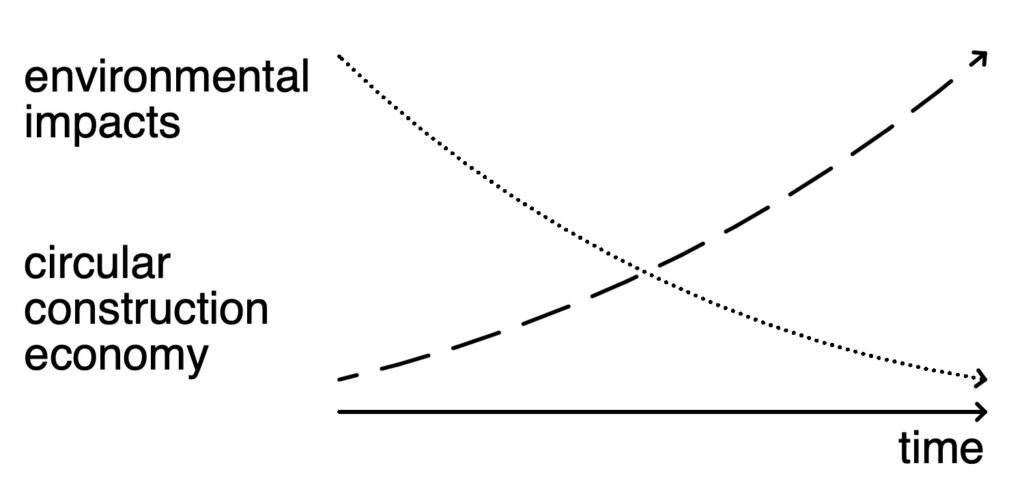
This doctoral thesis investigates how targeted reductions of environmental impacts in Germany’s building sector can achieve GHG neutrality by 2045 and stimulate innovation toward a circular economy. International models and methods are analysed and adapted to the German context to quantify life‑cycle environmental impacts of current construction activities using building LCAs. Results are compared with national emission‑reduction targets, considering cross‑sectoral decarbonisation, enabling a scientifically grounded development of policy measures and control instruments to reduce emissions and promote circularity in the construction sector.
-
Research Seminar: BACK TO ZERO – Reducing CO2 Emissions in the Construction Industry through LCA
The construction industry is responsible for 40% of all CO2 emissions in Germany. In order to meet climate targets, it is necessary to effectively reduce CO2 emissions throughout the entire life cycle of buildings. The seminar teaches the basics of life cycle assessment (LCA) as a tool for determining CO₂ emissions in construction. The focus is on global…
-
LooKIT-Interview: „We must eventually start measuring CO2 emissions instead of insulation thickness only“
Despite high energy-efficiency standards, buildings account for around 40% of the CO2 emissions in Germany. This is why a number of scientists have published a manifesto with the aim of initiating a change of policy in the building and refurbishment sectors. “We have been relying on the same policy for decades – without achieving significant…
-
Exhibition „Architecture and Energy“ at the DAM Frankfurt
The construction industry accounts for about 40 percent of the emissions responsible for climate change, and thus more than any other sector. It is therefore critically important to reduce as quickly as possible both the CO2 emissions and the energy inputs involved in the manufacture and operation of buildings. It is crucial to create an…