Home | Impressum | Datenschutz | KIT

Beyond Mining – Urban Growth
at Seoul Biennale of Architecture and Urbanism 2017

As populations and aspirations grow, so does the demand for materials and resources to support them. Although such resource demands were once satisfied by local and regional hinterlands, they are becoming increasingly global in scale and reach. This phenomenon has generated material flows that are trans-continental and planetary in scope, and has profound consequences for the sustainability, functioning, sense of ownership and identity of future cities. However, the global concentration of the construction industry on a selected few mined materials puts high pressure on our natural resources. If we talk about the future city, it becomes clear that it cannot be built with the same finite resources.

The 21st century will face a radical paradigm shift in how we produce materials for the construction of our habitat. The linear concept of “produce, use, and discard” has proven itself unsustainable in the face of scarce resources and exponentially increasing urban populations. Instead, to achieve a cycle of production, use, and re-use, we must explore alternative materials and approaches to construction. The Professorship of Sustainable Construction Dirk E. Hebel at the Karlsruhe Institute of Technology and the Block Research Group (BRG) at the Swiss Federal Institute of Technology (ETH) Zürich are combining their knowledge in materials, construction, structures, and geometry to address the problems posed by inefficiency in the realms of current design and material use.

Utilizing the regenerative materials mycelium and bamboo and a design based on polyhedral form and force diagrams controlling the geometry of the structure’s forces, this exhibition presents a full-scale vision for how we may move beyond the mining of our construction materials to their cultivation and urban growth. It suggests ways that efficiency of digital design and engineering and alternative resources can join forces to question current practice and propose more sustainable approaches.

Mycelium is the root network of mushrooms, a fast growing matrix that can act as a natural and self-assembling glue. Digesting plant-based waste products, such as saw dust, mycelium’s dense network of hyphae binds the substrate into a structurally active material composite. The advantages of such products are significant: As mycelium follows a metabolic cycle, building elements or whole constructions may be composted after their original use. The material may be grown locally, reducing both the energy and time required with transportation. And, as they are organic matter, they act to reverse carbon emissions through the absorption of carbon.

Mycelium based materials offer significant ecologic advantages on one hand but offer a comparably low structural strength on the other. When building with such weak materials, good geometry is essential for maintaining equilibrium through compression only. Such so-called funicular geometries have the advantage that their internal stresses are very low. While current conventional development of engineered materials, such as e.g. concrete and steel, is largely focused on making materials stronger by increasing their allowable stress, achieving stability through geometry instead allows the use of weak materials, such as mushroom mycelium, in structural applications.

We believe that local, regenerative and cultivated resources in combination with informed structural design, have the potential to become a very real alternative to established materials within the building industry.

Opening: 02. September 2017
Location: Donuimun Museum Village, Seoul, South Korea

Project Team:
Sustainable Construction, Dirk E. Hebel / KIT Karlsruhe & FCL Singapore
Professorship Philippe Block, Block Research Group / ETH Zürich
Karlsruhe: Karsten Schlesier, Felix Heisel
Zürich: Matthias Rippmann, Tomás Méndez Echenagucia, Juney Lee, Alessandro Dell’Endice, Andrew Liew, Noelle Paulson, Tom Van Mele
Singapore: Nazanin Saeidi, Alireza Javadian, Adi Reza Nugroho, Robbi Zidna Ilman, Erlambang Adjidarma, Hokie Christian, Orion Tan Sheng Yu, Kelly Cooper

Production partner:
Mycotech, PT Miko Bahtera Nusantara Indonesia

With kind support of:
Department of Architecture, ETH Zürich, Switzerland
ETH Global, ETH Zürich, Switzerland
Future Cities Laboratory (FCL) Singapore-ETH Centre, Singapore
Karlsruhe Institute of Technology (KIT), Germany


Karlsruher Institut für Technologie
Fakultät für Architektur
Institut Entwerfen und Bautechnik

Professur Nachhaltiges Bauen
Englerstr. 11, Geb. 11.40, Raum 25
D-76131 Karlsruhe
 
Tel: +49 (0)721/608-42167


Recent Publications:  
 

    RoofKIT in Karlsruhe

    November 11, 2026

    Wagner, Andreas, Dirk E. Hebel, and Elena Boerman. ‘RoofKIT in Karlsruhe’. In Living Lab NRW, Nachhaltiges Bauen erforschen, erproben und vermitteln. Living Lab NRW. Bergische Universität Wuppertal, Living Lab NRW, 2026. https://doi.org/10.25926/BUW/0-1071.


    Interview: „We’ve already made significant progress“

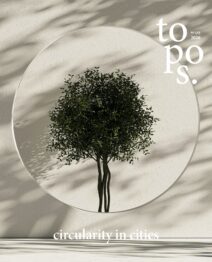
    Juli 9, 2026

    Kohring, Katharina, and Dirk E. Hebel. ‘Interview: “We’ve already made significant progress”’. topos. circularity in cities (München), 2026.


    Better this way

    Juli 9, 2026
    Screenshot

    Holl, Christian. ‘Besser So’. Marlowes, 7 July 2026. https://www.marlowes.de/besser-so/.


    Interview: „We’ve already made great progress“

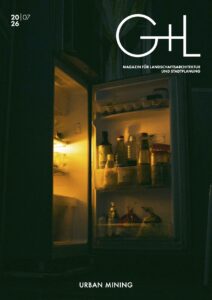
    Juli 9, 2026

    Kohring, Katharina, and Dirk E. Hebel. ‘Interview: “Wir sind schon einen großen Schritt weiter”’. G+L – Magazin für Landschaftsarchitektur und Stadtplanung (München), 2026.


    Umbauhof – A Place for the Reuse of Building Components

    Juni 24, 2026

    Boerman, E., & Hebel, D. E. (2026). Weniger Treibhausgasemissionen durch Wiederverwendung. In Umbauhof—Ein Ort für die Wiederverwendung von Bauteilen. Birkhäuser Verlag GmbH (Architektur Raumburgenland, Asphalt / Kollektiv für Architektur).


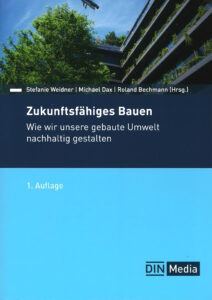
    Sustainable Construction. How we are shaping our built environment in a sustainable way.

    Mai 7, 2026

    Hebel, Dirk E., and Elena Boerman. “Projektstudie 2 (Schwerpunkt: Materialien): Der Kreislaufbasierte Architekturansatz.” In Zukunftsfähiges Bauen – Wie Wir Unsere Gebaute Umwelt Nachhaltig Gestalten, 64–78. Berlin: DIN Media Innovation, 2026.


    Circular! Foundations and principles of a circular construction industry.

    März 11, 2026

    Hebel, Dirk E., and Annette Hillebrandt, eds. 2026. Zirkulär! Fundamente und Postulate einer kreislaufbasierten Bauwirtschaft. Bauwelt Fundamente. Birkhäuser Verlag GmbH.


    A matter of consequence

    März 11, 2026

    Deutsches Architekt:innen Blatt. 2026. “Eine Frage der Konsequenz.” March.


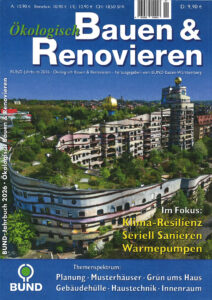
    Circular Construction. Regenerative Building material management.

    Januar 8, 2026

    Steiff, Peter. “Zirkuläres Bauen. Regeneratives Baustoff-Management.” BUND Jahrbuch 2026, January 2026.


    Wood as a foundation of a sustainable building culture

    Januar 8, 2026

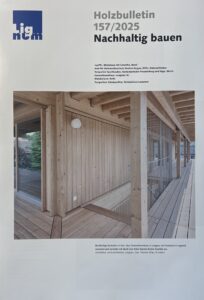
    Glanzmann, Jutta. “Holz Als Basis Für Eine Nachhaltige Baukultur.” Lignum Holzbulletin 157/2025, no. Nachhaltig bauen (2025): 4058–59.


    MycoTree

    Januar 5, 2026

    McLean, Will, Pete Silver, and Dirk Hebel. “MycoTree.” In Sustainable & Regenerative Materials for Architecture – A Source Book. 2025; Laurence King, 2025.


    Really Circular – Material Library at KIT

    Oktober 29, 2025

    Dietzold, Lutz, ed. Iconic Awards 2025 – Spaces Objects Visions. Frankfurt: Rat für Formgebung GmbH, 2025.


    Activating the Urban Mine

    Oktober 2, 2025

    Hebel, Dirk E. „Activating the Urban Mine.“ In Architecture and Technology Volume II: Cities in Climate Crisis. Madrid: Norman Foster Foundation Press, 2025.


    The city as a resource

    September 18, 2025


    Hebel, Dirk E. und Felix Heisel. “Die Stadt als Ressource.” In Für eine nachhaltige Architektur der Stadt. Berlin: Verlag Klaus Wagenbach, 2025.


    From a linear to a circular system

    September 15, 2025

    Hebel, Dirk E. “Vom Linearen Zum Kreislaufsystem.” In Architektur Und Klimawandel. München: Edition DETAIL, 2025.


    Interview: „We must finally start measuring CO2 emissions – not just how thick the insulation is“

    Juli 29, 2025

    Hebel, Dirk E. Interview: “Wir müssen endlich anfangen, den CO2-Ausstoß zu messen – nicht nur, wie dick die Dämmung ist.” Interview by Christoph Karcher. LooKIT 0225, 2025.


    WEtransFORM – On the Future of Building

    Juni 22, 2025

    BUNDESKUNSTHALLE, ed. WEtransFORM – Zur Zukunft Des Bauens. Berlin: jovis Verlag, 2025.


    Henkels Wuppertal

    Juni 4, 2025

    Renaissance AG, ed. Henkels Wuppertal – DenkWerkStadt. Wuppertal: renaissance Immobilien und Beteiligungen Aktiengesellschaft, 2025.


    Building for the world of tomorrow

    April 24, 2025

    Monkenbusch, Helmut. „Bauen für die Welt von morgen.“ Hörzu, 24.1.2025


    Funghi – underground networkers

    April 24, 2025

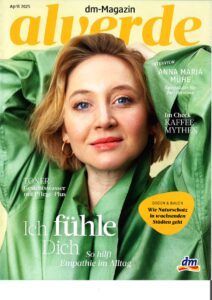
    Hebel, Dirk E., Tanja Hildbrandt. „ Pilze – Netzwerker im Untergrund“. alverde, dm-Magazin, April 2025.


    Fungi are versatile

    Februar 24, 2025

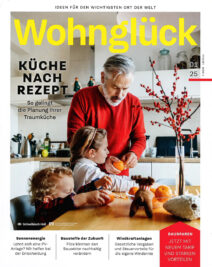
    Merkert-Andreas, Carolin. “Pilze Sind Vielseitig.” Wohnglück, January 2025.


    “RoofKIT – Carbon storage and Material storage”

    Januar 9, 2025

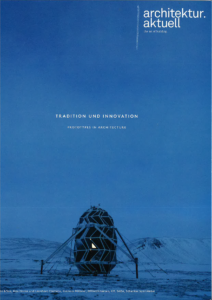
    Boerman, Elena, and Dirk E. Hebel. “RoofKIT – Kohlenstoffspeicher Und Materiallager.” Architektur.Aktuell, vol. 12.2024, no. Tradition und Innovation, Dezember 2024, pp. 98–109


    The many applications of mycelium construtction

    Dezember 8, 2024

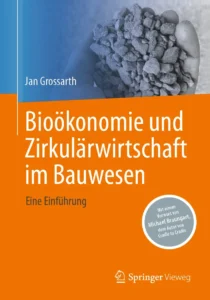
    Grossarth, Jan. „Exkurs: Die vielen Einsatzbereiche von Myzel im Bauwesen“. In Bioökonomie und Zirkulärwirtschaft im Bauwesen, eine Einführung, 174–117. Wiesbaden: Springer Fachmedien, 2024.


    Interview: „From a Linear to a Circular System“

    November 13, 2024

    Hebel, Dirk E. Interview: “Vom linearen zum zirkulären Kreislaufsystem.” Interview by Sandra Hofmeister, DETAIL 11.2024, Nov. 2024.


    Building with renewable materials – Nature as a resource depot

    Oktober 29, 2024

    Hebel, Dirk E., Sandra Böhm, Elena Boerman, Hrsg. Vom Bauen mit erneuerbaren Materialien – Die Natur als Rohstofflager. Stuttgart: Fraunhofer IRB Verlag, 2024.


    Guest contribution: ‚Thinking, designing and operating in circular ways.‘

    Juni 27, 2024

    Hebel, Dirk E. “In Kreisläufen denken, entwerfen und wirtschaften.” MÄG – Mein Häfele Magazin, 2024.


    Interview: ‚Mycelium power for the construction industry‘

    Juni 10, 2024

    Rubel, Maike, and Patricia Leuchtenberger. Interview: “Pilzpower für die Bauindustrie.” competitionline, 7 June 2024, https://www.competitionline.com/de/news/schwerpunkt/pilzpower-fuer-die-bauindustrie-7283.html.


    ‚Future building materials: mushroom, hemp and algae‘ in neubau kompass

    Mai 27, 2024

    Müller, Janek. “Baumaterialien der Zukunft: Pilze, Hanf und Algen.” neubau kompass – Neubauprojekte in Deutschland, May 3, 2024. https://www.neubaukompass.de/premium-magazin/.


    Interview: ‚We have disposed of valuable materials‘

    Mai 7, 2024

    Sören, S. Sgries. “Interview: ‘Wir haben wertvolle Materialien weggeworfen.’” Rhein-Neckar-Zeitung, April 27, 2024, SÜDWEST I 28 edition, sec. Sinsheimer Nachrichten.


    Built on mushroom

    April 24, 2024

    Schweikle, Johannes. “Auf Pilz gebaut.” Stuttgarter Zeitung, April 23, 2024, sec. Die Reportage.