Home | Impressum | Datenschutz | KIT

„BauNetz CAMPUS“ reports about NEWood

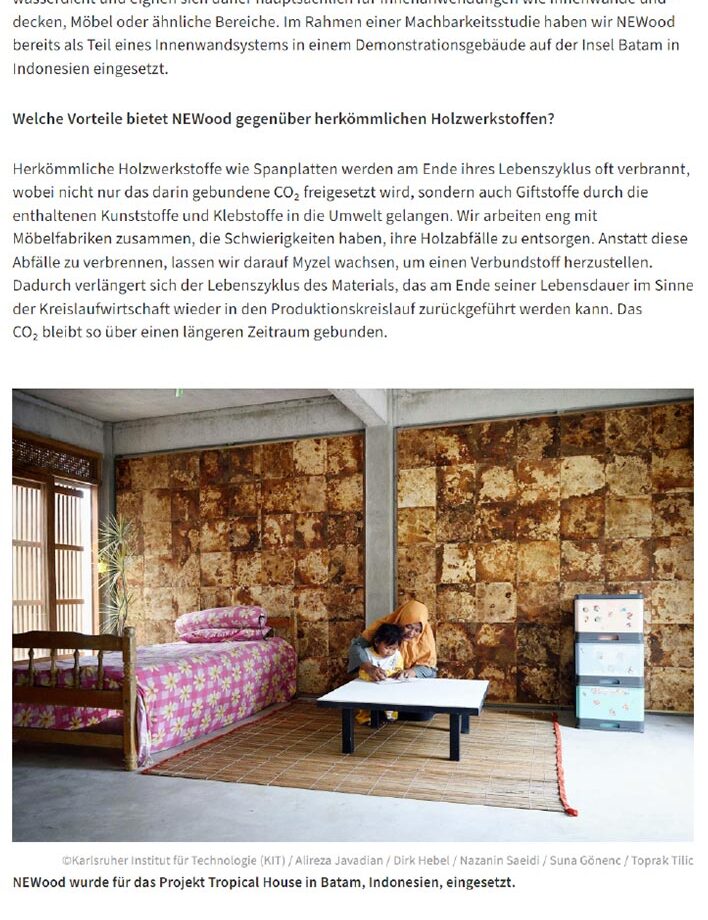
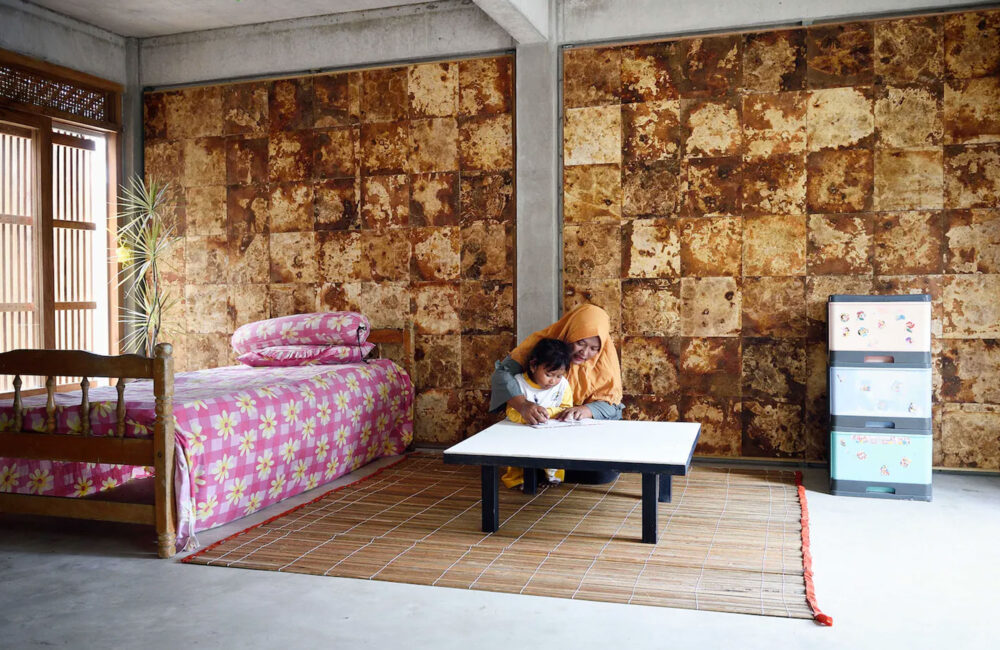
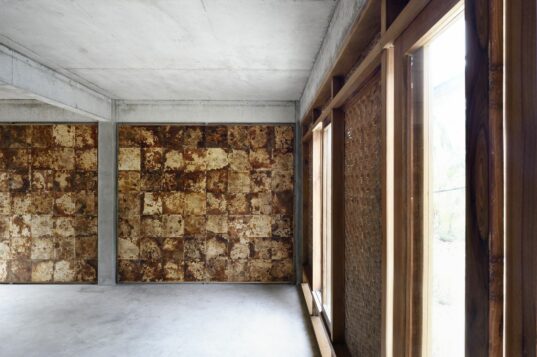
Batam Haus © Carlina Teteris

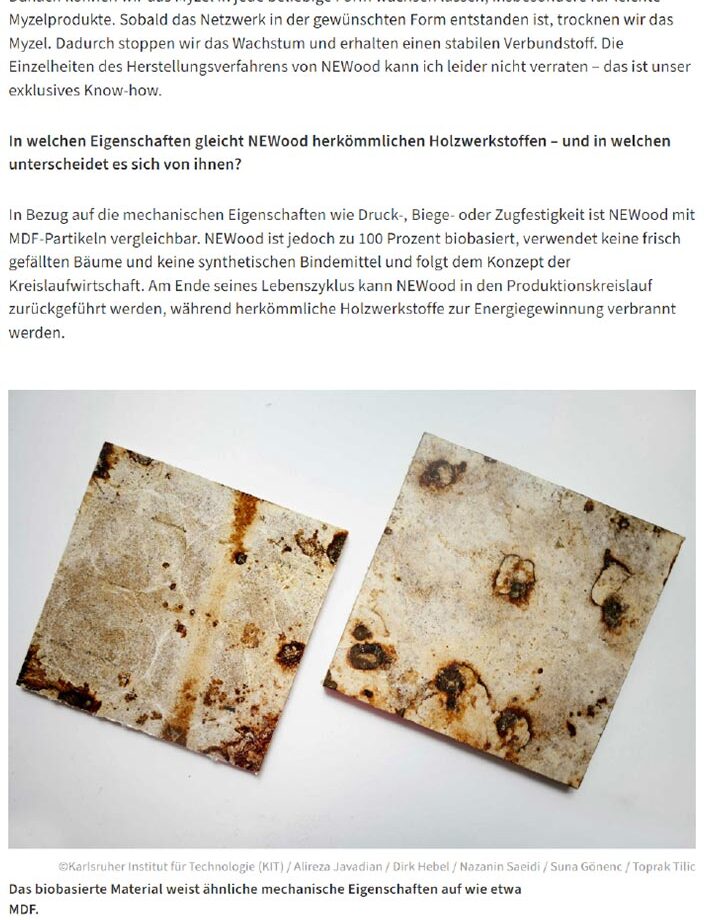
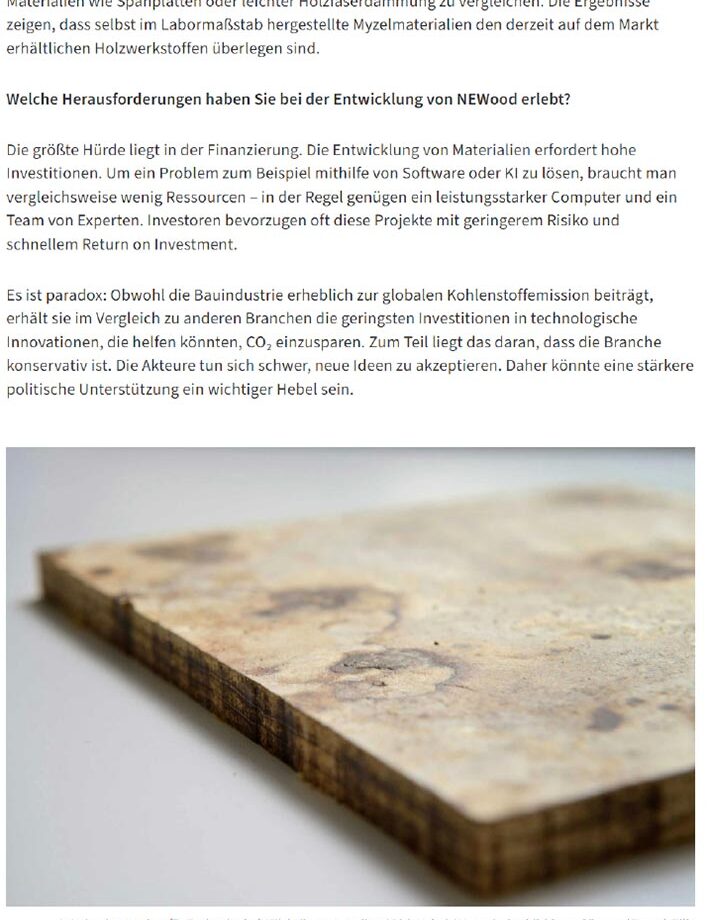
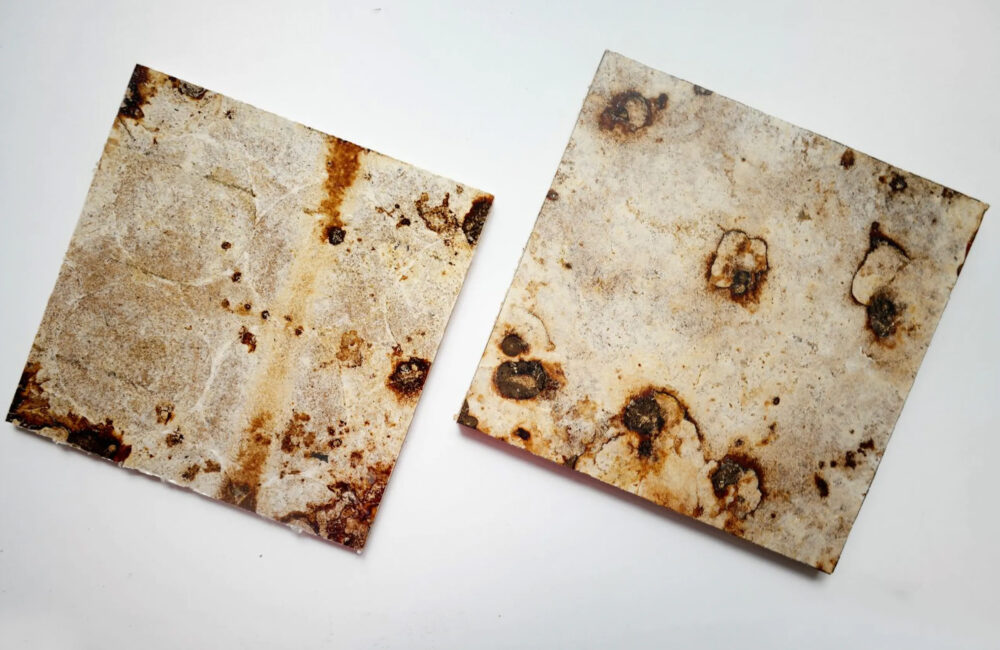
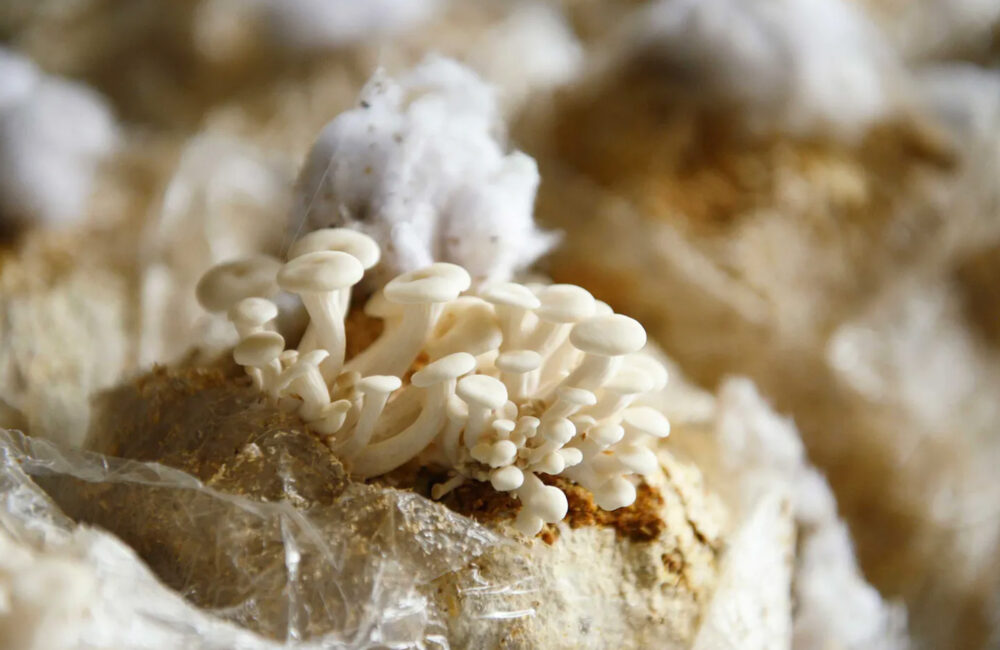
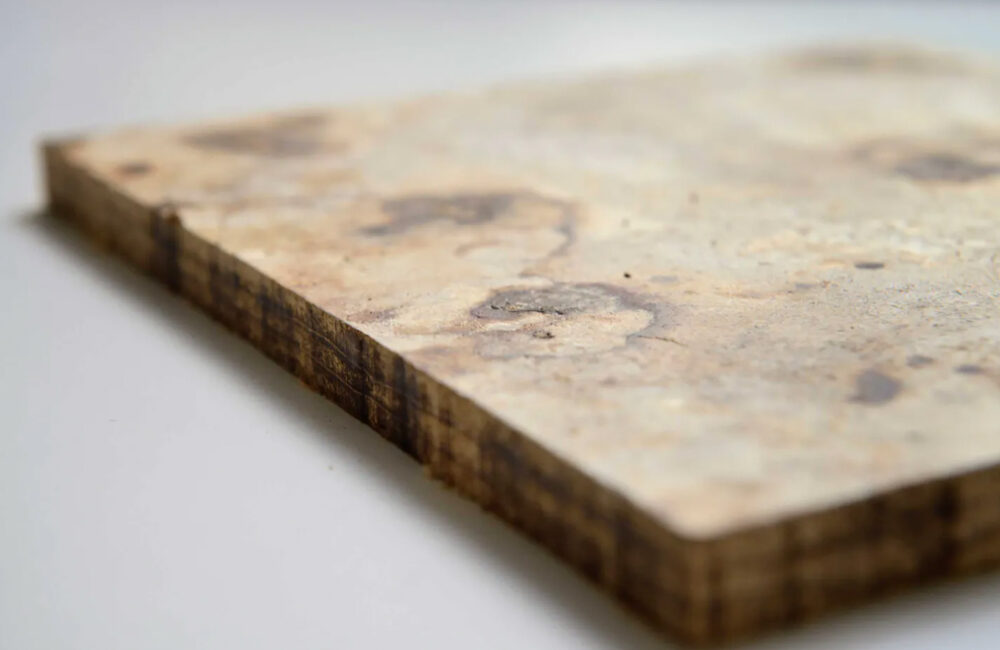
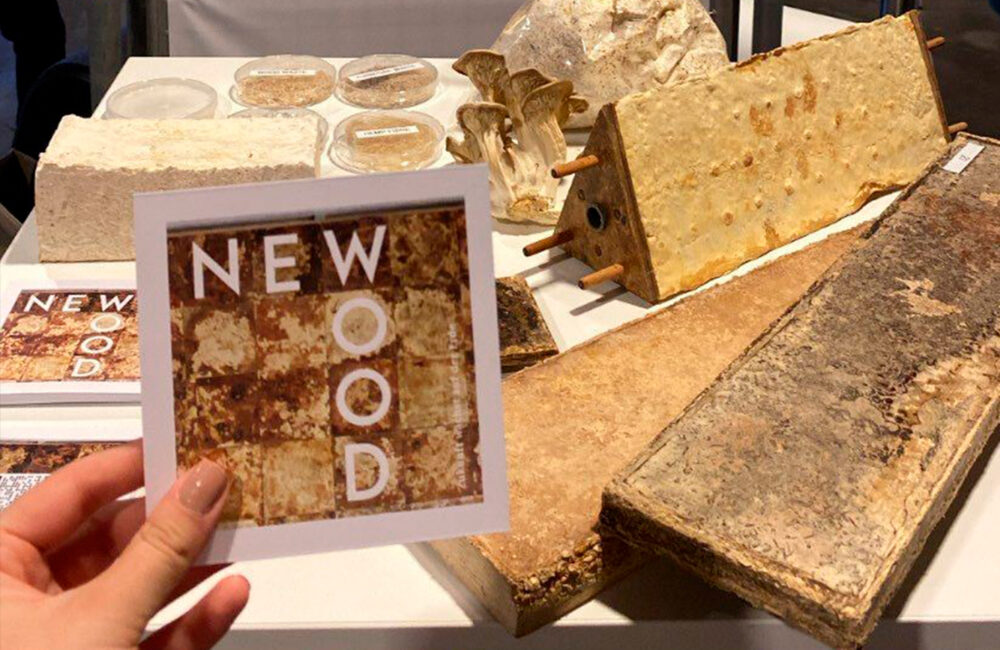
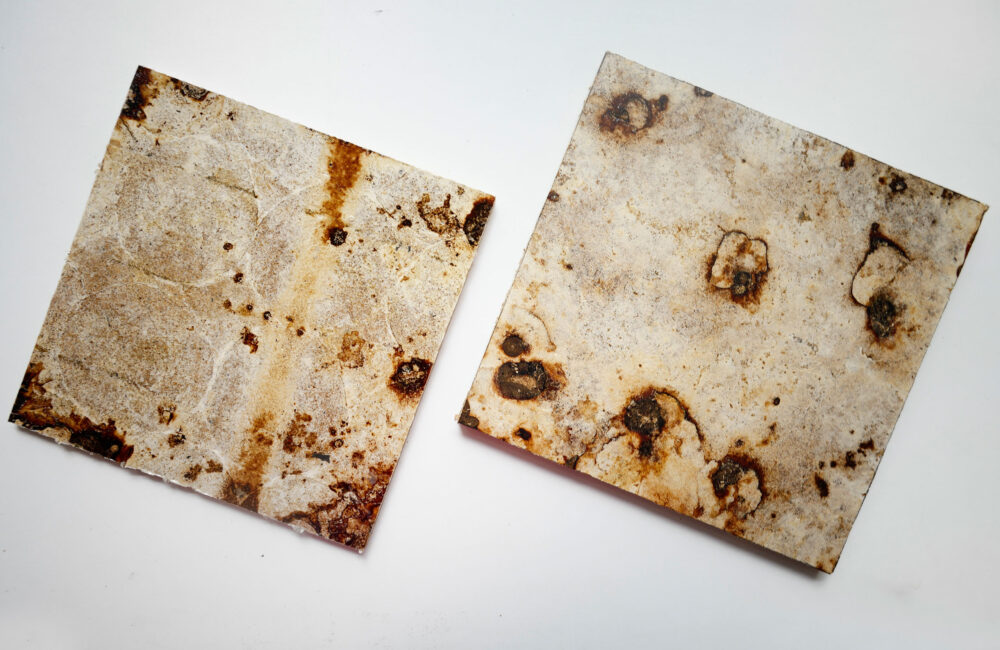
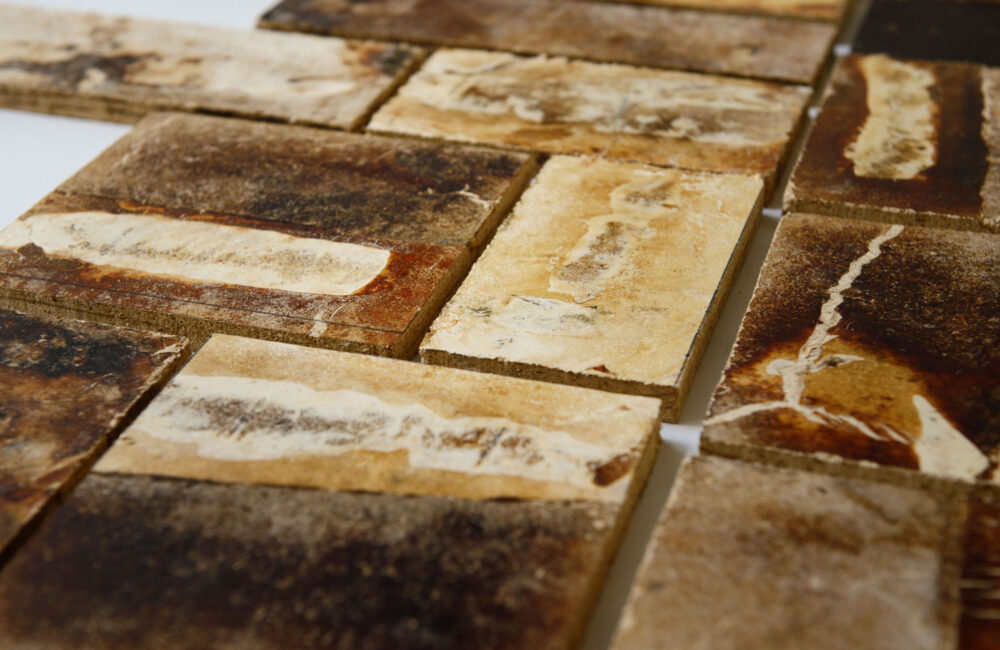
By combining wood and agricultural waste with mycelium as a natural binder, a sustainable material is created without the need for fresh wood or synthetic adhesives. This material offers density and stability comparable to OSB, MDF, and particle boards. It is suitable for furniture construction, drywall systems, and as a substitute for synthetic insulation materials.

A 1:1 demonstrator at KIT showcases NEWood as an interior wall system and furniture component. The circular room system serves as a quiet meeting space where students and staff can test the material. The goal is to achieve market readiness within two to four years.

Find out more about the project here or in the blog post below.


NEWood closes the loop – a 100% bio-based, climate-friendly and circular material alternative for the construction industry

Research Project NEWood – Sustainable material innovation for the construction and furniture industry

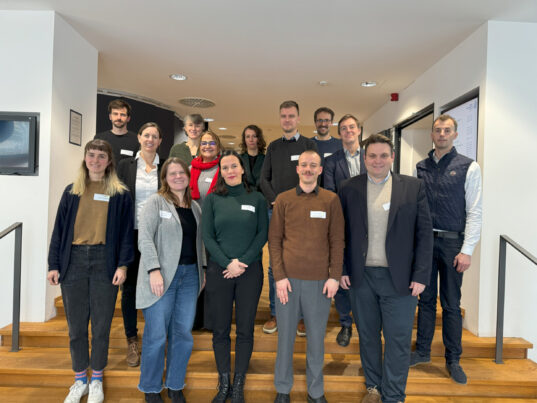
Project representatives of all projects funded under the ‘Circular Construction – Climate Protection through Recycling Management’ programme © Baden-Württemberg Stiftung gGmbH

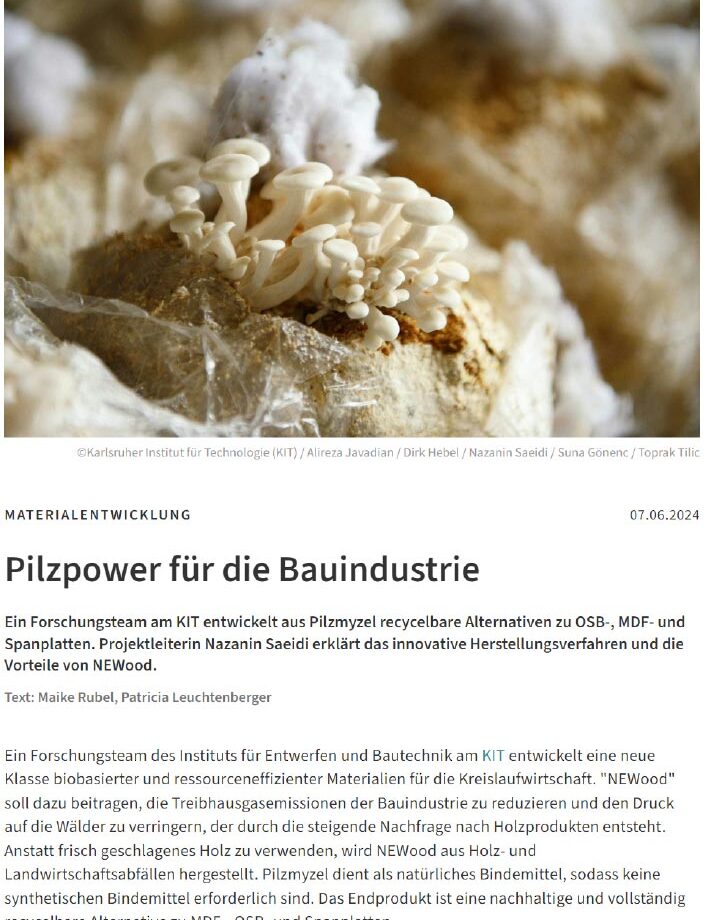
The Karlsruhe Institute of Technology (KIT), under the direction of Prof. Rebekka Volk (IIP), is working in close collaboration with the project leader Dr. Nazanin Saeidi from the research department of the Professorship of Sustainable Construction (IEB) to develop the innovative material ‘NEWood’, a 100% bio-based and circular material alternative with great potential for the construction and furniture industries. This material is produced exclusively from wood processing residues, agricultural waste and mushroom mycelium – completely without fossil raw materials. In the process, biogenic carbon is permanently bound, making an important contribution to climate protection.

The construction and operation of buildings and the creation of infrastructure are responsible for around 40% of global greenhouse gas emissions. At the same time, cities consume over 75% of the world’s resources and generate about half of the global waste. In this context, alternative and sustainable materials such as NEWood are becoming increasingly important in order to significantly reduce the emissions of material-intensive industries and promote the circular economy.

The project aims to develop 1:1 demonstrators that illustrate the versatility of NEWood for interior wall systems and furniture components. These demonstrators will be designed to meet the legal standards of the construction and furniture industries in order to enable the material to be launched on the market. In addition, the project includes a life cycle analysis, a cost analysis and a feasibility study for industrialisation. The results will be presented at trade fairs, at the KIT Department of Architecture and in the central library of the KIT in order to make the application possibilities and the potential of NEWood visible to the public.

The project is funded by the Baden-Württemberg Stiftung gGmbH and will run from July 2024 to June 2026. In addition to the KIT, partners such as König + Neurath AG and Fiber Engineering are involved in the development.

NEWood combines innovation and sustainability. With its ability to permanently bind biogenic carbon and replace fossil materials, this material can revolutionise the circular economy in the construction and furniture industries. At the same time, it makes a significant contribution to reducing greenhouse gas emissions and protecting the climate.


Interview: Mycelium power for the construction industry

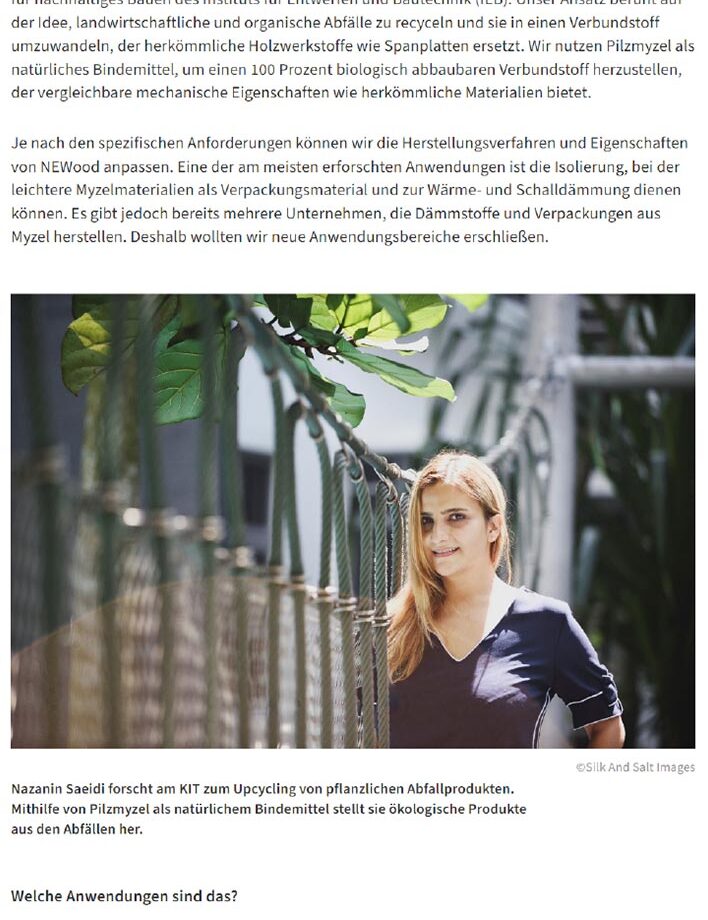
Nazanin Saeidi in an interview with Maike Rubel and Patricia Leuchtenberger about the innovative manufacturing process and the advantages of NEWood as a recyclable alternative to wooden composite materials.

  • © competitionline


„NEWood“ awarded Umweltpreis 2023 from Sparkasse Pforzheim Calw

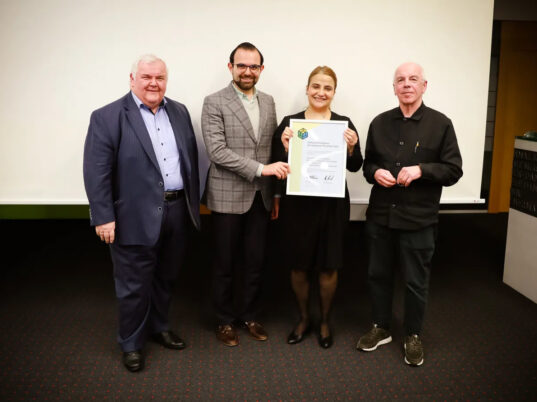
The Environmental Foundation of Sparkasse Pforzheim Calw honors four projects with the Umweltpreis 2023. The presentation of the prizes, worth a total of 15,000 euros, took place on March 15, 2023 at the Sparkasse in Calw. The main prize of 7,500 euros was awarded to the team from the Karlsruhe Institute of Technology (KIT) for the „NEWood“ project.

Hans Neuweiler, Dr. Alireza Javadian and Dr. Nazanin Saeidi, Prof. Peter Cheret © Stiftung Umweltpreis

The NEWood project is about developing new bio-based, sustainable and renewable materials that can replace conventional wood products, such as particleboard. Most of the currently available wood-based products do not meet the principles of the circular economy. KIT researchers now aim to develop materials that can replace unsustainable wood products in the construction industry. Time is pressing, as forests are threatened by deforestation due to strong demand. In addition, the production of synthetic binders, which require wood products, results in CO2 emissions that accelerate climate change. From an ecological point of view, the pressure on forests should be reduced and industrial greenhouse gas emissions reduced.

The „NEWood“ material developed by the KIT team belongs to a new class of biobased, resource-efficient and CO2-negative materials. It is produced exclusively from regionally available organic waste, including agricultural residues. As a sustainable and renewable material, NEWood thus offers an excellent alternative to freshly cut wood. It also has comparable properties to materials made primarily from wood fiber and glue. These include particleboard, medium-density fiberboard or multilayer board. Synthetic binders are not required for NEWood, as the new KIT material is manufactured using fungal mycelium as a natural binder. Mycelium, which is responsible for vegetative growth in fungi, provides a novel, ecologically valuable binding method for wood products. The Karlsruhe researchers are already in contact with industry. They are aiming to found a start-up that will enable the scientific findings on NEWood to be translated into industrial products.

Other award winners were:
Lukas Dufner, research associate at the University of Stuttgart, for the project „Photocatalytic drinking water treatment with sunlight“, which can be used to purify contaminated drinking water in developing countries and regions with poor infrastructure.
Prof. Dr.-Ing. Klemens Gintner of the Karlsruhe University of Applied Sciences (HKA) for the first measurement of breeding parameters, which are important for the breeding of endangered birds.
The municipality of Neuhausen (Enzkreis) for setting up a „WaldKlimaPfad“ (ForestClimatePath), which provides information about the consequences of global warming at play and information sites.

Text: Stiftung Umweltpreis


NEWood awarded with competitionline CAMPUS Award 2023

  • © KIT Professorship Sustainable Construction

165 projects from 54 universities took part in this year’s competitionline CAMPUS Award. The spectrum of topics ranged from utopias for urban development and material studies to adaptive architecture and after-use strategies. The proportion of projects dealing with sustainable design tasks such as the conversion of existing buildings, climate adaptation in cities or research into alternative materials was particularly high.

In addition to two student award-winning projects, which went to the TU Munich and Leibniz Universität Hannover, and two award-winning final theses from the Kunstakademie Düsseldorf and the University of Stuttgart, one faculty project also received an award.

From nine projects submitted, the jury selected the work „NEWood, a 100% bio-based, sustainable and recyclable material alternative to wood-based products“ as the winner. The research by the Institute of Design and Construction Technology at the Karlsruhe Institute of Technology resulted in the „development of a new class of bio-based, resource-efficient and CO2-negative materials.“ As an alternative to particleboard, MDF and OSB, the boards are made exclusively from wood and agricultural waste. Mushroom mycelium is used as a natural binder, so no synthetic binders are required.

The research project shows that NEWood has comparable properties to wood-based materials such as MDF, OSB and particleboard. The use of mycelium, the structural part of fungi, is a novel bonding method that enables the production of a 100% bio-based and fully recyclable alternative to wood-based materials. The project team, consisting of Dr. Alireza Javadian, Dr. Nazanin Saeidi and Prof. Dirk E. Hebel, is convinced that „NEWood“ will be a sustainable alternative to conventional MDF and particleboard and has the potential to initiate a paradigm shift in the way we produce our future building materials in terms of the circular economy without leaving any waste behind.

More information here.


Professorship of Sustainable Construction wins the DGNB Sustainability Challenge with the project „NEWood“

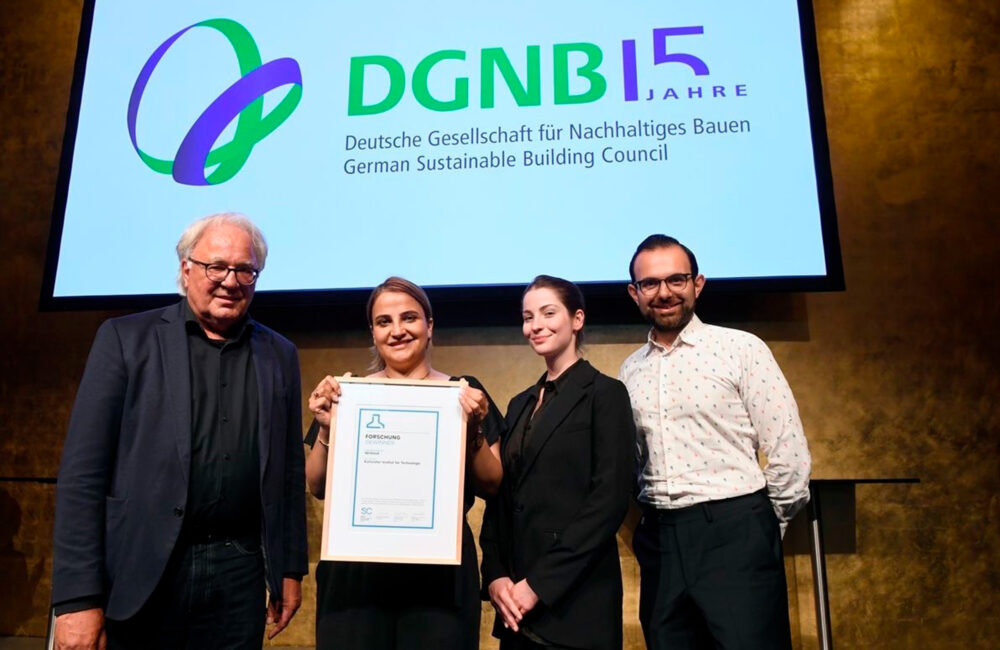
  • The project NEWood wins category “Research” of DGNB Sustainability Challenge led by Nazanin Saeidi and Alireza Javadian © DGNB

The German Sustainable Building Council (DGNB) announced the winners of this year’s Sustainability Challenge at the DGNB Sustainability Day in Fellbach on 8 July. In the category „Research“, the project „NEWood“ lead by Nazanin Saeidi and Alireza Javadian from the Professorship of Sustainable Construction Dirk E. Hebel at KIT in Karlsruhe, came out on top.

Among the start-ups, the jury chose mygreentop. The „Innovation“ category was won by Home Power Solutions with picea. The audience award went to the research project „Kalkspeicher“ from the German Aerospace Centre (DLR). A total of more than 100 projects and companies entered the DGNB Sustainability Challenge this year.

The selection of the award winners in the DGNB Sustainability Challenge was different this year than in the past. In addition to the finalists, the eleven-member jury also directly determined the winners in the categories „Innovation“, „Start-up“ and „Research“.

„The decision was enormously difficult for us as a jury,“ says Dr. Christine Lemaitre, Executive Director of the DGNB and part of the selection committee. „All the finalists presented themselves excellently, which is why I can only congratulate them all. They are the best proof that there are smart, forward-thinking people in our industry who can combine sustainability with innovation.“

The „NEWood“ project is a novel class of bio-based, resource-efficient and CO2-negative materials based on mycelium. Since NEWood shows comparable properties to MDF and chipboard, it serves as a substitute for wood and wood-based materials. The wood alternative is developed exclusively from available organic waste, including wood and agricultural waste, and is manufactured using fungal mycelium as a natural binder.

This year, the jury was made up of Dr Anna Braune (DGNB), Gerhard Breitschaft (Deutsches Institut für Bautechnik), Dominik Campanella (Concular), Prof. Moritz Fleischmann (Düsseldorf University of Applied Sciences), Prof. Andrea Klinge (ZRS Architekten), Dr Christine Lemaitre (DGNB), Martin Prösler (Proesler Kommunikation), Martin Rodeck (EDGE Technologies), Prof. Dr.-Ing. Ing. Anja Rosen (Bergische Universität Wuppertal), Prof. Dr.-Ing. Patrick Teuffel (Eindhoven University of Technology), and Prof. Meike Weber (Hildesheim University of Applied Sciences and Arts).

More information on all award winners and finalists is available online in the DGNB press release or on the DGNB blog. (Text © DGNB)


Karlsruher Institut für Technologie
Fakultät für Architektur
Institut Entwerfen und Bautechnik

Professur Nachhaltiges Bauen
Englerstr. 11, Geb. 11.40, Raum 25
D-76131 Karlsruhe
 
Tel: +49 (0)721/608-42167


Recent Publications:  
 

    Interview: „We’ve already made significant progress“

    Juli 9, 2026

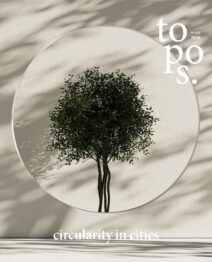
    Kohring, Katharina, and Dirk E. Hebel. ‘Interview: “We’ve already made significant progress”’. topos. circularity in cities (München), 2026.


    Better this way

    Juli 9, 2026
    Screenshot

    Holl, Christian. ‘Besser So’. Marlowes, 7 July 2026. https://www.marlowes.de/besser-so/.


    Interview: „We’ve already made great progress“

    Juli 9, 2026

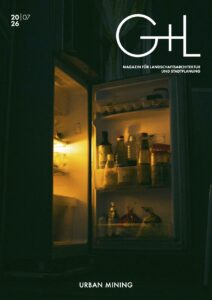
    Kohring, Katharina, and Dirk E. Hebel. ‘Interview: “Wir sind schon einen großen Schritt weiter”’. G+L – Magazin für Landschaftsarchitektur und Stadtplanung (München), 2026.


    Umbauhof – A Place for the Reuse of Building Components

    Juni 24, 2026

    Boerman, E., & Hebel, D. E. (2026). Weniger Treibhausgasemissionen durch Wiederverwendung. In Umbauhof—Ein Ort für die Wiederverwendung von Bauteilen. Birkhäuser Verlag GmbH (Architektur Raumburgenland, Asphalt / Kollektiv für Architektur).


    Sustainable Construction. How we are shaping our built environment in a sustainable way.

    Mai 7, 2026

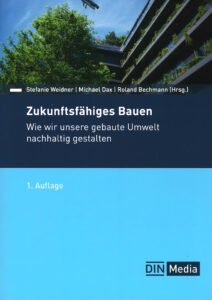
    Hebel, Dirk E., and Elena Boerman. “Projektstudie 2 (Schwerpunkt: Materialien): Der Kreislaufbasierte Architekturansatz.” In Zukunftsfähiges Bauen – Wie Wir Unsere Gebaute Umwelt Nachhaltig Gestalten, 64–78. Berlin: DIN Media Innovation, 2026.


    Circular! Foundations and principles of a circular construction industry.

    März 11, 2026

    Hebel, Dirk E., and Annette Hillebrandt, eds. 2026. Zirkulär! Fundamente und Postulate einer kreislaufbasierten Bauwirtschaft. Bauwelt Fundamente. Birkhäuser Verlag GmbH.


    A matter of consequence

    März 11, 2026

    Deutsches Architekt:innen Blatt. 2026. “Eine Frage der Konsequenz.” March.


    Circular Construction. Regenerative Building material management.

    Januar 8, 2026

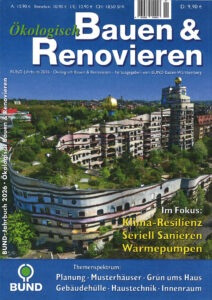
    Steiff, Peter. “Zirkuläres Bauen. Regeneratives Baustoff-Management.” BUND Jahrbuch 2026, January 2026.


    Wood as a foundation of a sustainable building culture

    Januar 8, 2026

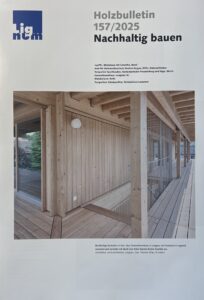
    Glanzmann, Jutta. “Holz Als Basis Für Eine Nachhaltige Baukultur.” Lignum Holzbulletin 157/2025, no. Nachhaltig bauen (2025): 4058–59.


    MycoTree

    Januar 5, 2026

    McLean, Will, Pete Silver, and Dirk Hebel. “MycoTree.” In Sustainable & Regenerative Materials for Architecture – A Source Book. 2025; Laurence King, 2025.


    Really Circular – Material Library at KIT

    Oktober 29, 2025

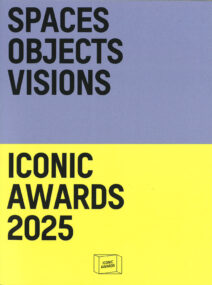
    Dietzold, Lutz, ed. Iconic Awards 2025 – Spaces Objects Visions. Frankfurt: Rat für Formgebung GmbH, 2025.


    Activating the Urban Mine

    Oktober 2, 2025

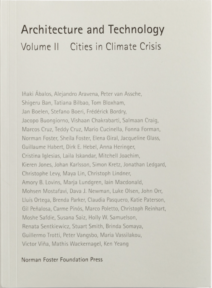
    Hebel, Dirk E. „Activating the Urban Mine.“ In Architecture and Technology Volume II: Cities in Climate Crisis. Madrid: Norman Foster Foundation Press, 2025.


    The city as a resource

    September 18, 2025


    Hebel, Dirk E. und Felix Heisel. “Die Stadt als Ressource.” In Für eine nachhaltige Architektur der Stadt. Berlin: Verlag Klaus Wagenbach, 2025.


    From a linear to a circular system

    September 15, 2025

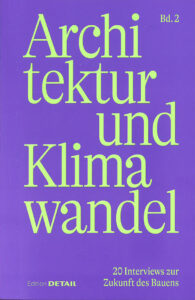
    Hebel, Dirk E. “Vom Linearen Zum Kreislaufsystem.” In Architektur Und Klimawandel. München: Edition DETAIL, 2025.


    Interview: „We must finally start measuring CO2 emissions – not just how thick the insulation is“

    Juli 29, 2025

    Hebel, Dirk E. Interview: “Wir müssen endlich anfangen, den CO2-Ausstoß zu messen – nicht nur, wie dick die Dämmung ist.” Interview by Christoph Karcher. LooKIT 0225, 2025.


    WEtransFORM – On the Future of Building

    Juni 22, 2025

    BUNDESKUNSTHALLE, ed. WEtransFORM – Zur Zukunft Des Bauens. Berlin: jovis Verlag, 2025.


    Henkels Wuppertal

    Juni 4, 2025

    Renaissance AG, ed. Henkels Wuppertal – DenkWerkStadt. Wuppertal: renaissance Immobilien und Beteiligungen Aktiengesellschaft, 2025.


    Building for the world of tomorrow

    April 24, 2025

    Monkenbusch, Helmut. „Bauen für die Welt von morgen.“ Hörzu, 24.1.2025


    Funghi – underground networkers

    April 24, 2025

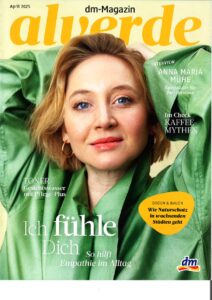
    Hebel, Dirk E., Tanja Hildbrandt. „ Pilze – Netzwerker im Untergrund“. alverde, dm-Magazin, April 2025.


    Fungi are versatile

    Februar 24, 2025

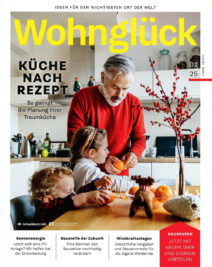
    Merkert-Andreas, Carolin. “Pilze Sind Vielseitig.” Wohnglück, January 2025.


    “RoofKIT – Carbon storage and Material storage”

    Januar 9, 2025

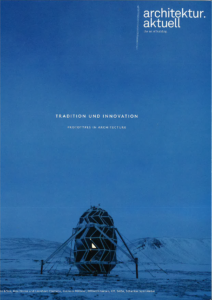
    Boerman, Elena, and Dirk E. Hebel. “RoofKIT – Kohlenstoffspeicher Und Materiallager.” Architektur.Aktuell, vol. 12.2024, no. Tradition und Innovation, Dezember 2024, pp. 98–109


    The many applications of mycelium construtction

    Dezember 8, 2024

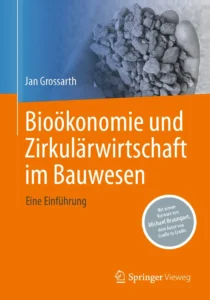
    Grossarth, Jan. „Exkurs: Die vielen Einsatzbereiche von Myzel im Bauwesen“. In Bioökonomie und Zirkulärwirtschaft im Bauwesen, eine Einführung, 174–117. Wiesbaden: Springer Fachmedien, 2024.


    Interview: „From a Linear to a Circular System“

    November 13, 2024

    Hebel, Dirk E. Interview: “Vom linearen zum zirkulären Kreislaufsystem.” Interview by Sandra Hofmeister, DETAIL 11.2024, Nov. 2024.


    Building with renewable materials – Nature as a resource depot

    Oktober 29, 2024

    Hebel, Dirk E., Sandra Böhm, Elena Boerman, Hrsg. Vom Bauen mit erneuerbaren Materialien – Die Natur als Rohstofflager. Stuttgart: Fraunhofer IRB Verlag, 2024.


    Guest contribution: ‚Thinking, designing and operating in circular ways.‘

    Juni 27, 2024

    Hebel, Dirk E. “In Kreisläufen denken, entwerfen und wirtschaften.” MÄG – Mein Häfele Magazin, 2024.


    Interview: ‚Mycelium power for the construction industry‘

    Juni 10, 2024

    Rubel, Maike, and Patricia Leuchtenberger. Interview: “Pilzpower für die Bauindustrie.” competitionline, 7 June 2024, https://www.competitionline.com/de/news/schwerpunkt/pilzpower-fuer-die-bauindustrie-7283.html.


    ‚Future building materials: mushroom, hemp and algae‘ in neubau kompass

    Mai 27, 2024

    Müller, Janek. “Baumaterialien der Zukunft: Pilze, Hanf und Algen.” neubau kompass – Neubauprojekte in Deutschland, May 3, 2024. https://www.neubaukompass.de/premium-magazin/.


    Interview: ‚We have disposed of valuable materials‘

    Mai 7, 2024

    Sören, S. Sgries. “Interview: ‘Wir haben wertvolle Materialien weggeworfen.’” Rhein-Neckar-Zeitung, April 27, 2024, SÜDWEST I 28 edition, sec. Sinsheimer Nachrichten.


    Built on mushroom

    April 24, 2024

    Schweikle, Johannes. “Auf Pilz gebaut.” Stuttgarter Zeitung, April 23, 2024, sec. Die Reportage.


    Organic Architecture – Fungus mycelium and flax as materials for the ecological building transition

    Februar 13, 2024

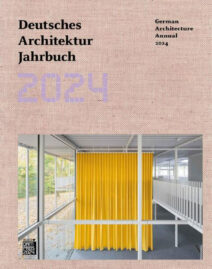
    Klaaßen, Lars. “Organische Architektur – Pilzmyzel und Flachs als Materialien für die ökologische Bauwende.” In Deutsches Architektur Jahrbuch 2024, edited by Peter Cachola Schmal, Yorck Förster, and Christina Gräwe, 198–209. Berlin, Germany: DOM publishers, 2024.