Home | Impressum | Datenschutz | KIT

From waste to high-performance mycelium-based biocomposites

  • Excerpts from the paper

The researchers Alireza Javadian, Xin Ying Chan, Nazanin Saeidi, Dirk E. Hebel and Frank Schultmann recently published a scientific report in Nature. In this study they demonstrate that abundant residues can be effectively valorized as feedstocks for the production of high-performance mycelium-based composite materials. The findings show that substrate composition plays a key role in determining the microstructure and mechanical performance of mycelium composites, providing a viable pathway for transforming underutilized lignocellulosic waste into functional bio-based materials.

The article can be accessed here.


Finalist: Evergreen Prize 2025

  • © evergreen Privatstiftung

Team MycoLab (Nazanin Saeidi, Karlsruhe Institute of Technology (KIT), Germany) was selected as one of the top 5 finalists for the prestigious Evergreen Prize 2025, sponsored by HS Timber Group and organized by the Evergreen Privatstiftung. Our project, „From Waste to Resource – Advancing Circular Bio-Based Materials for the Construction Industry,“ was recognized by a distinguished jury of timber experts for its innovative approach and impact. During an exhilarating day of live presentations at the Vienna City Hall on 26 May 2025, witnessed by over 900 attendees from more than 50 countries, Team MycoLab advanced to the top 3, showcasing the global potential of circular, bio-based solutions in construction.

Team Mycolab was competing with Team BranchUP (Maximilian Pramreiter, University of Natural Resources and Life Sciences, Vienna (BOKU), Austria), Team Hyperlignification (Emil Engelund Thybring, University of Copenhagen, Denmark), Team Transparent Wood (Yuanyuan Li, KTH Royal Institute of Technology, Sweden) and Team LignoVolt (Ingo Burgert, ETH Zürich, Switzerland).

The live presentations took place at the Vienna City Hall. Team MycoLab advanced to the top 3, showcasing the global potential of circular, bio-based solutions in construction.

For more information watch the video about the team and their presentation here.


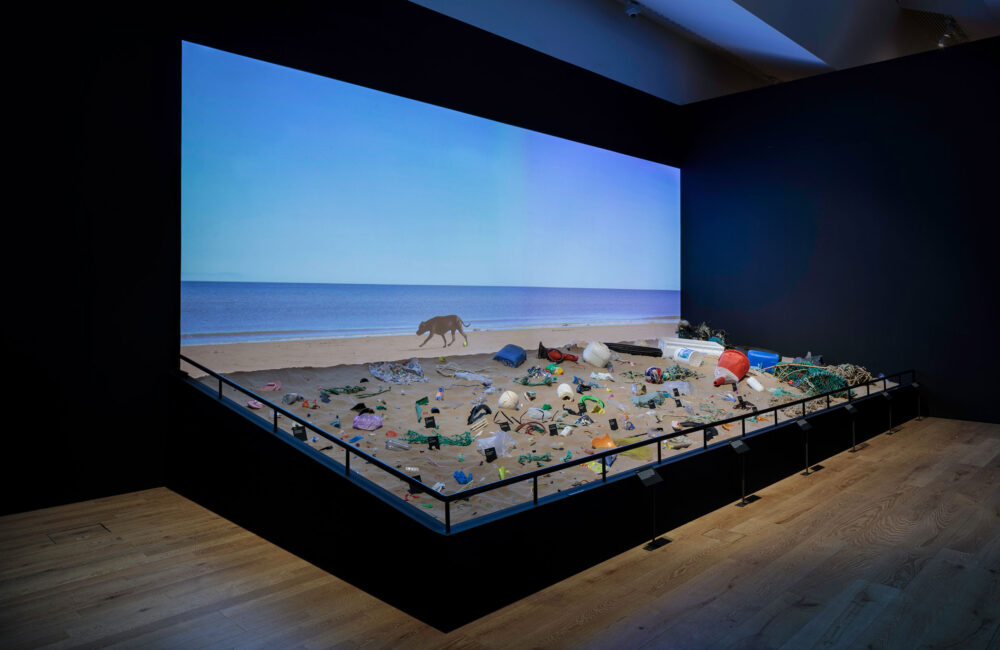
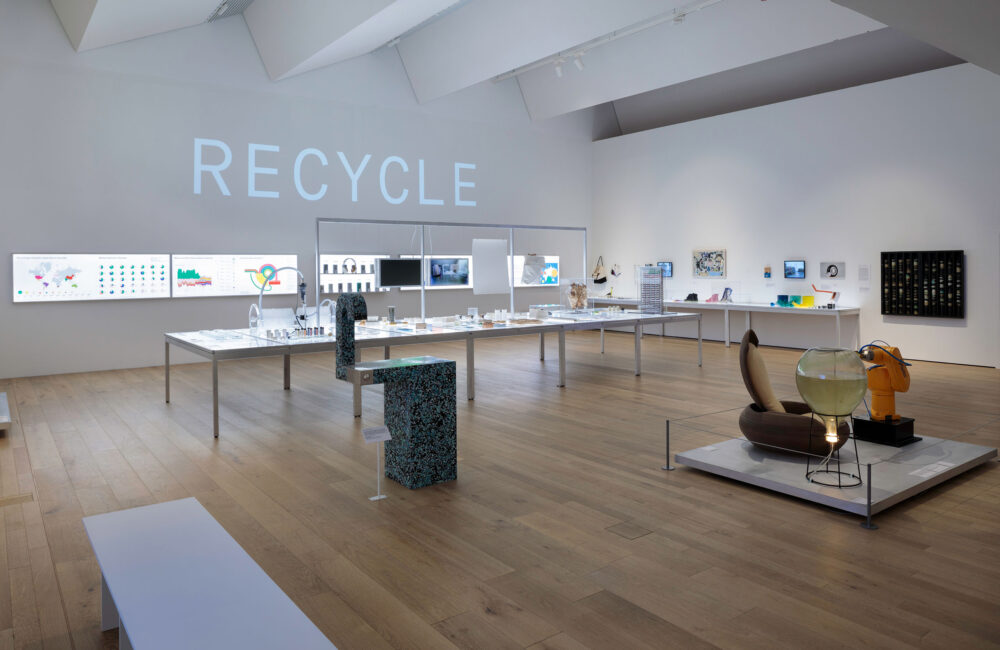
‚Plastic: Remaking Our World‘ has now opened at the National Museum of Singapore

  • © National Museum of Singapore

Plastics have shaped our daily lives like no other material. From food containers to electronic devices, from furniture to cars, from fashion to prefab buildings. With their almost limitless malleability, versatility, and economic production, plastics have spurred the imagination of designers and architects for decades. While they have been associated with convenience, progress, and even revolution, in recent years, they have lost their utopian appeal. Plastics are omnipresent – often as waste.

Moving away from a linear economy towards a circular one will require a combination of different strategies and approaches: mechanical, chemical, and biological recycling; a shift from oil-based plastics to plastics that are based on renewable resources and are biodegradable; reduction of single-use plastics. Lastly, legislation will need to support all these developments.

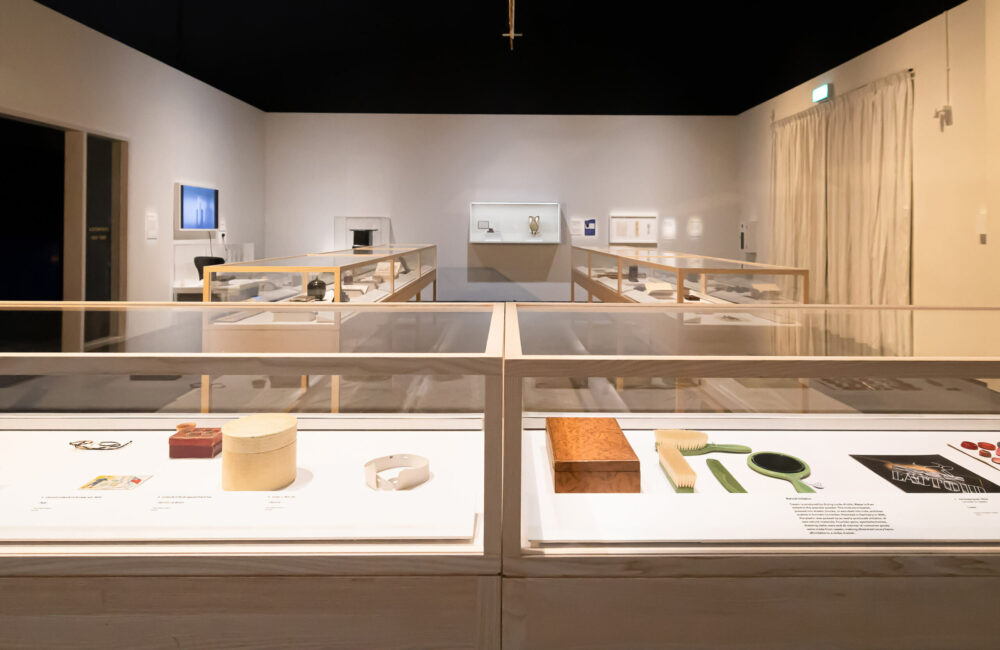
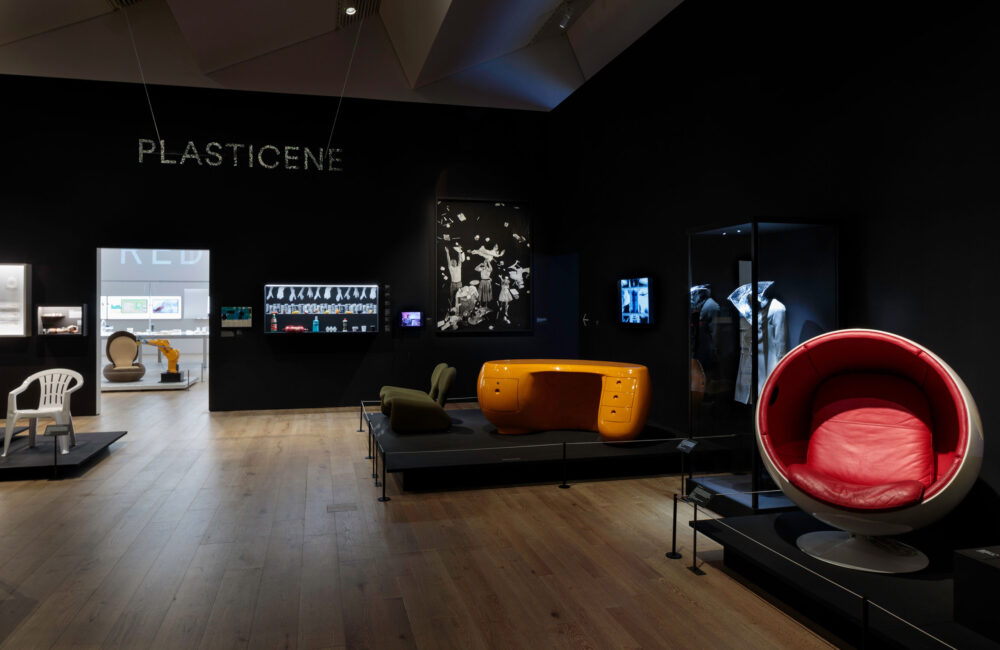
The Vitra Design Museum devotes a major exhibition to the utopian appeal of plastics and to the current challenges that need to be tackled by design, science, and politics. The exhibition ‚Plastic: Remaking Our World‘ examines the rise of plastic during the course of the twentieth century, its present ecological consequences as well as current research and design projects towards a new, sustainable use of the material in the future.

The exhibition will be on display in Singapore till 23 June 2024. Afterwards, it’ll move on to Korea and be on show at the Hyundai Motorstudio Busan from August 2024 till May 2025.

An exhibition by the Vitra Design Museum, V&A Dundee and maat, Lisbon

Detailed information
Vitra Design Museum
Illustrated Concept
Exhibition Film

Curatorial Team
Vitra Design Museum: Jochen Eisenbrand, Mea Hoffmann
V&A Dundee: Charlotte Hale, Laurie Bassam
maat, Lisbon: Anniina Koivu
Consultant Curators: V&A: Johanna Agerman Ross, Corinna Gardner 

Exhibition Design
Asif Khan

Graphic Design
Daniel Streat, Visual Fields

Exhibition Tour 
26.03.2022 – 04.09.2022, Vitra Design Museum, Weil am Rhein, Germany  
29.10.2022 – 05.02.2023, V&A Dundee, Dundee, United Kingdom 
22.03.2023 – 11.09.2023, maat, Lisbon, Portugal
27.01.2024 – 23.06.2024, National Museum of Singapore
09.08.2024 – May 2025, Hyundai Motorstudio, Busan, Korea


1,2 or 3 on KiKA: Wonderful world of mushrooms

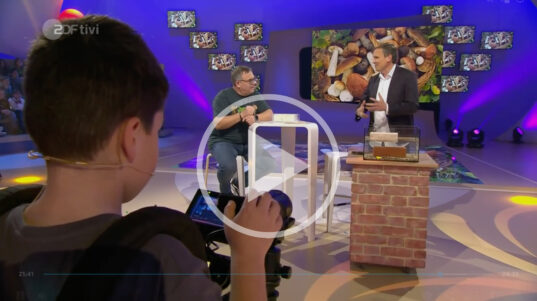
The children’s quiz „1, 2 or 3“ teaches knowledge in an entertaining and playful way. Bright minds and nimble legs are required. The guessing teams give their answers by jumping on one of the answer fields.


There are over two million species of mushroom worldwide. And you can not only eat mushrooms, you can even use some of them to build houses. Prof. Dirk Hebel explains how this works. The roots of fungi form a very strong tissue. Reporter Leonore uses this so-called mycelium to produce a kind of leather at the Fraunhofer Institute in Potsdam. She finds out from expert Hannes Hinneburg why wood chips are needed for this. Mushrooms are a truly miraculous material. They can not only be used to make leather, but also a meat substitute for plant-based steaks. And even ants grow mushrooms in their anthills as food. But why some mushrooms glow in the dark, spread black liquid, or how they even manage to take on cleaning tasks in nature, Elton wants to know from the guessing teams.

© KiKA 2023


Symposium “Biofrontiers: The Potential of Fungal-based Materials in Architecture”

Monday, October 9th, 2023
8:30 – 18:30 (CET)
Open Space 2 – Institute of Technology in Architecture (ITA ETH Hoenggerberg)

© Tobias Wootton

The one-day symposium is part of our work in the Future Cities Lab (FCL) research programme.

The event is being organized by the Block Research Group (ETH) and the chair of Digital Building Technologies (ETH), in collaboration with the chairs of Prof. Hortense Le Ferrand from NTU Singapore and Prof. Dirk Hebel from KIT Karlsruhe, with support from the Institute of Technology in Architecture (ITA) and ALIVE, and Holcim Foundation.

Our module BIO – Urban Biocycles Mycelium Digitalisation brings together researchers from the Block Research Group (ETH), the chair of Digital Building Technologies (ETH), Singapore (NTU), and Karlsruhe (KIT) to develop, utilize, and assess mycelium-bound composite materials in building construction.

This event aims to inspire new conversations regarding circularity in architecture and gauge the barriers and opportunities in utilizing bio-materials, with a focus on mycelium-based materials.

Each panel proposes a mix of experts in order to provide perspective on the industry and on the challenges and opportunities in utilizing mycelium-based materials in building construction and architectural applications. 

Please register now for our event – Registration, Lineup, and Schedule here: BIOFRONTIERS


Nazanin Saeidi at IMMO TALK 2023

90 representatives from business, science and politics came together on Wednesday at the new weisenburg headquarters in Karlsruhe for IMMO TALK 2023 of TechnologieRegion Karlsruhe GmbH (TRK GmbH), an event for more sustainability in the construction industry. The head of research at the Sustainable Building Professorship, Dr. Nazanin Saeidi, was also invited to the event.

The subject of this year’s event was „Bioeconomy 1 in building Plant-based building materials in the life cycle of buildings In two top-class rounds, innovative building materials made from plants were presented and discussed how they can find greater use in building practice in the future.

v.l.n.r. Lenz Sulzer, Projektmanager TechnologieRegion Karlsruhe GmbH (TRK GmbH); Jochen Ehlgötz, Geschäftsführer TRK GmbH; Dr. Petra Jung-Erceg, Koordinatorin Strategieentwicklung TRK GmbH; Dr. Sven Wydra, Fraunhofer-Institut für System- und Innovationsforschung ISI; Bernd Fleischer, Vorsitzender des Ausschusses Immobilien- & Standortentwicklung IHK Karlsruhe; Dr. Nazanin Saeidi, Forschungsleiterin Professur Nachhaltiges Bauen, KIT IEB; Prof. Dr. Moritz Dörstelmann, Professor Digital Design and Fabrication, Karlsruher Institut für Technologie; PD Dr.-Ing. Rebekka Volk, Forschungsgruppenleiterin Projekt- und Ressourcenmanagement in der bebauten Umwelt, KIT IIP; Bertram Hornung, Geschäftsführer Hornung GmbH & Co. KG Baustofffachhandel Stutensee; Alexander Möndel, Referatsleitung Bioökonomie Ministerium für Ernährung, Ländlichen Raum und Verbraucherschutz Baden-Württemberg

text and photo: TechnologieRegion Karlsruhe GmbH


arte 42: Are we being ruled by mushrooms?

This question is explored in an episode of „42-Die Antwort auf fast alles“ produced by Hessischer Rundfunk.

The director writes: Fungi have hardly been researched. Yet they are among the oldest and most diverse forms of life on our planet. Only through fungi could plants develop ages ago. They are at home everywhere: in the earth, in the air, in our bodies. And they form huge networks. They are intelligent, although they do not have a brain of their own. They make decisions and trade with the plants they live with. They take possession of insect bodies and turn them into zombies. Are fungi the secret rulers of the planet? (text: HR)

Nazanin Saeidi in „42 – Die Antwort auf fast alles“ © Hessischer Rundfunk

In this context, not only Dr. Nazanin Saeidi from the Sustainable Construction professorship is interviewed, but also the biologist Merlin Sheldrake, Francois Buscot from the Helmholtz Centre for Environmental Research in Leipzig and the political scientist Astrid Séville are invited to talk on the program.


„Plastic: Remaking Our World“ at V&A Dundee in Scotland

  • Plastic: Remaking Our World © V&A Dundee

The exhibition Plastic: Remaking Our World, which was initially on show at the Vitra Design Museum in Weil am Rhein, will be on display at the V&A Dundee in Scotland from 29 October 2022 until 5 February 2023.

The exhibition examines the history and the future of this controversial material. From its early origins when it was intended as a sustainable alternative to natural resources, to its meteoric rise in the twentieth century.

More information here.


Exhibition „Plastic: Remaking Our World“ now at V&A Dundee in Scotland

The exhibition Plastic: Remaking Our World, which was initially on show at the Vitra Design Museum, will be on display at the V&A Dundee in Scotland from 29 October 2022. The contribution of the Sustainable Building Professorship will also travel from Weil am Rhein to Dundee.

Plastic: Remaking Our World will again feature prototypes, new technologies, and cutting-edge materials as designers grapple with a material that has changed our world. 

The exhibition will feature product design, graphics, architecture and fashion from the collections of the V&A and Vitra Design Museum, as well as collections all over the world. This is the first exhibition produced and curated by V&A Dundee, the Vitra Design Museum and maat, Lisbon, with curators from V&A South Kensington.

© Vitra Design Museum


RoofKIT in Re: on arte – How mycelium researchers are working on the future

In this report, arte investigates the power of mushrooms and visits various actors. A Swiss mushroom expert, for example, wants to restore polluted soils. Researchers are also working together with students on a biological packaging material made from mushrooms. Mushroom leather or stable insulation and building materials are also examined in this episode of Re:.

The reporters also visit the Solar Decathlon in Wuppertal. Prof. Dirk E. Hebel explains why the mushroom, as a biologically renewable raw material, could become an important component of the future sustainable construction industry within planetary boundaries and in line with the European Green Deal.

Re: Mehr als Hut und Stiel © arte


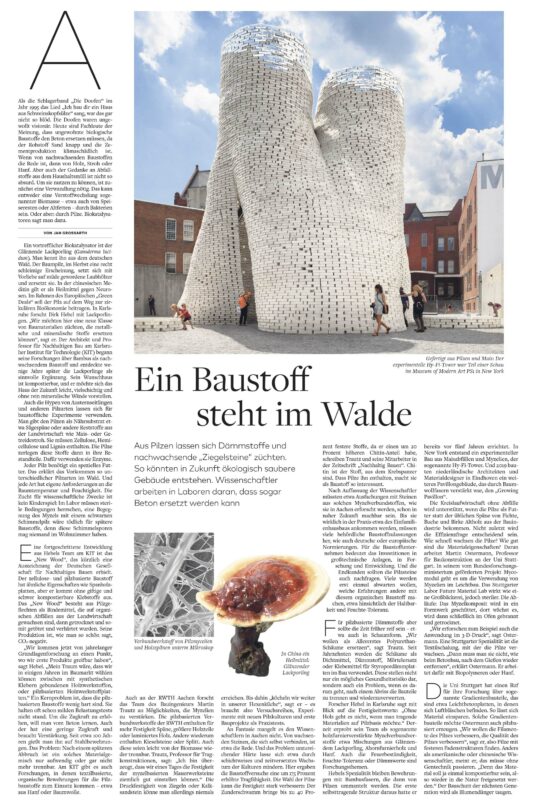
Welt am Sonntag reports about mycelium as a building material

Mushrooms can be used to grow insulations or renewable „bricks“. This could lead to ecologically clean buildings in the future.

Welt am Sonntag reports about scientists like Prof. Dirk E. Hebel working in laboratories on the possibility of replacing metals or mineral materials with harvested materials like mycelium, the root network of mushrooms.

© Welt am Sonntag


Nature Scientific Report: Mycelium-bound Biocomposite – A Sustainable Replacement for Particleboards

Mycelium-bound materials would play a significant role in mitigation of adverse climate change effect imposed by material consumption and resource scarcity. This paper, published by KIT researchers in scientific reports as part Nature publishing group, proposes dense mycelium-based composites (DMCs) as a potential green alternative to traditional particleboards.

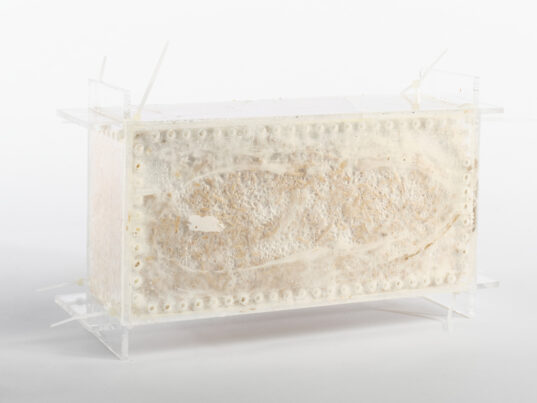
Mycelium, as the root of fungi, is composed of filamentous strands of fine hyphae that bind discrete substrate particles into a block material. With advanced processing, dense mycelium-bound composites (DMCs) resembling commercial particleboards can be formed.

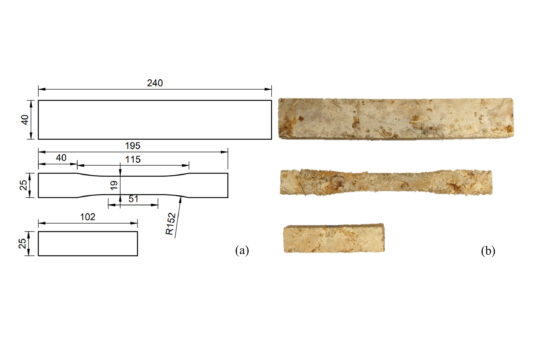
Testing specimens: a, dimensions of testing samples and b, test specimens for flexural, tensile and compression testing (from top to bottom)

In this paper the research team including Dr. Nazanin Saeidi, Dr. Alireza Javadian, and Prof. Dirk E. Hebel from the chair of Sustainable Construction at KIT, Karlsruhe, Germany in collaboration with Urban Biocycle project at FCL global and Xin Ying Chan and Prof. Manoj Gupta from NUS, Singapore have investigated the possibility of using DMCs as a green alternative to particleboards. 

A detailed investigation was carried out on the mechanical properties and performance of DMCs under the working conditions of particleboards. The DMC was made using Ganoderma lucidum mycelium grown on a substrate of sawdust and empty fruit bunch collected from the waste byproducts of Sawmills and Palm oil factories. The DMC was then subjected to weathering under tropical conditions over 35 days and tested under flexural, tensile, and compressive loading with reference to international standards. The results over the weathering period reveal that weathering reduces the strength and rigidity of the material.

However, by application of a commonly used natural oil-based coating DMC was able to withstand degradation under tropical weathering conditions. Furthermore, it was shown that some improvements to the material’s consistency could effectively increase the material strength and resistance to weathering with the help of a protective coating. Therefore, DMC could be a promising material as an environmentally friendly substitute for particleboards if such improvements in material production are made.

More information about the scientific report on nature.com.


„Urban Mining“ – Die Sendung mit der Maus

How do we want to live in the future? And how can we also be sure in the future that there will be enough raw materials to provide everything needed in daily life? Clari, Jana, Ralph and André from the „Sendung mit der Maus“ are looking into securing raw materials and urban mining.

For this purpose, they are opening a future flat-sharing community for four weeks in the Urban Mining and Recycling Unit in the NEST research building on the EMPA campus in Dübendorf, and from there they are exploring where and how the various components of the research unit were produced.

The four-part series Urban Mining from „Die Sendung mit der Maus“

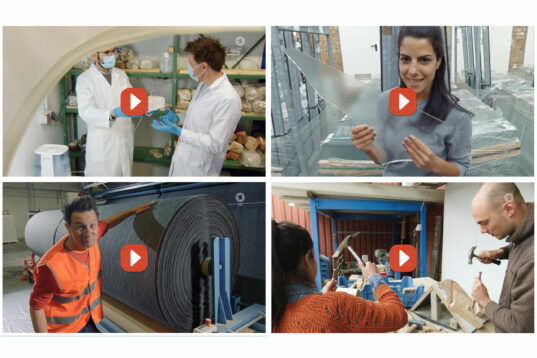
The first part is about the recycling of bricks into new masonry units. The focus is also on the MycoLab of the KIT in Karlsruhe and the production of insulating material from mycelium there. The second episode shows the viewers the production process of glass ceramics and plate material from melted plastic. The third episode deals with the production of table tops from used beverage cartons and with recyclable carpets. The fourth episode focuses on technical innovations and the deconstruction of materials from urban mining.

The four-part series „Urban Mining“ from the „Sendung mit der Maus“ conveys an understanding of the responsible use of our raw materials in a child-friendly way.


„Hello Future: Door opener day with the mouse 2021“

  • Hello Future: Door opener day with the mouse © WDR

At the „Door opener day with the mouse“, the 3 October 2021, upcoming ideas, innovative plannings, exciting projects and much more will be presented to children under the motto „Hello Future“ all over Germany. One of the numerous participatory activities will take place at the KIT in Karlsruhe.

At the MycoLab at KIT, the Professorship of Sustainable Construction at the Faculty of Architecture, Prof. Dirk Hebel, is conducting research on alternative building materials. The team is working on the conversion of organic waste into alternative, cultivated and biological building materials. This involves the use of mycelium, the route of mushrooms, which is fed with biological waste so that stable, pressure-resistant forms can subsequently be realized. 

The MycoLab has already been featured by ZDF PUR+ last year, and in the program „Sendung mit der Maus“ on its 50th anniversary a few months ago.

On the „Door opener day“ the MycoLab team aims to show the participating children how alternative sustainable resources can be regrown faster than wood without any negative impacts on our forests and biodiversity as well as our climate by utilizing the wood and agricultural waste resources and turning them into sustainable, biobased and green building materials with the power of mushrooms.

To join the event, please registrate here.


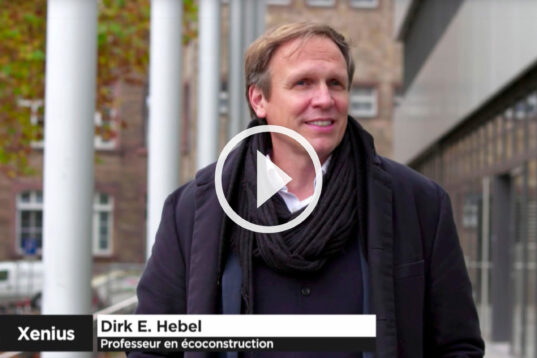
Xenius by arte: Future building materials

In a new episode of Xenius by arte, the hosts Dörthe Eickelberg and Pierre Girard set out in search of alternative building materials.

Future building materials: Mycelium, paperboard and popcorn © arte

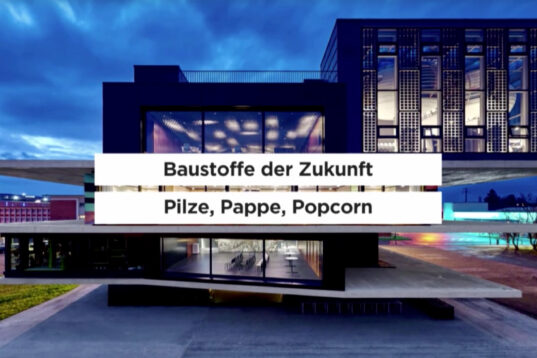
Up to now, the building industry has mainly used concrete and steel. In order to be able to build more ecologically and sustainably in the future, scientists are looking for alternative building materials. And there are some innovative ideas. Mycelium, paperboard or popcorn – nothing is impossible!

Interview with Prof. Dirk E. Hebel © arte

The hosts also interview Prof. Dirk E Hebel about his research with mycelium as an alternative, cultivated biological building material. The mycelium is simply fed with biological waste and can be shaped into stable, pressure-resistant forms. In the Urban Mining And Recycling Unit, which was created in collaboration with researchers from the ETH Zurich, many other innovative, forward-looking construction techniques are also used in exemplary applications, which allow the sorted disassembly and the later reuse of all used materials.

In this episode of Xenius, some other ideas for future building materials are presented. For example, scientists of the Technical University of Darmstadt are researching a way to build houses out of cardboard without any additional wood coatings or protective foils. In Munich, a visionary architect is growing trees into each other in such a controlled way that load-bearing structures are formed that will support bridges or even entire houses years later. Prof. Alireza Kharazipour in Göttingen aims to replace plastic materials as much as possible with the renewable raw material corn.

Watch the full episode on arte.tv here.

Further information:
http://nest-umar.net
https://www.wernersobek.de
https://changelab.exchange


UMAR and Mycelium Research in „Die Sendung mit der Maus“

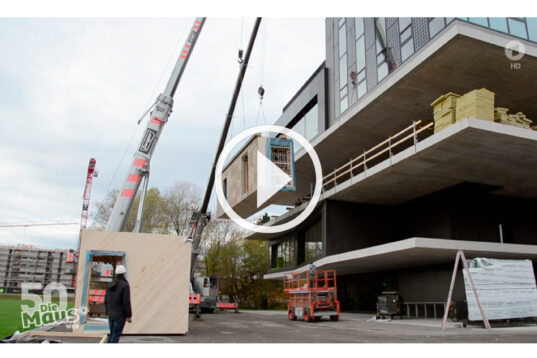
In the current 50th anniversary episode of „Die Sendung mit der Maus“, Armin Maiwald, one of the hosts, is looking for how people will live in the future. Therefore he visits the Urban Mining and Recycling Unit (UMAR) created by Werner Sobek with Dirk E. Hebel and Felix Heisel.

The UMAR Unit © WDR Die Maus

The building design demonstrates how a responsible approach to dealing with our natural resources can go hand in hand with appealing architectural form. The project is underpinned by the proposition that all the resources required to construct a building must be fully reusable, recyclable or compostable. This places life-cycle thinking at the forefront of the design: Instead of merely using and subsequently disposing of resources, they are borrowed from their technical and biological cycles for a certain amount of time before being put back into circulation once again. In that way UMAR functions simultaneously as a material laboratory and a temporary material storage.

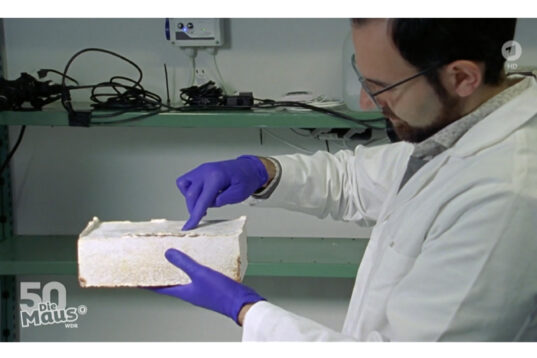
Dr. Alireza Javadian shows the material’s strength © WDR Die Maus

After having visited UMAR, Armin Maiwald also takes a look at the mycelium laboratory in the Westhochschule in Karlsruhe. Here our researcher Dr. Alireza Javadian shows the TV host of the children’s program how the mycelium grows in the laboratory, how it is shaped and how resistant it is afterwards.

Watch the full episode of „Die Maus“ on WDR here.

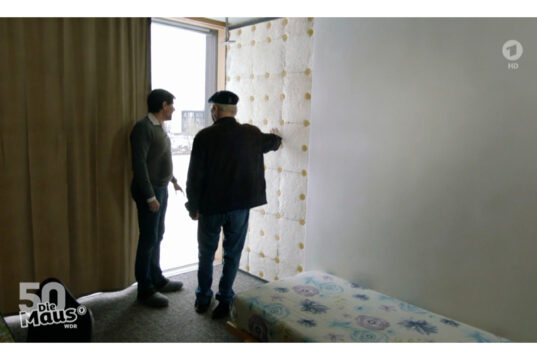
Mycelium Wall in the UMAR Unit © WDR Die Maus


The power of mushrooms

Mushrooms are given little attention – but are they the secret rulers of the world? „PUR +“ presenter Eric Mayer discovers new possibilities and also visits the KIT-MycoLab of Prof. Dirk E. Hebel and his research team around Dr. Nazanin Saeidi and Dr. Alireza Javadian to understand how a new class of building materials could be cultivated.


ZDF films at KIT MycoLab

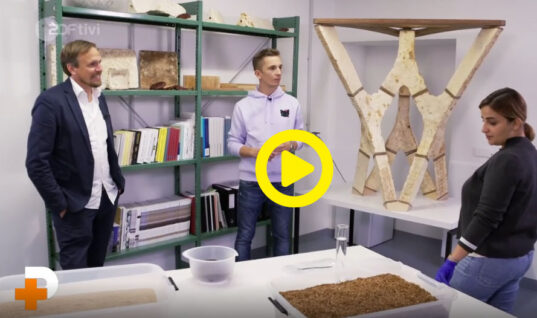
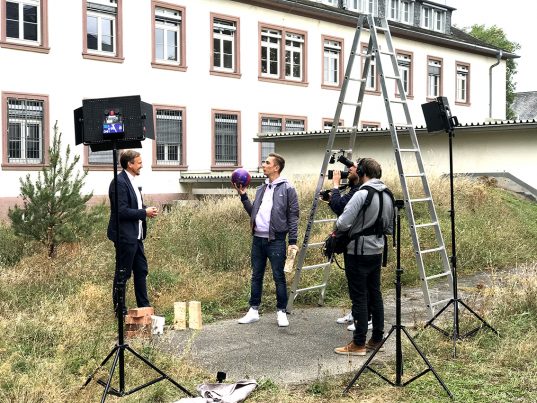
The public German TV station ZDF films at the KIT MycoLab for their format PUR+. PUR + is the discovery magazine in the children’s and youth program ZDFtivi. Each episode deals with one topic. Reports, explanations, and experiments shed light on the topic from different angles. The program focuses on the experiences and assessments of children. At KIT, Eric, the protganist of the format, explores together with the team of Prof. Dirk E. Hebel and Nazanin Saeidi the idea of using mycelium as an innovative building material of the future.


Radio interview: Architecture of mushroom and bamboo – Dirk E. Hebel talks about constructing sustainability

Marie-Dominique Wetzel, cultural correspondent from SWR2, talks with KIT professor Dirk E. Hebel about his vision of sustainable architecture as a part of the movement against climate change and the destruction of the environment. He emphasizes the importance of research on new building technologies in consideration of the fact that the earth’s resources are more and more declining. Therefore a change in awareness to the cycle-oriented and gradual use of building materials is inevitable for present and future architects.

Video on: https://www.swr.de/swr2


Dr. Nazanin Saeidi MIT Technology Review’s emerging innovator

Dr Nazanin Saedi, as of April 2020 part of the KIT research team at the Professorship of Sustainable Construction, was named one of the 20 emerging innovators in Asia Pacific by MIT Technology Review for her work on sustainable construction materials.

Dr Nazanin Saeidi is among MIT Technology Review’s ‘20 Innovators Under 35’ for the Asia Pacific region. In association with EmTech Asia 2020, the list celebrates 20 researchers, inventors, and entrepreneurs who are changing the world. As postdoctoral researcher in the Alternative Construction Materials project headed by Prof. Dirk E. Hebel at the Future Cities Laboratory in Singapore, Dr Saedi works on transforming organic waste, specifically mycellium, to create a mycelium-​bound composite material for the construction industry. She is among awardees selected from a pool of 200 exceptional candidates, including researchers, inventors, and entrepreneurs whose work include applications in agriculture, artificial intelligence, biomedicine, construction, energy, new materials, robotics, and water.

“The 20 ‘Innovators Under 35’ are a group of exceptional young scientists pursuing research that — in many cases — relates to substantial challenges facing humanity. The potential impact of their research is further increased when it becomes the foundation of one or more products that form the core of a Deep Tech startup,” said Steve Leonard, Founding CEO, SGInnovate.


Daring Growth at the 15th Venice Architecture Biennale

Daring Growth_Poster

Daring Growth_Opening

On May 28th, Dirk E. Hebel and Felix Heisel opened the exhibition Daring Growth at this year’s Venice Architecture Biennale in the presence of ETH president Lino Guzzella.

The installation calls for a radical paradigm shift in how habitats are materialized. The mining-based mentality must move towards an ethic of cultivating, recycling, recovering, breeding, raising, farming, and even growing future building materials. Decentralized, local and renewable production strategies and methods that do not deplete the planet’s resources or energy reserves must be given priority. A shift in attitude would allow developing societies to provide themselves with the building materials required for secure and dignified shelter without forcing them into economic dependencies.

Our contribution to ‘Reporting From the Front’ takes the form of a laboratory showcasing research work produced at the ETH Zürich and the Future Cities Laboratory Singapore in collaboration with partners such as MycoWorks Inc. in San Francisco and the Faculty of Civil Engineering and Geosciences at the TU Delft. The exhibition features examples of new building materials derived from mushroom mycelium, bacteria, grasses and waste. It also displays the power of an international, interdisciplinary network of researchers, academics and professionals working on commonly defined challenges.

Palazzo Mora, “Time Space Existence”
La Biennale di Venezia, 28 May – 27 November 2016

Daring Growth_Opening2

Acknowledgements
This exhibition would not have been possible without the generous and continuous support of the President of ETH Zürich, Prof. Dr Lino Guzzella, whom we would like to thank for his unrestricted encouragement, trust, and sustenance. We also would like to thank the rector of ETH Zürich Prof. Dr Sarah Springman and Vice President of research ETH Zürich Prof. Dr Detlef Günther for their reassurance and believe in our commitment and research.

We are especially indebted to Annette Spiro, Dean of Architecture at ETH Zürich, not only for her support of this exhibition, but in general creating an atmosphere of unlimited trust and backing without research and innovation would not be possible.

We deeply thank the whole team of the ETH Future Cities Laboratory in Singapore, above all Peter Edwards, Stephen Cairns, Kees Christiaanse and Remo Burkhard. Within FCL, relevant research was developed over the past years in various fields, which did not only fuel this exhibition, but scholars and professionals all around the globe and especially at the ETH in Zürich.

We are extremely grateful to Prof. Dr Gerhardt Schmitt and Prof. Dr Marc Angélil for their incredible mentorship, help, and intellectual as well as physical support. Without them, our work would not be possible.

Tobias Klauser and Carlo Lienhardt, through their incredible professionalism and critical assessment of our ideas and work, made this exhibition a project in its own. We would like to acknowledge their unrestricted dedication and support as partners, friends, and advisors.

Special acknowledgements go to ETH Global, Jürg Brunschweiler, for all of his continuous help over the past years. Thanks also to ETH Foundation, Corinna Adler, for her dedication and energy. Also to Hannes Schmid, who opened eyes and doors to new intellectual terrains and professionals. Matthias Büttiger and Markus Reinhard for their encouragement, spontaneous courtesy, and incredible generosity.

We thank GAA Foundation for the possibility to exhibit our work at the 16th Architecture Biennale in Venice. We are grateful to our partners of TU Delft, Henk Jonkers and Leon van Paassen as well as Mycoworks, Phil Ross, Sophia Wang, and Eddie Pavlu.

Special thanks to all members of our own team: Dustin Fleck, Sophie Nash, Ruben Bernegger, Manuel Fernandez, Christine Wöhner, Raphael Disler, Tobias Fuchs, Aurel von Richthofen, Alireza Javadian, Simon Lee, Philippe Müller, Marta H. Wisniewska, Patrick Chladek, Nikita Aigner, Philippe Jorisch, Amélie Fibicher, Hans Rufer.

Special thanks to Prof. Dr.Philippe Block and his team, especially Cristian Calvo Barentin for all the support and help.

Also to Uta Bogenrieder who did all graphic design works for the exhibition.

Our deepest thanks and gratitude go to all of theses individuals and organizations for their trust and the unrestricted possibilities to operate at the front of our discipline and sometimes even beyond.

Dirk E. Hebel and Felix Heisel, Zürich, May 2016

Sponsorship
Our deepest gratitude to all sponsors and supporters of this exhibition:
ETH Zürich, ETH Global
Department of Architecture, ETH Zürich
Future Cities Laboratory Singapore
Chair of Information Architecture Prof. Dr. Gerhard Schmitt, ETH Zürich
Chair of Architecture and Design Prof. Dr. Marc Angélil, ETH Zürich
Markus Reinhard, Nomis Foundation
Matthis Büttiger


Karlsruher Institut für Technologie
Fakultät für Architektur
Institut Entwerfen und Bautechnik

Professur Nachhaltiges Bauen
Englerstr. 11, Geb. 11.40, Raum 25
D-76131 Karlsruhe
 
Tel: +49 (0)721/608-42167


Recent Publications:  
 

    Interview: „We’ve already made significant progress“

    Juli 9, 2026

    Kohring, Katharina, and Dirk E. Hebel. ‘Interview: “We’ve already made significant progress”’. topos. circularity in cities (München), 2026.


    Better this way

    Juli 9, 2026
    Screenshot

    Holl, Christian. ‘Besser So’. Marlowes, 7 July 2026. https://www.marlowes.de/besser-so/.


    Interview: „We’ve already made great progress“

    Juli 9, 2026

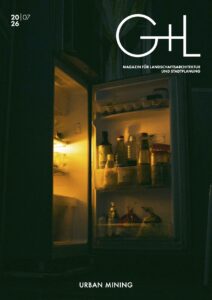
    Kohring, Katharina, and Dirk E. Hebel. ‘Interview: “Wir sind schon einen großen Schritt weiter”’. G+L – Magazin für Landschaftsarchitektur und Stadtplanung (München), 2026.


    Umbauhof – A Place for the Reuse of Building Components

    Juni 24, 2026

    Boerman, E., & Hebel, D. E. (2026). Weniger Treibhausgasemissionen durch Wiederverwendung. In Umbauhof—Ein Ort für die Wiederverwendung von Bauteilen. Birkhäuser Verlag GmbH (Architektur Raumburgenland, Asphalt / Kollektiv für Architektur).


    Sustainable Construction. How we are shaping our built environment in a sustainable way.

    Mai 7, 2026

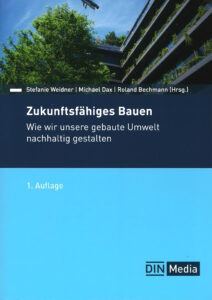
    Hebel, Dirk E., and Elena Boerman. “Projektstudie 2 (Schwerpunkt: Materialien): Der Kreislaufbasierte Architekturansatz.” In Zukunftsfähiges Bauen – Wie Wir Unsere Gebaute Umwelt Nachhaltig Gestalten, 64–78. Berlin: DIN Media Innovation, 2026.


    Circular! Foundations and principles of a circular construction industry.

    März 11, 2026

    Hebel, Dirk E., and Annette Hillebrandt, eds. 2026. Zirkulär! Fundamente und Postulate einer kreislaufbasierten Bauwirtschaft. Bauwelt Fundamente. Birkhäuser Verlag GmbH.


    A matter of consequence

    März 11, 2026

    Deutsches Architekt:innen Blatt. 2026. “Eine Frage der Konsequenz.” March.


    Circular Construction. Regenerative Building material management.

    Januar 8, 2026

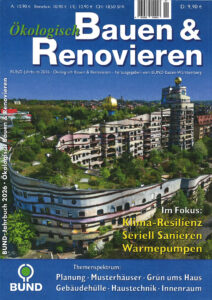
    Steiff, Peter. “Zirkuläres Bauen. Regeneratives Baustoff-Management.” BUND Jahrbuch 2026, January 2026.


    Wood as a foundation of a sustainable building culture

    Januar 8, 2026

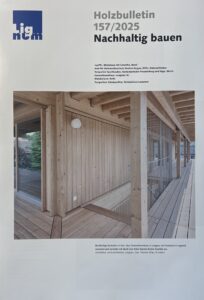
    Glanzmann, Jutta. “Holz Als Basis Für Eine Nachhaltige Baukultur.” Lignum Holzbulletin 157/2025, no. Nachhaltig bauen (2025): 4058–59.


    MycoTree

    Januar 5, 2026

    McLean, Will, Pete Silver, and Dirk Hebel. “MycoTree.” In Sustainable & Regenerative Materials for Architecture – A Source Book. 2025; Laurence King, 2025.


    Really Circular – Material Library at KIT

    Oktober 29, 2025

    Dietzold, Lutz, ed. Iconic Awards 2025 – Spaces Objects Visions. Frankfurt: Rat für Formgebung GmbH, 2025.


    Activating the Urban Mine

    Oktober 2, 2025

    Hebel, Dirk E. „Activating the Urban Mine.“ In Architecture and Technology Volume II: Cities in Climate Crisis. Madrid: Norman Foster Foundation Press, 2025.


    The city as a resource

    September 18, 2025


    Hebel, Dirk E. und Felix Heisel. “Die Stadt als Ressource.” In Für eine nachhaltige Architektur der Stadt. Berlin: Verlag Klaus Wagenbach, 2025.


    From a linear to a circular system

    September 15, 2025

    Hebel, Dirk E. “Vom Linearen Zum Kreislaufsystem.” In Architektur Und Klimawandel. München: Edition DETAIL, 2025.


    Interview: „We must finally start measuring CO2 emissions – not just how thick the insulation is“

    Juli 29, 2025

    Hebel, Dirk E. Interview: “Wir müssen endlich anfangen, den CO2-Ausstoß zu messen – nicht nur, wie dick die Dämmung ist.” Interview by Christoph Karcher. LooKIT 0225, 2025.


    WEtransFORM – On the Future of Building

    Juni 22, 2025

    BUNDESKUNSTHALLE, ed. WEtransFORM – Zur Zukunft Des Bauens. Berlin: jovis Verlag, 2025.


    Henkels Wuppertal

    Juni 4, 2025

    Renaissance AG, ed. Henkels Wuppertal – DenkWerkStadt. Wuppertal: renaissance Immobilien und Beteiligungen Aktiengesellschaft, 2025.


    Building for the world of tomorrow

    April 24, 2025

    Monkenbusch, Helmut. „Bauen für die Welt von morgen.“ Hörzu, 24.1.2025


    Funghi – underground networkers

    April 24, 2025

    Hebel, Dirk E., Tanja Hildbrandt. „ Pilze – Netzwerker im Untergrund“. alverde, dm-Magazin, April 2025.


    Fungi are versatile

    Februar 24, 2025

    Merkert-Andreas, Carolin. “Pilze Sind Vielseitig.” Wohnglück, January 2025.


    “RoofKIT – Carbon storage and Material storage”

    Januar 9, 2025

    Boerman, Elena, and Dirk E. Hebel. “RoofKIT – Kohlenstoffspeicher Und Materiallager.” Architektur.Aktuell, vol. 12.2024, no. Tradition und Innovation, Dezember 2024, pp. 98–109


    The many applications of mycelium construtction

    Dezember 8, 2024

    Grossarth, Jan. „Exkurs: Die vielen Einsatzbereiche von Myzel im Bauwesen“. In Bioökonomie und Zirkulärwirtschaft im Bauwesen, eine Einführung, 174–117. Wiesbaden: Springer Fachmedien, 2024.


    Interview: „From a Linear to a Circular System“

    November 13, 2024

    Hebel, Dirk E. Interview: “Vom linearen zum zirkulären Kreislaufsystem.” Interview by Sandra Hofmeister, DETAIL 11.2024, Nov. 2024.


    Building with renewable materials – Nature as a resource depot

    Oktober 29, 2024

    Hebel, Dirk E., Sandra Böhm, Elena Boerman, Hrsg. Vom Bauen mit erneuerbaren Materialien – Die Natur als Rohstofflager. Stuttgart: Fraunhofer IRB Verlag, 2024.


    Guest contribution: ‚Thinking, designing and operating in circular ways.‘

    Juni 27, 2024

    Hebel, Dirk E. “In Kreisläufen denken, entwerfen und wirtschaften.” MÄG – Mein Häfele Magazin, 2024.


    Interview: ‚Mycelium power for the construction industry‘

    Juni 10, 2024

    Rubel, Maike, and Patricia Leuchtenberger. Interview: “Pilzpower für die Bauindustrie.” competitionline, 7 June 2024, https://www.competitionline.com/de/news/schwerpunkt/pilzpower-fuer-die-bauindustrie-7283.html.


    ‚Future building materials: mushroom, hemp and algae‘ in neubau kompass

    Mai 27, 2024

    Müller, Janek. “Baumaterialien der Zukunft: Pilze, Hanf und Algen.” neubau kompass – Neubauprojekte in Deutschland, May 3, 2024. https://www.neubaukompass.de/premium-magazin/.


    Interview: ‚We have disposed of valuable materials‘

    Mai 7, 2024

    Sören, S. Sgries. “Interview: ‘Wir haben wertvolle Materialien weggeworfen.’” Rhein-Neckar-Zeitung, April 27, 2024, SÜDWEST I 28 edition, sec. Sinsheimer Nachrichten.


    Built on mushroom

    April 24, 2024

    Schweikle, Johannes. “Auf Pilz gebaut.” Stuttgarter Zeitung, April 23, 2024, sec. Die Reportage.


    Organic Architecture – Fungus mycelium and flax as materials for the ecological building transition

    Februar 13, 2024

    Klaaßen, Lars. “Organische Architektur – Pilzmyzel und Flachs als Materialien für die ökologische Bauwende.” In Deutsches Architektur Jahrbuch 2024, edited by Peter Cachola Schmal, Yorck Förster, and Christina Gräwe, 198–209. Berlin, Germany: DOM publishers, 2024.