Home | Impressum | Datenschutz | KIT

HDB Building Research Institute

HDB Logo_03

FCL, including the chair of Architecture and Construction, held a visit to the HDB Building Research Institute in Singapore on 22nd March 2013. Presentations, Q&A sessions and a tour through the research centre opened the floor for multiple possibilities of collaboration between the two insitutions. Main goals of HDB BRI are to introduce new technologies, and upgrade design standards and materials for the market. The visitors had an opportunity to see prototypes of new amenities, which adress safety and living standards in residential units in Singapore.


CREATE Talks – Waste and Want

CREATE Talks - Poster_photo

Public lecture by researcher Marta Wisniewska at the CREATE Talks in Singapore on 19th April 2013. CREATE Talks is a discussion platform, bringing together interdisciplinary researchers of CREATE Tower institutions, such as ETH, MIT, TUM and BERKLEY. This time the event was hosted by TU Munich and moderated by SMART, while FCL and BEARS representatives gave their talks. The ‚Waste and Want‘ presentation by Marta Wisniewska triggered a discussion of smart product design and what kind of impact it can have on the immediate surrounding as their second life cycle is activated. The talk examined exemplary refuse products as possibly one of the biggest material resource in the building industry. Some of the newest waste projects of CoreSing were also presented.


International FCL Conference organized by CoReSing:’CONCRETE – SLEEPING BEAUTY!‘

You are warmly invited to attend the international FCL conference CONCRETE – SLEEPING BEAUTY on 26 November 2012 organized by the Chair of Architecture and Construction Dirk E. Hebel at ETH Zuerich/FCL Singapore together with TEC21 and espazium Switzerland as media partners. Five projects will introduce and initiate a discussion on the state of the art of a century-long unchanged material use. Can we think of new application and production methodologies? Can concrete heal itself? Can it produce power? Can concrete be computated? Are there organic reinforcement possibilities?

Five international researchers from different backgrounds will showcase their work. They aim to change the way we think about the most used building material on the globe today. The speakers will be Francois Roche of R&Sie (France and Thailand), Matthias Kohler of Gramazio/Kohler (Switzerland), Hendrik Jonkers of TU Delft (The Netherlands), Thorsten Klooster of Task Architects (Germany) and Dirk Hebel, ETHZ/FCL (Switzerland and Singapore). The event will be moderated by Stephen Cairns, Scientific Coordinator of FCL Singapore.


Concrete Insurrection – Francois Roche

BIO: Francois Roche

New-Territories unfold their protocols through the re-staging of contemporary relationships: aesthetical, machinist, computational, organics, biological and even artificial. The group works simultaneously through the architectural practice R&Sie(n), the “new-territories” research Lab and the [eIf/bt/c] scenario studio.  François Roche leads independently architectural research labs such as the Advanced Studio at Colombia University-Gsapp in New York.

Abstract: Concrete Insurrection

I’ve heard about something that builds up only through multiple, heterogeneous and contradictory scenarios, something that rejects even the idea of a possible prediction about its form of growth or future typology.

Something shapeless grafted onto existing tissue, something that needs no vanishing point to justify itself but instead welcomes a quivering existence immersed in a real-time vibratory state, here and now.

Tangled, intertwined, it seems to be a city, or rather a fragment of a city.

Its inhabitants are immunized because they are both vectors and protectors of this complexity.

The multiplicity of its interwoven experiences and forms is matched by the apparent simplicity of its mechanisms.

The urban form no longer depends on the arbitrary decisions or control over its emergence exercised by a few, but rather the ensemble of its individual contingencies. It simultaneously subsumes premises, consequences and the ensemble of induced perturbations, in a ceaseless interaction. Its laws are consubstantial with the place itself, with no work of memory.


Computated Concrete – Matthias Kohler

BIO: Prof. Matthias Kohler

Matthias Kohler is an architect with interests ranging from computational design and robotic fabrication to material innovation. In 2000, he founded the architecture practice Gramazio & Kohler with his partner Fabio Gramazio. Founding also the world’s first architectural robotic laboratory at the ETH Zurich, his academic research concentrates on a multi-disciplinary practice between computational design, robotic fabrication and material innovation.

Abstract: Computated Concrete

At the disposal of architecture in the age of computation is an evolving array of interoperable tools and processes that allow the fabrication of design propositions to be increasingly complex and adaptive. With this approach, non-standard constructive practices become an essential part where concrete is one of the most favored and used materials since almost any shape can be achieved. However, few solutions exist providing the efficient and waste-free production of concrete structures with complex geometries. This lecture presents recent research and attempts to address new potentials for non-standard concrete construction, which in conjunction with robotic fabrication allows for interweaving dynamic properties of the material with design and digital fabrication at full scale.


Healing Concrete – Hendrik Jonkers

BIO: Hendrik Jonkers

Hendrik Marius Jonkers is currently a teaching scientist at Delft University of Technology, Faculty of Civil Engineering and Geosciences at the Department of Materials & Environment, The Netherlands. Prior to that, he worked as a research scientist at the Max-Planck-Institute for Marine Microbiology, Germany, as well as the University of Groningen, Department of Paleontology and the Netherlands Organization for Applied Scientific Research (MT-TNO).

Abstract: Healing Concrete

In this research project the suitability of very specific but otherwise harmless bacteria are tested for their ability to repair cracks and thus significantly improve the durability of concrete structures. Such a bacterial repair mechanism would be beneficial for the economy and the environment at the same time, as concrete is worldwide the most applied building material. This new type of ‚bio-concrete‘ would make costly manual repair unnecessary and would minimize the use of raw materials, as structures will last much longer.

In nature a huge number of different varieties of bacteria occur and some of these are likely well adapted to artificial man-made environments such as concrete. From a human perspective concrete may seem an extreme environment as the material is dry and rock-solid. However, this does not apply to a specialized group of bacteria, the ‚extremophiles‘, named after their habit to love extreme conditions. Some of these bacterial species are not only known to love extremely dry conditions, but also to be able to produce copious amounts of limestone. This calcium carbonate-based material, as well as other types of bio-minerals produced by bacteria, could serve to seal or heal cracks in concrete. The major goal of this research project therefore is to find the right bacteria which can, when integrated in concrete, actively repair a structure during its 50-100 years service life. This newly developed self-healing bio-concrete is expected to result in significantly reduced production-, repair-, and maintenance costs. Furthermore, this bacteria-based concrete will be much more environmental friendly as traditional concrete, as less material is needed due to the extended service life of its structures. Nowadays the production of cement, the most important ingredient of concrete, contributes for 5-10% to the world’s atmospheric CO2 emission, and as less material is needed, a wide application of bio-concrete based structures is expected to significantly lower atmospheric CO2 emissions.


Electrifying Concrete – Thorsten Klooster

BIO: Thorsten Klooster

Thorsten Klooster is a Berlin based architect and the editor of the book SMART SURFACES AND THEIR APPLICATION IN ARCHITECTURE AND DESIGN. He is a former member of the Technical Science Research Group at the Fraunhofer Institute (IPK) in Berlin and a teacher for architectural design and construction at the Brandenburg University of Technology. In 2007 he founded the architectural studio TASK in Berlin.

Abstract: Electrifying Concrete

„Electrifying concrete“ talks about the development of a new concrete called DiysCrete that is able to generate electricity out of solar energy. DiysCrete is based on the technical principles of dye-sensitized solar cells (DSSC or DYSC), using the generating means of electrochemical reactions of organic dyes absorbing sunlight. It can be produced without toxic emissions from freely available components. DiysCrete can be seen as a possible way of approaching new materialities for the design process. Starting from the BlingCrete project on a light reflecting concrete, that began as a series of experiments with light-reflecting materials and the phenomenon of retroreflection, further novel materials derived, like the solar active DiysCrete and the conductive and responsive Magnetically Patterned Concrete. At large these are attempts for high tech low budget materials, trying to create novel ambiguous polymorphic substances that could be regarded as new manifestations of concrete.


Bamboofying Concrete – Dirk E. Hebel

BIO: Asst. Prof. Dirk Hebel

Dirk Hebel is holding the position of Assistant Professor of Architecture and Construction at the Future Cities Laboratory in Singapore / ETH Zurich. Prior to that, he was the founding Scientific Director of the Ethiopian Institute of Architecture, Building Construction and City Development in Addis Ababa, Ethiopia. His research concentrates on alternative building materials and construction techniques and their application in developing territories.

Abstract: Bamboofying Concrete

Bamboo has been used as a construction material for centuries around the globe. The benefits of using bamboo are enormous: its fast growth, high tensile strength, and the capacity to capture large amounts of carbon dioxide from the atmosphere are just some of the most remarkable properties it has to offer. For decades, researchers around the world have searched for methods to activate those benefits for use within the building sector and transform bamboo from a locally applied organic material into an industrialized product. However, water absorption, swelling and shrinking behavior, durability, fungi attacks as well as chemical decomposition of bamboo have limited most of the applications so far. This research demonstrates that new bamboo composite materials, developed with Woven Strand Bamboo (WSB) technology, have the possibility to overcome most of these limitations and open new application fields within the building sector, especially in the concrete industry. The research conducted under the Professorship of Dirk E. Hebel at the Future Cities Laboratory in Singapore entails investigating the potential to replace steel reinforcements in structural concrete applications.


How to get there?

INTERNATIONAL FCL CONFERENCE CONCRETE SLEEPING BEAUTY
AUDITORIUM 2nd FLOOR – CREATE TOWER

Future Cities Laboratory FCL
Singapore ETH Centre SEC
01 CREATE Way / University Town
#06-01 CREATE TOWER
Singapore 138602


Successful EiABC/ETH/FCL/Bauhaus University Workshop in Addis Ababa on Straw Panel Technology

Addis Ababa/Singapore/Zuerich April 2012

The EiABC together with the Bauhaus University Weimar and the Chair of Architecture and Construction at FCL Singapore completed successfully the first construction of a double storey dwelling unit out of straw panels world wide. The so-called Sustainable Emerging City Unit (SECU) workshop arose immense interest from nation wide media and the Ministry of Urban Development and Construction. During the workshop, State Minister Heilemeskel Tefera announced to support the project to make the technology available for mass housing projects in Ethiopia. In near future, building codes need to be established, further research has to be conducted and production facilities need to be erected. The Chair of Architecture and Construction at FCL Singapore commited itself to be a strong partner of EiABC in the years to come to achieve these goals. We want to thank all partners for their immense energy and work, especially to all students who attended the workshop from EiABC, Bauhaus University Weimar and ETH Zuerich.

EiABC: Prof. Dr. Dirk Donath, Helawi Sewnet, Belay Getachew, Denamo Addissie, Ingo Oexmann, Jakob Mettler, Peter Dissel, Karsten Schlesier, Sami Tsegu, Fahmi Girma, Melakeselam Moges, Nejmia Ali, Mintesinot Tekle, Samrawit Tazezew, Henok Teshome, Habtamu Regassa, Aknaw Yohannes, Seyume Weldeyesuse, Estifanos Kiflu, Mohammed Jemal, Seife Abdulsemed, Nejat Hassen, Peniel Tekle, Regbe Hagos, Fruta Haddish, Samia Ibrahim

Bauhaus University Weimar: Prof. Dr. Bernd Rudolf, Stephan Schuetz, Timo Riechert, Michael Baer, Carolina Kolodziej, Nadine Wolz, Tereza Spindlerová, Paul Eikemeier, Mona Volkmann, Amelie Wegner, Johannes Martin, Victoria Goldmann, Anna Rodermund, Sebastian Linder

FCL/ETHZ: Asst. Prof. Dirk E. Hebel, Marta Wisniewska, Felix Heisel, Martin Kugelmeier, Sarah Sassi, Tanja Studer, Christian Schwizer and Nike Himmels

Special thanks: Chair of Building Construction EiABC Prof. Dirk Donath, BAM – Federal Material Testing Institute Berlin, AAiT, ICEAddis, D-Arch BUWeimar, D-Arch ETH Zuerich, ETH Sustainability, ETH Global, FCL Singapore, Chair of Information Architecture ETHZ Prof. Gerhard Schmitt, Strawtec Group AG Berlin Eckhardt Dauck and Dirk Niehaus, Frank Wildenhayn, Dr. Karola Hahn, Joachim Dieter, Fasil Giorghis, Prof. Elias Yitbarek, Bisrat Kifle, Teddy Kifle, Binyam Kifle, Prof. Dirk Donath and his energetic and highly motivated EiABC team

see also www.eiabc.edu.et/secu-project


National Media, Prof. Dirk E. Hebel, State Minister Hailemeskel Tefera, Prof. Dirk Donath, advisors to the State Minister

Photo credits: Marta Wisniewska.


ETH/FCL/EiABC/Bauhaus University conduct Workshop in Addis Ababa on Straw Panel Technology

Addis Ababa/Singapore/Zuerich April 2012

In collaboration with the Ethiopian Institute of Architecture, Building Construction and City Development (EiABC) and the Bauhaus University in Weimar, the Assistant Professorship of Architecture and Construction Dirk Hebel at the Future Cities Laboratory Singapore, ETHZ is conducting a one-week workshop to construct a full-scale double-story building out of straw panels in Addis Ababa, Ethiopia.
Five students of the Department of Architecture of ETH Zürich were offered the opportunity to join this international workshop, which concentrates on testing a building material, produced completely out of straw. New settlements are emerging in developing territories like Ethiopia almost every day, growing fast into urban conglomerates. One of the biggest problems in emerging cities is next to infrastructure measurements, available and affordable building materials and techniques for shelter production. The SECU (Sustainable Emerging Cities Unit) research project is focusing on the development of innovative and low-weight construction materials for emerging cities in developing territories, based on agricultural “waste” products like straw.
The company STRAWTEC© in Berlin developed over the last years a production system for pressed straw panels. Through heat, the natural starch in the straw is activated and functions as natural glue without any other chemical additions. So far, the panels are only used as non-bearing structural elements. The workshop will investigate possibilities to further develop the product and test construction methods for load bearing applications.


Karlsruher Institut für Technologie
Fakultät für Architektur
Institut Entwerfen und Bautechnik

Professur Nachhaltiges Bauen
Englerstr. 11, Geb. 11.40, Raum 25
D-76131 Karlsruhe
 
Tel: +49 (0)721/608-42167


Recent Publications:  
 

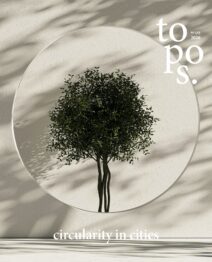
    Interview: „We’ve already made significant progress“

    Juli 9, 2026

    Kohring, Katharina, and Dirk E. Hebel. ‘Interview: “We’ve already made significant progress”’. topos. circularity in cities (München), 2026.


    Better this way

    Juli 9, 2026
    Screenshot

    Holl, Christian. ‘Besser So’. Marlowes, 7 July 2026. https://www.marlowes.de/besser-so/.


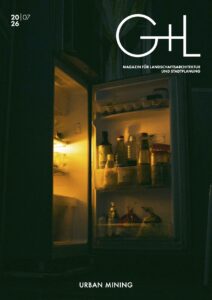
    Interview: „We’ve already made great progress“

    Juli 9, 2026

    Kohring, Katharina, and Dirk E. Hebel. ‘Interview: “Wir sind schon einen großen Schritt weiter”’. G+L – Magazin für Landschaftsarchitektur und Stadtplanung (München), 2026.


    Umbauhof – A Place for the Reuse of Building Components

    Juni 24, 2026

    Boerman, E., & Hebel, D. E. (2026). Weniger Treibhausgasemissionen durch Wiederverwendung. In Umbauhof—Ein Ort für die Wiederverwendung von Bauteilen. Birkhäuser Verlag GmbH (Architektur Raumburgenland, Asphalt / Kollektiv für Architektur).


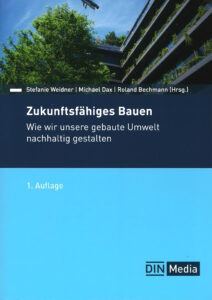
    Sustainable Construction. How we are shaping our built environment in a sustainable way.

    Mai 7, 2026

    Hebel, Dirk E., and Elena Boerman. “Projektstudie 2 (Schwerpunkt: Materialien): Der Kreislaufbasierte Architekturansatz.” In Zukunftsfähiges Bauen – Wie Wir Unsere Gebaute Umwelt Nachhaltig Gestalten, 64–78. Berlin: DIN Media Innovation, 2026.


    Circular! Foundations and principles of a circular construction industry.

    März 11, 2026

    Hebel, Dirk E., and Annette Hillebrandt, eds. 2026. Zirkulär! Fundamente und Postulate einer kreislaufbasierten Bauwirtschaft. Bauwelt Fundamente. Birkhäuser Verlag GmbH.


    A matter of consequence

    März 11, 2026

    Deutsches Architekt:innen Blatt. 2026. “Eine Frage der Konsequenz.” March.


    Circular Construction. Regenerative Building material management.

    Januar 8, 2026

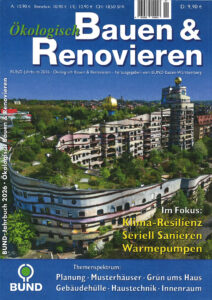
    Steiff, Peter. “Zirkuläres Bauen. Regeneratives Baustoff-Management.” BUND Jahrbuch 2026, January 2026.


    Wood as a foundation of a sustainable building culture

    Januar 8, 2026

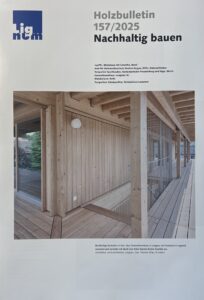
    Glanzmann, Jutta. “Holz Als Basis Für Eine Nachhaltige Baukultur.” Lignum Holzbulletin 157/2025, no. Nachhaltig bauen (2025): 4058–59.


    MycoTree

    Januar 5, 2026

    McLean, Will, Pete Silver, and Dirk Hebel. “MycoTree.” In Sustainable & Regenerative Materials for Architecture – A Source Book. 2025; Laurence King, 2025.


    Really Circular – Material Library at KIT

    Oktober 29, 2025

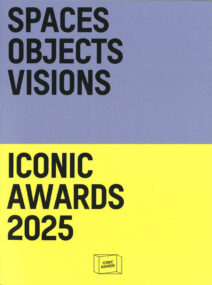
    Dietzold, Lutz, ed. Iconic Awards 2025 – Spaces Objects Visions. Frankfurt: Rat für Formgebung GmbH, 2025.


    Activating the Urban Mine

    Oktober 2, 2025

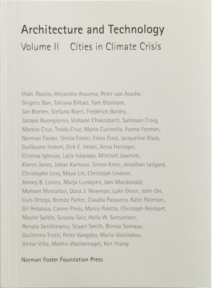
    Hebel, Dirk E. „Activating the Urban Mine.“ In Architecture and Technology Volume II: Cities in Climate Crisis. Madrid: Norman Foster Foundation Press, 2025.


    The city as a resource

    September 18, 2025


    Hebel, Dirk E. und Felix Heisel. “Die Stadt als Ressource.” In Für eine nachhaltige Architektur der Stadt. Berlin: Verlag Klaus Wagenbach, 2025.


    From a linear to a circular system

    September 15, 2025

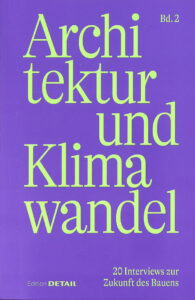
    Hebel, Dirk E. “Vom Linearen Zum Kreislaufsystem.” In Architektur Und Klimawandel. München: Edition DETAIL, 2025.


    Interview: „We must finally start measuring CO2 emissions – not just how thick the insulation is“

    Juli 29, 2025

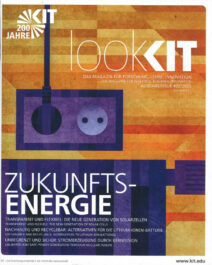
    Hebel, Dirk E. Interview: “Wir müssen endlich anfangen, den CO2-Ausstoß zu messen – nicht nur, wie dick die Dämmung ist.” Interview by Christoph Karcher. LooKIT 0225, 2025.


    WEtransFORM – On the Future of Building

    Juni 22, 2025

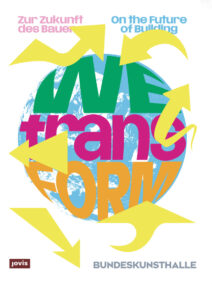
    BUNDESKUNSTHALLE, ed. WEtransFORM – Zur Zukunft Des Bauens. Berlin: jovis Verlag, 2025.


    Henkels Wuppertal

    Juni 4, 2025

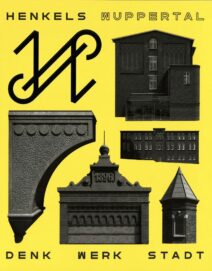
    Renaissance AG, ed. Henkels Wuppertal – DenkWerkStadt. Wuppertal: renaissance Immobilien und Beteiligungen Aktiengesellschaft, 2025.


    Building for the world of tomorrow

    April 24, 2025

    Monkenbusch, Helmut. „Bauen für die Welt von morgen.“ Hörzu, 24.1.2025


    Funghi – underground networkers

    April 24, 2025

    Hebel, Dirk E., Tanja Hildbrandt. „ Pilze – Netzwerker im Untergrund“. alverde, dm-Magazin, April 2025.


    Fungi are versatile

    Februar 24, 2025

    Merkert-Andreas, Carolin. “Pilze Sind Vielseitig.” Wohnglück, January 2025.


    “RoofKIT – Carbon storage and Material storage”

    Januar 9, 2025

    Boerman, Elena, and Dirk E. Hebel. “RoofKIT – Kohlenstoffspeicher Und Materiallager.” Architektur.Aktuell, vol. 12.2024, no. Tradition und Innovation, Dezember 2024, pp. 98–109


    The many applications of mycelium construtction

    Dezember 8, 2024

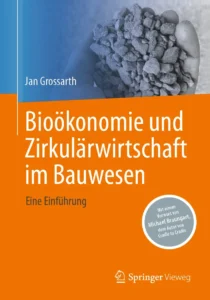
    Grossarth, Jan. „Exkurs: Die vielen Einsatzbereiche von Myzel im Bauwesen“. In Bioökonomie und Zirkulärwirtschaft im Bauwesen, eine Einführung, 174–117. Wiesbaden: Springer Fachmedien, 2024.


    Interview: „From a Linear to a Circular System“

    November 13, 2024

    Hebel, Dirk E. Interview: “Vom linearen zum zirkulären Kreislaufsystem.” Interview by Sandra Hofmeister, DETAIL 11.2024, Nov. 2024.


    Building with renewable materials – Nature as a resource depot

    Oktober 29, 2024

    Hebel, Dirk E., Sandra Böhm, Elena Boerman, Hrsg. Vom Bauen mit erneuerbaren Materialien – Die Natur als Rohstofflager. Stuttgart: Fraunhofer IRB Verlag, 2024.


    Guest contribution: ‚Thinking, designing and operating in circular ways.‘

    Juni 27, 2024

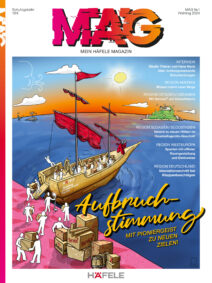
    Hebel, Dirk E. “In Kreisläufen denken, entwerfen und wirtschaften.” MÄG – Mein Häfele Magazin, 2024.


    Interview: ‚Mycelium power for the construction industry‘

    Juni 10, 2024

    Rubel, Maike, and Patricia Leuchtenberger. Interview: “Pilzpower für die Bauindustrie.” competitionline, 7 June 2024, https://www.competitionline.com/de/news/schwerpunkt/pilzpower-fuer-die-bauindustrie-7283.html.


    ‚Future building materials: mushroom, hemp and algae‘ in neubau kompass

    Mai 27, 2024

    Müller, Janek. “Baumaterialien der Zukunft: Pilze, Hanf und Algen.” neubau kompass – Neubauprojekte in Deutschland, May 3, 2024. https://www.neubaukompass.de/premium-magazin/.


    Interview: ‚We have disposed of valuable materials‘

    Mai 7, 2024

    Sören, S. Sgries. “Interview: ‘Wir haben wertvolle Materialien weggeworfen.’” Rhein-Neckar-Zeitung, April 27, 2024, SÜDWEST I 28 edition, sec. Sinsheimer Nachrichten.


    Built on mushroom

    April 24, 2024

    Schweikle, Johannes. “Auf Pilz gebaut.” Stuttgarter Zeitung, April 23, 2024, sec. Die Reportage.


    Organic Architecture – Fungus mycelium and flax as materials for the ecological building transition

    Februar 13, 2024

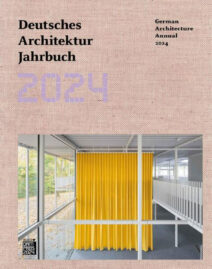
    Klaaßen, Lars. “Organische Architektur – Pilzmyzel und Flachs als Materialien für die ökologische Bauwende.” In Deutsches Architektur Jahrbuch 2024, edited by Peter Cachola Schmal, Yorck Förster, and Christina Gräwe, 198–209. Berlin, Germany: DOM publishers, 2024.