Home | Impressum | Datenschutz | KIT

MycoTree in Dezeen’s top 10 list of unusual materials

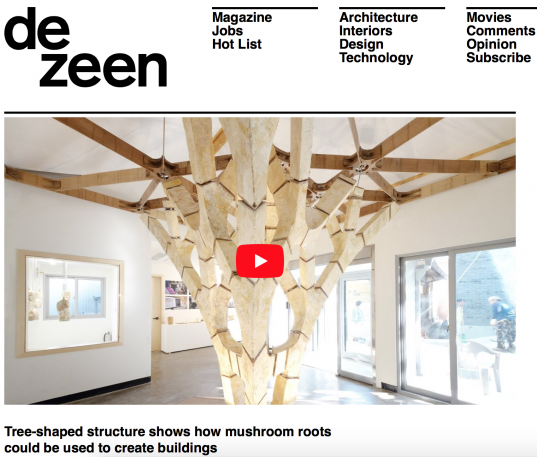
In 2017, a number of designers explored the structural properties of new, environmentally friendly materials – but mushroom mycelium was one of the most unusual. It was used to create a tree-shaped self-supporting structure in South Korea.


Detail RESEARCH: Baustoffe kultivieren – Pilzmyzelium als Werkstoff

On 01. November, Detail RESEARCH featured MycoTree on their website. The article in German describes the aim of the Chair of Sustainable Construction, as well as the Block Research Group to find ways to extend the palette of building materials beyond the conventional choices towards more sustainable and renewable options. The next print edition of Detail will further discuss the exhibition ‚Beyond Mining – Urban Growth‘ at the Seoul Biennale of Architecture and Urbanism. You can read the full article here.


Stuttgarter Zeitung reports on MycoTree

On 6th October, daily newspaper Stuttgarter Zeitung published a report on MycoTree in Seoul, as well as the research work of Sustainable Construction of KIT Karlsruhe and the Block Research Group of ETH Zürich. The complete article (in German) can be found here.


World-Architects reports on MycoTree

Read the full article here.


MycoTree in Badische Neueste Nachrichten


On September 19th, also Karlsruhe’s newspaper ‚Badische Neueste Nachrichten‘ reports on the MycoTree in Korea.


Dezeen reports on the opening of MycoTree at Seoul Biennale

„While some architects have been experimenting with mushroom mycelium as a cladding material, architect Dirk Hebel and engineer Philippe Block have gone one step further – by using fungi to build self-supporting structures.

Hebel, who leads the Sustainable Construction unit at Karlsruhe Institute of Technology, and Block, who founded the Block Research Group at ETH Zürich, have created a tree-shaped structure consisting almost entirely of mycelium.

According to the duo, the material – which is formed from the root network of mushrooms – could provide the structure of a two-storey building, if it is designed with the right geometries.“

Read the complete article here.


Süddeutsche Zeitung – The world is running out of sand

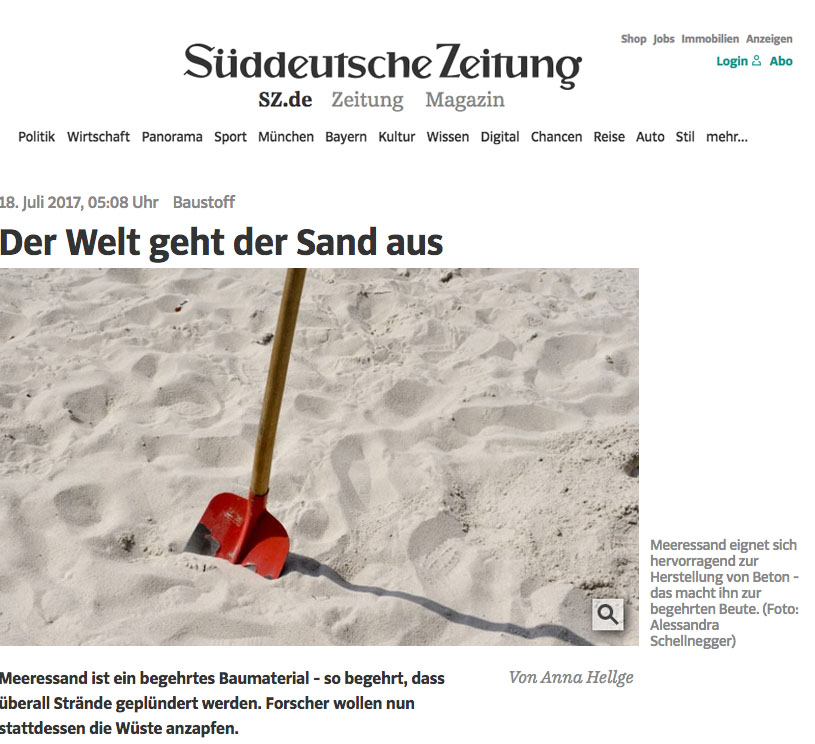
On 18 July 2017, Süddeutsche Zeitung reports on the resource sand for the building industry, with an interview by Prof. Dirk E. Hebel. „Dirk Hebel von der Universität Karlsruhe zweifelt trotzdem an der Nachhaltigkeit von Wüstensand und seinem Nutzen als alternativem Baustoff. ‚Die Idee klingt erst einmal gut‘, sagt er, ‚aber auch Wüstensand ist erschöpflich. Die Wüste hat genauso ein Ökosystem wie Meere oder Flüsse, das dann zerstört wird. So würden wir ein Problem mit einem nächsten ersetzen.'“ The full text (in German) can be found here.


Urban Mining & Recycling at conference „Kreislaufgerechtes Bauen“

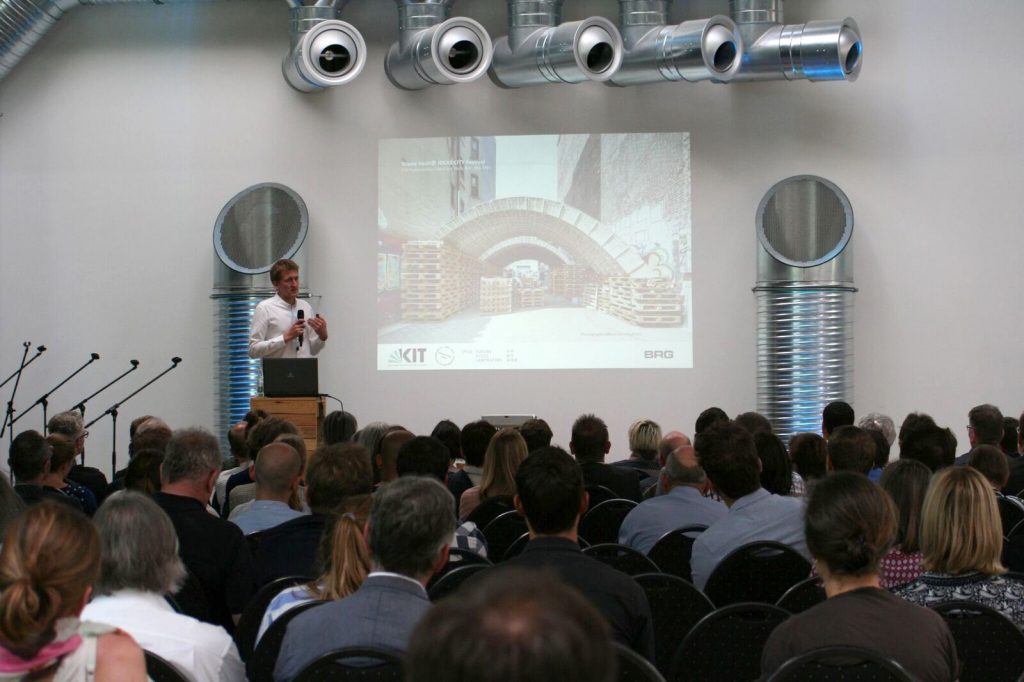
On 07.07.2017, Felix Heisel held a public lecture at the conference „Kreislaufgerechtes Bauen“ in Aachen, speaking about the NEST Module UMAR (Urban Mining and Recycling), which is currently under construction in Switzerland. The German magazine Recycling reported on the event with the words: „Felix Heisel vom Fachgebiet Nachhaltiges Bauen des Karlsruher Institut für Technologie forderte Architekten zum Umdenken in der Planung auf. Ein mit dem Architekturbüro Werner Sobek in der Schweiz geplantes Gebäude sei im Bau und zeige neue Möglichkeiten: Alle Bauteile sind hier dekonstruierbar und sortenrein trennbar, um eine Wiederverwendung von Materialien sicher zu stellen. Nur so können Gebäude in der Zukunft als Materiallager dienen.“

Read the complete text (in German) here.


Venice Biennale: Dirk Hebel on Cultivating Materials at world-architects.com

world-architect

The first installment in an interview series that explores the philosophical concerns of architects exhibiting at „TIME – SPACE – EXISTENCE,“ a collateral event at the 2016 Venice Architecture Biennale, features Dirk Hebel of ETH Zürich.

World-Architects first became aware of the materials research that Hebel and his ETH colleagues having been undertaking when we visited a pavilion he designed for the IDEAS CITY Festival in New York City last year. Made from shredded beverage cartons pressed into wallboards, the striking pavilion featured arched structures resting on wood pallets. That project is visible in this four-minute interview with Hebel, who discusses the broader goals of his research, including the need to grow and cultivate materials rather than mining them. More information here.


a+u publishes `Building from Waste` in Japanese

a+uThe publication Building from Waste (Hebel/Wisniewska/Heisel; Birkhäuser, 2014) will be published by a+u in Japanese. The book provides a conceptual and practical look into materials and products which use waste as a renewable resource for architectural, interior, and industrial design. The inventory ranges from marketed products to advanced research and development, organized along the manufacturing processes: densified, reconfigured, transformed, designed and cultivated materials. ”Reduce, Reuse, Recycle, and Recover“ is the sustainable guideline that has replaced the ”Take, Make, Waste“ attitude of the industrial age. Based on their background at the ETH Zurich and the Future Cities Laboratory in Singapore, the authors provide both a conceptual and practical look into materials and products which use waste as a renewable resource. More information here.


SUDU publication

SUDU cover

On December 01, 2015, Ruby Press Berlin publishes SUDU, Research and Manual, edited by Dirk E. Hebel, Melakeselam Moges and Zara Gray.  SUDU—the Sustainable Urban Dwelling Unit—is a full-scale prototype for an affordable, two-story house built with local materials and traditional building techniques in Ethiopia’s capital, Addis Ababa. Developed in a collaborative endeavor between the Ethiopian Institute of Architecture, Building Construction and City Development and ETH Zurich, SUDU ties in with the rich tradition of loam construction while at the same time taking a fresh look at how to adapt this tradition to contemporary needs.

Recapitulating SUDU’s idiosyncratic construction process in two lavishly illustrated volumes, this publication details the building techniques employed, such as rammed earth, mud bricks, and timbrel vaulting. The first volume additionally explores the history of Ethiopian architecture, the postcolonial nature of its current construction industry, and the challenges of the country’s rapid urbanization. The second volume, a manual with more than 600 detailed drawings and instructions, demonstrates how to build a house, step-by-step, with the most readily available building material—earth.


CNN: FCL Singapore developes ideas to steal from

CNNgross

Future Cities: Singapore focuses on the exceptionally forward-looking urban approach of the island nation to learn about the challenges of planning for future generations.

(CNN) Singapore is small, hot and heavily populated — the 5.5 million residents of the tropical city-state live in less than 750 square kilometres of land. And population is expected to reach 6.9 million by 2030. Despite these challenges, Singapore continues to be amongst the most liveable and economically successful cities in the word, with a GDP equaling that of leading European countries. With more than 50% of the world’s population living in cities already (a figure projected to reach 70% by 2050), Singapore — where everyone is a city dweller — is setting trends for rapidly urbanizing countries worldwide. …

With high-density living comes high-density waste. But Singapore has been organized with its refuse management systems, not only by collecting it efficiently but even employing it to make more land. „They don’t have the space to store waste,“ says Dirk Hebel, from the Future Cities Laboratory at the Singapore-ETH Centre for Global Environmental Sustainability. …

Due to its close proximity to the equator, Singapore’s climate is hot and humid, with temperatures averaging above 30 degrees Celsius and little variation throughout the year. The built-up nature of the city increases temperatures further through the ‚heat island‘ effect — caused by buildings blocking air flow, transport emissions and long-wave radiation heating up the island nation. As a result, a lot of the city’s energy expenditure goes towards cooling people down. „Up to 60% of Singapore’s electricity is for buildings,“ says Arno Schlüter, Professor of Architecture and building systems, also with the Future Cities Laboratory. Most buildings use electricity to cool-down and dehumidify public and work spaces. „Singapore is a noisy city due to all the [cooling] units on the wall,“ says Schlüter.


ETH Zurich Pavilion at the IDEAS CITY Festival in New York

Interiour2

Commissioned by ETH Global, the Assistant Professorship of Architecture and Construction Dirk E. Hebel and the Professorship of Architecture and Structure Philippe Block will be building a pavilion at New York City’s First Street Garden as part of the New Museum’s IDEAS CITY festival, May 28 – 30th, 2015.

Using waste products as construction material, the structure aims to redefine our perception of refuse, acknowledging its capacity as a substance from which to construct new cities. Waste was seen for centuries as something specific which neither belonged to the family of natural resources nor to the one of finished products. Waste was a by-product, an (ideally) invisible part in the making and existing of our cities.

But waste could also be understood as an integral part of what we define as a resource. This metabolic thinking understands our built environment as an interim stage of material storage. The ETH Pavilion will be an example of this approach using a common waste product: beverage cartons as its construction material. The expressive pavilion is designed to allow the use of a non-standard, weak material in construction.To keep the stresses in the material low, the shape follows the flow of forces, resulting in a vaulted structure in compression. Thanks to its overall double curvature and the triangular sections of the arches, which give the structure a deeper section for the same thickness and weight, the shell is stable and safe.

Underneath and within this structure, ETH Global will curate a program following the theme of the pavilion. The exhibition ‘Building from Waste’ displays over 25 construction materials derived from waste, activating resources within our cities that have remained invisible until now. A covered area for about 30-40 people will provide space for invited guests from ETH Zurich and its partners to organize lectures and seminars for the general public. A bar will offer a variety of catering services throughout the duration of the festival.

Download detailed description of the ETH Zurich Pavilion (PDF, 4.5 MB).


Bambus statt Beton

201105_green_school-17-label

Bislang sind Häuser und Brücken aus Bambus Einzelfälle. Forscher von der ETH Zürich wollen jetzt aus dem Süßgrasgewächs einen ökologischen und günstigen Massenbaustoff für die Städte von morgen entwickeln. Ein Beitrag von Oliver Ristau im Technology Review Magazin für Innovation. (article in German only)


Wundermaterial mit Langzeitfolgen

92011721

270.000 tons of plastic waste particles are floating in our oceans. Asst. Prof. Dirk E. Hebel is writing on garbage swirls and plastic materials in the ETH Zukunftsblog (article in German only). Click here to read the article.


The Bamboo-Alchemist in Swiss Newspaper Tagesanzeiger

Bildschirmfoto 2015-01-15 um 11.51.09

Swiss daily newspaper Tagesanzeiger recently published a report in the research activities of the Assistant Professorship Dirk E. Hebel at the ETH Zürich and the FCL Singapore. You can read the full article here in German.


Building from Waste selected as „Book of the month“

Building_from_Waste_Banner_EN

Dirk E. Hebel  / Marta H. Wisniewska / Felix Heisel
Building from Waste
Recovered Materials in Architecture and Construction

The book provides a conceptual and practical look into materials and products which use waste as a renewable resource for architectural, interior, and industrial design. The inventory ranges from marketed products to advanced research and development, organized along the manufacturing processes: densified, reconfigured, transformed, designed and cultivated materials. A product directory presents all materials and projects according to their functional uses.

Take a look inside the book here.


Neue Zürcher Zeitung reports on Bamboo Composite Material research

NZZ Bambus statt stahl

‚Bambus statt Stahl‘ (Bamboo instead of Steel) has been published in Switzerland’s leading daily newspaper ‚Neue Zürcher Zeitung‘ on Sunday 27th July. The article offers an overview on the recent developments of the Assistant Professorship Dirk E. Hebel in its bamboo composite material research and led to a wide public interest in Switzerland and Europe. The full article can be accessed here.


UN Habitat – Urban Gateway on bamboo research

unhabitat_bamboo

Very few developing countries have the resources to produce their own steel, and without this material tall buildings and urban development are all but impossible. But what if there were a local, renewable material that could be used instead of steel in reinforced-concrete buildings? And what if that substitute could be manufactured easily? These questions have motivated Dirk Hebel, an assistant professor of architecture and construction at the Future Cities Laboratory, in Singapore, to investigate a bamboo fiber composite as a possible substitute for steel reinforcement in concrete. The Future Cities Laboratory is a research arm of ETH (Eidgenössische Technische Hochschule) Zürich, in Switzerland, and is the first program under the newly formed Singapore-ETH Centre for Global Environmental Sustainability, which conducts multidisciplinary research to foster urbanization that conforms to the principles of sustainable development. If the tests on the bamboo composite are successful, developing countries will be able to manufacture and build their own urban centers without costly foreign steel imports, according to Hebel.

Read the full article here.


Bambus statt Stahl – Radio Interview on WDR5 Leonardo


On July 31st, German Radio WDR5 reported on the chair’s bamboo composite research at the Future Cities Laboratory in Singapore. Above you can listen to the short interview with Prof. Dirk E. Hebel in German.


Bamboo Reinforcement Could Help Developing Cities

asce

Civil Engineering is the award-winning monthly magazine of the American Society of Civil Engineers. Reaching an audience of more than 140,000 civil engineers worldwide, this magazine has the largest circulation in the engineering market and provides a compelling editorial mix of engineering projects and trends, engineering science, business and professional strategies, exploration of key issues, and news. The Civil Engineering website provides weekly news and feature content that supplements the content of the monthly print and digital editions.

On July 8th, the magazine published a lengthly interview with Prof Dirk E. Hebel on his current material research at the Future Cities Laboratory in Singapore titled: Bamboo Reinforcement Could Help Developing Cities. Research on the use of a bamboo composite material in place of steel to strengthen concrete is producing positive results—and could help some developing countries urbanize.

Read the full article here.


Bamboo: A Viable Alternative to Steel Reinforcement?

Screen Shot 2014-06-11 at 10.55.56 AM

Architectural Blog archdaily reported recently on the ongoing research of CoReSing’s bamboo composite materials for the building industry.

„Developing countries have the highest demand for steel-reinforced concrete, but often do not have the means to produce the steel to meet that demand.  Rather than put themselves at the mercy of a global market dominated by developed countries, Singapore’s Future Cities Laboratory suggests an alternative to this manufactured rarity: bamboo.  Abundant, sustainable, and extremely resilient, bamboo has potential in the future to become an ideal replacement in places where steel cannot easily be produced.“

The full article can be found here.


CNN article on alternative building materials quotes Dirk E. Hebel

Screen Shot 2014-06-12 at 10.50.01 AM

Kieron Monks asks in his recent article on CNN Innovations „Would you live in a house of sand and bacteria? It’s a surpassingly good idea“. The article gives an overview on recent developments in the field of alternative building materials and quotes Prof Dirk E. Hebel referring to mushroom bricks that „I could imagine every structure you would built out of bricks. No high-rises, but smaller scale structures and houses. The material is stronger than concrete, with better insulation capacities“. Read the full article here.


Impulse Magazine features Felix Heisel

impulse

Impulse, the magazine for the German-speaking community in Singapore, recently published a short article on Felix Heisel in their issue „German Researchers in Singapore“. It describes his motivation to work in Singapore as well as his research in urban design and construction materials. The issue is available online here.


Vertical Networking

vertical networking_web01

The CREATE Tower in Singapore sets the scene for vertical networking among its various entities. This kind of setting fosters interactions between the institutions on many levels, informally as well as professionally. Marta H. Wisniewska sees this as a strength. For the full article, please click here.


We built this city…from Waste

wastemhw

What we throw away may be a valuable renewable resource for building materials. Marta H. Wisniewska explains the future destiny of refuse in her newest blog entry for the ETH Intranet. For the full article, please click here.


Constructive Ideas: Building the cities of the future

From the forests of Indonesia to the skylines of future cities. The rapid urbanization in emerging market countries sparks a search for new and better building materials.

This video is part of the ‚HSBC Canada in the Future‘ Series, directed by Meg Andersen, The Mark Studios, Toronto Canada.


Dirk E. Hebel featured in art4d January 2014 issue

dirkhebel-art4d

Founded in 1995, art4d is a magazine created by designers for designers. Through its 11 annual issues, art4d positions itself in absolute contrast to the contemporary field of shelter and decoration titles. art4d has and continues to pioneer the exchange of ideas, presented in intelligent narratives accompanied by vivid images, as standard editorial practice. Art4d serves the community of design, artistic, and creative professional and participants within Thailand – within Asia – and worldwide.

art4d 210 is entitled SMALL TALK: The Interview Issue – Conversations with eight architecture studios.


The Edge Singapore reports on CoReSing’s bamboo research

edge

Dirk E. Hebel and the group’s research on Advanced Fiber Composite Reinforcement has been featured in The Edge Singapore on December 09th, 2013.

The article titled ‚Bamboo could replace steel in reinforced concrete, says Future Cities Lab’s Hebel‘ describes the background and research aims of the project. The Edge Singapore is a weekly magazine on business and investment and also includes a daily blog, which can be found here.


‚Bamboo offers green building solution‘ in Straits Times

sunday-times

Dirk E. Hebel and the group’s research on Advanced Fiber Composite Reinforcement has been featured in the Straits Times on November 10th, 2013.

„Now, researchers from the Future Cities Laboratory, a collaboration between Singapore and the Swiss Federal Institute of Technology in Zurich (ETH Zurich), hope to harness the flexibility and strength of bamboo fibres to replace steel rebar used in reinforced concrete.

As Singapore goes through a construction boom, it is paying more attention to greening the construction process – from studying the use of bamboo to reinforce concrete, to calculating the carbon footprint of buildings. Recently, the Building and Construction Authority (BCA) made „green and gracious builder“ certification a requirement for public construction projects from 2017.“

The whole article can be found here.


Bamboo – rock-hard iron substitute for the tropics

globe_hebel

ETH Globe published in its latest issue called „The particle tamers“ an article on the research of the Chair of Architecture and Construction Dirk E. Hebel at FCL Singapore called „Bamboo – rock-hard iron substitute for the tropics“ by Samuel Schlaefli. „Bamboo grows quickly, is common in tropical countries, and some species have a greater tensile strength than steel. It would be an ideal alternative to imported construction steel for the rapidly growing cities of the south, which is where the Future Cities Laboratory in Singapore comes in.“ See also: www.ethz.ch/about/publications/globe


Swiss Foundation sponsors Professorship Dirk Hebel FCL Singapore and EiABC on the research of Sustainable Rural Housing Strategies in Ethiopia

Zuerich/Addis Ababa/Singapore March 2012

The Arthur Waser Foundation, based in Lucerene Switzerland, recently agreed to sponsor a continuous research project called SRDU (Sustainable Rural Dwelling Unit) in Ethiopia to the tune of 460,000 Swiss Francs over the next three years. The project builds on an academic research cooperation between the Ethiopian Institute of Architecture, Building Construction and City Development (EiABC) in Ethiopia and the Professorship of Dirk E. Hebel of Architecture and Construction at the Singapore-ETH Centre for Global Environmental Sustainability and the Future Cities Laboratory (FCL) in Singapore.

Professor Dr. Elias Yitbarek initiated the project in 2010 as part of his work at the Chair of Housing at the EiABC and has secured funding from the Arthur Waser Foundation for a pilot project in 2011, with the support of the North-South Centre of ETH Zurich, Barbara Becker and the ETH Foundation, Nathalie Fontana. The pilot was regarded as a great success. It involved building two housing units located approximately 250km south of the capital Addis Ababa, and experimentation with local building materials combined with new building techniques and autonomous operating energy supply units. This success convinced the Arthur Waser Foundation to continue the engagement with the two universities and enlarge the scope of the work to include questions of capacity building, academic exchange with local schools and industry and the transfer of knowledge to a wide academic and non-academic audience in Africa.

Lara Davis, PhD researcher working under the supervision of Dirk E. Hebel at the ETH in Zurich, will fully concentrate her work on the development of technical solutions in earthen masonry systems, which address challenges posed by environment conditions, as well as constraints in available building materials and skilled labor. She will also look into robustly co-designed training methodologies, which target maximum cultural relevance, mechanisms for knowledge exchange, and methods for sustainable technology transfer with long-term viability. Next to the strong focus on applied research, where full scale housing units will be built, two PhD students at the EiABC under the guidance of Dr. Elias Yitbarek will work on soft impact factors such as health issues, socio-cultural frameworks, communication strategies and participation models in order to guarantee a long lasting anchoring of the project in rural regions of Ethiopia as well as building up curricula for the academic impact in schools and universities.

The ETH Zurich and the EiABC in Addis Ababa have a long history of academic collaboration. The SRDU research can be seen as the sister project of the Sustainable Urban Dwelling Unit: SUDU. The project, initiated in 2010 by Dirk E. Hebel, who was at that time the Scientific Director of EiABC, investigated the stock and flow model of building materials in Ethiopia and introduced new building techniques and material applications such as earth masonry vaulting together with Prof. Philippe Block and Lara Davis of ETH Zurich, in order to minimize the dependency of building material import in Ethiopia. The project got well know also in Ethiopia and beyond and set the tone for further investigations also in rural areas. With the funding of Arthur Waser Foundation, ETH and EiABC have the chance to further strengthen their research collaboration by understanding the build environment as a complex and open system, ranging from the urban territory to the neighborhood scale and with it the question of material application, considering economic, ecological, social and aesthetic values for a future urbanization of developing territories world wide.


Karlsruher Institut für Technologie
Fakultät für Architektur
Institut Entwerfen und Bautechnik

Professur Nachhaltiges Bauen
Englerstr. 11, Geb. 11.40, Raum 25
D-76131 Karlsruhe
 
Tel: +49 (0)721/608-42167


Recent Publications:  
 

    RoofKIT in Karlsruhe

    November 11, 2026

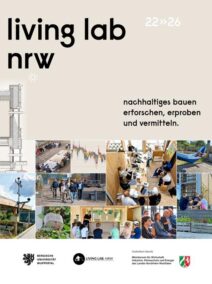
    Wagner, Andreas, Dirk E. Hebel, and Elena Boerman. ‘RoofKIT in Karlsruhe’. In Living Lab NRW, Nachhaltiges Bauen erforschen, erproben und vermitteln. Living Lab NRW. Bergische Universität Wuppertal, Living Lab NRW, 2026. https://doi.org/10.25926/BUW/0-1071.


    Interview: „We’ve already made significant progress“

    Juli 9, 2026

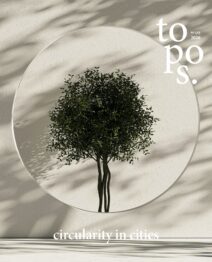
    Kohring, Katharina, and Dirk E. Hebel. ‘Interview: “We’ve already made significant progress”’. topos. circularity in cities (München), 2026.


    Better this way

    Juli 9, 2026
    Screenshot

    Holl, Christian. ‘Besser So’. Marlowes, 7 July 2026. https://www.marlowes.de/besser-so/.


    Interview: „We’ve already made great progress“

    Juli 9, 2026

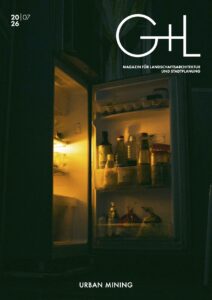
    Kohring, Katharina, and Dirk E. Hebel. ‘Interview: “Wir sind schon einen großen Schritt weiter”’. G+L – Magazin für Landschaftsarchitektur und Stadtplanung (München), 2026.


    Umbauhof – A Place for the Reuse of Building Components

    Juni 24, 2026

    Boerman, E., & Hebel, D. E. (2026). Weniger Treibhausgasemissionen durch Wiederverwendung. In Umbauhof—Ein Ort für die Wiederverwendung von Bauteilen. Birkhäuser Verlag GmbH (Architektur Raumburgenland, Asphalt / Kollektiv für Architektur).


    Sustainable Construction. How we are shaping our built environment in a sustainable way.

    Mai 7, 2026

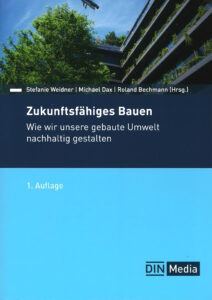
    Hebel, Dirk E., and Elena Boerman. “Projektstudie 2 (Schwerpunkt: Materialien): Der Kreislaufbasierte Architekturansatz.” In Zukunftsfähiges Bauen – Wie Wir Unsere Gebaute Umwelt Nachhaltig Gestalten, 64–78. Berlin: DIN Media Innovation, 2026.


    Circular! Foundations and principles of a circular construction industry.

    März 11, 2026

    Hebel, Dirk E., and Annette Hillebrandt, eds. 2026. Zirkulär! Fundamente und Postulate einer kreislaufbasierten Bauwirtschaft. Bauwelt Fundamente. Birkhäuser Verlag GmbH.


    A matter of consequence

    März 11, 2026

    Deutsches Architekt:innen Blatt. 2026. “Eine Frage der Konsequenz.” March.


    Circular Construction. Regenerative Building material management.

    Januar 8, 2026

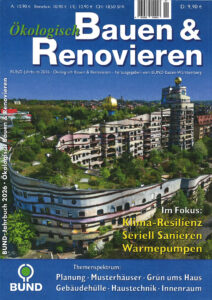
    Steiff, Peter. “Zirkuläres Bauen. Regeneratives Baustoff-Management.” BUND Jahrbuch 2026, January 2026.


    Wood as a foundation of a sustainable building culture
    Januar 8, 2026

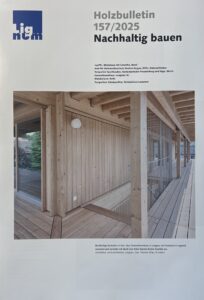
    Glanzmann, Jutta. “Holz Als Basis Für Eine Nachhaltige Baukultur.” Lignum Holzbulletin 157/2025, no. Nachhaltig bauen (2025): 4058–59.


    MycoTree

    Januar 5, 2026

    McLean, Will, Pete Silver, and Dirk Hebel. “MycoTree.” In Sustainable & Regenerative Materials for Architecture – A Source Book. 2025; Laurence King, 2025.


    Really Circular – Material Library at KIT

    Oktober 29, 2025

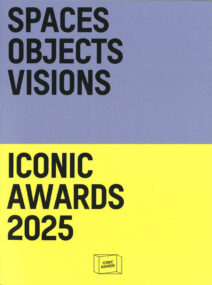
    Dietzold, Lutz, ed. Iconic Awards 2025 – Spaces Objects Visions. Frankfurt: Rat für Formgebung GmbH, 2025.


    Activating the Urban Mine

    Oktober 2, 2025

    Hebel, Dirk E. „Activating the Urban Mine.“ In Architecture and Technology Volume II: Cities in Climate Crisis. Madrid: Norman Foster Foundation Press, 2025.


    The city as a resource

    September 18, 2025


    Hebel, Dirk E. und Felix Heisel. “Die Stadt als Ressource.” In Für eine nachhaltige Architektur der Stadt. Berlin: Verlag Klaus Wagenbach, 2025.


    From a linear to a circular system

    September 15, 2025

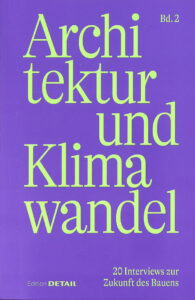
    Hebel, Dirk E. “Vom Linearen Zum Kreislaufsystem.” In Architektur Und Klimawandel. München: Edition DETAIL, 2025.


    Interview: „We must finally start measuring CO2 emissions – not just how thick the insulation is“
    Juli 29, 2025

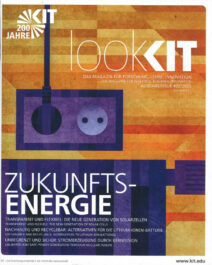
    Hebel, Dirk E. Interview: “Wir müssen endlich anfangen, den CO2-Ausstoß zu messen – nicht nur, wie dick die Dämmung ist.” Interview by Christoph Karcher. LooKIT 0225, 2025.


    WEtransFORM – On the Future of Building

    Juni 22, 2025

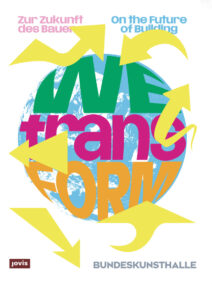
    BUNDESKUNSTHALLE, ed. WEtransFORM – Zur Zukunft Des Bauens. Berlin: jovis Verlag, 2025.


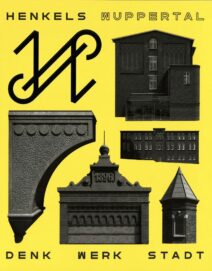
    Henkels Wuppertal

    Juni 4, 2025

    Renaissance AG, ed. Henkels Wuppertal – DenkWerkStadt. Wuppertal: renaissance Immobilien und Beteiligungen Aktiengesellschaft, 2025.


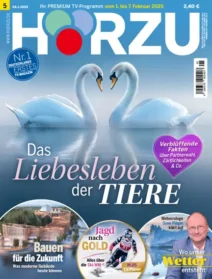
    Building for the world of tomorrow

    April 24, 2025

    Monkenbusch, Helmut. „Bauen für die Welt von morgen.“ Hörzu, 24.1.2025


    Funghi – underground networkers

    April 24, 2025

    Hebel, Dirk E., Tanja Hildbrandt. „ Pilze – Netzwerker im Untergrund“. alverde, dm-Magazin, April 2025.


    Fungi are versatile

    Februar 24, 2025

    Merkert-Andreas, Carolin. “Pilze Sind Vielseitig.” Wohnglück, January 2025.


    “RoofKIT – Carbon storage and Material storage”

    Januar 9, 2025

    Boerman, Elena, and Dirk E. Hebel. “RoofKIT – Kohlenstoffspeicher Und Materiallager.” Architektur.Aktuell, vol. 12.2024, no. Tradition und Innovation, Dezember 2024, pp. 98–109


    The many applications of mycelium construtction

    Dezember 8, 2024

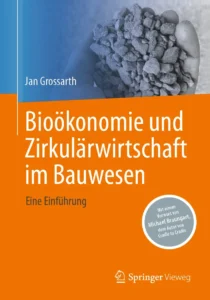
    Grossarth, Jan. „Exkurs: Die vielen Einsatzbereiche von Myzel im Bauwesen“. In Bioökonomie und Zirkulärwirtschaft im Bauwesen, eine Einführung, 174–117. Wiesbaden: Springer Fachmedien, 2024.


    Interview: „From a Linear to a Circular System“

    November 13, 2024

    Hebel, Dirk E. Interview: “Vom linearen zum zirkulären Kreislaufsystem.” Interview by Sandra Hofmeister, DETAIL 11.2024, Nov. 2024.


    Building with renewable materials – Nature as a resource depot

    Oktober 29, 2024

    Hebel, Dirk E., Sandra Böhm, Elena Boerman, Hrsg. Vom Bauen mit erneuerbaren Materialien – Die Natur als Rohstofflager. Stuttgart: Fraunhofer IRB Verlag, 2024.


    Guest contribution: ‚Thinking, designing and operating in circular ways.‘

    Juni 27, 2024

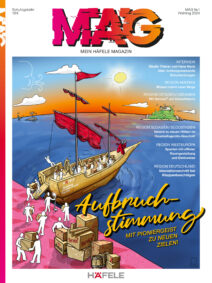
    Hebel, Dirk E. “In Kreisläufen denken, entwerfen und wirtschaften.” MÄG – Mein Häfele Magazin, 2024.


    Interview: ‚Mycelium power for the construction industry‘

    Juni 10, 2024

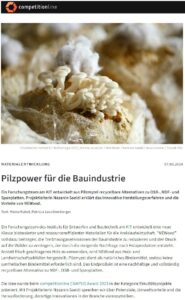
    Rubel, Maike, and Patricia Leuchtenberger. Interview: “Pilzpower für die Bauindustrie.” competitionline, 7 June 2024, https://www.competitionline.com/de/news/schwerpunkt/pilzpower-fuer-die-bauindustrie-7283.html.


    ‚Future building materials: mushroom, hemp and algae‘ in neubau kompass

    Mai 27, 2024

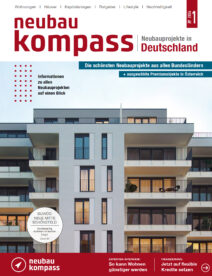
    Müller, Janek. “Baumaterialien der Zukunft: Pilze, Hanf und Algen.” neubau kompass – Neubauprojekte in Deutschland, May 3, 2024. https://www.neubaukompass.de/premium-magazin/.


    Interview: ‚We have disposed of valuable materials‘

    Mai 7, 2024

    Sören, S. Sgries. “Interview: ‘Wir haben wertvolle Materialien weggeworfen.’” Rhein-Neckar-Zeitung, April 27, 2024, SÜDWEST I 28 edition, sec. Sinsheimer Nachrichten.


    Built on mushroom

    April 24, 2024

    Schweikle, Johannes. “Auf Pilz gebaut.” Stuttgarter Zeitung, April 23, 2024, sec. Die Reportage.