Home | Impressum | Datenschutz | KIT

Addis 2050 – Culture

Culture Today


Culture 2050 – An Alternative

Tomorrow, in 2050, life in Addis Ababa is vibrant, diverse, public and secure. We enjoy our social heritage, our cities as cultural centers and our public spaces as an expression of an open, active, inventive, green, and responsible society.

At the end of the 20th century, housing shortages, energy blackouts, old and outdated mobility concepts, and inefficient or not existing infrastructures challenged the future of our nation. Additionally, health risks resulting from high levels of air pollution and other environmental hazards made the capital difficult to enjoy.

But combining economic growth and our own life prosperity with an alternative renewable energy concept for Ethiopia changed the way we lived. Migration slowed down, identity was strengthened, local habits and traditions could survive in the regions and Ethiopia therefore was able to protect its incredible rich culture and history.

Instead of following trends and fashions from the outside, the society developed into a trendsetter itself for other nations. Today, we are a role model for so many other countries, delegations come from all over the world to learn about our culture and how technology is used to strengthen local identities instead of destroying them. We harvest the energy we have, sun, water and wind, and we build small towns and cities of close proximities, where the Ethiopian social culture of closeness, tradition, family sense andcharity are expressed and enhanced.

And even existing cities were changed. In Addis Ababa, a new educational mile was introduced ranging from Arat Kilo to Addis Ababa University, where cars are
banned, trees are planted and extremely attractive spaces were designed by our young architects. The National Museum, the Ethnographical Museum, the Ethiopian History Museum, the new Central Library and other cultural institutions like the Goethe Institute, the Alliance Francais, and Addis Ababa University with its many institutions along the way are now accessible through a common public space which became a garden of knowledge and exchange.

Scholars are meeting and discussing here, tourists come and exchange their knowledge with us, friendships are build and research collaborations are negotiated. It became the urban think tank for our industry and economy. This spatial interaction favors again the humans and NOT the cars, it favors knowledge production over pure apllication, it favors exchange and openness over retraction and close mindedness.

The National Museum, the Commercial Bank, the Ministry of Defense, all of those were reopened and revitalized as public buildings around the area, which had an immense effect on the immediate surroundings as a public space of interaction. Restaurants opened their doors, traffic is re-routed in the evening hours and the National Theater opened an outside stage, which strengthened the role of the building as a magnet for social activities in the midst of the city.

The area is known as the “Cultural Mile” of Addis Ababa. It’s strategic location in the heart of the City makes it a popular space for all generations, small businesses, restaurants, artists and students are to be found, shaded by trees and a densified urban layout to create a real ‘Piazza’ for the people.

Another heritage building, the old station at the lower end of Churchill Road, sparked an additional social and economic important corridor in the city. The “Rail Line Project” started in 2032, connecting “La Gare” with Bole Airport following the old rail tracks of the Addis-Djibouti line.

The artificial topography of the project offers a contemporary and transformative breeding ground for small production and retail stores, spaces for entrepreneur companies, pockets for various markets, test grounds for new technologies, niches for cafes and restaurants, shops and small fabrication places for craftsmen and artists, all enhancing the economic base of the neighborhood. One finds also spaces for religious celebrations, very small open-air cinemas and all kinds of performances along with traditional festivals.

The ‘Kebena River Nature Park’ offers today a remote and piece full place in midst of a vibrant and environmental successful city. The Ethiopian rural history and culture can be combined with an urban future, as long as the urban does not destroy the biggest treasure we have: tradition, history, and our incredible nature.

Addis 2050 – Housing

Housing Today


Housing 2050 – An Alternative

Tomorrow, in 2050, Addis Ababa can offer to every citizen a place to live. It is a beautiful city characterized by its diverse and dense building stock, amble spaces for social and private interaction and heterogeneity of functions. Today, we live and work in the same area, we walk to get our groceries and meet our friends in front of the door.

Addis Ababa is a city of millions, but composed of small characteristic neighborhoods and families; a city of chances for the individual to thrive. Addis is my city of choice.

When it became clear to the government in 2016, that it neither had the money to construct social housing for the ever-growing millions of new migrants, nor the design for an Ethiopian way of life, a bold and visionary decision was made. The Ethiopian Prime Minister at that time allowed the implementation of a “Incremental Housing Program”, whereby the state only provided a minimum construction to guarantee safety and regulations, but where individuals and families were able to complete their own homes in several steps, according their income and family size. This gave opportunities to the individuals and shifted responsibility from the government in order to activate the capital of the citizens to build and shape their own way of life. It is hard to say where this idea originally came from. Scholars speculate today that a cooperative in Kebele 12 imported the idea from Chile in the year 2017, copying a project from Elemental SA. Working in a similar framework as Ethiopia, these architects developed an alternative social housing concept in 2005, providing only a framework with basic infrastructure such as water, electricity and a sewage system, as well as security to house owners. This made the project affordable on one hand, but more importantly, activated the creativity and capital of its owners to finish the given structure.

Apparently, Ethiopians quickly adapted the basic idea step by step to their own context by considering the climate, available building materials, as well as social and cultural needs. Most of these houses today are raised from the ground, leaving the ground floor open for income generating activities by the owner or public events. An exiting side effect of this idea is the dense network of paths and connections in Addis Ababa’s neighborhoods today, where people pass underneath houses from one active courtyard to the next.

Starting with the first floor, connected by a private staircase, the framework offers the possibility for an individual arrangement of private and semi private rooms. Usually starting with the front door to control access to the area, the owner’s needs determine the order of indoor and outdoor spaces, the choice of material and the speed of development. Windows, façade elements, shading devices and stairs can be constructed individually. This allows for a maximum of individual freedom within a given urban framework and community infrastructure network.

Cooperatives and private investors together consequently built a heterogeneous, dense and mixed Addis Ababa in the following years. The development, based on private, vertical row houses actually proved to be denser than expected. Quickly gaining popularity, this typology now frames streets and community courtyards as well as public spaces, offering house owners the possibility for income generation and housing at once. It is surprising how a small decision in the year 2016 influenced the city so greatly. At a surprising speed, thousands of families moved in their basic structures and started the completion. Low income, no income, middle and upper class all formed new neighborhoods and continued to build a Mixcity.

As we already heard earlier, families started harvesting energy on an individual level in 2024. A similar approach was developed to provide most of the other necessary infrastructure networks as well. Because of the fast development of the city, the government was unable to catch-up with the supply of networks. As a result, the kebeles decided to take it into their own hands and started building infrastructures and public network systems. On a community level, people started to collect waste and sell it to recyclers for the production of biogas or building materials. Small-scale sewage systems proved to be more efficient and cheaper than a city-wide grid. Out of economic reasons, even fresh water grids tend to be relatively small these days. Solar power and hydrogen supports these decentralized systems with the necessary, renewable energy.

This new development proved to be the starting point of today’s Addis Ababa. What had started in small cooperatives and self-built structures of individuals and their creativity, grew in to a new city structure, into a new understanding of urbanity, developed out of the Ethiopian culture, tradition and social networks.

Addis 2050 – Information

Constructing Waste: Week 3

The 3rd week’s CONSTRUCTING WASTE presentation ‚Why Waste Waste?‘ was held on 4 October by Dr Sun Xiaolong.

Dr Sun Xiaolong majored in Materials Science & Engineering. His research areas are waste-to-resource and environmental applications of materials science. Dr Sun works at R3C NTU.

More information: CONSTRUCTING WASTE

Constructing Waste: Week 2

Prof. Dr. Stephen Cairns opened the 2nd Week’s session of CONSTRUCTING WASTE with his talk ‚Rubbish Theory‚.

Stephen Cairns is Scientific Co-ordinator of the Future Cities Laboratory in the Singapore-ETH Centre, and Professor of Architecture and Urbanism at the University of Edinburgh. He is a member of KRUPUC, an independent inter-disciplinary, multi-sectorial research, planning and design platform focused on issues of urbanisation in the Southeast Asian region.

More information: CONSTRUCTING WASTE

Constructing Waste: Week 1

On 20 September 2012 Asst. Prof. Dirk E. Hebel introduced the FCL Fall Seminar: CONSTRUCTING WASTE. The goals and expectations of the course were presented on the example of the United_Bottles Project.

Dirk Hebel is currently holding the position of Assistant Professor at the Future Cities Laboratory in Singapore, a research project of ETH Zurich with the National Research Foundation Singapore.

More information: CONSTRUCTING WASTE

Cities as a Proto-Typologies at Academia Engelberg

Recording of the public lecture by Prof. Dirk E. Hebel at the 2012 Academia Engelberg Congress in Switzerland on September 14, 2012. – Courtesy of Academia Engelberg.

Cities as proto-typologies

Public lecture by Prof. Dirk E. Hebel at the 2012 Academia Engelberg Congress in Switzerland on September 14, 2012.  The 11th Dialogue on Science will focus on the issue of rapid urbanization and its consequences for everyday life in cities around the world. With this congress the Academia Engelberg Foundation asks how might the disciplines of architecture, urbanism and the built environment sciences respond to the challenges of rapid urbanization?

The Chair of Architecture and Construction at the Future Cities Laboratory in Singapore concentrates its research on ‘alternative modern’ construction materials. The ‘alternative’ aspect of this focus emerges from an exploration of the possibility of knowledge transfer, which could change the way we think about vernacular or traditional building materials. One material, maybe the most neglected building material in the world so far, has the chance to change our perspective: Bamboo, “the next super-material” as it was called out in a recent BBC documentary. It is growing exactly in those regions around the equator belt, where most developing territories are to be found today. Bamboo is a very fast growing and affordable natural resource, which has outstanding constructive qualities, superior to wood and, looking at tensile capacities, even to steel.

Re-inventing and overcoming its role as a old fashioned vernacular building material of the South, it could start to establish a knowledge transfer from South-to-South or South-to-North and reverse the traditional model. The talk will argue, that through knowledge transfer, there is a chance to combine and therefore revaluate globally applied building materials with local available substances and knowledge from the South. It is proposing the possibility for a ‘reverse’ or ‘alternative modernism’, whereby developed countries might start to learn and gain from a knowledge developed in the ‘South’.

Constructing Alternatives

Public lecture by Prof. Dirk E. Hebel at the 2012 FCL/ETH conference in Zurich, Switzerland on September 10, 2012.  Multiple centers, hubs and nodes increasingly supplement traditional city centers, regional territories and urban clusters. These are embedded in a network of infrastructures to form complex polycentric urban regions that extend far into once rural hinterlands. Research from the Future Cities Laboratory in Singapore will be confronted with research from ETH Zurich and elsewhere in order to promote an exchange of knowledge and to bring the Future Cities Laboratory’s work to the attention of a larger audience in Switzerland. Following the question on how a well-tempered environment can be achieved in different situations of affluence, material resources and technological development, Dirk Hebel will introduce first outcomes of his research in Singapore.

UN-Habitat Conference: The Urban Future

Public forum discussion with Prof. Dirk E. Hebel at the UN-Habitat Confrenece: The Urban Future in Naples, Italy, September 04, 2012. The overarching theme of the sixth session of the World Urban Form “The Urban Future” clearly signifies the need to anticipate, imagine and plan for the future in order to shape it in sustainable ways. The rapid pace of change from global to local levels and related complexities, uncertainties and connectivity necessitate cities to think ahead into the future and adapt their plans, policies and interventions accordingly. Promoting socially equitable, economically viable and environmentally balanced cities requires decision-makers to systematically examine and anticipate future trends, conditions and drivers of change. To become prosperous, innovative and competitive, cities need to critically examine possible and probable scenarios so as to work towards their preferred future.
The future offers enormous potential for achieving sustainable development targets in cities as it can be shaped through actions and decisions taken today.

While the term “future” bears several uncertainties, systematically analyzing the future presents an opportunity to identify alternatives that can guide today’s policies and development at the city, regional and national scales. Futuring is the methodical exploration, creation, and testing of a range of alternative futures to inform decision making, and allow better decisions to inform a better tomorrow. Thus, the objective of future analysis and visioning is not to project the “right” future or make the “right” decisions” but to make more informed decisions in relation to many possible projected scenarios.
Globally, cities have engaged in futuring processes at different scales and in various urban sectors so as to design policies and interventions that take future opportunities and risks into consideration. The results of these processes have not been without challenges, especially when it comes to being translated into action. In many other instances, cities seldom engage in foresight exercises and may be more occupied with addressing current and immediate needs and challenges, especially in developing countries. There is thus a clear need to rethink the role of futuring in urban management and governance to enable cities to better prepare for a complex, uncertain and rapidly changing global context.
UN‐Habitat has recently launched an urban futures initiative called “Futurban” to integrate futuring into urban policy and decision making processes. Futurban undertakes research to anticipate and analyze future trends, conditions and events in order to advance knowledge on the future of cities and contribute to enhanced policy and decision making. In addition, based on a rigorous analysis of alternative scenarios, Futurban assists cities to envision their preferred urban future and set realistic milestones for achieving it through innovative and visionary strategies. By building foresight in policy and decision making processes, it strengthens the ability of cities to capitalize on strategic levers to proactively shape their future.

Constructing Waste Seminar Kick Off Meeting

The Chair of Architecture and Construction Dirk E. Hebel at FCL Singapore is organizing an
FCL-SEC Fall Semester 2012 Seminar CONSTRUCTING WASTE.

Hundreds of tons of waste are produces in Singapore every day. These wastes represent an invaluable pool of resources, which could be activated by rethinking their designs. The ‘hands on the material’ seminar CONSTRUCTING WASTE will interrogate the concept of up-cycling strategies in order to minimize the overall refuse amount being produced in Singapore. The focus on design questions should create second life cycles for otherwise waste products.

The seminar will be conducted as a combination of input lectures, reading seminars and the production of full- scale up-cycling design products. Students will be asked to map the nature and flows of an everyday product through different research methods and finally to change the product design in order to influence both waste and material stock and flows in the future. 10 weeks of seminar will result in  project descriptions and an up-cycling prototype in full scale.

Field Research Trip to China

On a recent visit to China, CoReSing visited several factories for bamboo flooring. The so called WSB (Woven Strand Board) is commonly produced from 5-year old Moso bamboo culms, a fast and very tall growing species. After its harvest, the culms are immediately cut into approximately 2m long sections, sliced lengthwise into splits and finally processed into strands. They are then boiled and carbonized. Next, they are submerged into a pool of an adhesive agent and then left out to dry. Placed into molds, the pressing of the strands produces blocks of varying sizes. These can then be cut into boards or pieces as desired. To create WSB flooring boards, the most common application in this process, they will be sanded and coated with up to 7 layers of PV finish.

CoReSing is currently evaluating the possibility to incorporate this process into its research. During the visit, potential collaborations with manufacturers of machinery for bamboo processing as well as INBAR, the international network for bamboo and rattan have been discussed.

ADDIS 2050 – International Workshop at FCL Singapore

The Chair of Architecture and Construction Dirk E. Hebel at FCL Singapore together with Heinrich Boell Foundation and the Ethiopian Institute of Architecture, Building Construction and City Development is organizing an international workshop to develope a vision for Addis Ababa in the year 2050. The African population is growing fast and urbanization will shape the coming decades. Existing cities are changing rapidly and new infrastructures and buildings are constructed at an enormous speed, ambitious plans are in place to create dozens of new cities from scratch. Currently, the focus of this development seems to be “catching up” with developed or emerging economies. In many cases, a ‚copy/paste‘ mentality to urban development includes a repetition of the mistakes made elsewhere: expensive imported construction materials such as cement, glass and steel are preferred over locally available and more sustainable solutions, public spaces are diminishing, an increasing separation of working and living quarters enlarges transportation needs and traffic concepts concentrate on cars and individual rather than public transportation.

The aim of the workshop is to demonstrate the advantages of realizing bold visions rather than a continued ‚business as usual‘ by envisioning a possible alternative development path of the Ethiopian capital Addis Ababa over the next 30-40 years. The results will be presented at a two-day conference held in Addis Ababa in October 2012, open to both an Ethiopian and a wider African as well as intenational audience of academics, politicians, government representatives from relevant ministries and authorities and experts from continental institutions based in Ethiopia. A particular focus of this debate will be on the opportunities of constructing much of the needed infrastructure for the first time in the context of expanding cities – as opposed to cities faced with the challenge of adapting existing infrastructure to new challenges.

ADDIS 2050 – International Workshop at FCL Singapore

The Chair of Architecture and Construction Dirk E. Hebel at FCL Singapore together with Heinrich Boell Foundation and the Ethiopian Institute of Architecture, Building Construction and City Development is organizing an international workshop to develope a vision for Addis Ababa in the year 2050. The African population is growing fast and urbanization will shape the coming decades. Existing cities are changing rapidly and new infrastructures and buildings are constructed at an enormous speed, ambitious plans are in place to create dozens of new cities from scratch. Currently, the focus of this development seems to be “catching up” with developed or emerging economies. In many cases, a ‚copy/paste‘ mentality to urban development includes a repetition of the mistakes made elsewhere: expensive imported construction materials such as cement, glass and steel are preferred over locally available and more sustainable solutions, public spaces are diminishing, an increasing separation of working and living quarters enlarges transportation needs and traffic concepts concentrate on cars and individual rather than public transportation.

The aim of the workshop is to demonstrate the advantages of realizing bold visions rather than a continued ‚business as usual‘ by envisioning a possible alternative development path of the Ethiopian capital Addis Ababa over the next 30-40 years. The results will be presented at a two-day conference held in Addis Ababa in October 2012, open to both an Ethiopian and a wider African as well as intenational audience of academics, politicians, government representatives from relevant ministries and authorities and experts from continental institutions based in Ethiopia. A particular focus of this debate will be on the opportunities of constructing much of the needed infrastructure for the first time in the context of expanding cities – as opposed to cities faced with the challenge of adapting existing infrastructure to new challenges.

Building with Earth Workshop in Ethiopia

PhD Candidate Lara Davis of the Professorship of Architecture and Construction Dirk E. Hebel at SEC/FCL Singapore held this seven day intensive workshop to introduce students of architecture and urbanism and local technical-vocational (TVET) trainees to the concepts and practical aspects of building with earth with contextual sensitivity in Ethiopia.  For each day of the workshop, one half-day was devoted to field study and practical exercises, which allowed students to develop hands-on material-based knowledge.  Afternoon lectures provided the conceptual framing for theoretical study, documentation, and reflection.

The topics covered attempted to demonstrate the link between the fundamental properties of soil, its effective use as a building material, and strategies for context and climate-responsive design in earthen masonry.  Lectures and practical sessions addressed:  sampling and selection of soils in the field, properties and behavior of soil, empirical methods of soil testing and modification, chikka plastering and adobe block production, techniques and design principles of earthen masonry, mechanical properties of earthen masonry (compression, shrinkage and shear), construction of arches and vaults, applied structural principles, and climate-responsive detailing for weather and site conditions.  Beyond the various activities, students constructed a single curved earthen vault with the Nubian vaulting technique.  The workshop was concluded with student presentations.

Alternative Building Materials

Public lecture by Felix Heisel on Alternative Building Materials at the Global Cross-Disciplinary Tournament on Friday 28th, 2012.

The international conference Global Cross-Disciplinary Tournament (GXT) 2012 brings together 20 delegates from four universities – NUS USP, the Australian National University, Peking University, and Oxford University – to discuss problems and propose catalysts for change related to this year’s theme, The Future of Cities. The delegates from these universities are meeting in teams over 10 days in July to propose a cross-disciplinary catalyst with the potential to change a specific issue related to the future of cities in 30 years. They will each bring their unique domain knowledge and cross-cultural experiences in generating their ideas and in giving their presentations at the final symposium during their stay in Singapore.

Alternative Building Materials at GXT 2012 Conference

Public lecture by Felix Heisel on Alternative Building Materials at the Global Cross-Disciplinary Tournament on Friday July 28th, 2012.

The international conference Global Cross-Disciplinary Tournament (GXT) 2012 brings together 20 delegates from four universities – NUS USP, the Australian National University, Peking University, and Oxford University – to discuss problems and propose catalysts for change related to this year’s theme, The Future of Cities. The delegates from these universities are meeting in teams over 10 days in July to propose a cross-disciplinary catalyst with the potential to change a specific issue related to the future of cities in 30 years. They will each bring their unique domain knowledge and cross-cultural experiences in generating their ideas and in giving their presentations at the final symposium during their stay in Singapore.

CoreSing is guest-editing ‚Construction Ahead‘ Magazine: Constructing Alternatives

The Assistant Professorship Dirk E. Hebel is guest-editing the fall edition of Ethiopia’s leading construction magazine: ‚Construction Ahead‘. The 80 page issue „Constructing Alternatives“ proposes a variety of alternative modern, and sometimes transformed building materials and construction methods. Although tested in and derived from an African context, their application can also answer the rising needs of other developing territories and turn them from import-oriented systems into self-sustaining, knowledge exporting nations. As we are located in Singapore momentarily, an additional outlook “Learning from Singapore…” wants to initiate a debate on the development of a local, African architectural language, considering geographical, climatic, social and cultural characteristics without falling into a copy-paste mentality of the Dubai Fever. „Constructing Alternatives“ will be issued in Oct/Nov. 2012.

‚Construction Ahead‘ is a specialized bimonthly magazine for engineers, industry academics, architects, construction material manufacturers and suppliers and related service providers. ‚Construction Ahead‘ delivers keen insight and analysis of key construction markets, projects, products and trends.

Preparing Food. Today. Competition Entry for Venice Biennale 2012

Preparing Food. Today.

In 2052 there will be nine billion people living on earth, with the majority in cities. The recipe book Preparing Food. Today., and the ‘happening’ connected with its book-launch was a proposal for the Venice Biennale 2012. It introduces a change in attitude towards available recourses, as a possible solution to fill the prognosticated gap between production and demand. Diversification, here discussing the issues of ingredients and food preparation, will be an essential step towards sustainable, livable future cities.

First: To secure three healthy, nutritious, filling meals per day for all seven billion inhabitants will be the greatest challenge of our Future Cities, and especially their Hinterlands. Already in 2012, we are working feverishly to engineer crops such as rice, maize and wheat to increase yields so as to meet the growing demand. Preparing Food. Today. offers a selection of alternative ingredients to complement our existing menu to ensure food security in 2052.

Second: Our future world will certainly face determining challenges such as energy and water shortages. Since need is the mother of inventions, these issues will shape new technologies, our habits and our mindsets. Although the general way of food preparation has remained more or less the same throughout the past hundreds of years our tools, ingredients and recipes depict their times and crises. Preparing Food. Today. includes a chapter on how to cook in modern times, with less water and no fossil based fuels.

Third: Local cuisines are born out of their specific contexts. Social and cultural habits, as well as accessibility define what is on the menu. On the other hand, following latest trends, exactly these local dishes start to travel around the world. Sushi is as widely available now, as schnitzel or chicken rice. Continuing along this path, not only ingredients, but also menus and tastes will further diversify within the next 40 years. Preparing Food. Today. thus, gives an overview of recipes in the world of 2052, regardless of the region it will be used in.

Credits: Naomi Hanakata, Felix Heisel, Michaela Frances Prescott, Kashif Shaad, Martha Kolokotroni, Marta Wisniewska

Disappearing Spaces

Public lunch-talk by Felix Heisel at FCL Singapore on July 12, 2012. Addis Ababa, unlike many other African cities, has a history and city fabric to learn from. Even if the physical conditions of the informal settlements are very poor, the social networks, as well as spatial and cultural values developed and embedded in these areas are worth the preservation and study. Due to the current redevelopments, these parts of the city will change for good within the next years. Hence, now is the right time to document a century old way of living in Addis Ababa. We believe that its informal sector can teach important lessons about the use of architecture and its social role.

This movie is an cinematic documentary on the use of space in the informal parts of Ethiopia’s capital. Looking at one typical house for the duration of 24 hours, one can notice how a single room can serve for most daily functions. Interviews with the inhabitants and experts give further insight into the topic. “Disappearing Spaces” is the first of a series of documentaries on spatial developments in Addis Ababa.

A visit to Tuas South Incineration Plant Singapore

Singapore is one of the highest populated areas in the world. Consequently, the stock and flow of waste became one of the most important challenges on the island in recent years. Understanding the flow of waste materials and mining this incredible resource is one of the interests in the research of the Chair of Architecture and Construction at FCL.

So far, Singapore is using mostly incineration plants to burn the majority of the unrecyclable waste material. Incineration reduces the volume of refuse up to 90% while the remaining 10% are later disposed off at Semakau Landfill, constantly increasing the surface area of the peninsula. This technology uses ash filled parcels in the open see. The amount of refuse production increases constantly, which leaves approximately 20 more years until Semakau Landfill runs out of space. Thus, innovative ways of waste handling have to be developed.

The Chair of Architecture and Construction at FCL initiated a design research seminar in the winter semester 2012, which focuses on design questions in order to minimize the overall refuse amount and creates second life cycles for otherwise waste products.

FCL Lunch Talk – Felix Heisel: Disappearing Spaces

Felix Heisel will be holding a lecture titled Disappearing Spaces at the FCL Lunch Talk Series on July 12th – 12:00 (noon) at the Future Cities Laboratory.

Addis Ababa, unlike many other African cities, has a history and city fabric to learn from. Even if the physical conditions of the informal settlements are very poor, the social networks, as well as spatial and cultural values developed and embedded in these areas are worth the preservation and study.

Due to the current redevelopments, these parts of the city will change for good within the next years. Hence, now is the right time to document a century old way of living in Addis Ababa. We believe that its informal sector can teach important lessons about the use of architecture and its social role.

This movie is an educational documentary on the use of space in the informal parts of Ethiopia’s capital. Looking at one typical house for the duration of 24 hours, one can notice how a single room can serve for most daily functions. Interviews with the inhabitants and experts give further insight into the topic.

„Disappearing Spaces“ is the first of a series of documentaries on spatial developments in Addis Ababa.

FCL Lunch Talk – Karsten Schlesier: Proto-Typologies

CoreSing invited Karsten Schlesier for a FCL Lunch Talk on July 5th at the Future Cities Laboratory in CREATE Tower.

Proto-Typologies: bottles and bubbles

Starting the design by the chosen material urges to think about structural principles and details matching the properties and being customized to the scale of design. Projects from the structural design education show solutions to a material oriented design approach of alternative construction materials. These prototype structures define typologies with a potential for further development.

Which kind of More?

Public lecture by Prof. Dirk E. Hebel at the Design Research Society Biennial International Conference in Bangkok on July 04, 2012.

As urban populations grow so does the demand for materials and resources to support them. Where such resource demands were once satisfied by local and regional hinterlands, they are increasingly global in scale and reach. This phenomenon has generated materials flows that are trans-continental and planetary in scope, and has profound consequences for the sustainability, functioning, sense of ownership and identity of future cities. Seen from this perspective, the project for urban sustainability must be global in ambition, but cannot be a matter of applying a universal set of rules. Rather, sustainability requires a decentralised approach that both acknowledges the global dimension and is sensitive to the social, cultural, aesthetic, economic, and ecological capacities of particular places to thrive and endure.

Urban sustainability is therefore the capacity of densely populated conglomerates for a social, economic and ecological endurance. In this sense, the urban has to be understood as an open dynamic system with changing parameters characterizing long-lasting measures to achieve a sustainable behavior. In past decades, a phenomena of global “best construction practice” traveled through universities and building industries worldwide. Handbooks of sustainable construction, no matter in which location or context they were produced, were applied in a global scale, leading to a misunderstanding that sustainability could be measured as a universal standard. Sustainable construction methods must acknowledge their specific context und cultural setting, including the skills of local workers. Availability and origin of materials as well as their connection and economic as well as ecological value need to be taken into consideration, before deciding on certain construction methods. The context of a certain construction application includes the cultural space (history, religion, language, etc), the ecological space (which materials and products are produced locally with how much energy and other input sources), the ethical space (who produced the materials and products where and at which costs), as well as the economical space (which materials and products generated a local value chain and which are imported).

From Bottles to Buildings

Public lecture by Prof. Dirk E. Hebel at the Asia Green Youth Challenge in Singapore on July 2nd, 2012, a conference held as part of the WasteMET Asia Conference 2012 at Marina Bay Sands.

The Asian Green Youth Challenge (AGYC) is an environmental initiative by youth for youth to imagine and realise sustainable and innovative projects. Having recognised the mounting environmental challenges that Asia faces, AGYC seeks to promote ground-up innovation that is financially and environmentally sustainable.

SECU Workshop Video now online

Swiss Ethiopian Research & Science Forum 2012

The Embassy of Switzerland in Ethiopia with the Swiss Agency for Developmemnt and Cooperation under the Federal Department of Foreign Affairs invited Prof. Dirk E. Hebel as an representative of ETH Zuerich for a symposium on the future Swiss Ethiopian Research & Scientific Cooperation for Development held on July 28, 2012 in Addis Ababa. The forum will focus on Ethiopian experience and implementation of partnerships in Research & Science and on future fields, scope and modalities of Research & Science cooperation for development.

Which kind of more?

Public lecture by Prof. Dirk E. Hebel at the Design Research Society Biennial International Conference in Bangkok on July 04, 2012. The conference hosts 500 world’s leading design academics and professionals for five days of discussion and debate with a special emphasis on the role of design in sustainable development. The conference will provide a platform for educationalists and practitioners in all design fields to share their experiences and develop plans for the future.

From Bottles to Buildings

Public lecture by Prof. Dirk E. Hebel at the Asia Green Youth Challenge in Singapore on July 2nd, 2012, a conference held as part of the WasteMET Asia Conference 2012 at Marina bay Sands. The Asian Green Youth Challenge (AGYC) is an environmental initiative by youth for youth to imagine and realise sustainable and innovative projects. Having recognised the mounting environmental challenges that Asia faces, AGYC seeks to promote ground-up innovation that is financially and environmentally sustainable.

Proto-typologies: building cities out of moving targets

Public lecture by Prof. Dirk E. Hebel at TU Delft on May 31, 2012. The modernist ‚proto-type‘ followed the idea of one ‚ideal‘ model configuration, applied in a serial way, while the ‚proto-typology‘ defines a flexible and heterogenous form of organization, which can be changed and readjusted instantly and serve different cultural as well as contextual conditions. It is a process rather than a product. The lecture will show different case studies of prototypologies errected in the last years at the Urban Laboratory ETHiopia.

Successful EiABC/ETH/FCL/Bauhaus University Workshop in Addis Ababa on Straw Panel Technology

Addis Ababa/Singapore/Zuerich April 2012

The EiABC together with the Bauhaus University Weimar and the Chair of Architecture and Construction at FCL Singapore completed successfully the first construction of a double storey dwelling unit out of straw panels world wide. The so-called Sustainable Emerging City Unit (SECU) workshop arose immense interest from nation wide media and the Ministry of Urban Development and Construction. During the workshop, State Minister Heilemeskel Tefera announced to support the project to make the technology available for mass housing projects in Ethiopia. In near future, building codes need to be established, further research has to be conducted and production facilities need to be erected. The Chair of Architecture and Construction at FCL Singapore commited itself to be a strong partner of EiABC in the years to come to achieve these goals. We want to thank all partners for their immense energy and work, especially to all students who attended the workshop from EiABC, Bauhaus University Weimar and ETH Zuerich.

EiABC: Prof. Dr. Dirk Donath, Helawi Sewnet, Belay Getachew, Denamo Addissie, Ingo Oexmann, Jakob Mettler, Peter Dissel, Karsten Schlesier, Sami Tsegu, Fahmi Girma, Melakeselam Moges, Nejmia Ali, Mintesinot Tekle, Samrawit Tazezew, Henok Teshome, Habtamu Regassa, Aknaw Yohannes, Seyume Weldeyesuse, Estifanos Kiflu, Mohammed Jemal, Seife Abdulsemed, Nejat Hassen, Peniel Tekle, Regbe Hagos, Fruta Haddish, Samia Ibrahim

Bauhaus University Weimar: Prof. Dr. Bernd Rudolf, Stephan Schuetz, Timo Riechert, Michael Baer, Carolina Kolodziej, Nadine Wolz, Tereza Spindlerová, Paul Eikemeier, Mona Volkmann, Amelie Wegner, Johannes Martin, Victoria Goldmann, Anna Rodermund, Sebastian Linder

FCL/ETHZ: Asst. Prof. Dirk E. Hebel, Marta Wisniewska, Felix Heisel, Martin Kugelmeier, Sarah Sassi, Tanja Studer, Christian Schwizer and Nike Himmels

Special thanks: Chair of Building Construction EiABC Prof. Dirk Donath, BAM – Federal Material Testing Institute Berlin, AAiT, ICEAddis, D-Arch BUWeimar, D-Arch ETH Zuerich, ETH Sustainability, ETH Global, FCL Singapore, Chair of Information Architecture ETHZ Prof. Gerhard Schmitt, Strawtec Group AG Berlin Eckhardt Dauck and Dirk Niehaus, Frank Wildenhayn, Dr. Karola Hahn, Joachim Dieter, Fasil Giorghis, Prof. Elias Yitbarek, Bisrat Kifle, Teddy Kifle, Binyam Kifle, Prof. Dirk Donath and his energetic and highly motivated EiABC team

see also www.eiabc.edu.et/secu-project


National Media, Prof. Dirk E. Hebel, State Minister Hailemeskel Tefera, Prof. Dirk Donath, advisors to the State Minister

Photo credits: Marta Wisniewska.


ETH/FCL/EiABC/Bauhaus University conduct Workshop in Addis Ababa on Straw Panel Technology

Addis Ababa/Singapore/Zuerich April 2012

In collaboration with the Ethiopian Institute of Architecture, Building Construction and City Development (EiABC) and the Bauhaus University in Weimar, the Assistant Professorship of Architecture and Construction Dirk Hebel at the Future Cities Laboratory Singapore, ETHZ is conducting a one-week workshop to construct a full-scale double-story building out of straw panels in Addis Ababa, Ethiopia.

Five students of the Department of Architecture of ETH Zürich were offered the opportunity to join this international workshop, which concentrates on testing a building material, produced completely out of straw. New settlements are emerging in developing territories like Ethiopia almost every day, growing fast into urban conglomerates. One of the biggest problems in emerging cities is next to infrastructure measurements, available and affordable building materials and techniques for shelter production. The SECU (Sustainable Emerging Cities Unit) research project is focusing on the development of innovative and low-weight construction materials for emerging cities in developing territories, based on agricultural “waste” products like straw.

The company STRAWTEC© in Berlin developed over the last years a production system for pressed straw panels. Through heat, the natural starch in the straw is activated and functions as natural glue without any other chemical additions. So far, the panels are only used as non-bearing structural elements. The workshop will investigate possibilities to further develop the product and test construction methods for load bearing applications.


Building Ethiopia: activate local construction technologies and materials

Puplic lecture by Prof. Dirk E. Hebel on March 29, 2012 at the Goethe Institute Bangalore, India, organized by MoD Institute Berlin/Bangalore in the series ‚Talk of the Town‘. The lectures series, under the banner of the year of Germany and India 2011-2012: Infinite Opportunities, is organized around the themes of ‘SEE’, ‚ACT‘ and ‚BUILD‘ respectively, to critically address various issues related to urban transformation in India in applied and innovative ways. The first lecture began with Richard Saul Wurman’s famous call for ‚making the city observable‘ to interrogate different practices of seeing the city through cartography and other visual means and how those shape our everyday urban experiences and decisions. The second lecture ‘ACT’ will gather urban practitioners and actors to discuss and compare various strategies and tactics undertaken by them to intervene in city processes. The discussion will focus on how specific ways of ‚acting‘ or ‚intervening‘ in the city can create or dismantle urban hierarchies, and also what examples of ‚acting‘ in the city can be found in the urban discourse in India.

Swiss Foundation sponsors Professorship Dirk Hebel FCL Singapore and EiABC on the research of Sustainable Rural Housing Strategies in Ethiopia

Zuerich/Addis Ababa/Singapore March 2012

The Arthur Waser Foundation, based in Lucerene Switzerland, recently agreed to sponsor a continuous research project called SRDU (Sustainable Rural Dwelling Unit) in Ethiopia to the tune of 460,000 Swiss Francs over the next three years. The project builds on an academic research cooperation between the Ethiopian Institute of Architecture, Building Construction and City Development (EiABC) in Ethiopia and the Professorship of Dirk E. Hebel of Architecture and Construction at the Singapore-ETH Centre for Global Environmental Sustainability and the Future Cities Laboratory (FCL) in Singapore.

Professor Dr. Elias Yitbarek initiated the project in 2010 as part of his work at the Chair of Housing at the EiABC and has secured funding from the Arthur Waser Foundation for a pilot project in 2011, with the support of the North-South Centre of ETH Zurich, Barbara Becker and the ETH Foundation, Nathalie Fontana. The pilot was regarded as a great success. It involved building two housing units located approximately 250km south of the capital Addis Ababa, and experimentation with local building materials combined with new building techniques and autonomous operating energy supply units. This success convinced the Arthur Waser Foundation to continue the engagement with the two universities and enlarge the scope of the work to include questions of capacity building, academic exchange with local schools and industry and the transfer of knowledge to a wide academic and non-academic audience in Africa.

Lara Davis, PhD researcher working under the supervision of Dirk E. Hebel at the ETH in Zurich, will fully concentrate her work on the development of technical solutions in earthen masonry systems, which address challenges posed by environment conditions, as well as constraints in available building materials and skilled labor. She will also look into robustly co-designed training methodologies, which target maximum cultural relevance, mechanisms for knowledge exchange, and methods for sustainable technology transfer with long-term viability. Next to the strong focus on applied research, where full scale housing units will be built, two PhD students at the EiABC under the guidance of Dr. Elias Yitbarek will work on soft impact factors such as health issues, socio-cultural frameworks, communication strategies and participation models in order to guarantee a long lasting anchoring of the project in rural regions of Ethiopia as well as building up curricula for the academic impact in schools and universities.

The ETH Zurich and the EiABC in Addis Ababa have a long history of academic collaboration. The SRDU research can be seen as the sister project of the Sustainable Urban Dwelling Unit: SUDU. The project, initiated in 2010 by Dirk E. Hebel, who was at that time the Scientific Director of EiABC, investigated the stock and flow model of building materials in Ethiopia and introduced new building techniques and material applications such as earth masonry vaulting together with Prof. Philippe Block and Lara Davis of ETH Zurich, in order to minimize the dependency of building material import in Ethiopia. The project got well know also in Ethiopia and beyond and set the tone for further investigations also in rural areas. With the funding of Arthur Waser Foundation, ETH and EiABC have the chance to further strengthen their research collaboration by understanding the build environment as a complex and open system, ranging from the urban territory to the neighborhood scale and with it the question of material application, considering economic, ecological, social and aesthetic values for a future urbanization of developing territories world wide.


Waste

Waste is usually defined as unwanted or useless material, which is the product of a linear utilization process.

Endless stocks of material are already in the cities regarded as waste. Making this (re-) source available, the value-chains of construction products and materials have a great potential for increased ecological and economic efficiency, and with it minimizing global material flows. Waste products, but also local available materials which were not used in the construction sector yet, need to be recognized as basic elements of the urban creation process. Their use, re-use, and potential for re-placement of other materials are key factors for creating identity, resource efficiency, and new added values to a specific urban system. Analyzing potentials of waste products as a resource for new construction materials and products will be key factors of this research. The understanding of the term “waste” needs to be extended to such materials which were not seen as construction materials yet, or which were seen as backward-oriented, cheap or useless. Waste resources must be analyzed and quantified in similar terms and standards as natural resources. With this analysis, comparative strategies can be implemented. In addition, up-cycling strategies have to be followed, designing new products in such a way, that projected further life-cycles are already incorporated.

In the United_Bottle project, a regular waste product like the PET bottle becomes a new building material, (Source: United_Bottle Group Zürich, 2007-ongoing)

Soil

Soil is a natural body consisting of layers (soil horizons) of primarily mineral constituents of variable thicknesses, which differ from the parent materials in their texture, structure, consistence, color, chemical, biological and other physical characteristics.[1]

Sustainable construction requires an integrative thinking of various possible local available materials, skills and know-how. There is a need to enhance vernacular construction and material knowledge to cope with the dramatic need for new urban dwellings. This knowledge must be based on integrative modes of thinking, combining design, construction, building physics, sociology, energy, ecology and economy. If local construction materials and their application could be made available to the wide public in developing territories, local value chains could be build up using a very low-cost and easy to obtain material.[2]

Vaulted earth masonry at the SUDU project in Addis Ababa, Ethiopia (Source: Lara Davis and BLOCK Research Group ETHZ Zuerich)

The countries around the equator belt have almost all a very rich soil, which contains high levels of clay particles. In this light, almost all material excavated from construction sides are a possible source for material needed to build new structures. Might it be “rammed earth”, “earth masonry” or “vaulted earth tile” technology, all of them have the possibility to be low-cost and very efficient. The research will also target the existing multi-criteria environmental constraints of heavy seasonal rains (e.g. drainage details and waterproofing), highly expansive vertisol soils (e.g. foundation details and soil stabilizers), and seismic activity (e.g. connection details and reinforcing).


[1] Peter W. Birkeland, Soils and Geomorphology, 3rd Edition. New York: Oxford University Press, 1999
[2] Dirk Hebel: The Vernacular Rediscovered, in: Re-Inventing Construction, ed. by Ilka and Andreas Ruby, Ruby Press, Berlin 2010

Straw

Straw belongs to the family of grasses. Grasses are plants, which typically have one seed leaf and continue to grow with narrow leaves from their base. The family includes “true grasses”, sedges and rushes. The Chair of Architecture and Construction at FCL is mostly interested in true grasses such as bamboo and cerials, since their characteristics show a high potential for taking tensile stress.

The Chair of Architecture and Construction at FCL Singapore started a research project together with the Bauhaus University in Weimar and the Ethiopian Institute of Architecture, Building Construction and City Development in Addis Ababa focusing on straw panel building technology. New settlements are emerging in developing territories almost every day, growing fast into urban conglomerates. One of the biggest problems in emerging cities is next to infrastructure measurements, available and affordable building materials and techniques for shelter production. The research project is focusing on the development of innovative and low-weight construction materials for emerging cities in developing territories, based on agricultural “waste” products like straw.

Straw panels and first ideas about load-bearing applications (Source: Prof. Dr. Dirk Donath)

The company STRAWTEC© in Berlin, Germany developed over the last years a production system for pressed straw panels. Through heat, the natural starch in the straw is activated and functions as natural glue without any other chemical additions. So far, the panels are only used as non-bearing structural elements. The project will investigate possibilities to develop the product and invent construction methods for load bearing applications. Presumed a positive research outcome, this innovative method could be applied in developing territories, which are economically agricultural based, including India, China and Indonesia.

Bamboo

Bamboo belongs to the family of grasses. Grasses are plants, which typically have one seed leaf and continue to grow with narrow leaves from their base. The family includes “true grasses”, sedges and rushes. The Chair of Architecture and Construction at FCL is mostly interested in true grasses such as bamboo and cerials, since their characteristics show a high potential for taking tensile stress.

Looking at available local resources, the “magic triangle” contains one of the most neglected building materials in the world so far: Bamboo. Most developing territories today with an ever-growing speed of population increase and with it an ever-increasing need for housing are to be found in a belt around the equator. And also here, bamboo is usually the fastest growing, affordable and local available natural resource, which has outstanding constructive qualities. Bamboo grows much faster than wood and is usually available in great quantities and it is easy to obtain. It is also known for its unrivalled capacity to capture carbon and could therefore play an important role in reducing CO2 emissions world wide. Developing territories around the equator belt could use this capacity even as an income source, selling CO2 certificates in a global market.

Global natural habitat of bamboo

Bamboo is extremely resistant to tensile stress and is therefore one of nature`s most extreme products. In principle, bamboo is with regard to its mechanical-technological properties superior to timber and even to reinforcement steel in terms of the ratio of liveload and deadweight [1]. The “hinterland” of Singapore offers a huge potential for developing new ideas to use bamboo not only in rod structures but also as composite material in an added value chain mentality, which will help developing territories to build up supply chains domestically and therefore reduce their dependencies on imported building materials. New technologies of bamboo composite productions allow for a new view on already elaborated methodologies of the 1950`ies and 60`ies by the US Naval Civil Engineering Laboratory [2] and the Clemson Agricultural College [3]. The research will focus to develop new products, based on bamboo as one of the most efficient and fastest growing resources in the equator belt.


[1] Klaus Dunkelberg: Bamboo as Building Material, IL 31, Institut für leichte Flächentragwerke (IL), Stuttgart 1985
[2] Francis Brink and Paul Rush: Bamboo Reinforced Concrete Construction, US Naval Civil Engineering Laboratory, California, 1966
[3] H. E. Glenn: Bamboo reinforcement in portland cement concrete, Engineering Experiment Station, Clemson Agricultural College, South Carolina, Bulkletin Nr. 4, May 1950

ETH Zurich Seminar Weeks Prof. Dirk E. Hebel

16HS_Seminarwoche Venedig_Poster
Fall Semester 2016
Reporting from the Front: Venedig _ Geschichte und Zukunft

Dates:
Monday 24th October to Friday 28th October 2016
Cost Category: C

We travel to Venice to get a selected view on the Venice Biennale and to visit one of the most impressive and unique urban structures in the world.


Spring Semester 2016
Zukunft des Bauens – eine Rundreise

Dates:
Monday 14th March to Friday 18th March 2016
Cost Category: B

We travel to Switzerland and southern Germany, in search of groundbreaking approaches in the production of buildings. It is the goal to understand technical frameworks and to experience the built reality and today’s opportunities in terms of prefabrication and energy issues.


Fall Semester 2015
Exploring Cambodia: from Angkor to Pnomh Penh

Dates:
Saturday 17th October to Sunday 25th October 2015
Cost Category: E

We are visiting Cambodia from the vernacular architecture of the Khmer to the booming capital Phnom Penh. The main goal is to experience the triad of social structures, climatic conditions and local building materials, as well as their influence on the built environment.


SeminarWeek_FS15_Poster_Hebel-707x1000
Spring Semester 2015
Tour de Suisse

Dates:
Monday 16th March to Friday 20th March 2015
Cost Category: B

We travel through Switzerland and visit buildings, which have an architectural concept developed based on the local. The goal is increase the knowledge and experience of Switzerland’s materials and the locations, skills and people connected to these materials.


posters-2014-707x1000
Fall Semester 2014
Addis Ababa / LaLibela

Dates:
Saturday 18th October to Sunday 26th October 2014
Cost Category: E

This week in Ethiopia will concentrate on the development of new, resilient and alternative housing strategies for one of the fastest growing cities in the Global South. Next to visits in different housing typologies and neighborhoods, the group will also investigate and experience how locally available materials need to change our design strategies. In the second half of the week, trips either to the rural area south of Addis Ababa or LaLibela will be organized.

Building Week: A week of loam construction in Addis Abeba

We travel to Addis Ababa, the capital of Ethiopia. While modern architecture dominates the cities, the rural areas are traditionally characterized by „tukuls“ – round, simple loam houses. A contemporary reinterpretation of this construction method is being developed as part of the Building Week: The „Tukul 2.0“ combines the traditional architecture of Ethiopia with rammed earth technologies known in Europe.

In collaboration with students from the School of Built Environment (formerly EiABC) at Addis Ababa University, prototypes will be created that enable a more robust, durable and yet simple construction method. The focus is on the intercultural exchange of knowledge between Ethiopian and German students.

First orientation meeting: 7 May 2025, 3:00 PM, Bldg. 11.40 Room 26

Excursion one week in the period 28.09.25 to 12.10.2025


Karlsruher Institut für Technologie
Fakultät für Architektur
Institut Entwerfen und Bautechnik

Professur Nachhaltiges Bauen
Englerstr. 11, Geb. 11.40, Raum 25
D-76131 Karlsruhe
 
Tel: +49 (0)721/608-42167


Recent Publications:  
 

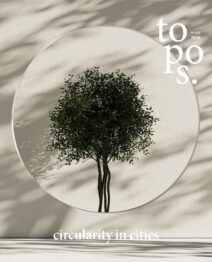
    Interview: „We’ve already made significant progress“

    Juli 9, 2026

    Kohring, Katharina, and Dirk E. Hebel. ‘Interview: “We’ve already made significant progress”’. topos. circularity in cities (München), 2026.


    Better this way

    Juli 9, 2026
    Screenshot

    Holl, Christian. ‘Besser So’. Marlowes, 7 July 2026. https://www.marlowes.de/besser-so/.


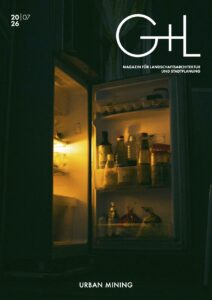
    Interview: „We’ve already made great progress“

    Juli 9, 2026

    Kohring, Katharina, and Dirk E. Hebel. ‘Interview: “Wir sind schon einen großen Schritt weiter”’. G+L – Magazin für Landschaftsarchitektur und Stadtplanung (München), 2026.


    Umbauhof – A Place for the Reuse of Building Components

    Juni 24, 2026

    Boerman, E., & Hebel, D. E. (2026). Weniger Treibhausgasemissionen durch Wiederverwendung. In Umbauhof—Ein Ort für die Wiederverwendung von Bauteilen. Birkhäuser Verlag GmbH (Architektur Raumburgenland, Asphalt / Kollektiv für Architektur).


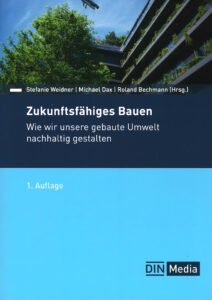
    Sustainable Construction. How we are shaping our built environment in a sustainable way.

    Mai 7, 2026

    Hebel, Dirk E., and Elena Boerman. “Projektstudie 2 (Schwerpunkt: Materialien): Der Kreislaufbasierte Architekturansatz.” In Zukunftsfähiges Bauen – Wie Wir Unsere Gebaute Umwelt Nachhaltig Gestalten, 64–78. Berlin: DIN Media Innovation, 2026.


    Circular! Foundations and principles of a circular construction industry.

    März 11, 2026

    Hebel, Dirk E., and Annette Hillebrandt, eds. 2026. Zirkulär! Fundamente und Postulate einer kreislaufbasierten Bauwirtschaft. Bauwelt Fundamente. Birkhäuser Verlag GmbH.


    A matter of consequence

    März 11, 2026

    Deutsches Architekt:innen Blatt. 2026. “Eine Frage der Konsequenz.” March.


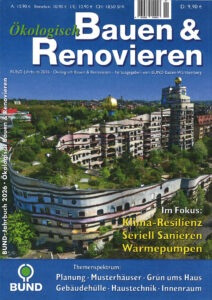
    Circular Construction. Regenerative Building material management.

    Januar 8, 2026

    Steiff, Peter. “Zirkuläres Bauen. Regeneratives Baustoff-Management.” BUND Jahrbuch 2026, January 2026.


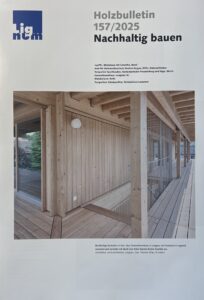
    Wood as a foundation of a sustainable building culture

    Januar 8, 2026

    Glanzmann, Jutta. “Holz Als Basis Für Eine Nachhaltige Baukultur.” Lignum Holzbulletin 157/2025, no. Nachhaltig bauen (2025): 4058–59.


    MycoTree

    Januar 5, 2026

    McLean, Will, Pete Silver, and Dirk Hebel. “MycoTree.” In Sustainable & Regenerative Materials for Architecture – A Source Book. 2025; Laurence King, 2025.


    Really Circular – Material Library at KIT

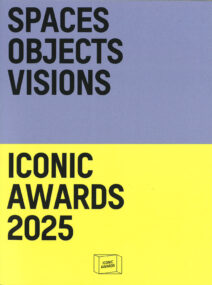
    Oktober 29, 2025

    Dietzold, Lutz, ed. Iconic Awards 2025 – Spaces Objects Visions. Frankfurt: Rat für Formgebung GmbH, 2025.


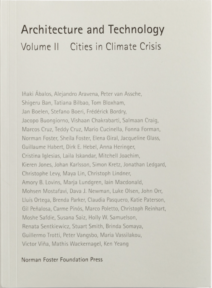
    Activating the Urban Mine

    Oktober 2, 2025

    Hebel, Dirk E. „Activating the Urban Mine.“ In Architecture and Technology Volume II: Cities in Climate Crisis. Madrid: Norman Foster Foundation Press, 2025.


    The city as a resource

    September 18, 2025


    Hebel, Dirk E. und Felix Heisel. “Die Stadt als Ressource.” In Für eine nachhaltige Architektur der Stadt. Berlin: Verlag Klaus Wagenbach, 2025.


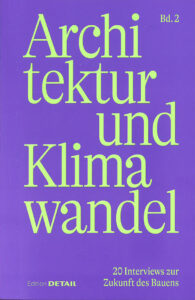
    From a linear to a circular system

    September 15, 2025

    Hebel, Dirk E. “Vom Linearen Zum Kreislaufsystem.” In Architektur Und Klimawandel. München: Edition DETAIL, 2025.


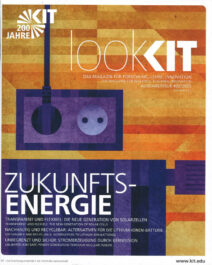
    Interview: „We must finally start measuring CO2 emissions – not just how thick the insulation is“

    Juli 29, 2025

    Hebel, Dirk E. Interview: “Wir müssen endlich anfangen, den CO2-Ausstoß zu messen – nicht nur, wie dick die Dämmung ist.” Interview by Christoph Karcher. LooKIT 0225, 2025.


    WEtransFORM – On the Future of Building

    Juni 22, 2025

    BUNDESKUNSTHALLE, ed. WEtransFORM – Zur Zukunft Des Bauens. Berlin: jovis Verlag, 2025.


    Henkels Wuppertal

    Juni 4, 2025

    Renaissance AG, ed. Henkels Wuppertal – DenkWerkStadt. Wuppertal: renaissance Immobilien und Beteiligungen Aktiengesellschaft, 2025.


    Building for the world of tomorrow

    April 24, 2025

    Monkenbusch, Helmut. „Bauen für die Welt von morgen.“ Hörzu, 24.1.2025


    Funghi – underground networkers

    April 24, 2025

    Hebel, Dirk E., Tanja Hildbrandt. „ Pilze – Netzwerker im Untergrund“. alverde, dm-Magazin, April 2025.


    Fungi are versatile

    Februar 24, 2025

    Merkert-Andreas, Carolin. “Pilze Sind Vielseitig.” Wohnglück, January 2025.


    “RoofKIT – Carbon storage and Material storage”

    Januar 9, 2025

    Boerman, Elena, and Dirk E. Hebel. “RoofKIT – Kohlenstoffspeicher Und Materiallager.” Architektur.Aktuell, vol. 12.2024, no. Tradition und Innovation, Dezember 2024, pp. 98–109


    The many applications of mycelium construtction

    Dezember 8, 2024

    Grossarth, Jan. „Exkurs: Die vielen Einsatzbereiche von Myzel im Bauwesen“. In Bioökonomie und Zirkulärwirtschaft im Bauwesen, eine Einführung, 174–117. Wiesbaden: Springer Fachmedien, 2024.


    Interview: „From a Linear to a Circular System“

    November 13, 2024

    Hebel, Dirk E. Interview: “Vom linearen zum zirkulären Kreislaufsystem.” Interview by Sandra Hofmeister, DETAIL 11.2024, Nov. 2024.


    Building with renewable materials – Nature as a resource depot

    Oktober 29, 2024

    Hebel, Dirk E., Sandra Böhm, Elena Boerman, Hrsg. Vom Bauen mit erneuerbaren Materialien – Die Natur als Rohstofflager. Stuttgart: Fraunhofer IRB Verlag, 2024.


    Guest contribution: ‚Thinking, designing and operating in circular ways.‘

    Juni 27, 2024

    Hebel, Dirk E. “In Kreisläufen denken, entwerfen und wirtschaften.” MÄG – Mein Häfele Magazin, 2024.


    Interview: ‚Mycelium power for the construction industry‘

    Juni 10, 2024

    Rubel, Maike, and Patricia Leuchtenberger. Interview: “Pilzpower für die Bauindustrie.” competitionline, 7 June 2024, https://www.competitionline.com/de/news/schwerpunkt/pilzpower-fuer-die-bauindustrie-7283.html.


    ‚Future building materials: mushroom, hemp and algae‘ in neubau kompass

    Mai 27, 2024

    Müller, Janek. “Baumaterialien der Zukunft: Pilze, Hanf und Algen.” neubau kompass – Neubauprojekte in Deutschland, May 3, 2024. https://www.neubaukompass.de/premium-magazin/.


    Interview: ‚We have disposed of valuable materials‘

    Mai 7, 2024

    Sören, S. Sgries. “Interview: ‘Wir haben wertvolle Materialien weggeworfen.’” Rhein-Neckar-Zeitung, April 27, 2024, SÜDWEST I 28 edition, sec. Sinsheimer Nachrichten.


    Built on mushroom

    April 24, 2024

    Schweikle, Johannes. “Auf Pilz gebaut.” Stuttgarter Zeitung, April 23, 2024, sec. Die Reportage.


    Organic Architecture – Fungus mycelium and flax as materials for the ecological building transition

    Februar 13, 2024

    Klaaßen, Lars. “Organische Architektur – Pilzmyzel und Flachs als Materialien für die ökologische Bauwende.” In Deutsches Architektur Jahrbuch 2024, edited by Peter Cachola Schmal, Yorck Förster, and Christina Gräwe, 198–209. Berlin, Germany: DOM publishers, 2024.