Home | Impressum | Datenschutz | KIT

Tropical Town Project Batam with prototypes of newly developed materials of the Alternative Construction Materials Team of FCL Singapore and the Professorship Dirk E. Hebel KIT Karlsruhe

By 2025, Indonesia will need 30 million houses to house its residents, which means the country needs to build around 1.2 million new houses per year. Access to formal public housing, however, especially for the low-income group, is still elusive due to the cost and the difficulties of securing financing.The Tropical Town project by Singapore Future Cities Laboratory’s Urban-Rural Systems team around Prof. Stephen Cairns aims to develop alternative sustainable settlements that provide affordable housing for the low income inhabitants in developing countries, particularly in the tropics.

The planning strategy of Tropical Town is to integrate small living units with public spaces and productive landscapes. Each unit called Rubah can gather 100% of the rainwater for clean water, manage 100% of liquid and solid waste, afford 60% of the self-sufficient energy which will be integrated with an on-grid system with PLN, and 20% of  food that family needs. The Rubah has been constructed with help of the Alternative Construction Materials Module FCL Nazanin Saeidi and Alireza Javadian and the Professorship of Dirk E. Hebel at KIT Karlsruhe using local building materials such as bamboo, Meranti timber, rammed earth, and mycelium. The kitchen has been designed as a mobile kitchen to provide the opportunity to run a small food business to increase household incomes.

The first phase of Tropical Town was an explorative study conducted through symposiums, workshops and exhibitions in Singapore, the Netherlands, Switzerland, Germany and Indonesia. The second phase of this project is focused on design development, experimental studies and the implementation of the ground floor construction of the Rubah unit along with the provision of the smallest systems in Tropical Town. The third phase will continue with design development, the experimental and construction studies of the Rubah’s upper floors.

The Alternative Construction Materials Module FCL and the Professorship of Dirk E. Hebel at KIT Karlsruhe has also taken responsibility for design and construction of the second and third phase of the project. Currently the team has finished the production of newly developed bamboo composite elements as an external wall cladding element. The team together with Mycotech from Indonesia has also finished the production and installation of innovative mycelium tiles as an internal wall cladding and is currently finalizing the design for the 3rd floor of the building, which should be finished also this year.


Karlsruher Institut für Technologie
Fakultät für Architektur
Institut Entwerfen und Bautechnik

Professur Nachhaltiges Bauen
Englerstr. 11, Geb. 11.40, Raum 25
D-76131 Karlsruhe
 
Tel: +49 (0)721/608-42167


Recent Publications:  
 

    Interview: „We’ve already made significant progress“

    Juli 9, 2026

    Kohring, Katharina, and Dirk E. Hebel. ‘Interview: “We’ve already made significant progress”’. topos. circularity in cities (München), 2026.


    Better this way

    Juli 9, 2026
    Screenshot

    Holl, Christian. ‘Besser So’. Marlowes, 7 July 2026. https://www.marlowes.de/besser-so/.


    Interview: „We’ve already made great progress“

    Juli 9, 2026

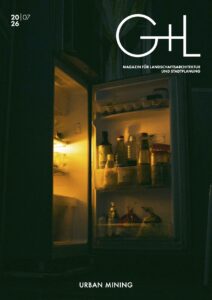
    Kohring, Katharina, and Dirk E. Hebel. ‘Interview: “Wir sind schon einen großen Schritt weiter”’. G+L – Magazin für Landschaftsarchitektur und Stadtplanung (München), 2026.


    Umbauhof – A Place for the Reuse of Building Components

    Juni 24, 2026

    Boerman, E., & Hebel, D. E. (2026). Weniger Treibhausgasemissionen durch Wiederverwendung. In Umbauhof—Ein Ort für die Wiederverwendung von Bauteilen. Birkhäuser Verlag GmbH (Architektur Raumburgenland, Asphalt / Kollektiv für Architektur).


    Sustainable Construction. How we are shaping our built environment in a sustainable way.

    Mai 7, 2026

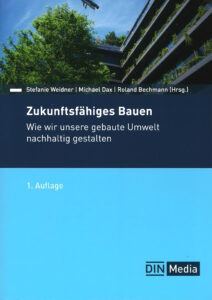
    Hebel, Dirk E., and Elena Boerman. “Projektstudie 2 (Schwerpunkt: Materialien): Der Kreislaufbasierte Architekturansatz.” In Zukunftsfähiges Bauen – Wie Wir Unsere Gebaute Umwelt Nachhaltig Gestalten, 64–78. Berlin: DIN Media Innovation, 2026.


    Circular! Foundations and principles of a circular construction industry.

    März 11, 2026

    Hebel, Dirk E., and Annette Hillebrandt, eds. 2026. Zirkulär! Fundamente und Postulate einer kreislaufbasierten Bauwirtschaft. Bauwelt Fundamente. Birkhäuser Verlag GmbH.


    A matter of consequence

    März 11, 2026

    Deutsches Architekt:innen Blatt. 2026. “Eine Frage der Konsequenz.” March.


    Circular Construction. Regenerative Building material management.

    Januar 8, 2026

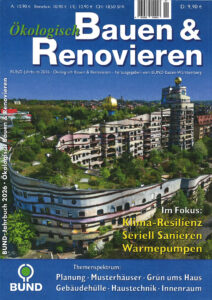
    Steiff, Peter. “Zirkuläres Bauen. Regeneratives Baustoff-Management.” BUND Jahrbuch 2026, January 2026.


    Wood as a foundation of a sustainable building culture

    Januar 8, 2026

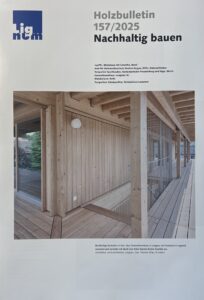
    Glanzmann, Jutta. “Holz Als Basis Für Eine Nachhaltige Baukultur.” Lignum Holzbulletin 157/2025, no. Nachhaltig bauen (2025): 4058–59.


    MycoTree

    Januar 5, 2026

    McLean, Will, Pete Silver, and Dirk Hebel. “MycoTree.” In Sustainable & Regenerative Materials for Architecture – A Source Book. 2025; Laurence King, 2025.


    Really Circular – Material Library at KIT

    Oktober 29, 2025

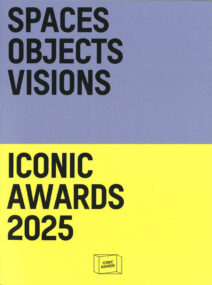
    Dietzold, Lutz, ed. Iconic Awards 2025 – Spaces Objects Visions. Frankfurt: Rat für Formgebung GmbH, 2025.


    Activating the Urban Mine

    Oktober 2, 2025

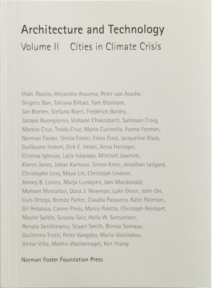
    Hebel, Dirk E. „Activating the Urban Mine.“ In Architecture and Technology Volume II: Cities in Climate Crisis. Madrid: Norman Foster Foundation Press, 2025.


    The city as a resource

    September 18, 2025


    Hebel, Dirk E. und Felix Heisel. “Die Stadt als Ressource.” In Für eine nachhaltige Architektur der Stadt. Berlin: Verlag Klaus Wagenbach, 2025.


    From a linear to a circular system

    September 15, 2025

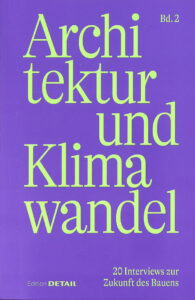
    Hebel, Dirk E. “Vom Linearen Zum Kreislaufsystem.” In Architektur Und Klimawandel. München: Edition DETAIL, 2025.


    Interview: „We must finally start measuring CO2 emissions – not just how thick the insulation is“

    Juli 29, 2025

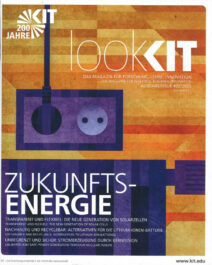
    Hebel, Dirk E. Interview: “Wir müssen endlich anfangen, den CO2-Ausstoß zu messen – nicht nur, wie dick die Dämmung ist.” Interview by Christoph Karcher. LooKIT 0225, 2025.


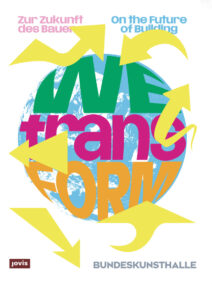
    WEtransFORM – On the Future of Building

    Juni 22, 2025

    BUNDESKUNSTHALLE, ed. WEtransFORM – Zur Zukunft Des Bauens. Berlin: jovis Verlag, 2025.


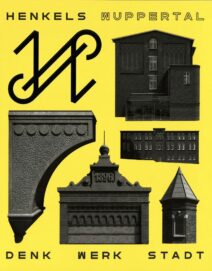
    Henkels Wuppertal

    Juni 4, 2025

    Renaissance AG, ed. Henkels Wuppertal – DenkWerkStadt. Wuppertal: renaissance Immobilien und Beteiligungen Aktiengesellschaft, 2025.


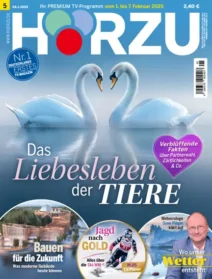
    Building for the world of tomorrow

    April 24, 2025

    Monkenbusch, Helmut. „Bauen für die Welt von morgen.“ Hörzu, 24.1.2025


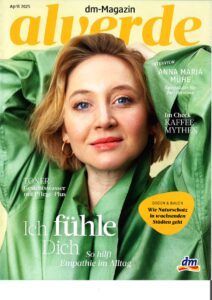
    Funghi – underground networkers

    April 24, 2025

    Hebel, Dirk E., Tanja Hildbrandt. „ Pilze – Netzwerker im Untergrund“. alverde, dm-Magazin, April 2025.


    Fungi are versatile

    Februar 24, 2025

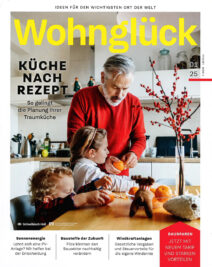
    Merkert-Andreas, Carolin. “Pilze Sind Vielseitig.” Wohnglück, January 2025.


    “RoofKIT – Carbon storage and Material storage”

    Januar 9, 2025

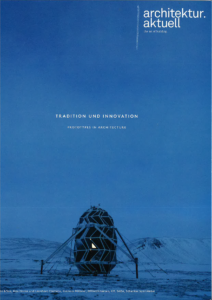
    Boerman, Elena, and Dirk E. Hebel. “RoofKIT – Kohlenstoffspeicher Und Materiallager.” Architektur.Aktuell, vol. 12.2024, no. Tradition und Innovation, Dezember 2024, pp. 98–109


    The many applications of mycelium construtction

    Dezember 8, 2024

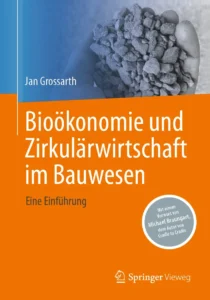
    Grossarth, Jan. „Exkurs: Die vielen Einsatzbereiche von Myzel im Bauwesen“. In Bioökonomie und Zirkulärwirtschaft im Bauwesen, eine Einführung, 174–117. Wiesbaden: Springer Fachmedien, 2024.


    Interview: „From a Linear to a Circular System“

    November 13, 2024

    Hebel, Dirk E. Interview: “Vom linearen zum zirkulären Kreislaufsystem.” Interview by Sandra Hofmeister, DETAIL 11.2024, Nov. 2024.


    Building with renewable materials – Nature as a resource depot

    Oktober 29, 2024

    Hebel, Dirk E., Sandra Böhm, Elena Boerman, Hrsg. Vom Bauen mit erneuerbaren Materialien – Die Natur als Rohstofflager. Stuttgart: Fraunhofer IRB Verlag, 2024.


    Guest contribution: ‚Thinking, designing and operating in circular ways.‘

    Juni 27, 2024

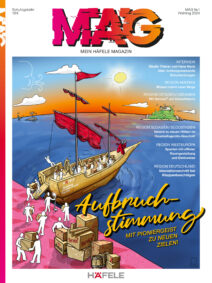
    Hebel, Dirk E. “In Kreisläufen denken, entwerfen und wirtschaften.” MÄG – Mein Häfele Magazin, 2024.


    Interview: ‚Mycelium power for the construction industry‘

    Juni 10, 2024

    Rubel, Maike, and Patricia Leuchtenberger. Interview: “Pilzpower für die Bauindustrie.” competitionline, 7 June 2024, https://www.competitionline.com/de/news/schwerpunkt/pilzpower-fuer-die-bauindustrie-7283.html.


    ‚Future building materials: mushroom, hemp and algae‘ in neubau kompass

    Mai 27, 2024

    Müller, Janek. “Baumaterialien der Zukunft: Pilze, Hanf und Algen.” neubau kompass – Neubauprojekte in Deutschland, May 3, 2024. https://www.neubaukompass.de/premium-magazin/.


    Interview: ‚We have disposed of valuable materials‘

    Mai 7, 2024

    Sören, S. Sgries. “Interview: ‘Wir haben wertvolle Materialien weggeworfen.’” Rhein-Neckar-Zeitung, April 27, 2024, SÜDWEST I 28 edition, sec. Sinsheimer Nachrichten.


    Built on mushroom

    April 24, 2024

    Schweikle, Johannes. “Auf Pilz gebaut.” Stuttgarter Zeitung, April 23, 2024, sec. Die Reportage.


    Organic Architecture – Fungus mycelium and flax as materials for the ecological building transition

    Februar 13, 2024

    Klaaßen, Lars. “Organische Architektur – Pilzmyzel und Flachs als Materialien für die ökologische Bauwende.” In Deutsches Architektur Jahrbuch 2024, edited by Peter Cachola Schmal, Yorck Förster, and Christina Gräwe, 198–209. Berlin, Germany: DOM publishers, 2024.