Privacy & Cookies: This site uses cookies. By continuing to use this website, you agree to their use.
To find out more, including how to control cookies, see here:
KIT Datenschutzerklärung
As of May 15th, Dr. Mateusz Wielopolski as a Post-Doc researcher and Karsten Schlesier as an external advisor joined the research team of CoReSing in Singapore. Both are active in the composite bamboo research and investigate chemical, physical as well as mechanical material properties. Mateusz Wielopolski has received his PhD in Chemistry in Germany at the University of Erlangen. His background in physical chemical and materials sciences has led him through researcher positions in the UK, Japan, Germany and Switzerland. Thereby, his expertise is found in the development and analysis of new materials. In this field he has contributed to more than 20 peer-reviewed journal publications and books. Karsten Schlesier graduated in Civil Engineering from Karlsruhe Institute of Technology KIT. As a structural engineer his research activities are focused on non-standardized and alternative construction materials, realizing various prototypical structures in Germany and Ethiopia over the last years. Also, Dr. Dragan Griebel from CoReSings research partner REHAU had his first extended research stay at the Advanced Fiber Composite Laboratory AFCL setting up first test series and establishing production standards.
FCL, including the chair of Architecture and Construction, held a visit to the HDB Building Research Institute in Singapore on 22nd March 2013. Presentations, Q&A sessions and a tour through the research centre opened the floor for multiple possibilities of collaboration between the two insitutions. Main goals of HDB BRI are to introduce new technologies, and upgrade design standards and materials for the market. The visitors had an opportunity to see prototypes of new amenities, which adress safety and living standards in residential units in Singapore.
Lecture by Dirk E. Hebel on April 22, 2013 in the seminar ‘Information Architecture of Cities’ at the chair of Prof. Dr. Gerhard Schmitt, ETH Zurich. The elective course ‘Information Architecture of Cities’ opens a holistic view on existing and new cities, with focus on Asia. The goal is to better understand the city by going beyond the physical appearance and by focusing on different representations, properties and impact factors of the urban system.
Public lecture by researcher Marta Wisniewska at the CREATE Talks in Singapore on 19th April 2013. CREATE Talks is a discussion platform, bringing together interdisciplinary researchers of CREATE Tower institutions, such as ETH, MIT, TUM and BERKLEY. This time the event was hosted by TU Munich and moderated by SMART, while FCL and BEARS representatives gave their talks. The ‘Waste and Want’ presentation by Marta Wisniewska triggered a discussion of smart product design and what kind of impact it can have on the immediate surrounding as their second life cycle is activated. The talk examined exemplary refuse products as possibly one of the biggest material resource in the building industry. Some of the newest waste projects of CoreSing were also presented.
Public lecture by researcher Marta Wisniewska at the CREATE Talks in Singapore on 19th April 2013.CREATE Talks is a discussion platform, bringing together interdisciplinary researchers of CREATE Tower institutions, such as ETH, MIT, TUM and BERKLEY. This time the event will be hosted by TU Munich and moderated by SMART, while FCL and BEARS representatives will give their talks. The ‘Waste and Want’ presentation by Marta Wisniewska will introduce the idea of smart product design and what kind of impact they can have on the immediate surrounding as their second life cycle is activated. The talk will examined exemplary refuse products as possibly one of the biggest material resource in the building industry. Some of the newest waste projects of CoreSing will be also presented.
The Chair of Architecture and Construction Dirk E. Hebel at FCL Singapore was awarded the SMART Innovation Grant in the tune of SG $250.000 on March 22, 2013. The grant supports the research of CoReSing in the area of bamboo composite reinforcemnet systems and will assist to help it reach the marketplace. The SMART Innovation Grant enables the research team to pursue new avenues of extended research and participate in programs that will help accelerate innovations toward commercialization. The funding will be used to de-risk the technology by developing prototypes or conducting proof-of-concept experiments and determine a go-to-market strategy for the products or services being developed. The end point of the grant funding would be a well defined business opportunity attractive to start-up company formation or licensing to a commercial firm.
Public lecture by researcher Marta Wisniewska at a meeting of the Future Cities Laboratory with Shanghai Jiao Tong University in CREATE Tower, on 22nd March 2013. The presentation was conducted in order to discuss on possible collaboration platforms between the two institutes. The session was attended by Prof. Tong Yen Wah, the Singapore-based Co-Director of SJTU-CREATE (Shanghai Jiao Tong University) as well as Ms. Karina Yew-Hoong GIN and Mr. Babovic Vladan, Associate Professors of the Department of Civil and Environmental Engineering. SJTU-CREATE is researching two areas: ‘Waste management and energy recovery ‘(including studies of human behaviour) and ‘Emerging contaminants and the effect on human health and ecology’ (including pollutants in reservoirs). The talk of Marta Wisniewska focused on CoReSing’s search for an intelligent design of future refuse products and their second life cycle. The abundance of waste as future building material in cities was an essential part of the presentation.
Public lecture by Prof. Dirk E. Hebel at the Princeton School of Architecture on April 3, 2013. During the academic year 2012/13 Princeton SoA will stage a series of public conversations around alternative practices in architecture through the work of 85 distinguished alumni from the last 25 years. At a moment when the profession is going through some important questions on a global scale, the series will explore the broad range of practices of recent alumni that spin from or gravitate around architecture, seeking alternatives to the established forms of architectural practice. The series will highlight Princeton’s commitment to experimental work at the edge of the discipline, and on our alumni’s engagement with a wide range of contemporary practices to outline propositions for alternative forms of practice. The lecture series intends to feature these practices as a sample of the issues that the contemporary practice of architecture has to address, to foreground relevant areas of interest and opportunity. Eight sessions will be held during the Fall ’12 term, and eight more during the Spring ’13 term, featuring different practice formats, geographies, ideologies and technologies. Dirk E. Hebel will lecture in the session: New Brave Worlds – Africa and Latin America. April 3, SoA Princeton University, Betts Auditorium, 6pm.
Public lecture by researcher Marta Wisniewska at a meeting of the Future Cities Laboratory with Shanghai Jiao Tong University in CREATE Tower, on March 22, 2013. The talk will be attended by Prof. Tong Yen Wah, the Singapore-based Co-Director of SJTU-CREATE (Shanghai Jiao Tong University), in order to elaborate on possible collaboration platform between the two institutes. SJTU–CREATE is researching two areas: Waste management and energy recovery (including studies of human behaviour) and Emerging contaminants and the effect on human health and ecology (including pollutants in reservoirs). The talk will focus on CoReSing’s approach to intelligent design of future refuse products and their second life cycle. The abundance of waste as future building material in cities will be an essential part of the presentation.
Public lecture by PhD candidate Alireza Javadian at the 1st Annual International Conference on Architecture and Civil Engineering (ACE 2013) in Singapore, on March 18th, 2013. The ACE 2013 has been organized by the Global Science and Technology Forum (GTSF) and is the first international conference dedicated to both Architecture and Civil Engineering research. The conference is the premiere forum for the presentation of new advances and research results in the fields of Architecture and Civil Engineering. The conference intends to bring together leading researchers, architects, engineers and scientists in this domain of interest from around the world. A paper on ‘Engineering Bamboo; New composite reinforcements’ by the Chair of Architecture and Construction Dirk E. Hebel of FCL Singapore was accepted by the ACE 2013 committee for presentation.
The Chair for Architecture and Construction of Assistant Professor Dirk E. Hebel at the ETH Zurich is part of the Future Cities Laboratory (FCL), the first research program of the Singapore ETH Centre for Global Environmental Sustainability (SEC). Within this context, the chair aims to investigate appropriate building materials and construction methods for future urban development. Resource limitations, heavily import-oriented construction industries, inappropriate use and unreflected application of construction materials and methods drive many economies of the so-called developing world into immense trade deficits. The chair is researching alternative approaches, looking into the appropriate use of indigenous materials in an industrial application process.
In this spirit, the chair is part of a large research project between the Ethiopian Institute of Architecture, Building Construction and City Development (EiABC) in Ethiopia, ETH Global, and the Arthur Waser Foundation, Lucerne. Professor Dr. Elias Yitbarek initiated the ‘Sustainable Rural Dwelling Unit’ (SRDU) project in 2010 as part of his work at the EiABC Chair of Housing. He was able to secure funding of the Arthur Waser Foundation for a pilot project in 2011 with full support and help of the former North-South Centre of ETH Zurich (now represented by ETH Global). Two housing units were built approximately 175km south of the capital Addis Ababa experimenting with local building materials combined with new building techniques. The huge success of this pilot project convinced the Arthur Waser Foundation to continue the engagement with the two universities and enlarge the scope of the work to questions of capacity building, academic exchange with local schools, universities and industry and the transfer of knowledge to a broad range of academic and non-academic stakeholders in Africa.
Immediately, or upon agreement, the Chair of Architecture and Construction Dirk E. Hebel at FCL Singapore is looking for a highly qualified Research Assistant with a background in applied earth masonry, alternative material research and practical training skills to work full time in this research project. As member of the SRDU team, you will assist in initiating and coordinating research in alternative building materials and their use in rural areas in Ethiopia. You will develop testing methods and standards for alternative building materials based on an empirical as well as scientific research approach. You will organize and lead training sessions with local craftsman and undergraduate students in Ethiopia. You will develop didactical concepts on how to train craftsmen and students. You will help to develop curricula for the local University and Technical Vocational Center and help to implement them in these institutions. You will establish contacts with local organizations, NGOs and training facilities in Ethiopia and integrate the SRDU activities in a broader network. Furthermore, you will assume responsibility for the production of publications about the SRDU project, the writing of technical and financial reports, as well as the preparation of possible further research proposals. Prior experience in handling financial aspects of a research project will be a plus. Administrative tasks complement your scope of duties. Based in Ethiopia (80%) and Singapore (20%), the post is provided with a competitive salary under a contract with ETH Zurich (Switzerland). You will be equipped with all necessary tools and office space at EiABC (Ethiopia) and FCL (Singapore).
You possess a technical and/or academic degree along with an established reputation in the field of earth masonry and/or applied alternative material research, as evidenced in a distinguished record of academic and/or practical experience, work, and/or research. You have experience in teaching and vocational training and have practiced in developing countries before. Knowledge in the field of architecture and engineering would also be of great advantage. You actively seek to promote excellence in interdisciplinary thinking and are able to provide exceptional motivation for your work in a team. Not least, you stand out due to your aptitude to contribute to the strategic visions of the project at large.
For further information about the position and/or your application, please contact Ass. Prof. Dirk E. Hebel by e-mail: hebel@arch.ethz.ch and visit the websites www.hebel.arch.ethz.ch as well as www.eiabc.edu.et for further information.
Public lecture by Prof. Dirk E. Hebel at the ‘Advances in Cement and Concrete Technology in Africa’ (ACCTA) conference in Johannesburg, South Africa on January 28, 2013. The ACCTA 2013 is the first international conference initiated from the SPIN project (Spearhead network for innovative, clean and safe cement and concrete technologies), that is a cooperation between European and African leading research institutions from the fields of materials research. The conference aims to cross-link experts in the field of cement and concrete technology with key players from research institutions, industries, associations and policy-making bodies. The aim is to establish a sustainable and economically efficient cement and concrete technology in Africa with impact on the world-wide. A paper on ‘Bamboo Composite Reinforcements in Structural Concrete Applications’ by the Chair of Architecture and Construction Dirk E. Hebel of FCL Singapore was accepted by theACCTA peer review group for presentation.
The FCL ‘Constructing Waste’ seminar 2012 concluded in an exhibition vernissage on 30 November 2012 at the Future Cities Laboratory in Singapore. The public event was orchestrated as the final step in the pedagogical laboratory set by Dirk E. Hebel and Marta Wisniewska of the Assistant Professorship of Architecture and Construction.
The exhibition gave platform to seven outcomes of the ten-week research course, focusing on re-designing an everyday product in such a way, that it can have a second life cycle instead of ending as a trash item. Guests had a chance to see, feel, touch and smell the new products and to understand the concepts behind them. ‘CoBag+’, designed by Tobias Wullschleger, is an intelligent water container, which starts its second life cycle as a shelter and a water-purifying device. Naomi Hanakata presented her ‘D-Shirt’, a high-tech dust cloth, which turns into a fashionable item to wear after use. ‘Back to Bag’ is a design by Desiree Ampot, who is concerned with the amount of plastic carriers wasted every day. Thanks to this alternative version of plastic bags, they could become a luxury collection item. A similar concern encouraged Nikolaos Theodoratos to develop ‘YoBag’- a yoghurt container in a folded plastic bag.
Ervin Lim was inspired by his research in the Indonesian slums. His ‘Plant a Box’ design enhances the locals to collect paper food containers after use, fill them with soil and plant seeds inside. Thanks to an innovative connecting system, these boxes combine into retaining walls to keep river banks intact. Cell phone covers out of Tetra Pack? Pascal Genhart proofed them to be not only stylish but also convenient and very durable. In Singapore , five tons of straws are used and incinerated every day. Alireza Javadian proposes a small change in design, which would allow them to turn into a concrete reinforcement after use – ‘StrawCrete’. All seminar materials, readings, excercise instructions and background information on each lecturer are available in the booklet ‘Constructing Waste’.
‘Preparing Food. Today.’, a recipe book constructed by FCL researchers Naomi Hanakata, Felix Heisel, Martha Kolokotroni, Michaela Frances Prescott, Kashif Shaad, and Marta Wisniewska proposes a change in attitude towards the availability of food resources. Diversification in selecting and preparing food with an extended scope of various possibilities is presented as the taste of the future. The recipe book tries to be provocative by establishing a link between food security and urban structures. ‘Preparing Food. Today.’ gives an overview of recipes in the world of 2052, featuring suprising alternatives. The hypothetical project was presented to FCL community in the lunch talk series on 29 November 2012.
You are warmly invited to attend the international FCL conference CONCRETE – SLEEPING BEAUTY on 26 November 2012 organized by the Chair of Architecture and Construction Dirk E. Hebel at ETH Zuerich/FCL Singapore together with TEC21 and espazium Switzerland as media partners. Five projects will introduce and initiate a discussion on the state of the art of a century-long unchanged material use. Can we think of new application and production methodologies? Can concrete heal itself? Can it produce power? Can concrete be computated? Are there organic reinforcement possibilities?
Five international researchers from different backgrounds will showcase their work. They aim to change the way we think about the most used building material on the globe today. The speakers will be Francois Roche of New Territories (France and Thailand), Matthias Kohler of Gramazio & Kohler (Switzerland), Hendrik Jonkers of TU Delft (The Netherlands), Thorsten Klooster of Task Architects (Germany) and Dirk Hebel, ETHZ/FCL (Switzerland and Singapore). The event will be moderated by Stephen Cairns, Scientific Coordinator of FCL Singapore.
The last talk of the Constructing Waste Seminar was led by Dr Chen Chia-Lung on 15 November 2012. Dr. Chen Chia- Lung is a Research Fellow and Centre Manager at Residues and Resource Reclamation Centre (R3C) Nanyang Technological University, NTU Singapore.
There are around 1 billion different types of bacteria in the world. Out of those, less than 1% is known or described scientifically. Within this huge spectrum, different bacterias are known to have specific qualities and properties. While many cause damage and deceases, others help to produce electricity, heal building materials, reduce waste or even ‘eat’ hazardous chemicals . This weeks’ talk focussed on the positive effects and possibilities of bacterias in various sectors.
‘Recycling Spaces’ is a short documentary on waste and recycling in Addis Ababa, Ethiopia, presented by one of the authors, Felix Heisel. The movie led into a discussion on the financial aspect of waste, which is the topic of this week’s Constructing Waste session.
Together with Bisrat Kifle, Felix Heisel initiated the EiABC Movie Series on space appropriation, starting in 2011.The series so far consists out of 4 movies: Disappearing Spaces, Emerging Spaces, Supporting Spaces and Recycling Spaces.
Felix Heisel is working as a Researcher in the Chair of Architecture and Construction at the Future Cities Laboratory Singapore, a collaboration of ETH Zurich and NRF Singapore.
The 7th week’s session of Constructing Waste was opened with a presentation ‘Waste and Want’ by Marta Wisniewska.
The talk raises the everlasting question of aesthetic perception on the example of waste. Questions of necessity and luxury were raised, as waste in architecture evokes very extreme and contradictory reactions in both developing territories and developed countries. Cultural and aesthetic goals as well as differences were discussed on the example of MULU, a container housing project developed by Marta Wisniewska and Felix Heisel in Addis Ababa Ethiopia.
Marta Wisniewska is a researcher at the Future Cities Laboratory at the Assistant Professorship Dirk E. Hebel. Prior to that, she was working as a lecturer and architectural program coordinator at the Ethiopian Institute of Architecture, Building Construction and City Development in Addis Ababa.
The ‘Environmental Session’ of the Constructing Waste Seminar of the Chair of Architecture and Construction at FCL was led by Prof. Rainer Stegmann on 25 October 2012.
Prof. Dr.-Ing Rainer Stegmann is Professor Emeritus of the University of Technology in Hamburg, Germany. As Head of the Institute of Waste Resource Management, he continues doing research in the field of solid waste management and co-owns two patents with his colleagues. Prof. Stegmann is currently a Visiting Professor at the Nanyang Technological University (NTU) in Singapore and Director of the Residues and Resource Reclamation Centre (R3C) at NTU.
The 5th week’s CONSTRUCTING WASTE talk was led by Mr. Ong Seng Eng, former Director of Waste and Resource Management Department of National Environment Agency Singapore.
Mr. Ong is a chemical engineer and responsible for solid waste management in Singapore. His duties include the promotion of the 3Rs (Reduce, Reuse and Recycle), regulatory control on waste collection and management of waste disposal facilities such as waste-to-energy incineration plants and the Semakau Landfill.
Assoc. Prof. Wang Jing-Yuan gave an introductory talk of the 4th Week’s CONSTRUCTING WASTE seminar.
Prof. Wang is an Associate Professor of the School of Civil and Environmental Engineering in Nanyang Technological University (NTU) and is currently Director of the Residues and Resource Reclamation Centre of NTU.
Public lecture by Prof. Dirk E. Hebel, Felix Heisel, Bisrat Kifle, Addis alem Fekele, Tewedaj Eshetu, Yosef Teferri, and Eyob Wedesu at the Green Forum ADDIS 2050 Conference in Addis Ababa on October 09, 2012. Addis Ababa belongs to the fastest growing urban centers in the world. Migration from the rural areas as well as a massive redevelopment strategies of the City Government put the African capital under enormous pressure. Infrastructural deficiencies, water and energy shortages, environmental hazards and mobility challenges question the current modus operandi in place. Alternative pathways will be presented in this lecture which is a result of a workshop collaboration between the Green Forum Ethiopia, FCL Singapore and EiABC Addis Ababa.
Team FCL Singapore: Dirk Hebel, Felix Heisel, Marta Wisniewska, Alireza Javadian, Gerhard Schmitt, Stephen Cairns, Remo Burkhard, Eva-Maria Friedrich, Matthias Berger, Stefan Mueller Arisona, Ludger Hovestadt, Jorge Orozco, Alex Erath, Max Hirsh, Sonja Berthold, Ying Zhou, Edda Ostertag, Naomi Hanakata, Lindsey Ann Sawyer, Cheryl Song, Noor Faizah Binte Othman, Kevin Lim, Amanda Tan
Team EiABC: Joachim Dieter, Bisrat Kifle, Addis alem Fekele, Tewedaj Eshetu, Yosef Teferri, Eyob Wedesu
Team Green Forum/Heinrich Boell Foundation: Patrick Berg, Ayele Kebede, Jonas
The conference ADDIS 2050 – an alternative pathway into Ethiopia’s future – was held on October 9th and 10th 2012 at the campus of the Ethiopian Institute of Architecture, Building Construction and City Development EiABC in Addis Ababa. Addis Ababa belongs to the fastest growing urban centers in the world. Migration from the rural areas as well as massive redevelopment strategies of the City Government put the African capital under enormous pressure. Infrastructural deficiencies, water and energy shortages, environmental hazards and mobility challenges question the current modus operandi in place.
The Green Forum Ethiopia under the leadership of Heinrich Boell Foundation in Addis Ababa commissioned the Chair of Architecture and Construction Dirk E. Hebel at FCL Singapore in collaboration with the Ethiopian Institute of Architecture, Building Construction and City Development EiABC to invent an alternative “green” scenario for the city of Addis Ababa in the year 2050. The conference concentrated on the issues of Energy, Mobility, Cultural and Social Space, Housing and Information. The event was visited by more than 500 people and arose immense interest from the media as well as the City Administration. As guest of honor, the Swiss Ambassador H.E. Dominik Langenbacher attended the conference as well as delegates from several federal ministries and the UN-Habitat. In the meantime, the Department of Masterplanning and Vision of the City Adeministration invited the speakers to present the work in their offices.
Team FCL Singapore:Dirk Hebel, Felix Heisel, Marta Wisniewska, Alireza Javadian, Gerhard Schmitt, Stephen Cairns, Remo Burkhard, Eva-Maria Friedrich, Matthias Berger, Stefan Mueller Arisona, Ludger Hovestadt, Jorge Orozco, Alex Erath, Max Hirsh, Sonja Berthold, Ying Zhou, Edda Ostertag, Naomi Hanakata, Lindsey Ann Sawyer, Cheryl Song, Noor Faizah Binte Othman, Kevin Lim, Amanda Tan
Team EiABC: Joachim Dieter, Bisrat Kifle, Addis alem Fekele, Tewedaj Eshetu, Yosef Teferri, Eyob Wedesu
Team Green Forum/Heinrich Boell Foundation: Patrick Berg, Ayele Kebede, Jonas
Public lecture by Felix Heisel at the Green Forum ADDIS 2050 Conference in Addis Ababa on October 09, 2012. Out of Singapore’s breathtaking development over the past 50 years, the lecture focuses on two mayor characteristics of urban planning: the incredible success story of the Housing & Developing Board (HDB) as well as the concept of a “City in the Garden”. Today, more than 85% of Singapore’s 5.3 million inhabitants are home owners, due to an inventive strategy implemented already in the 1960ies. Identification of the home owners with the nation-state is almost guaranteed, since almost everybody is owning a share of Singapore, whereby national economic growth enhances the value of private property. Also during the last 50 years, even so the built mass in Singapore grew constantly, the green area did as well and is covering today more than 50% of the island, making Singapore one of the greenest cities world-wide. The lecture will introduce the necessary decisions that were taken over the last five decades in order to achieve such high standards.
The 3rd week’s CONSTRUCTING WASTE presentation ‘Why Waste Waste?’ was held on 4 October by Dr Sun Xiaolong.
Dr Sun Xiaolong majored in Materials Science & Engineering. His research areas are waste-to-resource and environmental applications of materials science. Dr Sun works at R3C NTU.
Prof. Dr. Stephen Cairns opened the 2nd Week’s session of CONSTRUCTING WASTE with his talk ‘Rubbish Theory‘.
Stephen Cairns is Scientific Co-ordinator of the Future Cities Laboratory in the Singapore-ETH Centre, and Professor of Architecture and Urbanism at the University of Edinburgh. He is a member of KRUPUC, an independent inter-disciplinary, multi-sectorial research, planning and design platform focused on issues of urbanisation in the Southeast Asian region.
On 20 September 2012 Asst. Prof. Dirk E. Hebel introduced the FCL Fall Seminar: CONSTRUCTING WASTE. The goals and expectations of the course were presented on the example of the United_Bottles Project.
Dirk Hebel is currently holding the position of Assistant Professor at the Future Cities Laboratory in Singapore, a research project of ETH Zurich with the National Research Foundation Singapore.
Public lecture by Prof. Dirk E. Hebel at the 2012 Academia Engelberg Congress in Switzerland on September 14, 2012. The 11th Dialogue on Science will focus on the issue of rapid urbanization and its consequences for everyday life in cities around the world. With this congress the Academia Engelberg Foundation asks how might the disciplines of architecture, urbanism and the built environment sciences respond to the challenges of rapid urbanization?
The Chair of Architecture and Construction at the Future Cities Laboratory in Singapore concentrates its research on ‘alternative modern’ construction materials. The ‘alternative’ aspect of this focus emerges from an exploration of the possibility of knowledge transfer, which could change the way we think about vernacular or traditional building materials. One material, maybe the most neglected building material in the world so far, has the chance to change our perspective: Bamboo, “the next super-material” as it was called out in a recent BBC documentary. It is growing exactly in those regions around the equator belt, where most developing territories are to be found today. Bamboo is a very fast growing and affordable natural resource, which has outstanding constructive qualities, superior to wood and, looking at tensile capacities, even to steel.
Re-inventing and overcoming its role as a old fashioned vernacular building material of the South, it could start to establish a knowledge transfer from South-to-South or South-to-North and reverse the traditional model. The talk will argue, that through knowledge transfer, there is a chance to combine and therefore revaluate globally applied building materials with local available substances and knowledge from the South. It is proposing the possibility for a ‘reverse’ or ‘alternative modernism’, whereby developed countries might start to learn and gain from a knowledge developed in the ‘South’.
Public lecture by Prof. Dirk E. Hebel at the 2012 FCL/ETH conference in Zurich, Switzerland on September 10, 2012. Multiple centers, hubs and nodes increasingly supplement traditional city centers, regional territories and urban clusters. These are embedded in a network of infrastructures to form complex polycentric urban regions that extend far into once rural hinterlands. Research from the Future Cities Laboratory in Singapore will be confronted with research from ETH Zurich and elsewhere in order to promote an exchange of knowledge and to bring the Future Cities Laboratory’s work to the attention of a larger audience in Switzerland. Following the question on how a well-tempered environment can be achieved in different situations of affluence, material resources and technological development, Dirk Hebel will introduce first outcomes of his research in Singapore.
Public forum discussion with Prof. Dirk E. Hebel at the UN-Habitat Confrenece: The Urban Future in Naples, Italy, September 04, 2012. The overarching theme of the sixth session of the World Urban Form “The Urban Future” clearly signifies the need to anticipate, imagine and plan for the future in order to shape it in sustainable ways. The rapid pace of change from global to local levels and related complexities, uncertainties and connectivity necessitate cities to think ahead into the future and adapt their plans, policies and interventions accordingly. Promoting socially equitable, economically viable and environmentally balanced cities requires decision-makers to systematically examine and anticipate future trends, conditions and drivers of change. To become prosperous, innovative and competitive, cities need to critically examine possible and probable scenarios so as to work towards their preferred future.
The future offers enormous potential for achieving sustainable development targets in cities as it can be shaped through actions and decisions taken today.
While the term “future” bears several uncertainties, systematically analyzing the future presents an opportunity to identify alternatives that can guide today’s policies and development at the city, regional and national scales. Futuring is the methodical exploration, creation, and testing of a range of alternative futures to inform decision making, and allow better decisions to inform a better tomorrow. Thus, the objective of future analysis and visioning is not to project the “right” future or make the “right” decisions” but to make more informed decisions in relation to many possible projected scenarios.
Globally, cities have engaged in futuring processes at different scales and in various urban sectors so as to design policies and interventions that take future opportunities and risks into consideration. The results of these processes have not been without challenges, especially when it comes to being translated into action. In many other instances, cities seldom engage in foresight exercises and may be more occupied with addressing current and immediate needs and challenges, especially in developing countries. There is thus a clear need to rethink the role of futuring in urban management and governance to enable cities to better prepare for a complex, uncertain and rapidly changing global context.
UN‐Habitat has recently launched an urban futures initiative called “Futurban” to integrate futuring into urban policy and decision making processes. Futurban undertakes research to anticipate and analyze future trends, conditions and events in order to advance knowledge on the future of cities and contribute to enhanced policy and decision making. In addition, based on a rigorous analysis of alternative scenarios, Futurban assists cities to envision their preferred urban future and set realistic milestones for achieving it through innovative and visionary strategies. By building foresight in policy and decision making processes, it strengthens the ability of cities to capitalize on strategic levers to proactively shape their future.
The Chair of Architecture and Construction Dirk E. Hebel at FCL Singapore is organizing an
FCL-SEC Fall Semester 2012 Seminar CONSTRUCTING WASTE.
Hundreds of tons of waste are produces in Singapore every day. These wastes represent an invaluable pool of resources, which could be activated by rethinking their designs. The ‘hands on the material’ seminar CONSTRUCTING WASTE will interrogate the concept of up-cycling strategies in order to minimize the overall refuse amount being produced in Singapore. The focus on design questions should create second life cycles for otherwise waste products.
The seminar will be conducted as a combination of input lectures, reading seminars and the production of full- scale up-cycling design products. Students will be asked to map the nature and flows of an everyday product through different research methods and finally to change the product design in order to influence both waste and material stock and flows in the future. 10 weeks of seminar will result in project descriptions and an up-cycling prototype in full scale.
The Chair of Architecture and Construction Dirk E. Hebel at FCL Singapore together with Heinrich Boell Foundation and the Ethiopian Institute of Architecture, Building Construction and City Development is organizing an international workshop to develope a vision for Addis Ababa in the year 2050. The African population is growing fast and urbanization will shape the coming decades. Existing cities are changing rapidly and new infrastructures and buildings are constructed at an enormous speed, ambitious plans are in place to create dozens of new cities from scratch. Currently, the focus of this development seems to be “catching up” with developed or emerging economies. In many cases, a ‘copy/paste’ mentality to urban development includes a repetition of the mistakes made elsewhere: expensive imported construction materials such as cement, glass and steel are preferred over locally available and more sustainable solutions, public spaces are diminishing, an increasing separation of working and living quarters enlarges transportation needs and traffic concepts concentrate on cars and individual rather than public transportation.
The aim of the workshop is to demonstrate the advantages of realizing bold visions rather than a continued ‘business as usual’ by envisioning a possible alternative development path of the Ethiopian capital Addis Ababa over the next 30-40 years. The results will be presented at a two-day conference held in Addis Ababa in October 2012, open to both an Ethiopian and a wider African as well as intenational audience of academics, politicians, government representatives from relevant ministries and authorities and experts from continental institutions based in Ethiopia. A particular focus of this debate will be on the opportunities of constructing much of the needed infrastructure for the first time in the context of expanding cities – as opposed to cities faced with the challenge of adapting existing infrastructure to new challenges.
Public lunch-talk by Felix Heisel at FCL Singapore on July 12, 2012. Addis Ababa, unlike many other African cities, has a history and city fabric to learn from. Even if the physical conditions of the informal settlements are very poor, the social networks, as well as spatial and cultural values developed and embedded in these areas are worth the preservation and study. Due to the current redevelopments, these parts of the city will change for good within the next years. Hence, now is the right time to document a century old way of living in Addis Ababa. We believe that its informal sector can teach important lessons about the use of architecture and its social role.
This movie is an cinematic documentary on the use of space in the informal parts of Ethiopia’s capital. Looking at one typical house for the duration of 24 hours, one can notice how a single room can serve for most daily functions. Interviews with the inhabitants and experts give further insight into the topic. “Disappearing Spaces” is the first of a series of documentaries on spatial developments in Addis Ababa.
Singapore is one of the highest populated areas in the world. Consequently, the stock and flow of waste became one of the most important challenges on the island in recent years. Understanding the flow of waste materials and mining this incredible resource is one of the interests in the research of the Chair of Architecture and Construction at FCL.
So far, Singapore is using mostly incineration plants to burn the majority of the unrecyclable waste material. Incineration reduces the volume of refuse up to 90% while the remaining 10% are later disposed off at Semakau Landfill, constantly increasing the surface area of the peninsula. This technology uses ash filled parcels in the open see. The amount of refuse production increases constantly, which leaves approximately 20 more years until Semakau Landfill runs out of space. Thus, innovative ways of waste handling have to be developed.
The Chair of Architecture and Construction at FCL initiated a design research seminar in the winter semester 2012, which focuses on design questions in order to minimize the overall refuse amount and creates second life cycles for otherwise waste products.
The Embassy of Switzerland in Ethiopia with the Swiss Agency for Developmemnt and Cooperation under the Federal Department of Foreign Affairs invited Prof. Dirk E. Hebel as an representative of ETH Zuerich for a symposium on the future Swiss Ethiopian Research & Scientific Cooperation for Development held on July 28, 2012 in Addis Ababa. The forum will focus on Ethiopian experience and implementation of partnerships in Research & Science and on future fields, scope and modalities of Research & Science cooperation for development.
Public lecture by Prof. Dirk E. Hebel at the Design Research Society Biennial International Conference in Bangkok on July 04, 2012. The conference hosts 500 world’s leading design academics and professionals for five days of discussion and debate with a special emphasis on the role of design in sustainable development. The conference will provide a platform for educationalists and practitioners in all design fields to share their experiences and develop plans for the future.
Public lecture by Prof. Dirk E. Hebel at TU Delft on May 31, 2012. The modernist ‘proto-type’ followed the idea of one ‘ideal’ model configuration, applied in a serial way, while the ‘proto-typology’ defines a flexible and heterogenous form of organization, which can be changed and readjusted instantly and serve different cultural as well as contextual conditions. It is a process rather than a product. The lecture will show different case studies of prototypologies errected in the last years at the Urban Laboratory ETHiopia.
The EiABC together with the Bauhaus University Weimar and the Chair of Architecture and Construction at FCL Singapore completed successfully the first construction of a double storey dwelling unit out of straw panels world wide. The so-called Sustainable Emerging City Unit (SECU) workshop arose immense interest from nation wide media and the Ministry of Urban Development and Construction. During the workshop, State Minister Heilemeskel Tefera announced to support the project to make the technology available for mass housing projects in Ethiopia. In near future, building codes need to be established, further research has to be conducted and production facilities need to be erected. The Chair of Architecture and Construction at FCL Singapore commited itself to be a strong partner of EiABC in the years to come to achieve these goals. We want to thank all partners for their immense energy and work, especially to all students who attended the workshop from EiABC, Bauhaus University Weimar and ETH Zuerich.
EiABC: Prof. Dr. Dirk Donath, Helawi Sewnet, Belay Getachew, Denamo Addissie, Ingo Oexmann, Jakob Mettler, Peter Dissel, Karsten Schlesier, Sami Tsegu, Fahmi Girma, Melakeselam Moges, Nejmia Ali, Mintesinot Tekle, Samrawit Tazezew, Henok Teshome, Habtamu Regassa, Aknaw Yohannes, Seyume Weldeyesuse, Estifanos Kiflu, Mohammed Jemal, Seife Abdulsemed, Nejat Hassen, Peniel Tekle, Regbe Hagos, Fruta Haddish, Samia Ibrahim
Bauhaus University Weimar: Prof. Dr. Bernd Rudolf, Stephan Schuetz, Timo Riechert, Michael Baer, Carolina Kolodziej, Nadine Wolz, Tereza Spindlerová, Paul Eikemeier, Mona Volkmann, Amelie Wegner, Johannes Martin, Victoria Goldmann, Anna Rodermund, Sebastian Linder
FCL/ETHZ: Asst. Prof. Dirk E. Hebel, Marta Wisniewska, Felix Heisel, Martin Kugelmeier, Sarah Sassi, Tanja Studer, Christian Schwizer and Nike Himmels
Special thanks: Chair of Building Construction EiABC Prof. Dirk Donath, BAM – Federal Material Testing Institute Berlin, AAiT, ICEAddis, D-Arch BUWeimar, D-Arch ETH Zuerich, ETH Sustainability, ETH Global, FCL Singapore, Chair of Information Architecture ETHZ Prof. Gerhard Schmitt, Strawtec Group AG Berlin Eckhardt Dauck and Dirk Niehaus, Frank Wildenhayn, Dr. Karola Hahn, Joachim Dieter, Fasil Giorghis, Prof. Elias Yitbarek, Bisrat Kifle, Teddy Kifle, Binyam Kifle, Prof. Dirk Donath and his energetic and highly motivated EiABC team
In collaboration with the Ethiopian Institute of Architecture, Building Construction and City Development (EiABC) and the Bauhaus University in Weimar, the Assistant Professorship of Architecture and Construction Dirk Hebel at the Future Cities Laboratory Singapore, ETHZ is conducting a one-week workshop to construct a full-scale double-story building out of straw panels in Addis Ababa, Ethiopia.
Five students of the Department of Architecture of ETH Zürich were offered the opportunity to join this international workshop, which concentrates on testing a building material, produced completely out of straw. New settlements are emerging in developing territories like Ethiopia almost every day, growing fast into urban conglomerates. One of the biggest problems in emerging cities is next to infrastructure measurements, available and affordable building materials and techniques for shelter production. The SECU (Sustainable Emerging Cities Unit) research project is focusing on the development of innovative and low-weight construction materials for emerging cities in developing territories, based on agricultural “waste” products like straw.
Puplic lecture by Prof. Dirk E. Hebel on March 29, 2012 at the Goethe Institute Bangalore, India, organized by MoD Institute Berlin/Bangalore in the series ‘Talk of the Town’. The lectures series, under the banner of the year of Germany and India 2011-2012: Infinite Opportunities, is organized around the themes of ‘SEE’, ‘ACT’ and ‘BUILD’ respectively, to critically address various issues related to urban transformation in India in applied and innovative ways. The first lecture began with Richard Saul Wurman’s famous call for ‘making the city observable’ to interrogate different practices of seeing the city through cartography and other visual means and how those shape our everyday urban experiences and decisions. The second lecture ‘ACT’ will gather urban practitioners and actors to discuss and compare various strategies and tactics undertaken by them to intervene in city processes. The discussion will focus on how specific ways of ‘acting’ or ‘intervening’ in the city can create or dismantle urban hierarchies, and also what examples of ‘acting’ in the city can be found in the urban discourse in India.
Circular! Foundations and principles of a circular construction industry.
March 11, 2026
Hebel, Dirk E., and Annette Hillebrandt, eds. 2026. Zirkulär! Fundamente und Postulate einer kreislaufbasierten Bauwirtschaft. Bauwelt Fundamente. Birkhäuser Verlag GmbH.
A matter of consequence
March 11, 2026
Deutsches Architekt:innen Blatt. 2026. “Eine Frage der Konsequenz.” March.
Circular Construction. Regenerative Building material management.
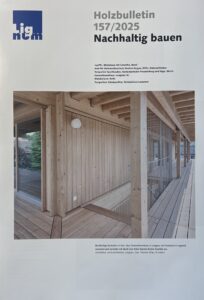
Wood as a foundation of a sustainable building culture
January 8, 2026
Glanzmann, Jutta. “Holz Als Basis Für Eine Nachhaltige Baukultur.”Lignum Holzbulletin 157/2025, no. Nachhaltig bauen (2025): 4058–59.
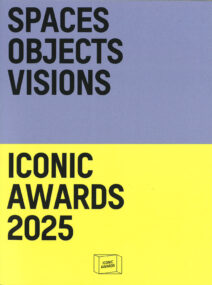
Really Circular – Material Library at KIT
October 29, 2025
Dietzold, Lutz, ed. Iconic Awards 2025 – Spaces Objects Visions. Frankfurt: Rat für Formgebung GmbH, 2025.
Activating the Urban Mine
October 2, 2025
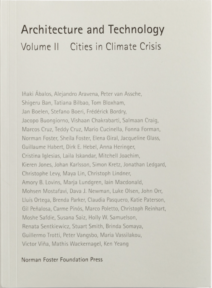
Hebel, Dirk E. “Activating the Urban Mine.“ In Architecture and Technology Volume II: Cities in Climate Crisis. Madrid: Norman Foster Foundation Press, 2025.
The city as a resource
September 18, 2025
Hebel, Dirk E. und Felix Heisel. “Die Stadt als Ressource.” In Für eine nachhaltige Architektur der Stadt. Berlin: Verlag Klaus Wagenbach, 2025.
From a linear to a circular system
September 15, 2025
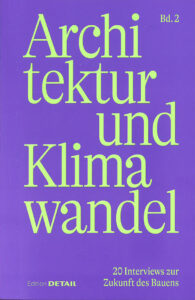
Hebel, Dirk E. “Vom Linearen Zum Kreislaufsystem.” In Architektur Und Klimawandel. München: Edition DETAIL, 2025.
Interview: “We must finally start measuring CO2 emissions – not just how thick the insulation is”
July 29, 2025
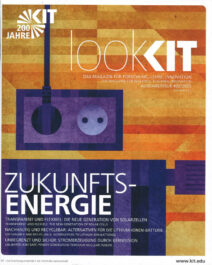
Hebel, Dirk E. Interview: “Wir müssen endlich anfangen, den CO2-Ausstoß zu messen – nicht nur, wie dick die Dämmung ist.” Interview by Christoph Karcher. LooKIT 0225, 2025.
WEtransFORM – On the Future of Building
June 22, 2025
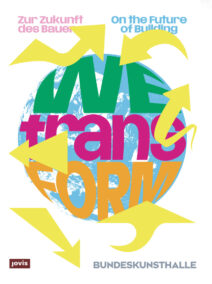
BUNDESKUNSTHALLE, ed. WEtransFORM – Zur Zukunft Des Bauens. Berlin: jovis Verlag, 2025.
Monkenbusch, Helmut. „Bauen für die Welt von morgen.“ Hörzu, 24.1.2025
Funghi – underground networkers
April 24, 2025
Hebel, Dirk E., Tanja Hildbrandt. „ Pilze – Netzwerker im Untergrund“. alverde, dm-Magazin, April 2025.
Fungi are versatile
February 24, 2025
Merkert-Andreas, Carolin. “Pilze Sind Vielseitig.”Wohnglück, January 2025.
“RoofKIT – Carbon storage and Material storage”
January 9, 2025
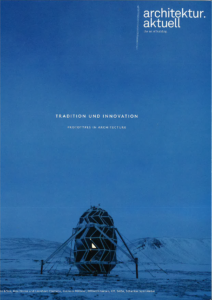
Boerman, Elena, and Dirk E. Hebel. “RoofKIT – Kohlenstoffspeicher Und Materiallager.”Architektur.Aktuell, vol. 12.2024, no. Tradition und Innovation, Dezember 2024, pp. 98–109
Interview: “From a Linear to a Circular System”
November 13, 2024
Hebel, Dirk E. Interview: “Vom linearen zum zirkulären Kreislaufsystem.” Interview by Sandra Hofmeister, DETAIL 11.2024, Nov. 2024.
Building with renewable materials – Nature as a resource depot
October 29, 2024
Hebel, Dirk E., Sandra Böhm, Elena Boerman, Hrsg. Vom Bauen mit erneuerbaren Materialien – Die Natur als Rohstofflager. Stuttgart: Fraunhofer IRB Verlag, 2024.
Guest contribution: ‘Thinking, designing and operating in circular ways.’
June 27, 2024
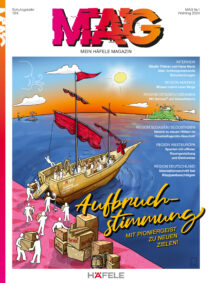
Hebel, Dirk E. “In Kreisläufen denken, entwerfen und wirtschaften.”MÄG – Mein Häfele Magazin, 2024.
Interview: ‘Mycelium power for the construction industry’
June 10, 2024
Rubel, Maike, and Patricia Leuchtenberger. Interview: “Pilzpower für die Bauindustrie.” competitionline, 7 June 2024, https://www.competitionline.com/de/news/schwerpunkt/pilzpower-fuer-die-bauindustrie-7283.html.
‘Future building materials: mushroom, hemp and algae’ in neubau kompass
May 27, 2024
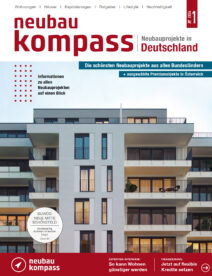
Müller, Janek. “Baumaterialien der Zukunft: Pilze, Hanf und Algen.”neubau kompass – Neubauprojekte in Deutschland, May 3, 2024. https://www.neubaukompass.de/premium-magazin/.
Interview: ‘We have disposed of valuable materials’
May 7, 2024
Sören, S. Sgries. “Interview: ‘Wir haben wertvolle Materialien weggeworfen.’”Rhein-Neckar-Zeitung, April 27, 2024, SÜDWEST I 28 edition, sec. Sinsheimer Nachrichten.
Built on mushroom
April 24, 2024
Schweikle, Johannes. “Auf Pilz gebaut.”Stuttgarter Zeitung, April 23, 2024, sec. Die Reportage.
Organic Architecture – Fungus mycelium and flax as materials for the ecological building transition
February 13, 2024
Klaaßen, Lars. “Organische Architektur – Pilzmyzel und Flachs als Materialien für die ökologische Bauwende.” In Deutsches Architektur Jahrbuch 2024, edited by Peter Cachola Schmal, Yorck Förster, and Christina Gräwe, 198–209. Berlin, Germany: DOM publishers, 2024.
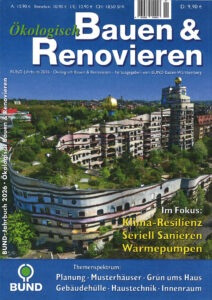
Circular construction – Circulation instead of demolition in “BUND-Jahrbuch 2024”
Redesigned Material Library at KIT in ‘Mitteilungsblatt des VDB-Regionalverbands Südwest’
January 8, 2024
Mönnich, Michael, and Sandra Böhm. “Neu gestaltete Materialbibliothek am KIT.”Südwest-Info: Mitteilungsblatt des VDB-Regionalverbands Südwest Nr. 36 (2023), 2023.
RoofKIT Wuppertal, Germany; Interview with Prof. Dirk Hebel
November 20, 2023
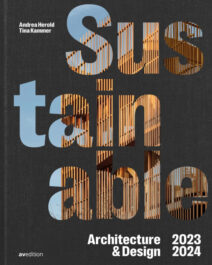
Hebel, Dirk E. “RoofKIT Wuppertal, Germany; Interview with Prof. Dirk Hebel: The aim is clear, we must forge the path ourselves.” In Sustainable Architecture & Design 2023/ 2024, edited by Andrea Herold, Tina Kammerer, and InteriorPark., 46–55. Stuttgart, Germany: av edition GmbH, 2023.
The existing building stock is the future resource
November 16, 2023
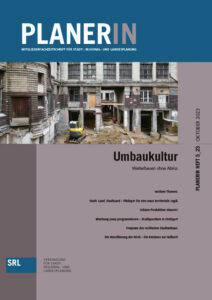
Hebel, Dirk E. “Der Bestand ist die künftige Ressource – Den linearen Umgang mit Baumaterialien schnellstmöglich stoppen.”Planerin – Mitgliederfachzeitschrift für Stadt-, Regional- und Landesplanung, Oktober 2023.
Article: Investigation of mechanical, physical and thermoacoustic properties of a novel light-weight dense wall panels made of bamboo Phyllostachys Bambusides
October 30, 2023
Gholizadeh, Parham, Hamid Zarea Hosseinabadi, Dirk E. Hebel, and Alireza Javadian. “Investigation of Mechanical, Physical and Thermoacoustic Properties of a Novel Light-Weight Dense Wall Panels Made of Bamboo Phyllostachys Bambusides.”Nature Sientific Reports 13 (October 26, 2023). https://doi.org/https://doi.org/10.1038/s41598-023-45515-3
Building Better – Less – Different: Clean Energy Transition and Digital Transformation
October 16, 2023
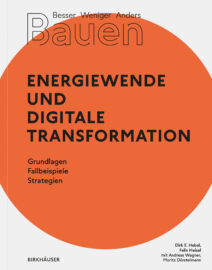
Hebel, Dirk E., Felix Heisel, Andreas Wagner, und Moritz Dörstelmann, Hrsg. Besser Weniger Anders Bauen – Energiewende und digitale Transformation. Besser Weniger Anders Bauen 2. Basel: Birkhäuser Verlag GmbH, 2023.
From hunting, breeding and harvesting future building materials
September 27, 2023
Hebel, Dirk E. “Vom Jagen, Züchten Und Ernten Zukünftiger Baumaterialien.”Baukultur Nordrhein Westfalen, September 2023.