Home | Impressum | Datenschutz | KIT

Swiss Foundation sponsors Professorship Dirk Hebel FCL Singapore and EiABC on the research of Sustainable Rural Housing Strategies in Ethiopia

Zuerich/Addis Ababa/Singapore March 2012

The Arthur Waser Foundation, based in Lucerene Switzerland, recently agreed to sponsor a continuous research project called SRDU (Sustainable Rural Dwelling Unit) in Ethiopia to the tune of 460,000 Swiss Francs over the next three years. The project builds on an academic research cooperation between the Ethiopian Institute of Architecture, Building Construction and City Development (EiABC) in Ethiopia and the Professorship of Dirk E. Hebel of Architecture and Construction at the Singapore-ETH Centre for Global Environmental Sustainability and the Future Cities Laboratory (FCL) in Singapore.

Professor Dr. Elias Yitbarek initiated the project in 2010 as part of his work at the Chair of Housing at the EiABC and has secured funding from the Arthur Waser Foundation for a pilot project in 2011, with the support of the North-South Centre of ETH Zurich, Barbara Becker and the ETH Foundation, Nathalie Fontana. The pilot was regarded as a great success. It involved building two housing units located approximately 250km south of the capital Addis Ababa, and experimentation with local building materials combined with new building techniques and autonomous operating energy supply units. This success convinced the Arthur Waser Foundation to continue the engagement with the two universities and enlarge the scope of the work to include questions of capacity building, academic exchange with local schools and industry and the transfer of knowledge to a wide academic and non-academic audience in Africa.

Lara Davis, PhD researcher working under the supervision of Dirk E. Hebel at the ETH in Zurich, will fully concentrate her work on the development of technical solutions in earthen masonry systems, which address challenges posed by environment conditions, as well as constraints in available building materials and skilled labor. She will also look into robustly co-designed training methodologies, which target maximum cultural relevance, mechanisms for knowledge exchange, and methods for sustainable technology transfer with long-term viability. Next to the strong focus on applied research, where full scale housing units will be built, two PhD students at the EiABC under the guidance of Dr. Elias Yitbarek will work on soft impact factors such as health issues, socio-cultural frameworks, communication strategies and participation models in order to guarantee a long lasting anchoring of the project in rural regions of Ethiopia as well as building up curricula for the academic impact in schools and universities.

The ETH Zurich and the EiABC in Addis Ababa have a long history of academic collaboration. The SRDU research can be seen as the sister project of the Sustainable Urban Dwelling Unit: SUDU. The project, initiated in 2010 by Dirk E. Hebel, who was at that time the Scientific Director of EiABC, investigated the stock and flow model of building materials in Ethiopia and introduced new building techniques and material applications such as earth masonry vaulting together with Prof. Philippe Block and Lara Davis of ETH Zurich, in order to minimize the dependency of building material import in Ethiopia. The project got well know also in Ethiopia and beyond and set the tone for further investigations also in rural areas. With the funding of Arthur Waser Foundation, ETH and EiABC have the chance to further strengthen their research collaboration by understanding the build environment as a complex and open system, ranging from the urban territory to the neighborhood scale and with it the question of material application, considering economic, ecological, social and aesthetic values for a future urbanization of developing territories world wide.


Waste

Waste is usually defined as unwanted or useless material, which is the product of a linear utilization process.

Endless stocks of material are already in the cities regarded as waste. Making this (re-) source available, the value-chains of construction products and materials have a great potential for increased ecological and economic efficiency, and with it minimizing global material flows. Waste products, but also local available materials which were not used in the construction sector yet, need to be recognized as basic elements of the urban creation process. Their use, re-use, and potential for re-placement of other materials are key factors for creating identity, resource efficiency, and new added values to a specific urban system. Analyzing potentials of waste products as a resource for new construction materials and products will be key factors of this research. The understanding of the term “waste” needs to be extended to such materials which were not seen as construction materials yet, or which were seen as backward-oriented, cheap or useless. Waste resources must be analyzed and quantified in similar terms and standards as natural resources. With this analysis, comparative strategies can be implemented. In addition, up-cycling strategies have to be followed, designing new products in such a way, that projected further life-cycles are already incorporated.

In the United_Bottle project, a regular waste product like the PET bottle becomes a new building material, (Source: United_Bottle Group Zürich, 2007-ongoing)


Soil

Soil is a natural body consisting of layers (soil horizons) of primarily mineral constituents of variable thicknesses, which differ from the parent materials in their texture, structure, consistence, color, chemical, biological and other physical characteristics.[1]

Sustainable construction requires an integrative thinking of various possible local available materials, skills and know-how. There is a need to enhance vernacular construction and material knowledge to cope with the dramatic need for new urban dwellings. This knowledge must be based on integrative modes of thinking, combining design, construction, building physics, sociology, energy, ecology and economy. If local construction materials and their application could be made available to the wide public in developing territories, local value chains could be build up using a very low-cost and easy to obtain material.[2]

Vaulted earth masonry at the SUDU project in Addis Ababa, Ethiopia (Source: Lara Davis and BLOCK Research Group ETHZ Zuerich)

The countries around the equator belt have almost all a very rich soil, which contains high levels of clay particles. In this light, almost all material excavated from construction sides are a possible source for material needed to build new structures. Might it be “rammed earth”, “earth masonry” or “vaulted earth tile” technology, all of them have the possibility to be low-cost and very efficient. The research will also target the existing multi-criteria environmental constraints of heavy seasonal rains (e.g. drainage details and waterproofing), highly expansive vertisol soils (e.g. foundation details and soil stabilizers), and seismic activity (e.g. connection details and reinforcing).


[1] Peter W. Birkeland, Soils and Geomorphology, 3rd Edition. New York: Oxford University Press, 1999
[2] Dirk Hebel: The Vernacular Rediscovered, in: Re-Inventing Construction, ed. by Ilka and Andreas Ruby, Ruby Press, Berlin 2010


Straw

Straw belongs to the family of grasses. Grasses are plants, which typically have one seed leaf and continue to grow with narrow leaves from their base. The family includes “true grasses”, sedges and rushes. The Chair of Architecture and Construction at FCL is mostly interested in true grasses such as bamboo and cerials, since their characteristics show a high potential for taking tensile stress.

The Chair of Architecture and Construction at FCL Singapore started a research project together with the Bauhaus University in Weimar and the Ethiopian Institute of Architecture, Building Construction and City Development in Addis Ababa focusing on straw panel building technology. New settlements are emerging in developing territories almost every day, growing fast into urban conglomerates. One of the biggest problems in emerging cities is next to infrastructure measurements, available and affordable building materials and techniques for shelter production. The research project is focusing on the development of innovative and low-weight construction materials for emerging cities in developing territories, based on agricultural “waste” products like straw.

Straw panels and first ideas about load-bearing applications (Source: Prof. Dr. Dirk Donath)

The company STRAWTEC© in Berlin, Germany developed over the last years a production system for pressed straw panels. Through heat, the natural starch in the straw is activated and functions as natural glue without any other chemical additions. So far, the panels are only used as non-bearing structural elements. The project will investigate possibilities to develop the product and invent construction methods for load bearing applications. Presumed a positive research outcome, this innovative method could be applied in developing territories, which are economically agricultural based, including India, China and Indonesia.


Bamboo

Bamboo belongs to the family of grasses. Grasses are plants, which typically have one seed leaf and continue to grow with narrow leaves from their base. The family includes “true grasses”, sedges and rushes. The Chair of Architecture and Construction at FCL is mostly interested in true grasses such as bamboo and cerials, since their characteristics show a high potential for taking tensile stress.

Looking at available local resources, the “magic triangle” contains one of the most neglected building materials in the world so far: Bamboo. Most developing territories today with an ever-growing speed of population increase and with it an ever-increasing need for housing are to be found in a belt around the equator. And also here, bamboo is usually the fastest growing, affordable and local available natural resource, which has outstanding constructive qualities. Bamboo grows much faster than wood and is usually available in great quantities and it is easy to obtain. It is also known for its unrivalled capacity to capture carbon and could therefore play an important role in reducing CO2 emissions world wide. Developing territories around the equator belt could use this capacity even as an income source, selling CO2 certificates in a global market.
Global natural habitat of bamboo

Bamboo is extremely resistant to tensile stress and is therefore one of nature`s most extreme products. In principle, bamboo is with regard to its mechanical-technological properties superior to timber and even to reinforcement steel in terms of the ratio of liveload and deadweight [1]. The “hinterland” of Singapore offers a huge potential for developing new ideas to use bamboo not only in rod structures but also as composite material in an added value chain mentality, which will help developing territories to build up supply chains domestically and therefore reduce their dependencies on imported building materials. New technologies of bamboo composite productions allow for a new view on already elaborated methodologies of the 1950`ies and 60`ies by the US Naval Civil Engineering Laboratory [2] and the Clemson Agricultural College [3]. The research will focus to develop new products, based on bamboo as one of the most efficient and fastest growing resources in the equator belt.


[1] Klaus Dunkelberg: Bamboo as Building Material, IL 31, Institut für leichte Flächentragwerke (IL), Stuttgart 1985
[2] Francis Brink and Paul Rush: Bamboo Reinforced Concrete Construction, US Naval Civil Engineering Laboratory, California, 1966
[3] H. E. Glenn: Bamboo reinforcement in portland cement concrete, Engineering Experiment Station, Clemson Agricultural College, South Carolina, Bulkletin Nr. 4, May 1950


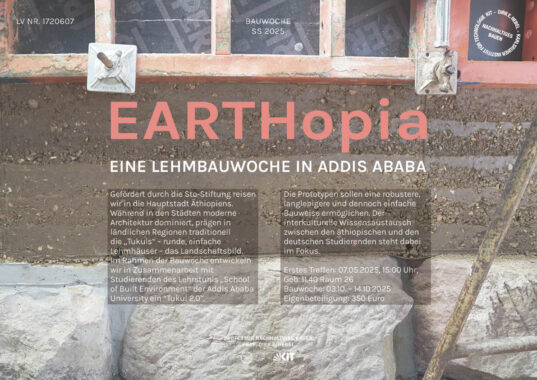
Building Week: A week of loam construction in Addis Abeba

We travel to Addis Ababa, the capital of Ethiopia. While modern architecture dominates the cities, the rural areas are traditionally characterized by “tukuls” – round, simple loam houses. A contemporary reinterpretation of this construction method is being developed as part of the Building Week: The “Tukul 2.0” combines the traditional architecture of Ethiopia with rammed earth technologies known in Europe.

In collaboration with students from the School of Built Environment (formerly EiABC) at Addis Ababa University, prototypes will be created that enable a more robust, durable and yet simple construction method. The focus is on the intercultural exchange of knowledge between Ethiopian and German students.

First orientation meeting: 7 May 2025, 3:00 PM, Bldg. 11.40 Room 26

Excursion one week in the period 28.09.25 to 12.10.2025


Karlsruher Institut für Technologie
Fakultät für Architektur
Institut Entwerfen und Bautechnik

Professur Nachhaltiges Bauen
Englerstr. 11, Geb. 11.40, Raum 25
D-76131 Karlsruhe
 
Tel: +49 (0)721/608-42167


Recent Publications:  
 

    Circular! Foundations and principles of a circular construction industry.

    March 11, 2026

    Hebel, Dirk E., and Annette Hillebrandt, eds. 2026. Zirkulär! Fundamente und Postulate einer kreislaufbasierten Bauwirtschaft. Bauwelt Fundamente. Birkhäuser Verlag GmbH.


    A matter of consequence

    March 11, 2026

    Deutsches Architekt:innen Blatt. 2026. “Eine Frage der Konsequenz.” March.


    Circular Construction. Regenerative Building material management.

    January 8, 2026

    Steiff, Peter. “Zirkuläres Bauen. Regeneratives Baustoff-Management.” BUND Jahrbuch 2026, January 2026.


    Wood as a foundation of a sustainable building culture

    January 8, 2026

    Glanzmann, Jutta. “Holz Als Basis Für Eine Nachhaltige Baukultur.” Lignum Holzbulletin 157/2025, no. Nachhaltig bauen (2025): 4058–59.


    Really Circular – Material Library at KIT

    October 29, 2025

    Dietzold, Lutz, ed. Iconic Awards 2025 – Spaces Objects Visions. Frankfurt: Rat für Formgebung GmbH, 2025.


    Activating the Urban Mine

    October 2, 2025

    Hebel, Dirk E. “Activating the Urban Mine.“ In Architecture and Technology Volume II: Cities in Climate Crisis. Madrid: Norman Foster Foundation Press, 2025.


    The city as a resource

    September 18, 2025


    Hebel, Dirk E. und Felix Heisel. “Die Stadt als Ressource.” In Für eine nachhaltige Architektur der Stadt. Berlin: Verlag Klaus Wagenbach, 2025.


    From a linear to a circular system

    September 15, 2025

    Hebel, Dirk E. “Vom Linearen Zum Kreislaufsystem.” In Architektur Und Klimawandel. München: Edition DETAIL, 2025.


    Interview: “We must finally start measuring CO2 emissions – not just how thick the insulation is”

    July 29, 2025

    Hebel, Dirk E. Interview: “Wir müssen endlich anfangen, den CO2-Ausstoß zu messen – nicht nur, wie dick die Dämmung ist.” Interview by Christoph Karcher. LooKIT 0225, 2025.


    WEtransFORM – On the Future of Building

    June 22, 2025

    BUNDESKUNSTHALLE, ed. WEtransFORM – Zur Zukunft Des Bauens. Berlin: jovis Verlag, 2025.


    Henkels Wuppertal

    June 4, 2025

    Renaissance AG, ed. Henkels Wuppertal – DenkWerkStadt. Wuppertal: renaissance Immobilien und Beteiligungen Aktiengesellschaft, 2025.


    Building for the world of tomorrow

    April 24, 2025

    Monkenbusch, Helmut. „Bauen für die Welt von morgen.“ Hörzu, 24.1.2025


    Funghi – underground networkers

    April 24, 2025

    Hebel, Dirk E., Tanja Hildbrandt. „ Pilze – Netzwerker im Untergrund“. alverde, dm-Magazin, April 2025.


    Fungi are versatile

    February 24, 2025

    Merkert-Andreas, Carolin. “Pilze Sind Vielseitig.” Wohnglück, January 2025.


    “RoofKIT – Carbon storage and Material storage”

    January 9, 2025

    Boerman, Elena, and Dirk E. Hebel. “RoofKIT – Kohlenstoffspeicher Und Materiallager.” Architektur.Aktuell, vol. 12.2024, no. Tradition und Innovation, Dezember 2024, pp. 98–109


    Interview: “From a Linear to a Circular System”

    November 13, 2024

    Hebel, Dirk E. Interview: “Vom linearen zum zirkulären Kreislaufsystem.” Interview by Sandra Hofmeister, DETAIL 11.2024, Nov. 2024.


    Building with renewable materials – Nature as a resource depot

    October 29, 2024

    Hebel, Dirk E., Sandra Böhm, Elena Boerman, Hrsg. Vom Bauen mit erneuerbaren Materialien – Die Natur als Rohstofflager. Stuttgart: Fraunhofer IRB Verlag, 2024.


    Guest contribution: ‘Thinking, designing and operating in circular ways.’

    June 27, 2024

    Hebel, Dirk E. “In Kreisläufen denken, entwerfen und wirtschaften.” MÄG – Mein Häfele Magazin, 2024.


    Interview: ‘Mycelium power for the construction industry’

    June 10, 2024

    Rubel, Maike, and Patricia Leuchtenberger. Interview: “Pilzpower für die Bauindustrie.” competitionline, 7 June 2024, https://www.competitionline.com/de/news/schwerpunkt/pilzpower-fuer-die-bauindustrie-7283.html.


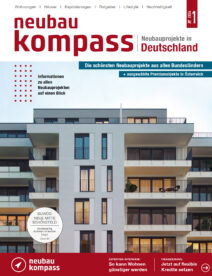
    ‘Future building materials: mushroom, hemp and algae’ in neubau kompass

    May 27, 2024

    Müller, Janek. “Baumaterialien der Zukunft: Pilze, Hanf und Algen.” neubau kompass – Neubauprojekte in Deutschland, May 3, 2024. https://www.neubaukompass.de/premium-magazin/.


    Interview: ‘We have disposed of valuable materials’

    May 7, 2024

    Sören, S. Sgries. “Interview: ‘Wir haben wertvolle Materialien weggeworfen.’” Rhein-Neckar-Zeitung, April 27, 2024, SÜDWEST I 28 edition, sec. Sinsheimer Nachrichten.


    Built on mushroom

    April 24, 2024

    Schweikle, Johannes. “Auf Pilz gebaut.” Stuttgarter Zeitung, April 23, 2024, sec. Die Reportage.


    Organic Architecture – Fungus mycelium and flax as materials for the ecological building transition

    February 13, 2024

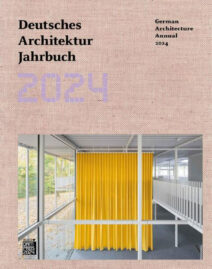
    Klaaßen, Lars. “Organische Architektur – Pilzmyzel und Flachs als Materialien für die ökologische Bauwende.” In Deutsches Architektur Jahrbuch 2024, edited by Peter Cachola Schmal, Yorck Förster, and Christina Gräwe, 198–209. Berlin, Germany: DOM publishers, 2024.


    Circular construction – Circulation instead of demolition in “BUND-Jahrbuch 2024”

    January 18, 2024

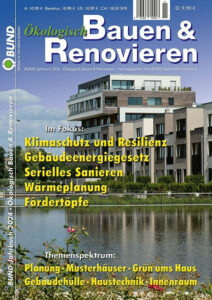
    Streiff, Peter. “Zirkuläres Bauen – Kreislauf statt Abriss.” BUND-Jahrbuch – Ökologisch Bauen & Renovieren 2024, January 2024.


    Redesigned Material Library at KIT in ‘Mitteilungsblatt des VDB-Regionalverbands Südwest’

    January 8, 2024

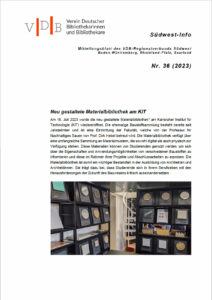
    Mönnich, Michael, and Sandra Böhm. “Neu gestaltete Materialbibliothek am KIT.” Südwest-Info: Mitteilungsblatt des VDB-Regionalverbands Südwest Nr. 36 (2023), 2023.


    RoofKIT Wuppertal, Germany; Interview with Prof. Dirk Hebel

    November 20, 2023

    Hebel, Dirk E. “RoofKIT Wuppertal, Germany; Interview with Prof. Dirk Hebel: The aim is clear, we must forge the path ourselves.” In Sustainable Architecture & Design 2023/ 2024, edited by Andrea Herold, Tina Kammerer, and InteriorPark., 46–55. Stuttgart, Germany: av edition GmbH, 2023.


    The existing building stock is the future resource

    November 16, 2023

    Hebel, Dirk E. “Der Bestand ist die künftige Ressource – Den linearen Umgang mit Baumaterialien schnellstmöglich stoppen.” Planerin – Mitgliederfachzeitschrift für Stadt-, Regional- und Landesplanung, Oktober 2023.


    Article: Investigation of mechanical, physical and thermoacoustic properties of a novel light-weight dense wall panels made of bamboo Phyllostachys Bambusides

    October 30, 2023

    Gholizadeh, Parham, Hamid Zarea Hosseinabadi, Dirk E. Hebel, and Alireza Javadian. “Investigation of Mechanical, Physical and Thermoacoustic Properties of a Novel Light-Weight Dense Wall Panels Made of Bamboo Phyllostachys Bambusides.” Nature Sientific Reports 13 (October 26, 2023). https://doi.org/https://doi.org/10.1038/s41598-023-45515-3


    Building Better – Less – Different: Clean Energy Transition and Digital Transformation

    October 16, 2023

    Hebel, Dirk E., Felix Heisel, Andreas Wagner, und Moritz Dörstelmann, Hrsg. Besser Weniger Anders Bauen – Energiewende und digitale Transformation. Besser Weniger Anders Bauen 2. Basel: Birkhäuser Verlag GmbH, 2023.


    From hunting, breeding and harvesting future building materials

    September 27, 2023

    Hebel, Dirk E. “Vom Jagen, Züchten Und Ernten Zukünftiger Baumaterialien.” Baukultur Nordrhein Westfalen, September 2023.