ETH Zurich Pavilion – Construction Day 2

Construction Day 2 of the ETH Zurich Pavilion concluded with the first few ReWall arches go up and span over the First Street Green. Stay tuned!
Construction Day 2 of the ETH Zurich Pavilion concluded with the first few ReWall arches go up and span over the First Street Green. Stay tuned!

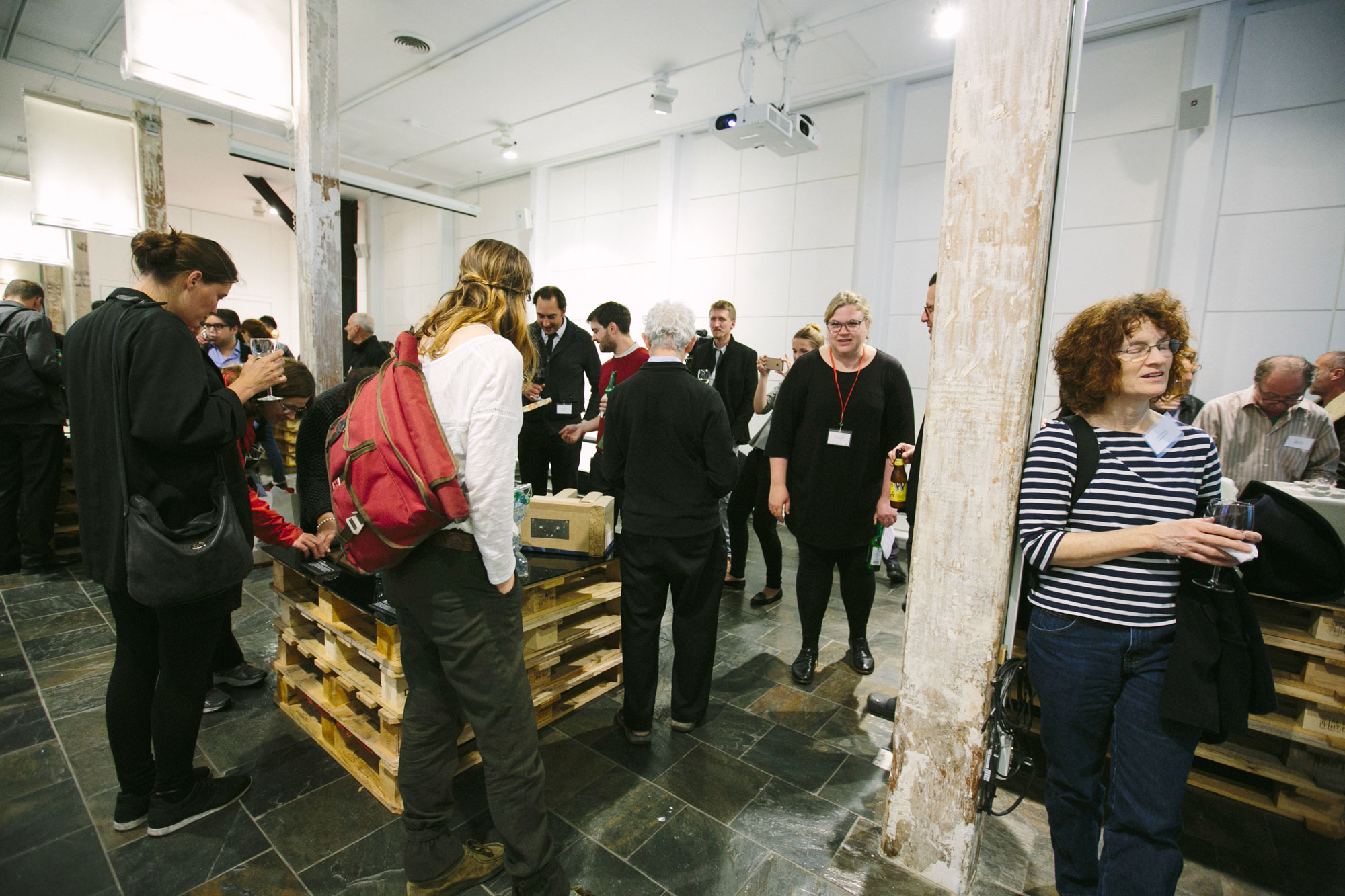
On May 22nd, construction of the ETH Zurich Pavilion started at the First Street Green in New York City. The stacking of the recycled pallets was concluded with the installation of the parametric triangular footings for arches made from reused beverage cartons. Within the next 3 days, the team from the Assistant Professorship of Architecture and Construction Dirk E. Hebel and the Block Research Group will conclude a 90 m2 pavilion in time for the IDEAS CITY Festival starting on Thursday 28th May 2015.

ETH Zurich brings a cutting-edge artifact of the future to the East Village: a pavilion created from waste materials. Recasting “trash” as a valuable asset, ETH Zurich Future Garden and Pavilion will redefine the notion of waste, acknowledging its value as a resource from which new cities can rise. Read more about the events of next week here.

May 30th, 5:30 – 7:30 p.m.
First Street Garden, Houston Street and 2nd Avenue, ETH Zurich Pavilion, New York City
The American Institute of Architects NY engage ETH Zurich’s Dirk E. Hebel and Philippe Block in a conversation with NY architects David Benjamin and Mark Wasiuta, Columbia University on cultural practices that define smart cities. The panel discussion will be held underneath the ETH Zurich pavilion and is part of the IDEAS CITY Festival program.

ETH Popup Workshop + Gallery
34 E 1st Street
During the month of May, ETH Zurich’s Assistant Professorship of Architecture and Construction Dirk E. Hebel and the Block Research Group together with miLES will transform the storefront at 34 E. 1st Street into a pop-up workshop and gallery for the prefabrication of the ETH Zurich Pavilion across the street at First Street Green Park. The storefront will become a workshop, showcase, and resting stop to visualize the working process behind the construction of a temporary structure by the ETH Department of Architecture. Peek into it, you may find surprises!

Commissioned by ETH Global, the Assistant Professorship of Architecture and Construction Dirk E. Hebel and the Professorship of Architecture and Structure Philippe Block will be building a pavilion at New York City’s First Street Garden as part of the New Museum’s IDEAS CITY festival, May 28 – 30th, 2015.
Using waste products as construction material, the structure aims to redefine our perception of refuse, acknowledging its capacity as a substance from which to construct new cities. Waste was seen for centuries as something specific which neither belonged to the family of natural resources nor to the one of finished products. Waste was a by-product, an (ideally) invisible part in the making and existing of our cities.
But waste could also be understood as an integral part of what we define as a resource. This metabolic thinking understands our built environment as an interim stage of material storage. The ETH Pavilion will be an example of this approach using a common waste product: beverage cartons as its construction material. The expressive pavilion is designed to allow the use of a non-standard, weak material in construction.To keep the stresses in the material low, the shape follows the flow of forces, resulting in a vaulted structure in compression. Thanks to its overall double curvature and the triangular sections of the arches, which give the structure a deeper section for the same thickness and weight, the shell is stable and safe.
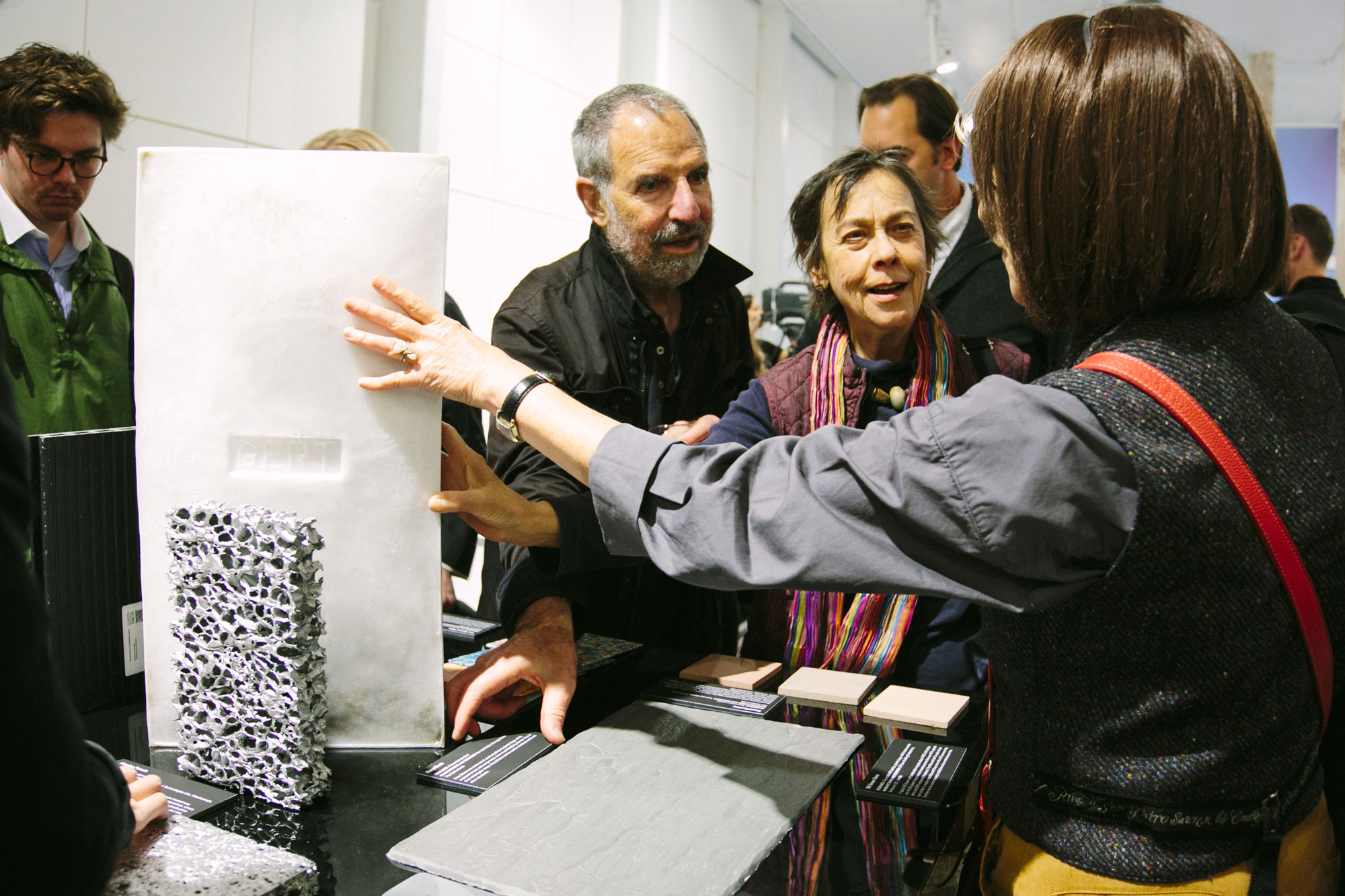
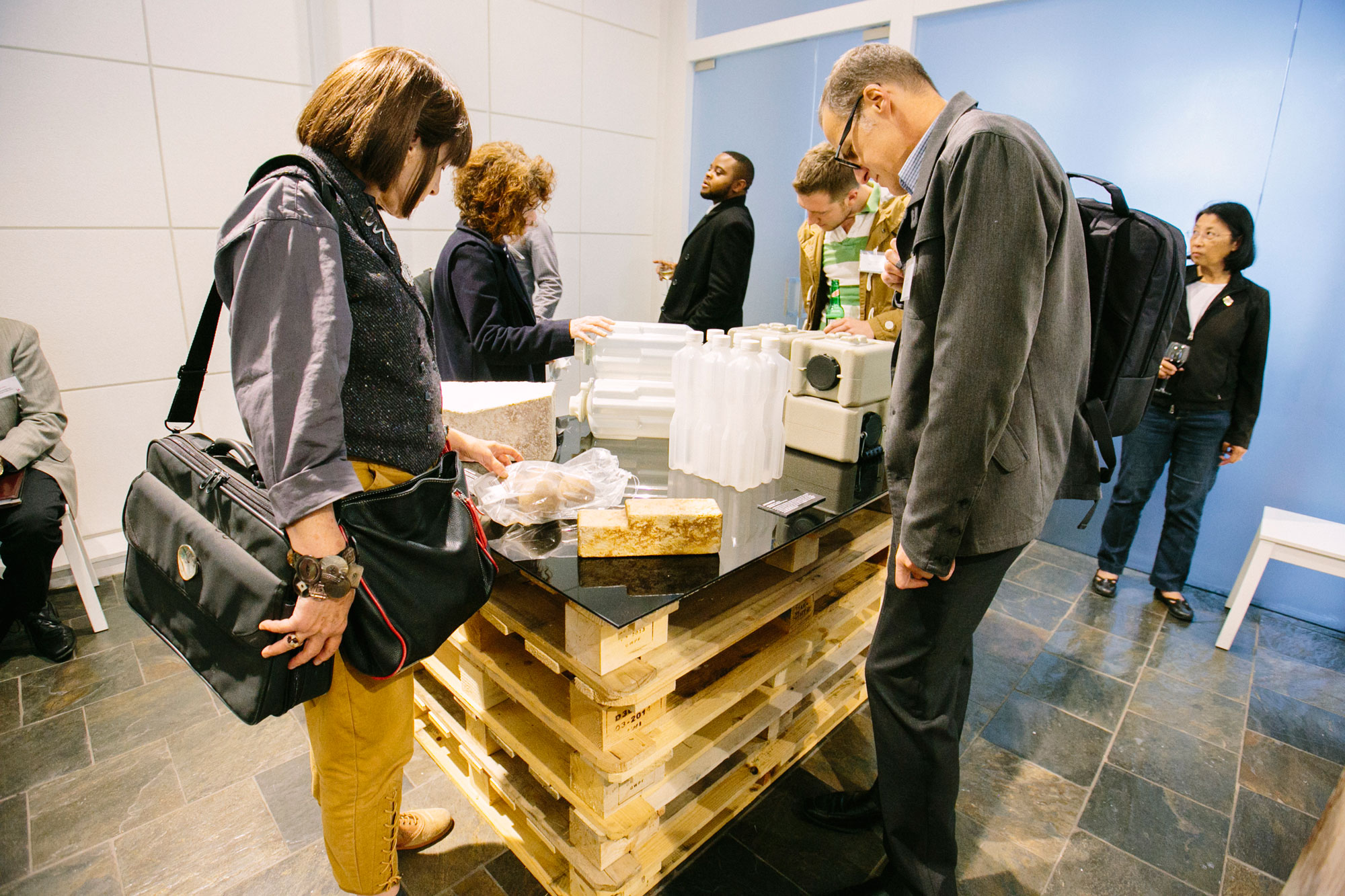
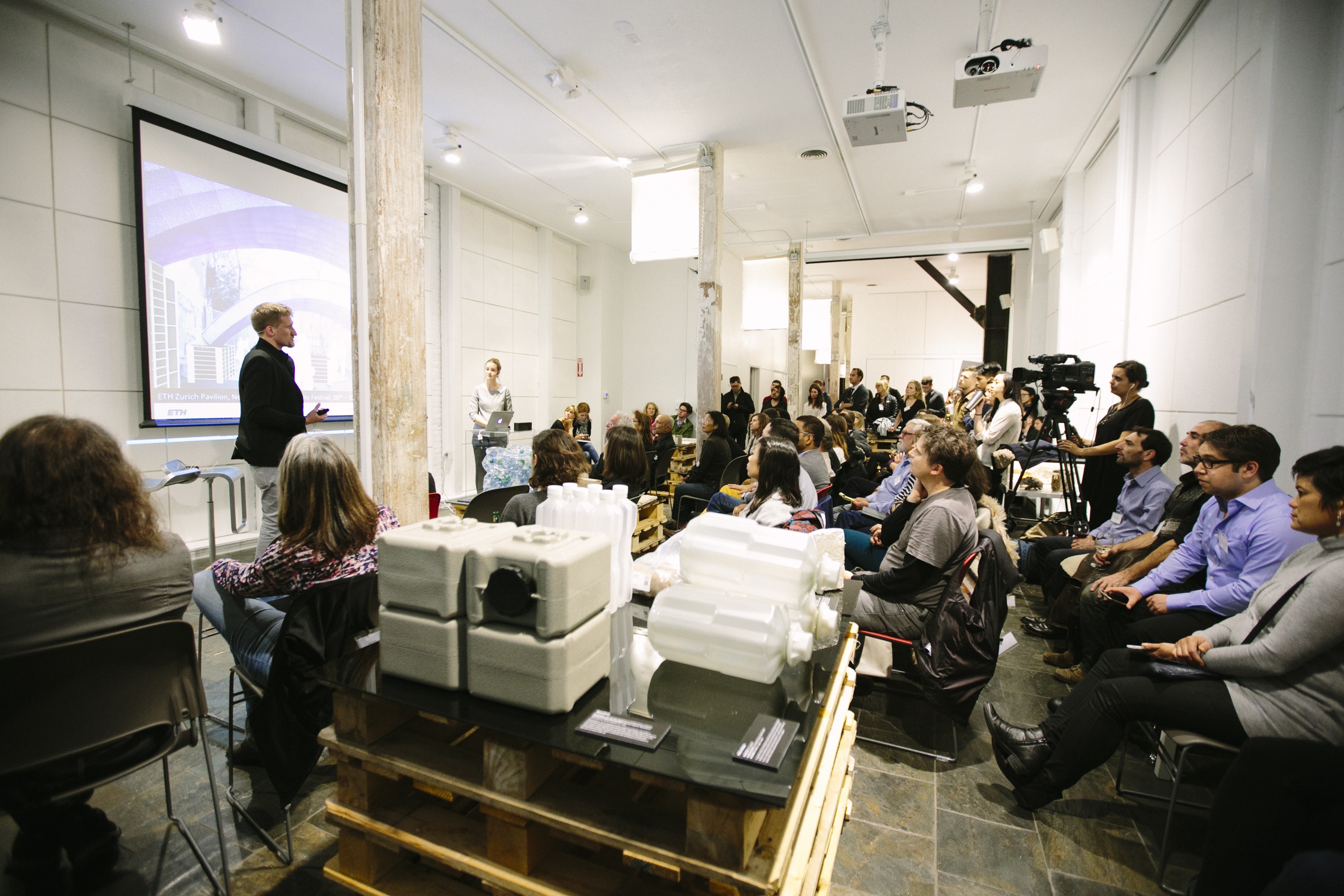
Underneath and within this structure, ETH Global will curate a program following the theme of the pavilion. The exhibition ‘Building from Waste’ displays over 25 construction materials derived from waste, activating resources within our cities that have remained invisible until now. A covered area for about 30-40 people will provide space for invited guests from ETH Zurich and its partners to organize lectures and seminars for the general public. A bar will offer a variety of catering services throughout the duration of the festival.
Download detailed description of the ETH Zurich Pavilion (PDF, 4.5 MB).

On Tuesday, April 28, 2015, a stakeholders forum in Butajira city to place to present and discuss further steps of the Rural Housing research project, a combined research project of EiABC and ETH Professorship Dirk E. Hebel, with representatives of Guraghe Zone Administration, City Government, Bete Guraghe Cultural Center, colleagues from Wolkite University and Wolkite Polytechnic College and other stakeholder.
In his opening speech, EiABC Scientific Director Joachim Dieter explained the role and importance of housing research for the development of the rural areas and the meaning of experimental and applied research in full scale for the education of Architects, Construction Manager and Urban Planner at the Institute.
Project Manager Melekeselam Moges and his team explained in their presentation the achievements of the SRDU project, the current state of research on the continuation project, improvements in it’s design and technical aspects as building materials and construction methods, while possible collaborations and partnerships with local authorities, University and Polytechnic, communities and NGO have been evaluated.
All topics of the presentation had been commented and discussed with the invited guests to reach maximum acceptance and learn from previous valuable experiences.
This research project is supported and facilitated by Switzerland’s Arthur Waser Foundation, the ETH Swiss Federal Institute of Technology in Zurich, and ETH-Global.
The team of EiABC included both wings of the management, academic and administrative, and was represented by Scientific Director Joachim Dieter, Managing Director Dr. Beatrice Delpouve, Project Manager Melakeselam Moges and his team, Chairholder Imam Mahmoud – Chair of Housing, Head of Finance Shimeles Habtamu, and the Head of International Relations, Mr. Agus Prianto. The event was concluded with a visit of the future project site.
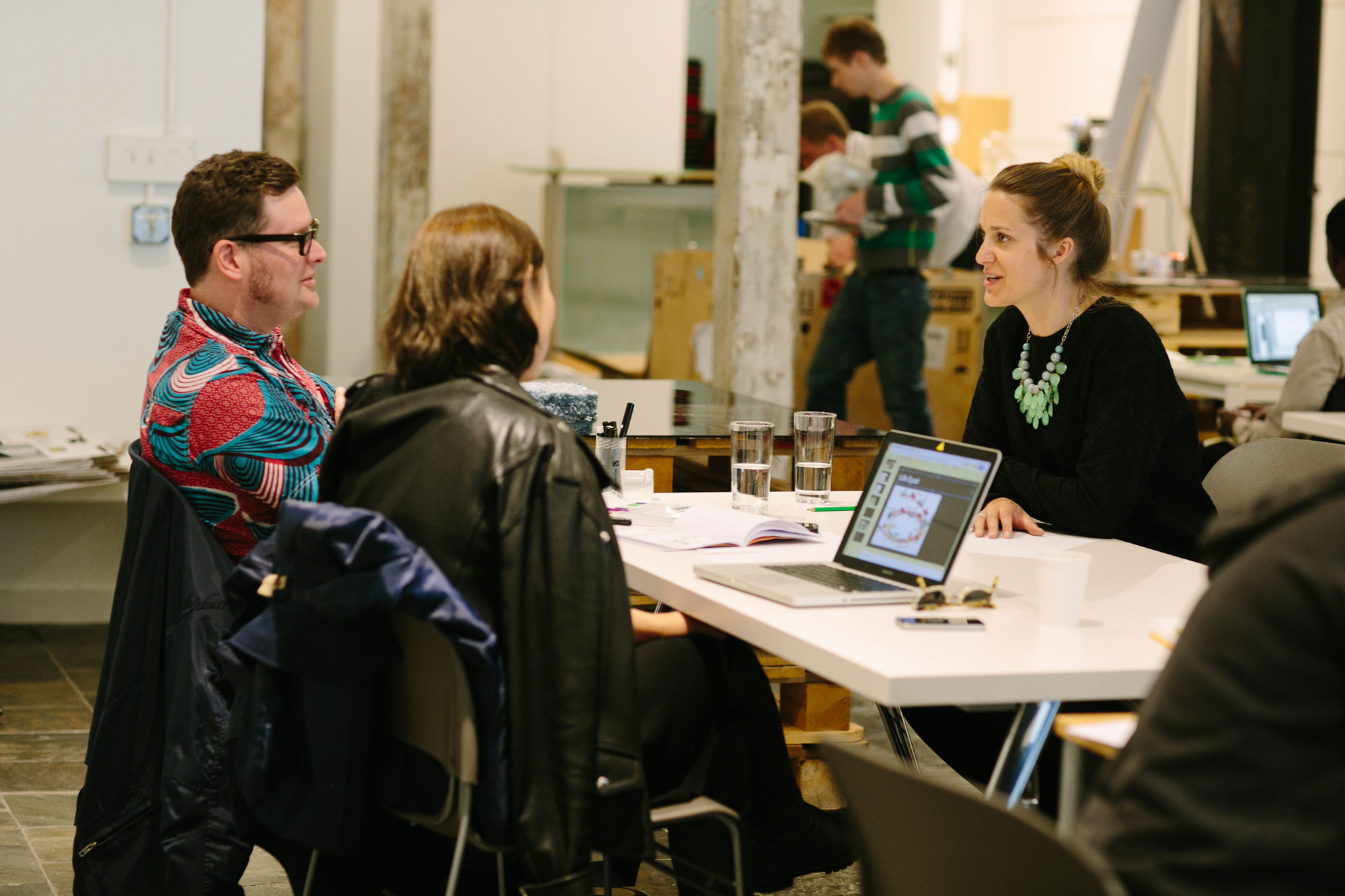
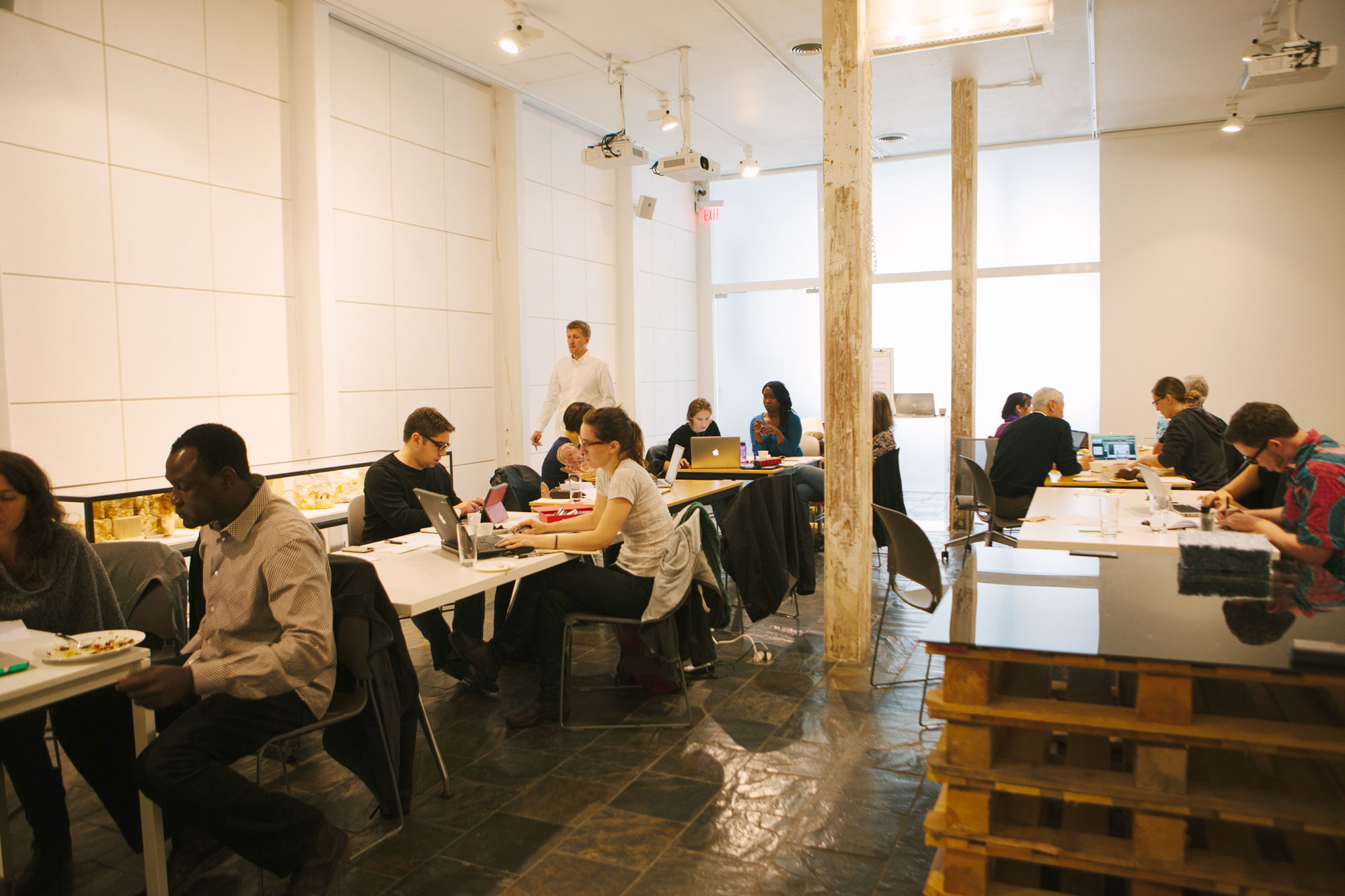
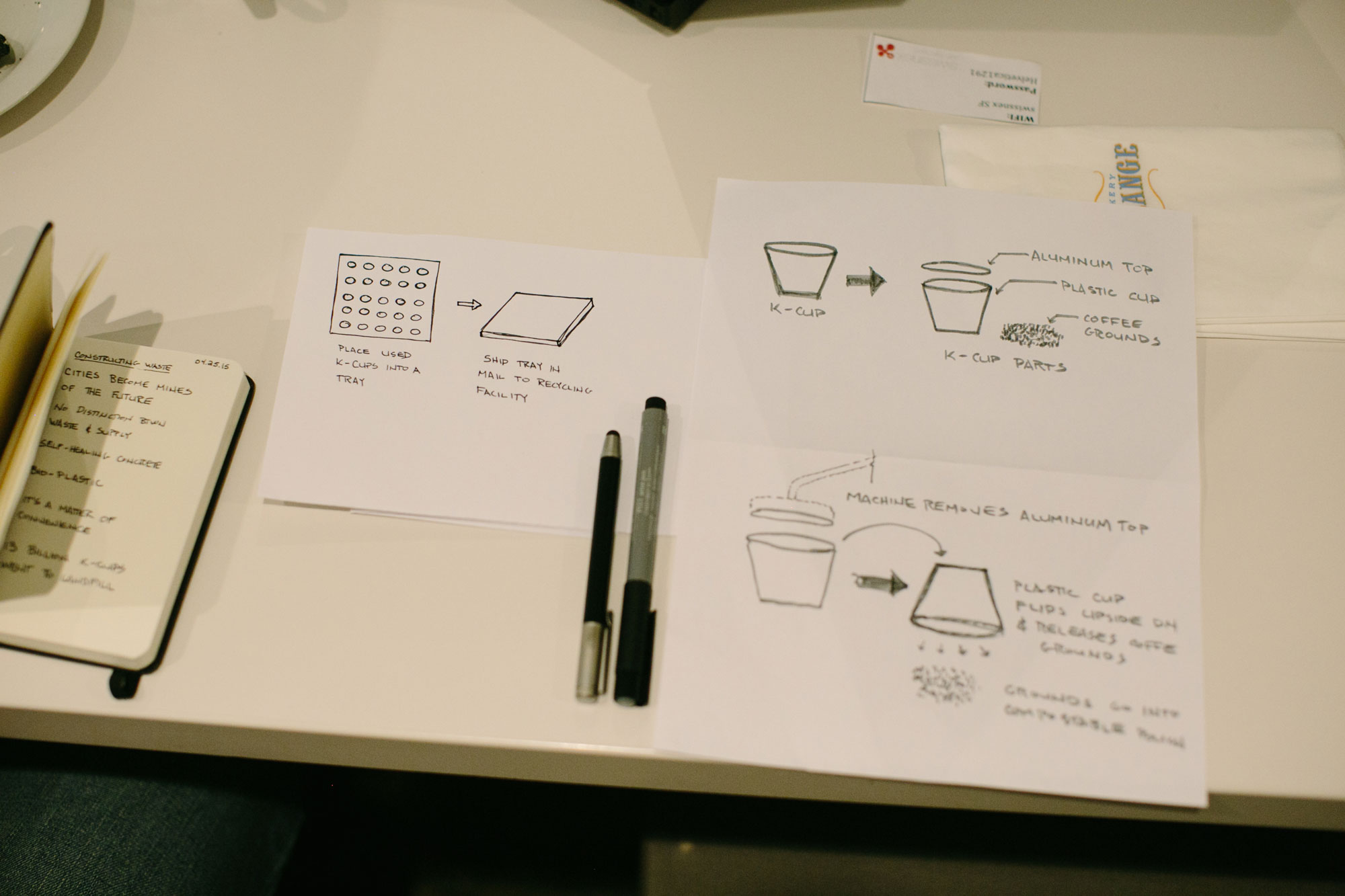
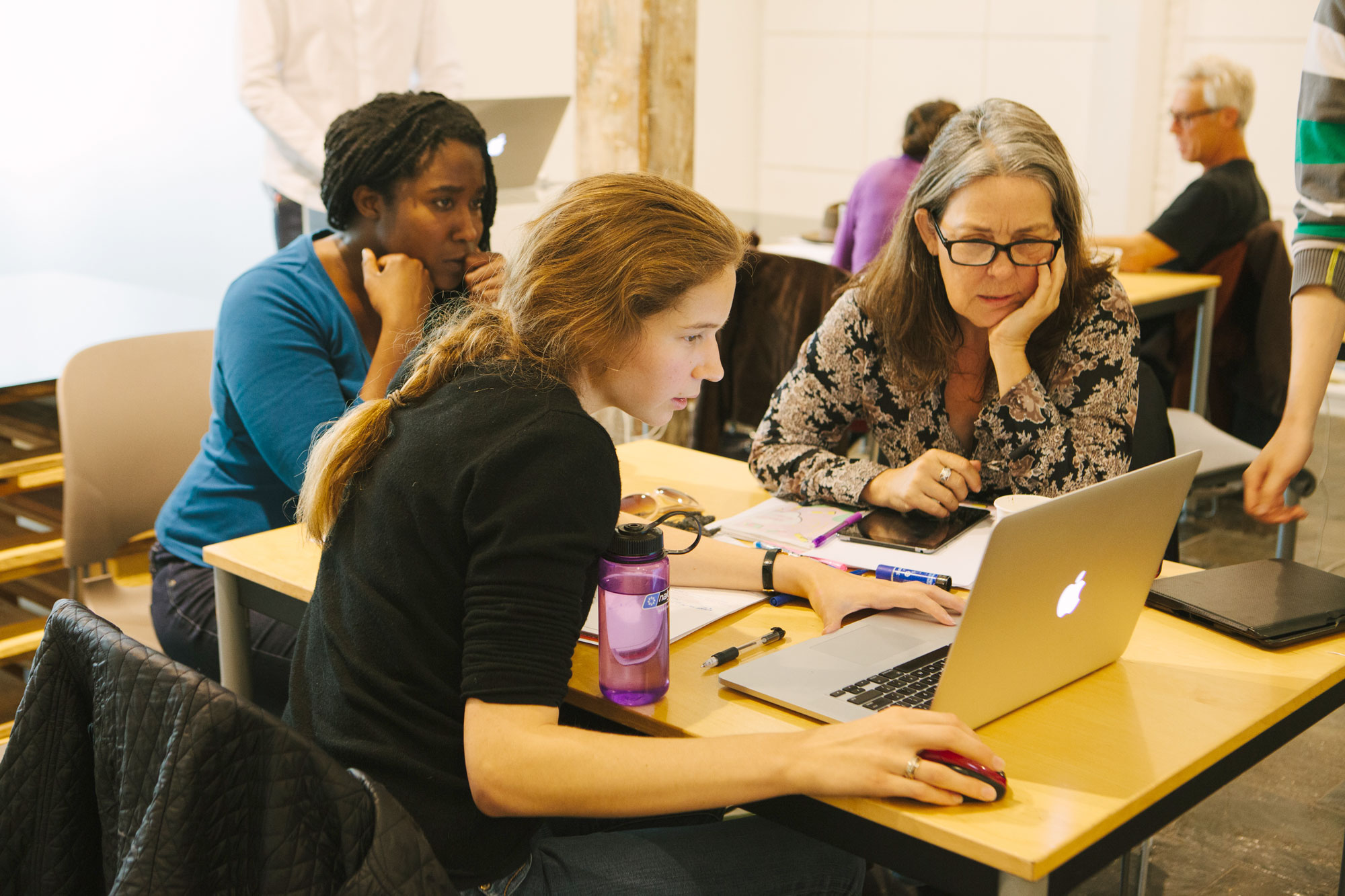
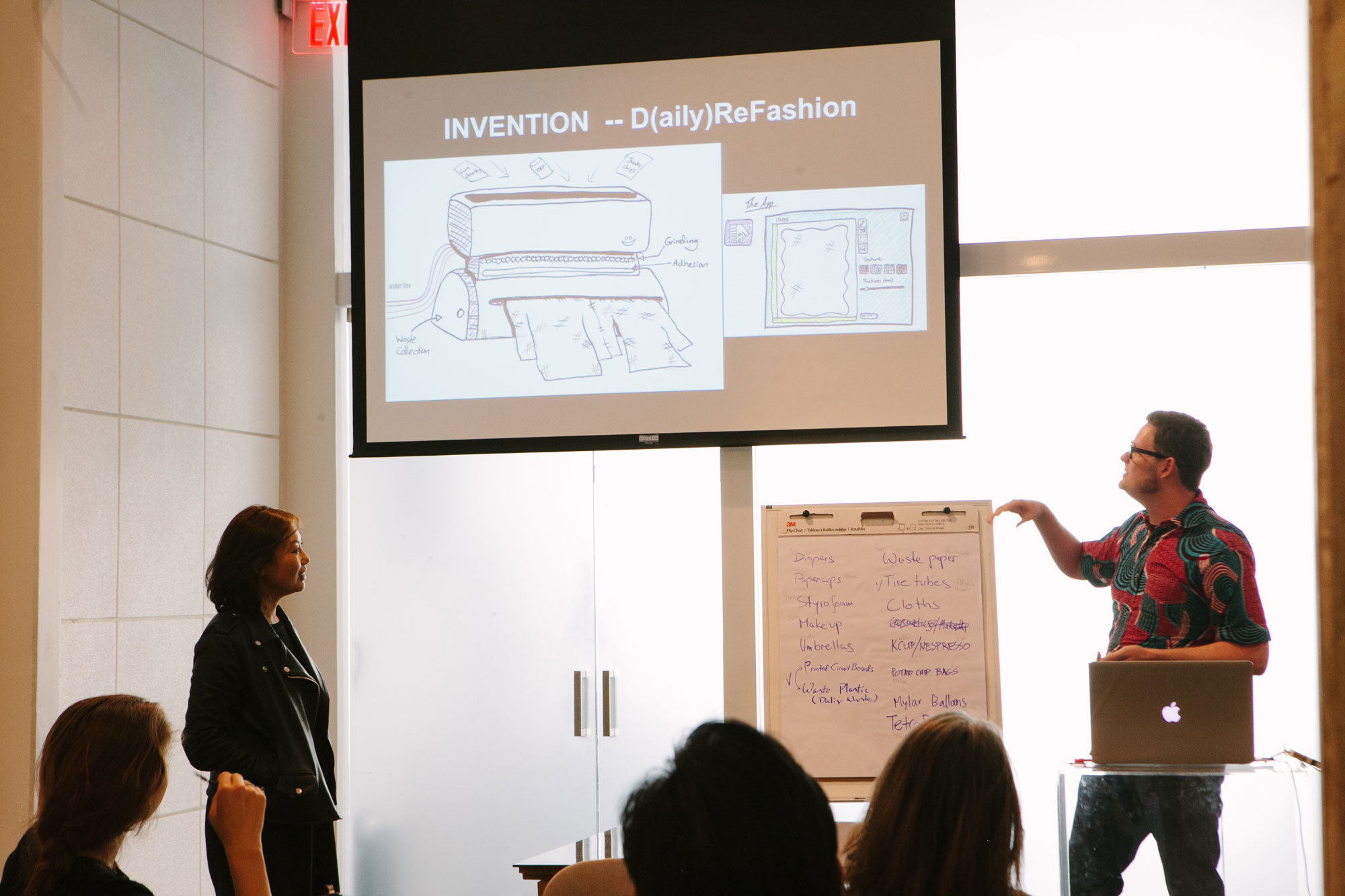
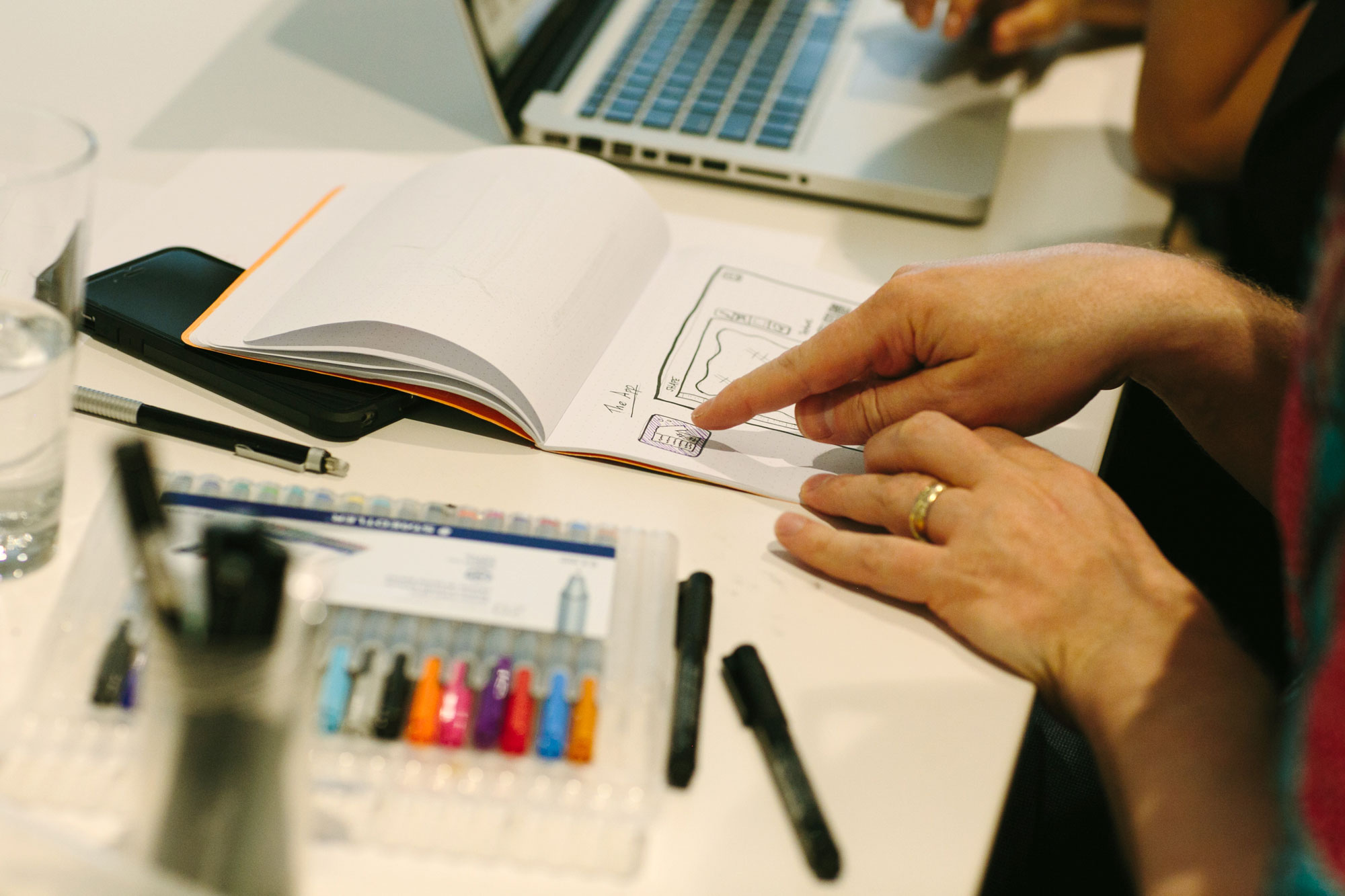
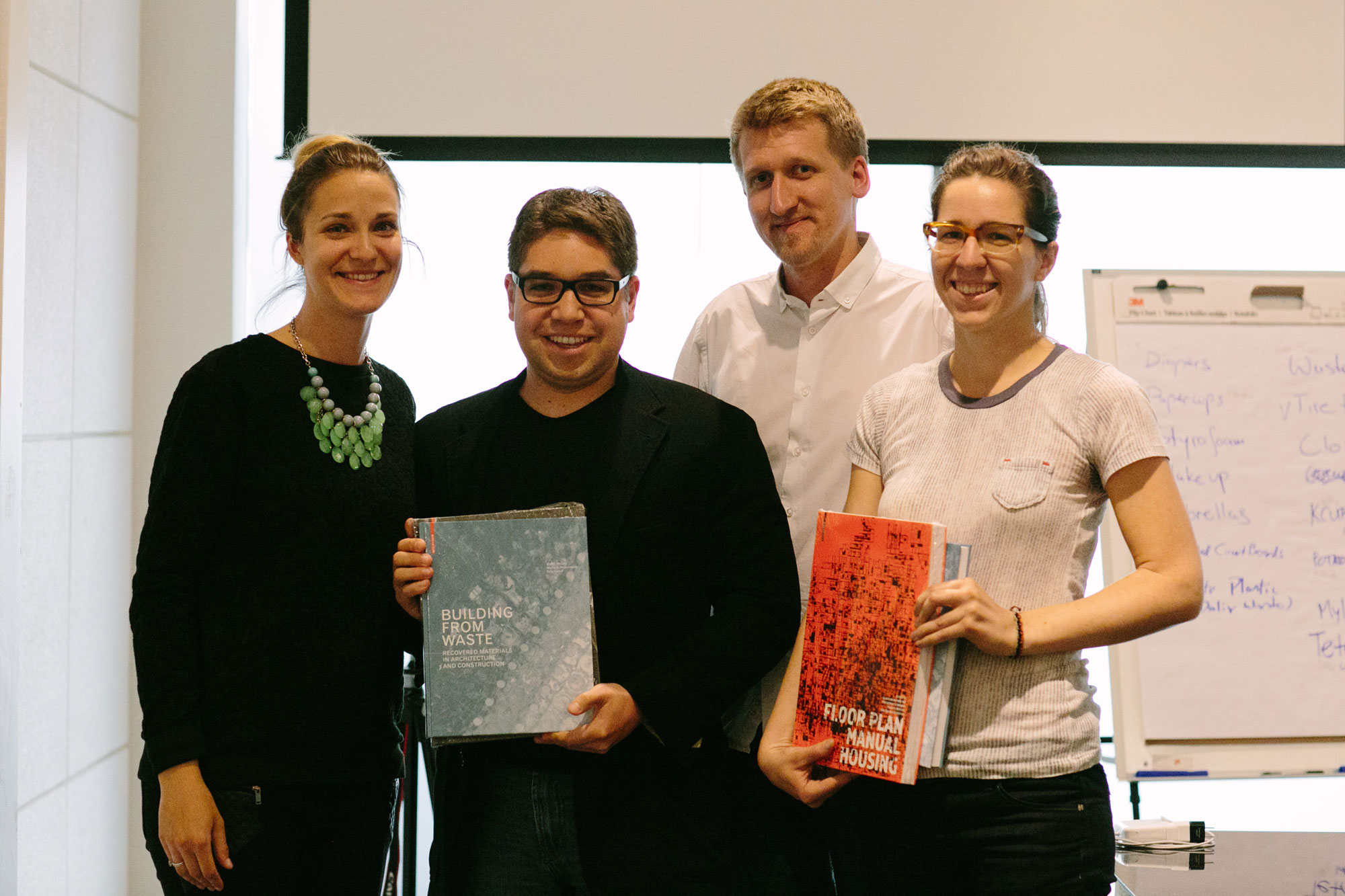
Can design reduce waste production? How can small adjustments in the typical life cycle of everyday products drastically minimize waste flow? The search for the answers to those and other refuse-related questions were the goals of this year’s ‘Constructing from Waste’ workshop in San Francisco led by Marta H. Wisniewska and Felix Heisel. Participants with different background and experience, including students, school teachers, architects and product designers, worked on eight different proposals. Andreas Müller of Birkhäuser, publisher of the Building from Waste book, awarded the best three proposals with recent publications.
The Constructing Waste: Upcycling and Rethinking Trash workshop was organized in cooperation with Mary Ellyn Johnson of swissnex SF in the frame of a one week long event at swissnex San Francisco promoting the Building from Waste book, which has just entered the US market.
For more information click here.
Photo credits: swissnex SF/ Mayleen Hollero
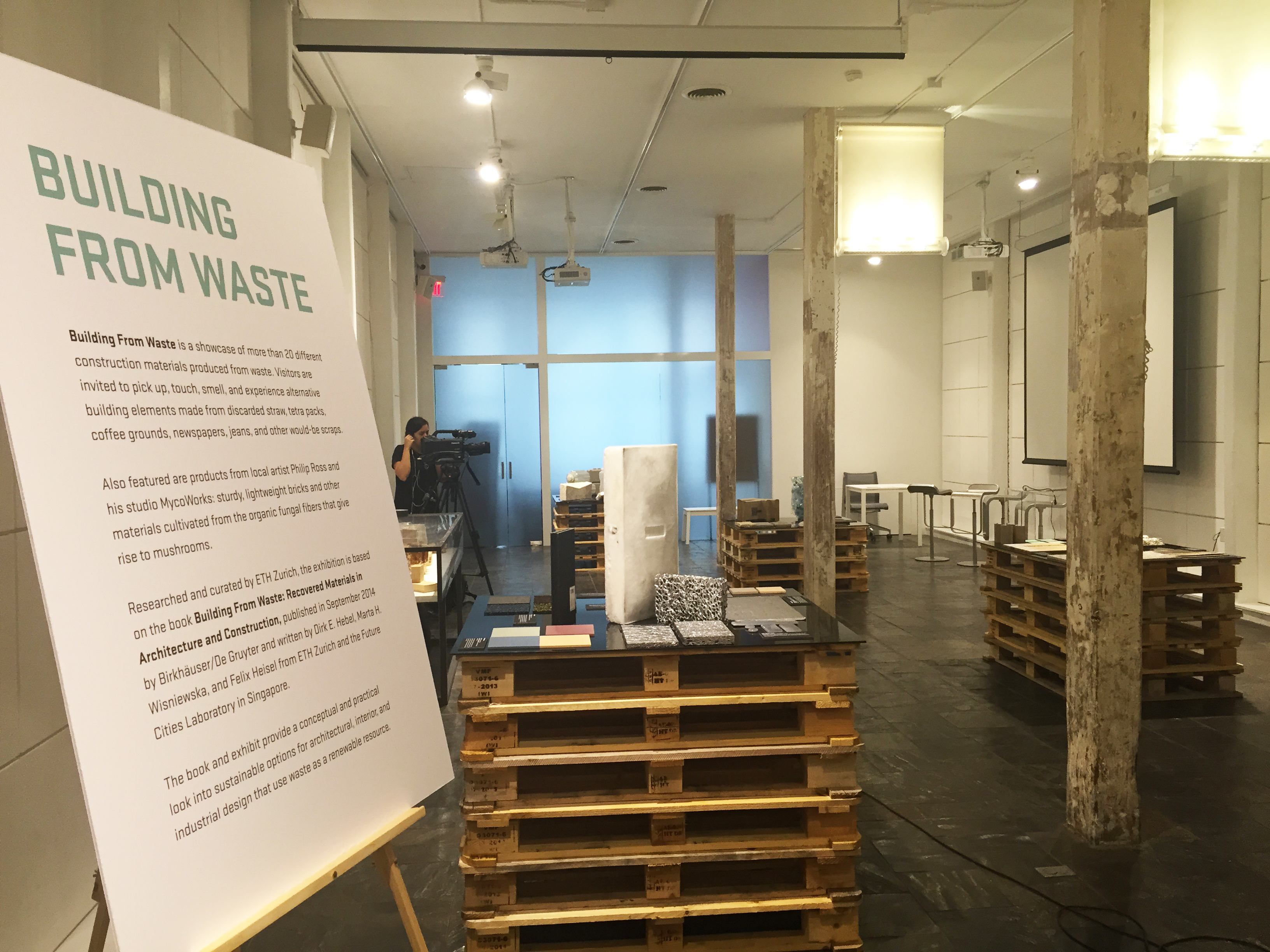
The exhibition Building from Waste: Material Showcase accompanied the Building from Waste book promotion week, which took place at swissnex San Francisco between April 20 – 25, 2015
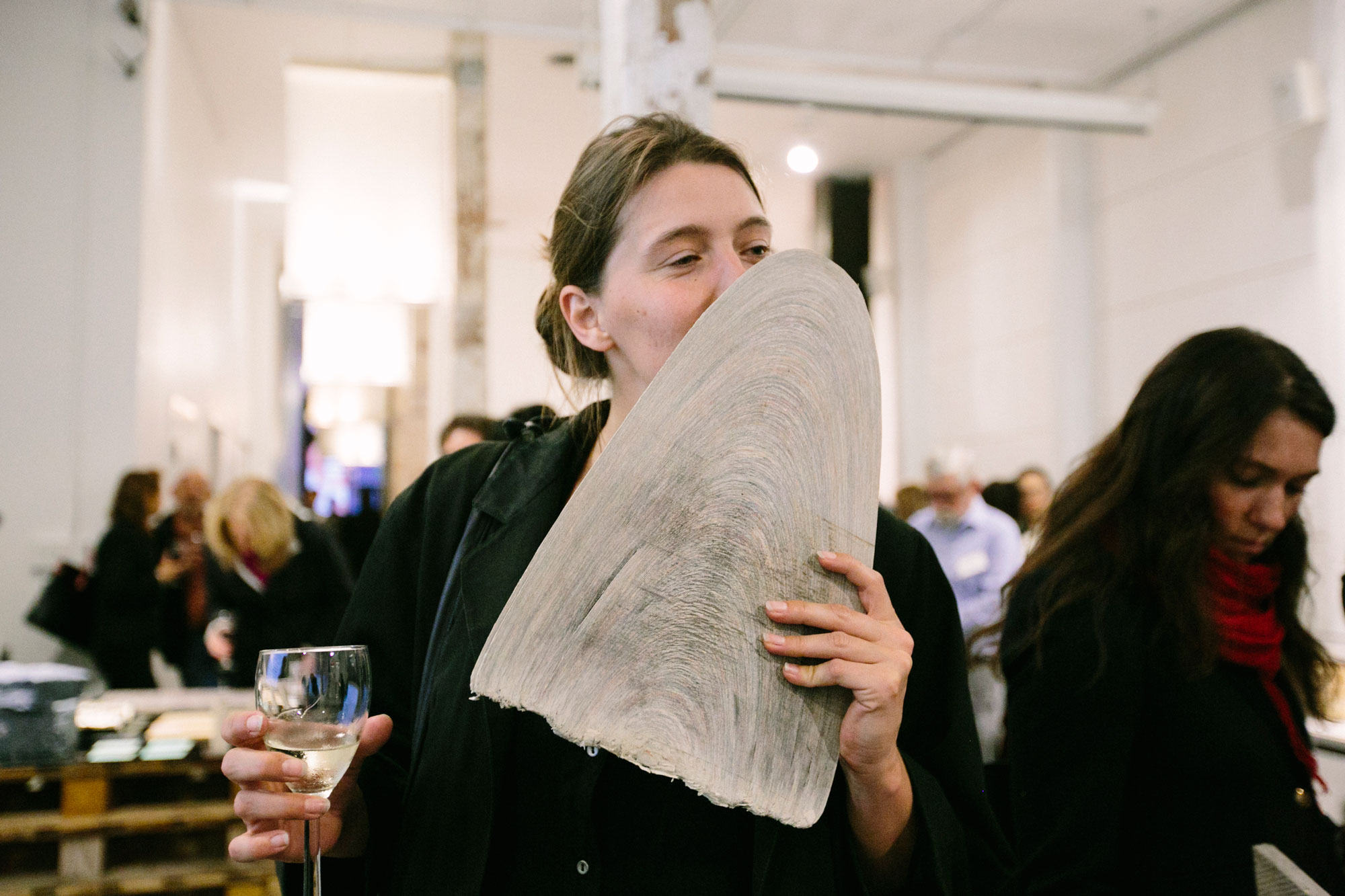
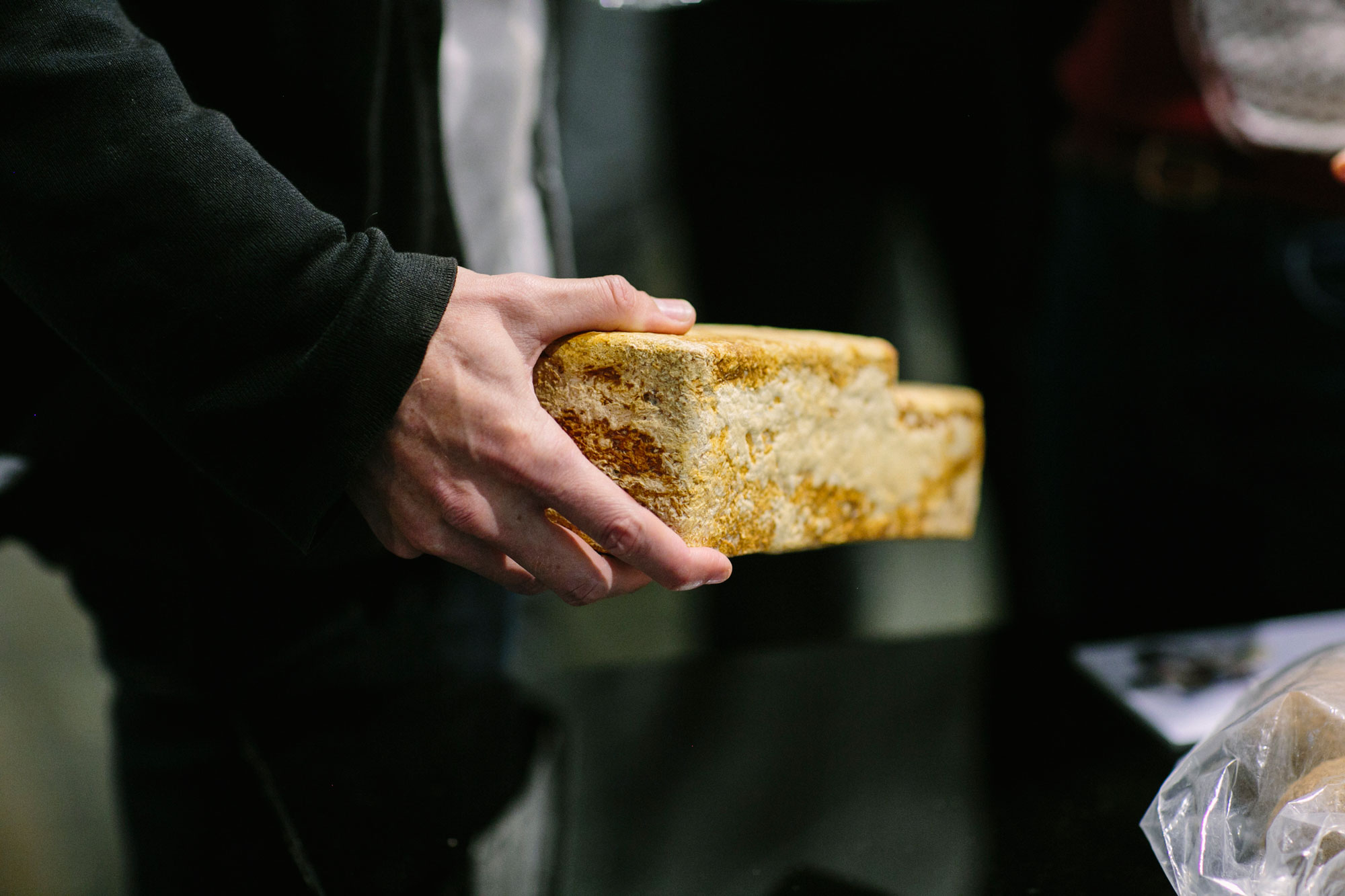
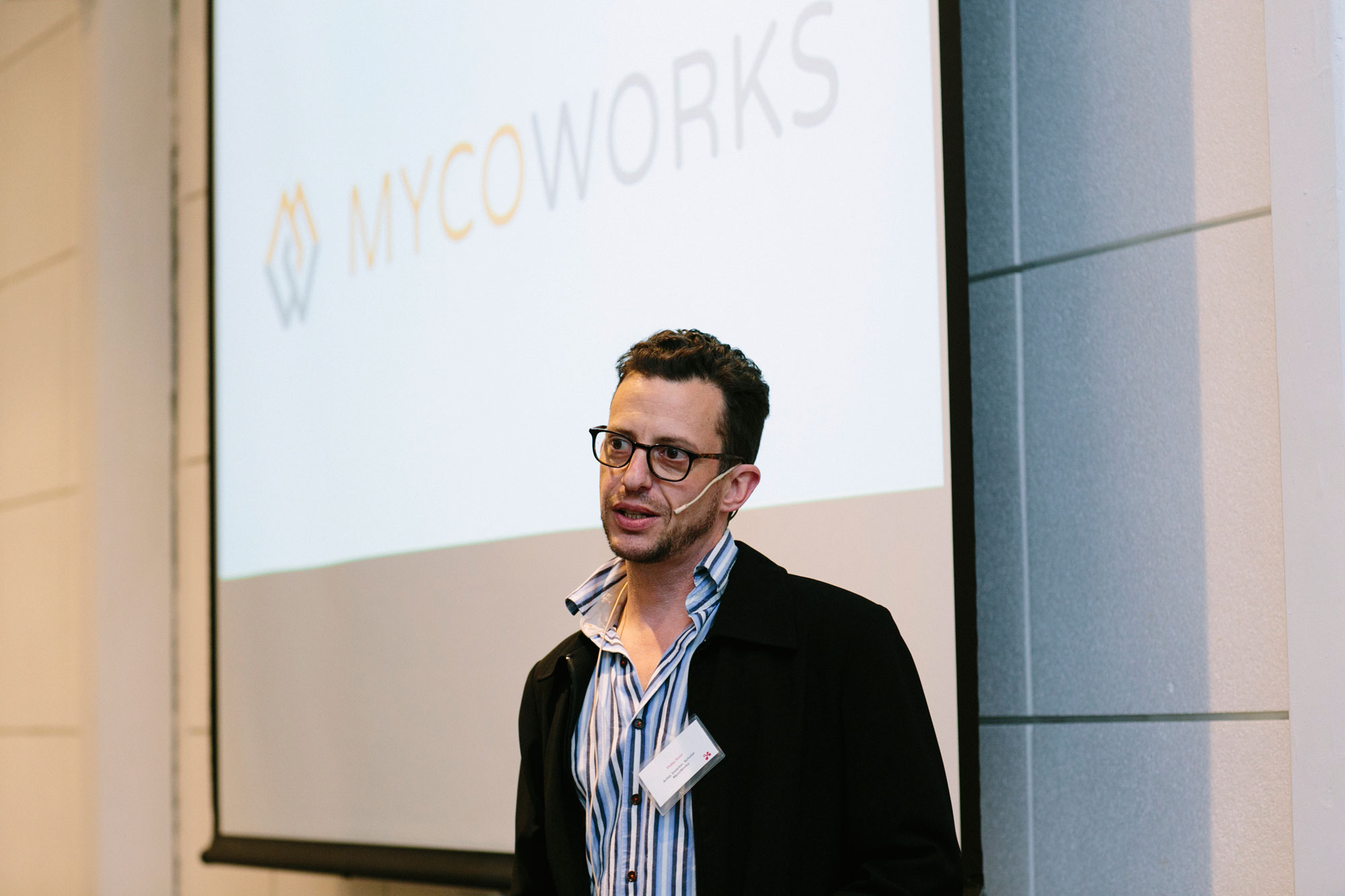
The Asst. Professorship of Architecture and Construction Dirk E. Hebel brought the Building from Waste: Material Showcase to swissnex San Francisco, items of loan from the Baubibliothek of the ETH-Bibliothek. Visitors had a chance to experience over 20 alternative construction materials produced from waste. The exhibited materials cover a wide range of building elements made from straw or PET bottles, fibers extracted from old newspapers, juice and milk containers, denim jeans, and many more. Additionally the exhibition included an extended display of mycelium lightweight products in different moments of growth produced by local artist and inventor Phill Ross of Mycoworks.
For more information click here.
Photo credits: swissnex SF/ Mayleen Hollero
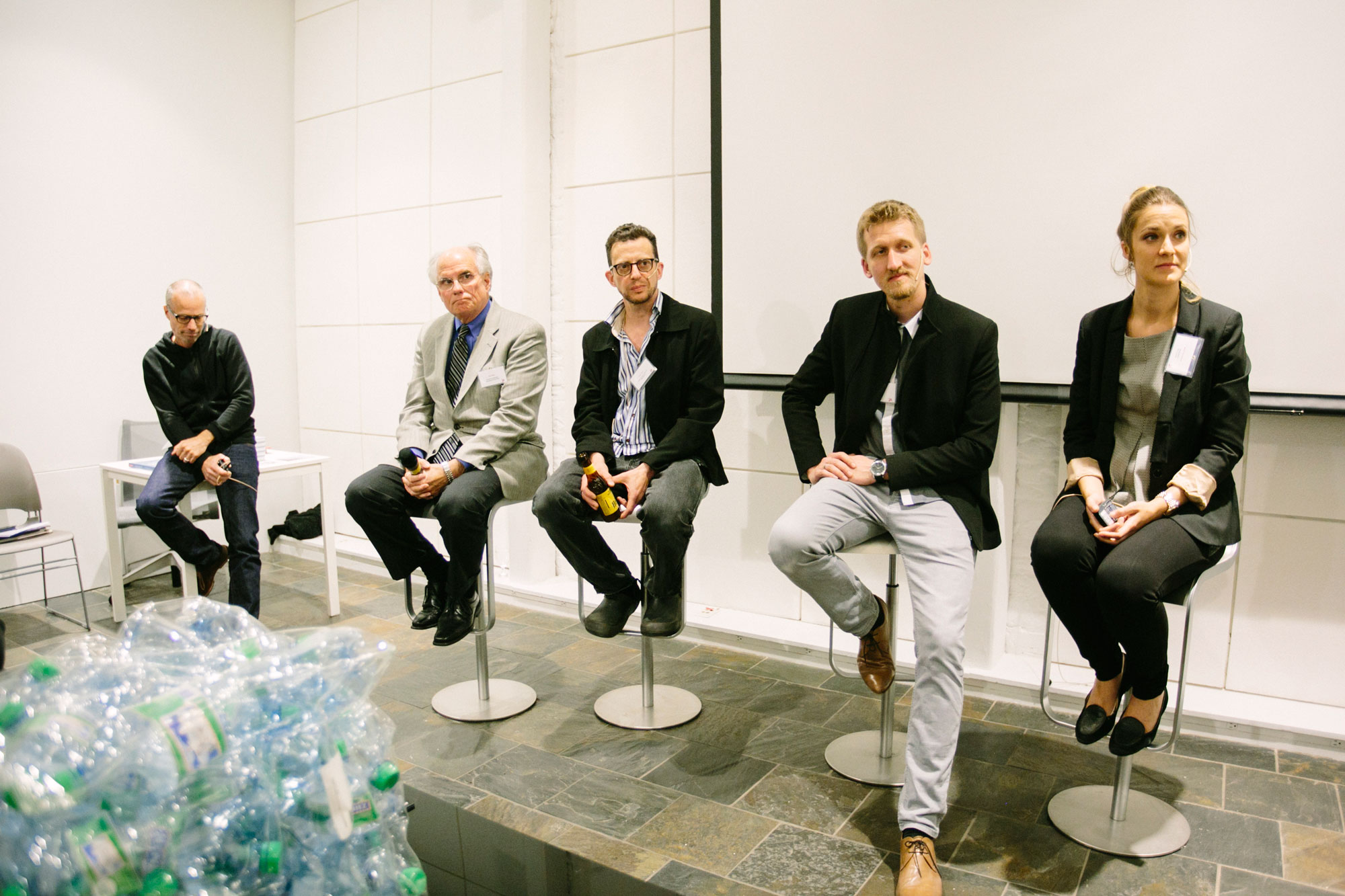
Waste Not Panel Discussion at swissnex San Francisco on April 21, 2015 started a week-long event organized by Mary Ellyn Johnson and the swissnex SF team around the launch of the Building from Waste book for the US market.
Future resilient cities will be constructed out of their own refuse. This hypothesis was the spark for the book, Building from Waste: Recovered Materials in Architecture and Construction by Dirk E. Hebel, Marta H. Wisniewska and Felix Heisel from ETH Zurich and the Future Cities Laboratory in Singapore.
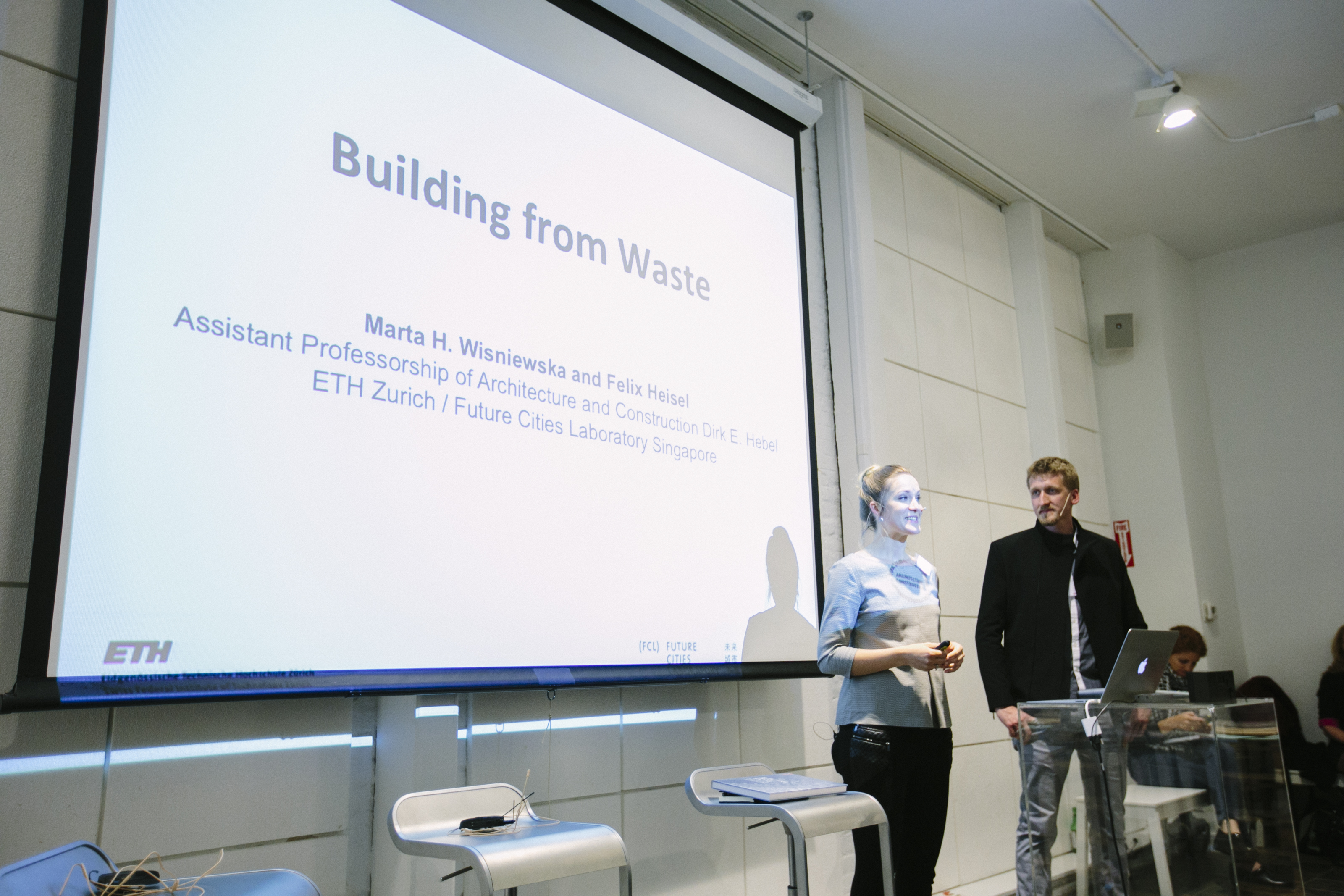
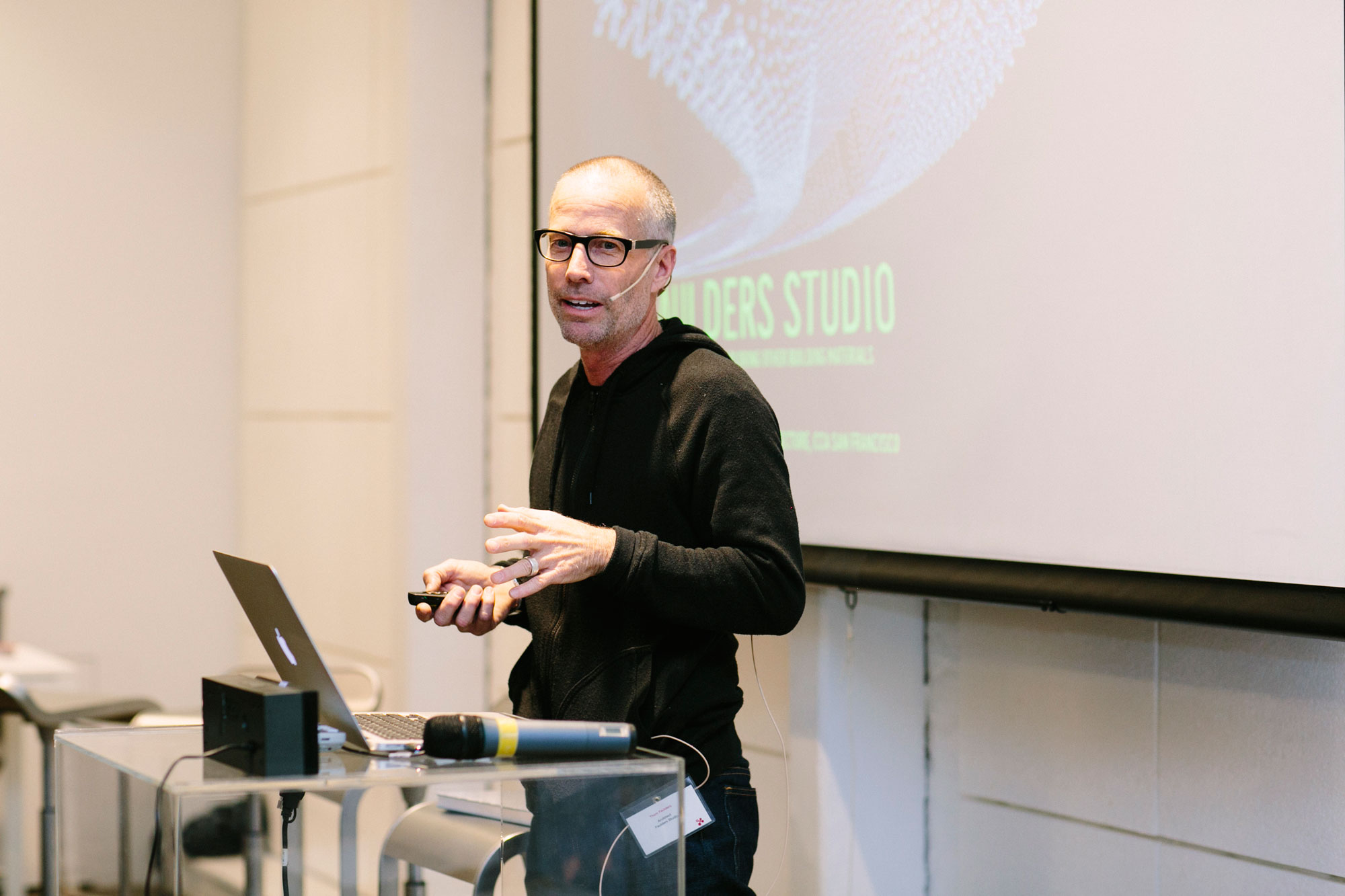
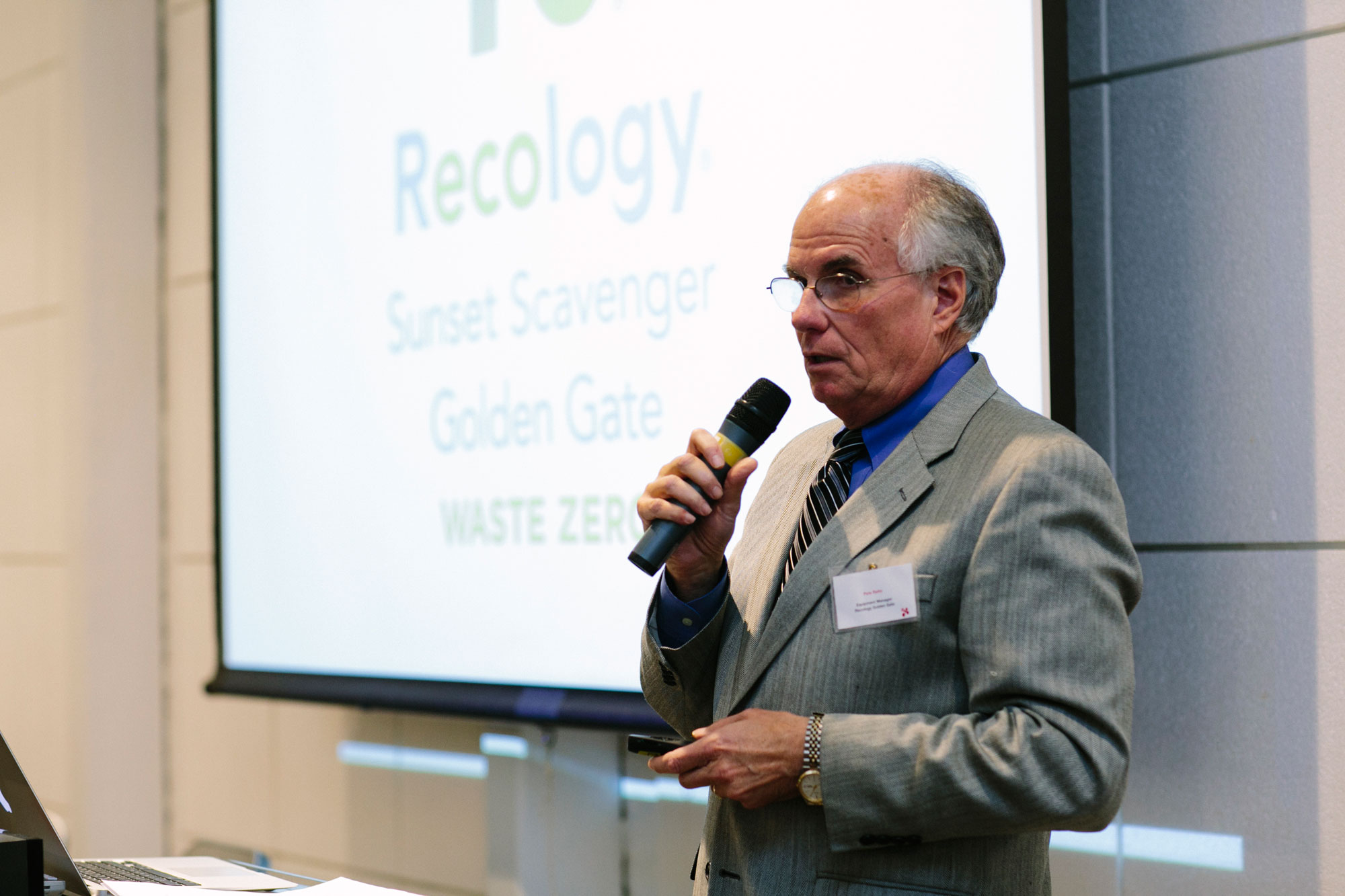
Felix Heisel and Marta H. Wisniewska gave a conceptual and practical look at materials and products that use waste as a renewable resource during their presentation and panel discussion at swissnex San Francisco. From the local experts, Philip Ross (Mycoworks), Thom Foulders (Foulders Studio) and Peter Ratto (Recology), the guests could hear how mushrooms can be a viable building material, how experiments in architecture are incorporating unique products focused on sustainability and renewal, and how San Francisco’s Recology is working towards zero waste for the city by 2020.
For more information click here.
Photo credits: swissnex SF/ Mayleen Hollero

Marta H. Wisniewska and Felix Heisel will be leading several events from 21st – 25th of April at Swissnex San Fransisco in order to promote the recent publication “Building from Waste” in the United States. For detailed information on the events please see here and register your attendance through the swissnex website:
21.04. – 25.04.2015: “Building from Waste” Exhibit with 25 construction products made from refuse

Article published at Sourceable: Bamboo is one of the world’s oldest structural materials and has been used in construction for centuries. Now new research could potentially bolster its continued resurgence and use as a material in green structures. Steel-reinforced concrete is the most common building material in the world. Developing countries use close to 90 per cent of the cement and 80 per cent of the steel consumed by the global construction sector. According to research by the chair of architecture and construction at Future Cities Laboratory (FCL) in the Singapore-ETH Centre, 70 per cent of damage in the built environment today is caused by corrosion of steel inside reinforced concrete structures. In addition, steel is also costly and energy hungry when it comes to production and transportation. Read more here.

Doctoral Researcher Alireza Javadian of the Assistant Professorship of Architecture and Construction Dirk E. Hebel spoke on February 13th 2015 as part of the “Friday Talks” at the Urban Redevelopment Authority Singapore (URA) on “Bamboo: The Green Reinforcement”. His talk introduced the audience to the research of new bamboo composite materials, featuring high tensile capacity with a variety of different application possibilities.
More on the Friday Talk Series can be found here.

Bislang sind Häuser und Brücken aus Bambus Einzelfälle. Forscher von der ETH Zürich wollen jetzt aus dem Süßgrasgewächs einen ökologischen und günstigen Massenbaustoff für die Städte von morgen entwickeln. Ein Beitrag von Oliver Ristau im Technology Review Magazin für Innovation. (article in German only)

The ‘Future Cities: Research in Action’ exhibition opened on 23 Jan 2015 at the URA Centre atrium in Singapore It will run till 13 Mar 2015. Focused on cities, urbanisation, and global environmental sustainability, it presents research conducted by FCL towards the development of sustainable future cities. In this context, the Assistant Profesorship of Dirk E. Hebel (who also curated the show) exhibits their work on alternative future building materials. In general, the exhibition features the work of more than 120 FCL researchers from over 30 countries over the past four years. Integrating science, design and technology, they tackle urban challenges at multiple scales, from building materials and systems to neighbourhoods, districts, cities and their hinterlands. Click here for more information.

270.000 tons of plastic waste particles are floating in our oceans. Asst. Prof. Dirk E. Hebel is writing on garbage swirls and plastic materials in the ETH Zukunftsblog (article in German only). Click here to read the article.

The Ministry of Education in Singapore has awarded the Assistant Professorship of Architecture and Construction Dirk E. Hebel together with the Republic Polytechnic Singapore 320.000 Singapore Dollars within the framework of the “Translational R&D and Innovation Fund Grant” for the jointly submitted project: “Maximize bonding between Sustainable Bamboo Composite Reinforcement and Concrete”. The project is set for two years and lead by Dr. Leong Wen Shing in collaboration with the group of Prof. Hebel in Singapore. The award acknowledges the successful collaboration between the Republic Polytechnic and the Future Cities Laboratory which started in 2013.

The bamboo composite research collaboration between the Assistant Professorship of Architecture and Construction Dirk E. Hebel in Singapore and the Republic Polytechnic Singapore (Dr Wen Shing) was highlighted again this year from Jan 8th to Jan 10th at the Republic Polytechnic Open House 2015 Event.

Swiss daily newspaper Tagesanzeiger recently published a report in the research activities of the Assistant Professorship Dirk E. Hebel at the ETH Zürich and the FCL Singapore. You can read the full article here in German.

A selection of twenty alternative construction materials produced from waste will be on display at the Baumuster Centrale Zürich until January 15th 2015, to be experienced hands-on. The material samples are part of the recent publication “Building from Waste – Recovered Materials in Architecture and Construction” by Dirk E. Hebel, Marta H. Wisniewska and Felix Heisel.

Public lecture “Building from Waste” by Felix Heisel and Marta H. Wisniewska on Thursday November 27, 2014 at the Baumuster Centrale in Zürich, Switzerland. The event, combining a talk and a small exhibition of selected waste materials, explains the approach of the Professorship of Architecture and Construction Dirk E. Hebel to understand waste as a possible resource for the construction of future cities. “The city of the future does not distiguinsh any more between waste and resource”. Quote by Mitchell Joachim

The Chair of Architecture and Construction is exhibiting its bamboo composite material in the exhibition “Magie des Einfachen” (The Magic of the Simple) at the Gewerbemuseum Winterthur from 16th November 2014 to 29th March 2015. Featuring the Brazilian Alvaro Abreu and the German Hans Hansen, the exhibition shows a variety of bamboo applications in the fields of art and construction. More information directly from the museum here and below:
Magie des Einfachen
Der Brasilianer Alvaro Abreu schnitzt Löffel aus Bambus, Hunderte, Tausende, seit vielen Jahren. Erst in einer späten Lebensphase hat er damit angefangen. Jeden Tag einen Löffel, immer aus einem einzigen Stück Bambus, keiner ist wie der andere. Der renommierte deutsche Fotograf Hans Hansen hat sich in seiner fotografischen Arbeit eingehend mit dem Werk von Alvaro Abreu beschäftigt und hat unzählige Bambuslöffel sortiert, geordnet und in einen Rhythmus gebracht, mal in strenger Balance, dann wieder in chaotischer Zufälligkeit. Das Gewerbemuseum Winterthur holt Alvaro Abreus Reich der Bambuslöffel gemeinsam mit den fotografischen Arbeiten von Hans Hansen als Schweizer Premiere nach Winterthur.


In collaboration with Haute Innovation, the Chair of Architecture and Construction exhibited its bamboo composite material at two recent international material fairs: from 21st to 23rd October at the Orgatec 2014 in Cologne, Germany as part of the Smart Office Materials exhibition, and between 11th and 14th November at the Subcontractor 2014 in Jönköping, Sweden.
On October 20th 2014, Bisrat Kifle, Fasil Giorghis and Dirk E. Hebel presented alternative housing concepts to the Addis Ababa Housing and Construction Development Board as part of the ongoing research project ADDIS 2050 The aim of the project is the construction of 5`000 low cost housing units to shelter relocated citizens within the inner city of Ethiopia’s capital, preserving existing social and economic networks. The presented typologies resulted in an overwhelming feedback for EiABC and the ETH, featured in the national evening news on the Ethiopian Broadcasting Network EBC. The short clip can be seen below in Amharic.
EBC Evening News from Architecture and Construction on Vimeo.


At this years World Sustainable Building Conference, the Chair of Architecture and Construction Dirk E. Hebel presented two papers. In Session 48, Felix Heisel talked about “Bamboo Reinforcement – a Sustainable Alternative to Steel”, while Marta H. Wisniewska presented “Waste – a Resource for Sustainable and Resilient Future Cities” in Session 90.


On thursday, October 30th, 12:15pm, Asst Prof. Dirk E. Hebel will give a brown bag lunch talk at the Schweizer Baumuster-Centrale on the research of alternative building materials at ETH Zürich and FCL Singapore. For more information please visit www.baumuster.ch
Building from Waste has been successfully launched and is now available online and in book stores. Together with the book vernissage, also the exhibition Building from Waste was opened on October 8th 2014 at the Baubibliothek at ETH Hönggerberg.


Can a social housing program only provide a structural frame? Will inhabitants start to activate their own skills and financial means to fill this structure according to their needs and desires? And how could this look like? The experimental research project Simulating Incremental Housing is following these questions by implementing a proto-typology of such a structure in a developing settlement in the heart of Addis Ababa’s no-income zones. The simulation tool allows to speculate on different materials and construction methods how such a structure could be populated and used by its inhabitants.
Exhibition Dates: Thursday 9 October to Monday 8 December, 10:00 – 18:00
About the Exhibition
Although long under way, the hybridization of art and science presents itself as the most significant challenge for society today. The boundaries between the sciences are poorly delineated and those between art and science are as well. However, these poorly delineated boundaries form commonly shared areas where the stull unknown can be explored and where points of suture between disciplines can be made. It is here that artistic and scientific forms of knowledge begin to merge and are allowed to develop into hybrid formations which bear new knowledge and offer unique experience. And if hybridity is the landmark of artistic and scientific practice, the exhibition “Hybrid Highlights” is indicative of such hybridized territory that goes beyond art and science while exploring and expanding through the possibilities offered from the still “unknown” of the poorly delineated

Dirk E. Hebel / Marta H. Wisniewska / Felix Heisel
Building from Waste
Recovered Materials in Architecture and Construction
The book provides a conceptual and practical look into materials and products which use waste as a renewable resource for architectural, interior, and industrial design. The inventory ranges from marketed products to advanced research and development, organized along the manufacturing processes: densified, reconfigured, transformed, designed and cultivated materials. A product directory presents all materials and projects according to their functional uses.
Take a look inside the book here.

At this year’s World Sustainable Building Conference in Barcelona WSBC2014, the Chair of Architecture and Construction is presenting two papers on its recent research. Marta H. Wisniewska is speaking on “Waste – a Resource for Sustainable and Resilient future Cities” on 29th October between 3pm and 4:30pm in Session 90: “Construction systems and materials”. Alireza Javadian is presenting “Bamboo Reinforcement – A Carbon Alternative to Steel” on 29th October between 10am and 11:30am in Session 48: “Resources and Waste”. For the Conference program, please visit here.

‘Bambus statt Stahl’ (Bamboo instead of Steel) has been published in Switzerland’s leading daily newspaper ‘Neue Zürcher Zeitung’ on Sunday 27th July. The article offers an overview on the recent developments of the Assistant Professorship Dirk E. Hebel in its bamboo composite material research and led to a wide public interest in Switzerland and Europe. The full article can be accessed here.

Very few developing countries have the resources to produce their own steel, and without this material tall buildings and urban development are all but impossible. But what if there were a local, renewable material that could be used instead of steel in reinforced-concrete buildings? And what if that substitute could be manufactured easily? These questions have motivated Dirk Hebel, an assistant professor of architecture and construction at the Future Cities Laboratory, in Singapore, to investigate a bamboo fiber composite as a possible substitute for steel reinforcement in concrete. The Future Cities Laboratory is a research arm of ETH (Eidgenössische Technische Hochschule) Zürich, in Switzerland, and is the first program under the newly formed Singapore-ETH Centre for Global Environmental Sustainability, which conducts multidisciplinary research to foster urbanization that conforms to the principles of sustainable development. If the tests on the bamboo composite are successful, developing countries will be able to manufacture and build their own urban centers without costly foreign steel imports, according to Hebel.
Read the full article here.
On July 31st, German Radio WDR5 reported on the chair’s bamboo composite research at the Future Cities Laboratory in Singapore. Above you can listen to the short interview with Prof. Dirk E. Hebel in German.

Civil Engineering is the award-winning monthly magazine of the American Society of Civil Engineers. Reaching an audience of more than 140,000 civil engineers worldwide, this magazine has the largest circulation in the engineering market and provides a compelling editorial mix of engineering projects and trends, engineering science, business and professional strategies, exploration of key issues, and news. The Civil Engineering website provides weekly news and feature content that supplements the content of the monthly print and digital editions.
On July 8th, the magazine published a lengthly interview with Prof Dirk E. Hebel on his current material research at the Future Cities Laboratory in Singapore titled: Bamboo Reinforcement Could Help Developing Cities. Research on the use of a bamboo composite material in place of steel to strengthen concrete is producing positive results—and could help some developing countries urbanize.
Read the full article here.

“The Zumtobel Group Award that we have curated for the past eight years is not a static object but an evolutionary process. Just as, under the influence of the respective times, the jury helped drive forward future developments through their decision, responding as they did so to social and technological demands and changes, we, as the curators have joined with the initiator of the award to take it forward by adding the “Applied Innovations” category. The large number of submissions, not least in this new category, and the intense debate within the jury only serve to underline the increasing relevance of the interplay between human beings and technology,” said Kristin Feireiss and Hans-Jürgen Commerell, Founders of Aedes Architecture Forum in Berlin (DE) and curators of the award.
The new APPLIED INNOVATIONS category, rewards innovations and technological solutions that make a trailblazing contribution to the realisation of a more sustainable built environment. The award in this category addresses technical universities, research institutions, individual engineers and firms of consulting engineers, as well as technology start-ups. Submissions could include innovations that have been proven in a prototype, a test series or an application in an actual project. From among 50 submissions in this category, the jury has nominated five offices and projects, including CoReSing’s material research on bamboo composite materials for the building industry.
Mor information can be found here.

CoReSing exhibited its Advanced Fibre Composite Materials at this years World Cities Summit in Singapore from June 2nd to 4th at the Swiss Pavilion. The World Cities Summit is a premier event that brings together practitioners and policy makers with leading experts in their field to identify innovative solutions to the most pressing challenges facing cities today. It is an international conference series on public governance and the sustainable development of cities.

Architectural Blog archdaily reported recently on the ongoing research of CoReSing’s bamboo composite materials for the building industry.
“Developing countries have the highest demand for steel-reinforced concrete, but often do not have the means to produce the steel to meet that demand. Rather than put themselves at the mercy of a global market dominated by developed countries, Singapore’s Future Cities Laboratory suggests an alternative to this manufactured rarity: bamboo. Abundant, sustainable, and extremely resilient, bamboo has potential in the future to become an ideal replacement in places where steel cannot easily be produced.”
The full article can be found here.

Kieron Monks asks in his recent article on CNN Innovations “Would you live in a house of sand and bacteria? It’s a surpassingly good idea”. The article gives an overview on recent developments in the field of alternative building materials and quotes Prof Dirk E. Hebel referring to mushroom bricks that “I could imagine every structure you would built out of bricks. No high-rises, but smaller scale structures and houses. The material is stronger than concrete, with better insulation capacities”. Read the full article here.

Impulse, the magazine for the German-speaking community in Singapore, recently published a short article on Felix Heisel in their issue “German Researchers in Singapore”. It describes his motivation to work in Singapore as well as his research in urban design and construction materials. The issue is available online here.

The CREATE Tower in Singapore sets the scene for vertical networking among its various entities. This kind of setting fosters interactions between the institutions on many levels, informally as well as professionally. Marta H. Wisniewska sees this as a strength. For the full article, please click here.
Dietzold, Lutz, ed. Iconic Awards 2025 – Spaces Objects Visions. Frankfurt: Rat für Formgebung GmbH, 2025.
Hebel, Dirk E. “Activating the Urban Mine.“ In Architecture and Technology Volume II: Cities in Climate Crisis. Madrid: Norman Foster Foundation Press, 2025.

Hebel, Dirk E. und Felix Heisel. “Die Stadt als Ressource.” In Für eine nachhaltige Architektur der Stadt. Berlin: Verlag Klaus Wagenbach, 2025.
Hebel, Dirk E. “Vom Linearen Zum Kreislaufsystem.” In Architektur Und Klimawandel. München: Edition DETAIL, 2025.
Hebel, Dirk E. Interview: “Wir müssen endlich anfangen, den CO2-Ausstoß zu messen – nicht nur, wie dick die Dämmung ist.” Interview by Christoph Karcher. LooKIT 0225, 2025.
BUNDESKUNSTHALLE, ed. WEtransFORM – Zur Zukunft Des Bauens. Berlin: jovis Verlag, 2025.
Renaissance AG, ed. Henkels Wuppertal – DenkWerkStadt. Wuppertal: renaissance Immobilien und Beteiligungen Aktiengesellschaft, 2025.
Monkenbusch, Helmut. „Bauen für die Welt von morgen.“ Hörzu, 24.1.2025
Hebel, Dirk E., Tanja Hildbrandt. „ Pilze – Netzwerker im Untergrund“. alverde, dm-Magazin, April 2025.
Merkert-Andreas, Carolin. “Pilze Sind Vielseitig.” Wohnglück, January 2025.
Boerman, Elena, and Dirk E. Hebel. “RoofKIT – Kohlenstoffspeicher Und Materiallager.” Architektur.Aktuell, vol. 12.2024, no. Tradition und Innovation, Dezember 2024, pp. 98–109

Hebel, Dirk E. Interview: “Vom linearen zum zirkulären Kreislaufsystem.” Interview by Sandra Hofmeister, DETAIL 11.2024, Nov. 2024.

Hebel, Dirk E., Sandra Böhm, Elena Boerman, Hrsg. Vom Bauen mit erneuerbaren Materialien – Die Natur als Rohstofflager. Stuttgart: Fraunhofer IRB Verlag, 2024.
Hebel, Dirk E. “In Kreisläufen denken, entwerfen und wirtschaften.” MÄG – Mein Häfele Magazin, 2024.
Rubel, Maike, and Patricia Leuchtenberger. Interview: “Pilzpower für die Bauindustrie.” competitionline, 7 June 2024, https://www.competitionline.com/de/news/schwerpunkt/pilzpower-fuer-die-bauindustrie-7283.html.
Müller, Janek. “Baumaterialien der Zukunft: Pilze, Hanf und Algen.” neubau kompass – Neubauprojekte in Deutschland, May 3, 2024. https://www.neubaukompass.de/premium-magazin/.
Sören, S. Sgries. “Interview: ‘Wir haben wertvolle Materialien weggeworfen.’” Rhein-Neckar-Zeitung, April 27, 2024, SÜDWEST I 28 edition, sec. Sinsheimer Nachrichten.

Schweikle, Johannes. “Auf Pilz gebaut.” Stuttgarter Zeitung, April 23, 2024, sec. Die Reportage.
Klaaßen, Lars. “Organische Architektur – Pilzmyzel und Flachs als Materialien für die ökologische Bauwende.” In Deutsches Architektur Jahrbuch 2024, edited by Peter Cachola Schmal, Yorck Förster, and Christina Gräwe, 198–209. Berlin, Germany: DOM publishers, 2024.
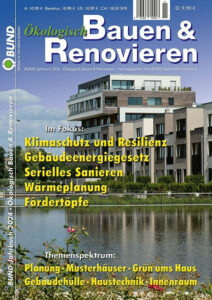
Streiff, Peter. “Zirkuläres Bauen – Kreislauf statt Abriss.” BUND-Jahrbuch – Ökologisch Bauen & Renovieren 2024, January 2024.
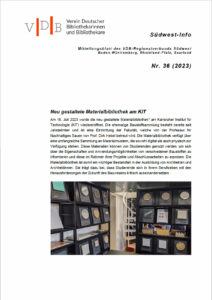
Mönnich, Michael, and Sandra Böhm. “Neu gestaltete Materialbibliothek am KIT.” Südwest-Info: Mitteilungsblatt des VDB-Regionalverbands Südwest Nr. 36 (2023), 2023.
Hebel, Dirk E. “RoofKIT Wuppertal, Germany; Interview with Prof. Dirk Hebel: The aim is clear, we must forge the path ourselves.” In Sustainable Architecture & Design 2023/ 2024, edited by Andrea Herold, Tina Kammerer, and InteriorPark., 46–55. Stuttgart, Germany: av edition GmbH, 2023.
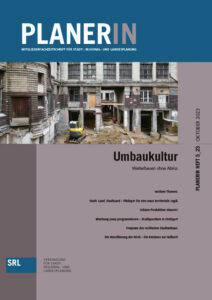
Hebel, Dirk E. “Der Bestand ist die künftige Ressource – Den linearen Umgang mit Baumaterialien schnellstmöglich stoppen.” Planerin – Mitgliederfachzeitschrift für Stadt-, Regional- und Landesplanung, Oktober 2023.
Gholizadeh, Parham, Hamid Zarea Hosseinabadi, Dirk E. Hebel, and Alireza Javadian. “Investigation of Mechanical, Physical and Thermoacoustic Properties of a Novel Light-Weight Dense Wall Panels Made of Bamboo Phyllostachys Bambusides.” Nature Sientific Reports 13 (October 26, 2023). https://doi.org/https://doi.org/10.1038/s41598-023-45515-3
Hebel, Dirk E., Felix Heisel, Andreas Wagner, und Moritz Dörstelmann, Hrsg. Besser Weniger Anders Bauen – Energiewende und digitale Transformation. Besser Weniger Anders Bauen 2. Basel: Birkhäuser Verlag GmbH, 2023.
Hebel, Dirk E. “Vom Jagen, Züchten Und Ernten Zukünftiger Baumaterialien.” Baukultur Nordrhein Westfalen, September 2023.
Hebel, Dirk E., Ludwig Wappner, Katharina Blümke, Valerio Calavetta, Steffen Bytomski, Lisa Häberle, Peter Hoffmann, Paula Holtmann, Hanna Hoss, Daniel Lenz and Falk Schneemann, eds. Sortenrein Bauen – Methode Material Konstruktion. Edition DETAIL. München: DETAIL Business Information GmbH, 2023.
Schweikle, Johannes. “Fungi.” In Earthlike, 1:70–75, 2023.
Hebel, Dirk E. “Die Stadt als Rohstofflager.” wohnen – Zeitschrift der Wohnungswirtschaft Bayern, August 2023.
Hebel, Dirk E. “Das RoofKIT-Gebäude der KIT Fakultät für Architektur – Gewinner des Solar Decathlon 2021/22 in Wuppertal.” wohnen – Zeitschrift der Wohnungswirtschaft Bayern, August 2023.
Hebel, Dirk E. “Die Stadt Als Rohstofflager.” Aktuell – Das Magazin Der Wohnung- Und Immobilienwirtschaft in Baden-Württemberg, 2023.