Privacy & Cookies: This site uses cookies. By continuing to use this website, you agree to their use.
To find out more, including how to control cookies, see here:
KIT Datenschutzerklärung
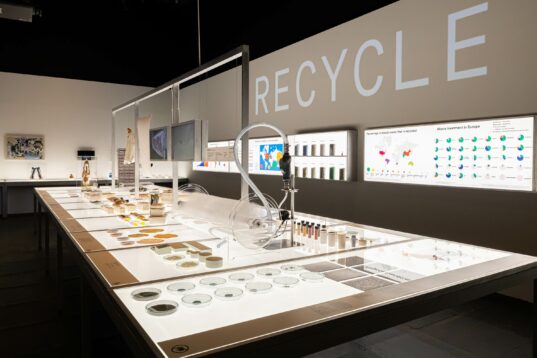
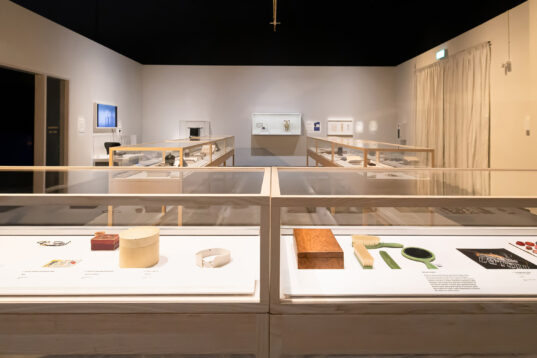
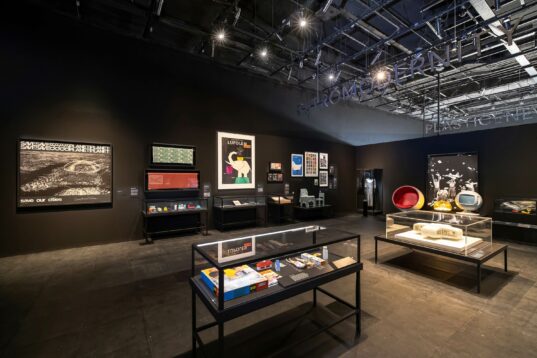
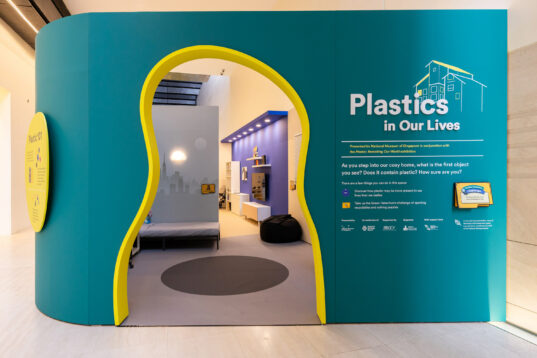
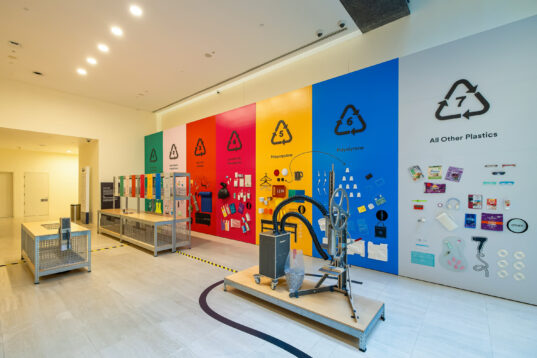
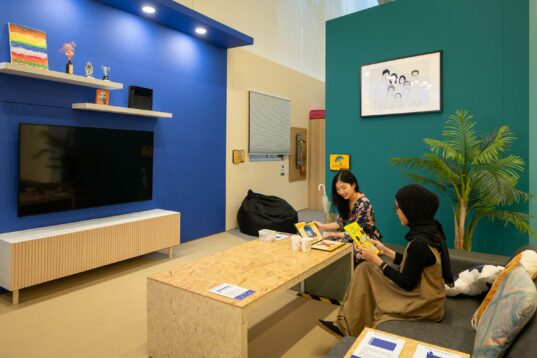
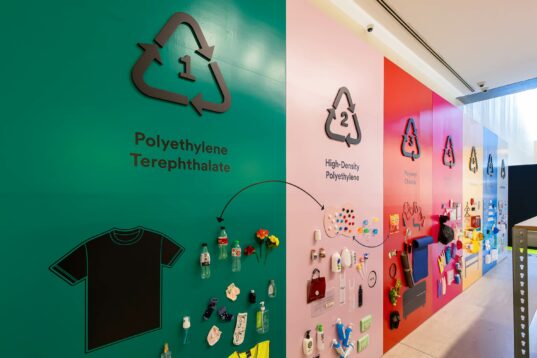
Plastics have shaped our daily lives like no other material. From food containers to electronic devices, from furniture to cars, from fashion to prefab buildings. With their almost limitless malleability, versatility, and economic production, plastics have spurred the imagination of designers and architects for decades. While they have been associated with convenience, progress, and even revolution, in recent years, they have lost their utopian appeal. Plastics are omnipresent – often as waste.
Moving away from a linear economy towards a circular one will require a combination of different strategies and approaches: mechanical, chemical, and biological recycling; a shift from oil-based plastics to plastics that are based on renewable resources and are biodegradable; reduction of single-use plastics. Lastly, legislation will need to support all these developments.
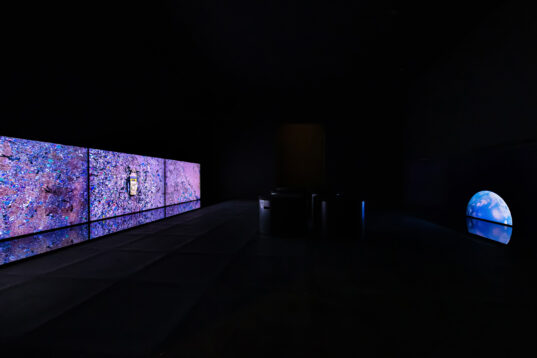
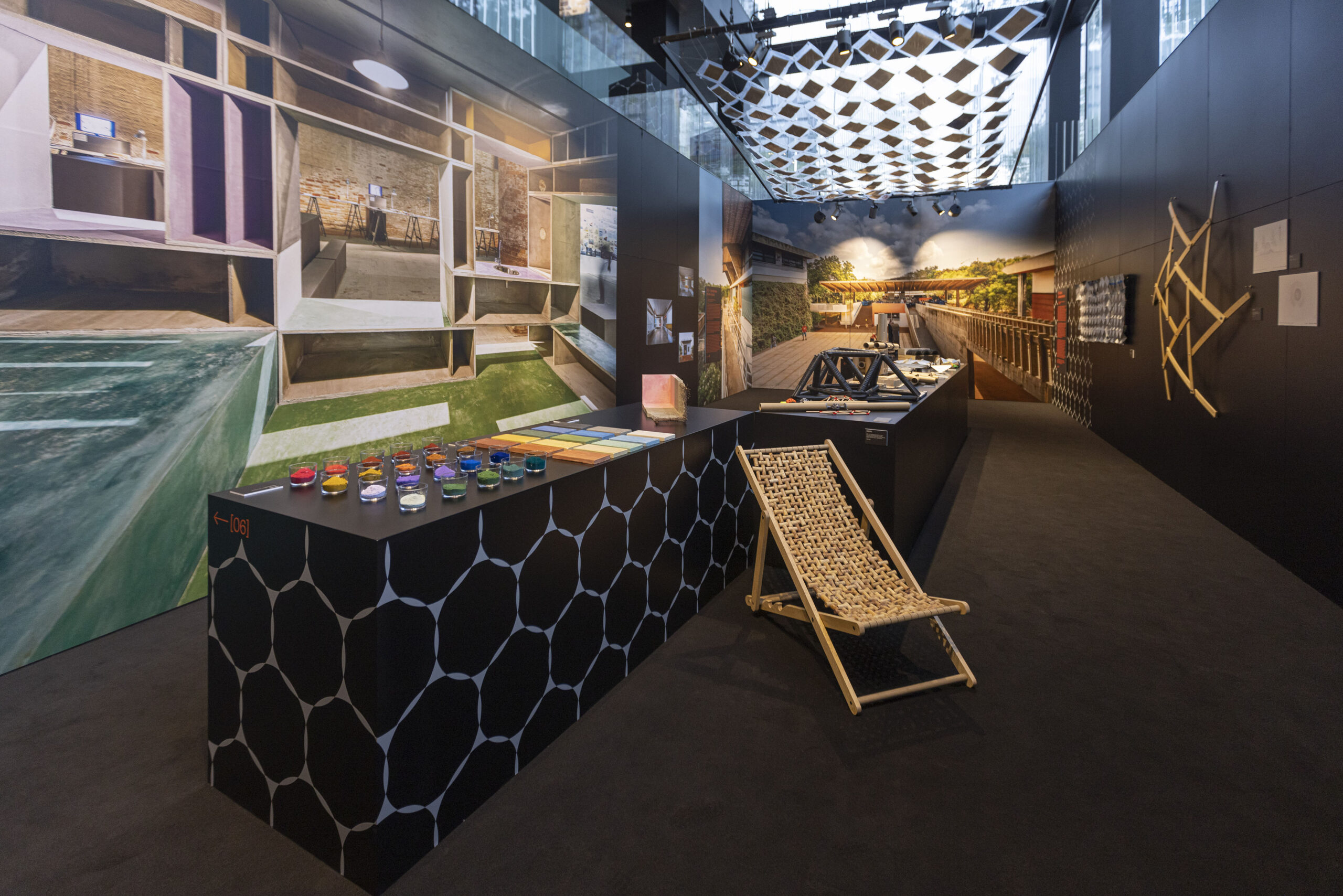
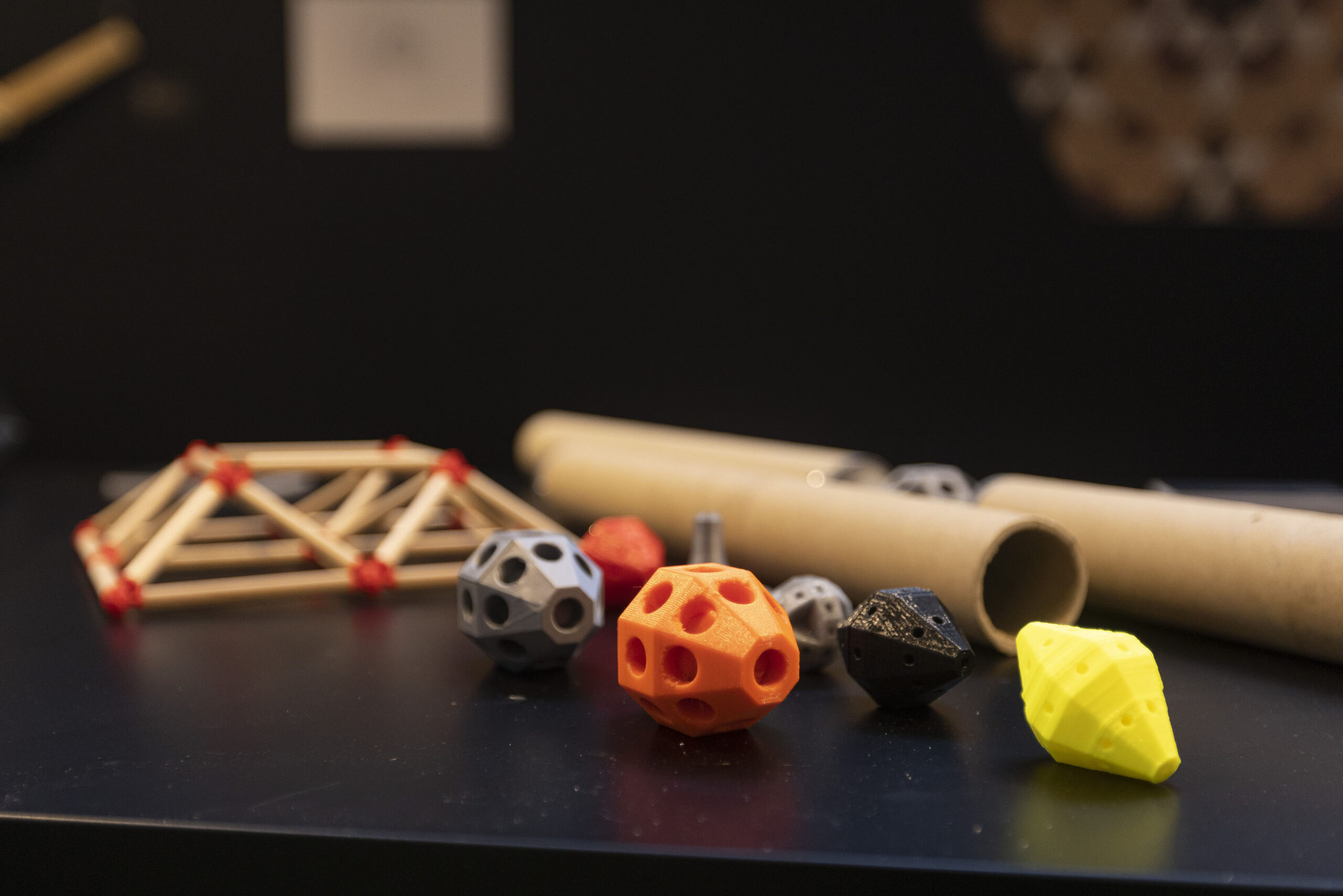
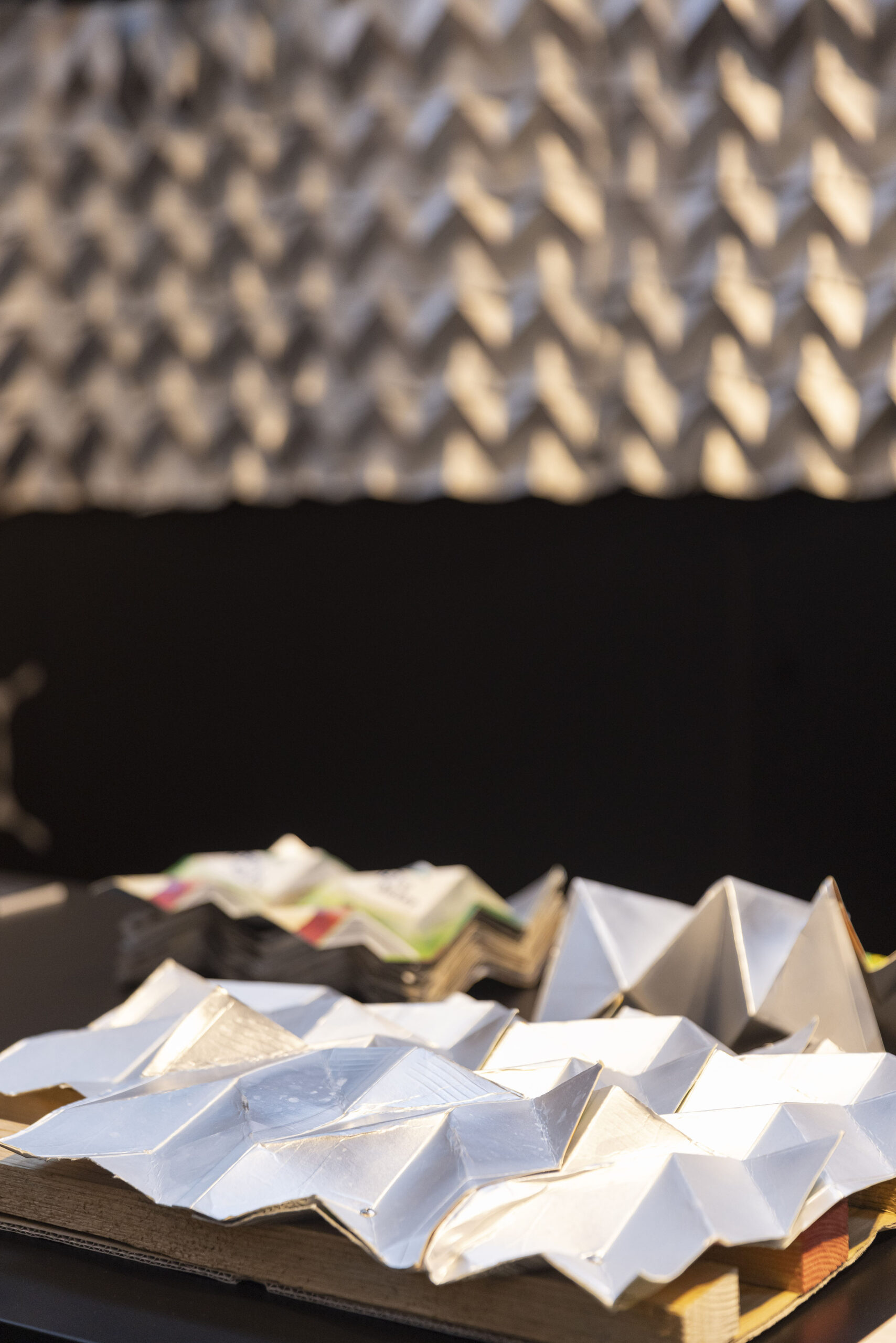
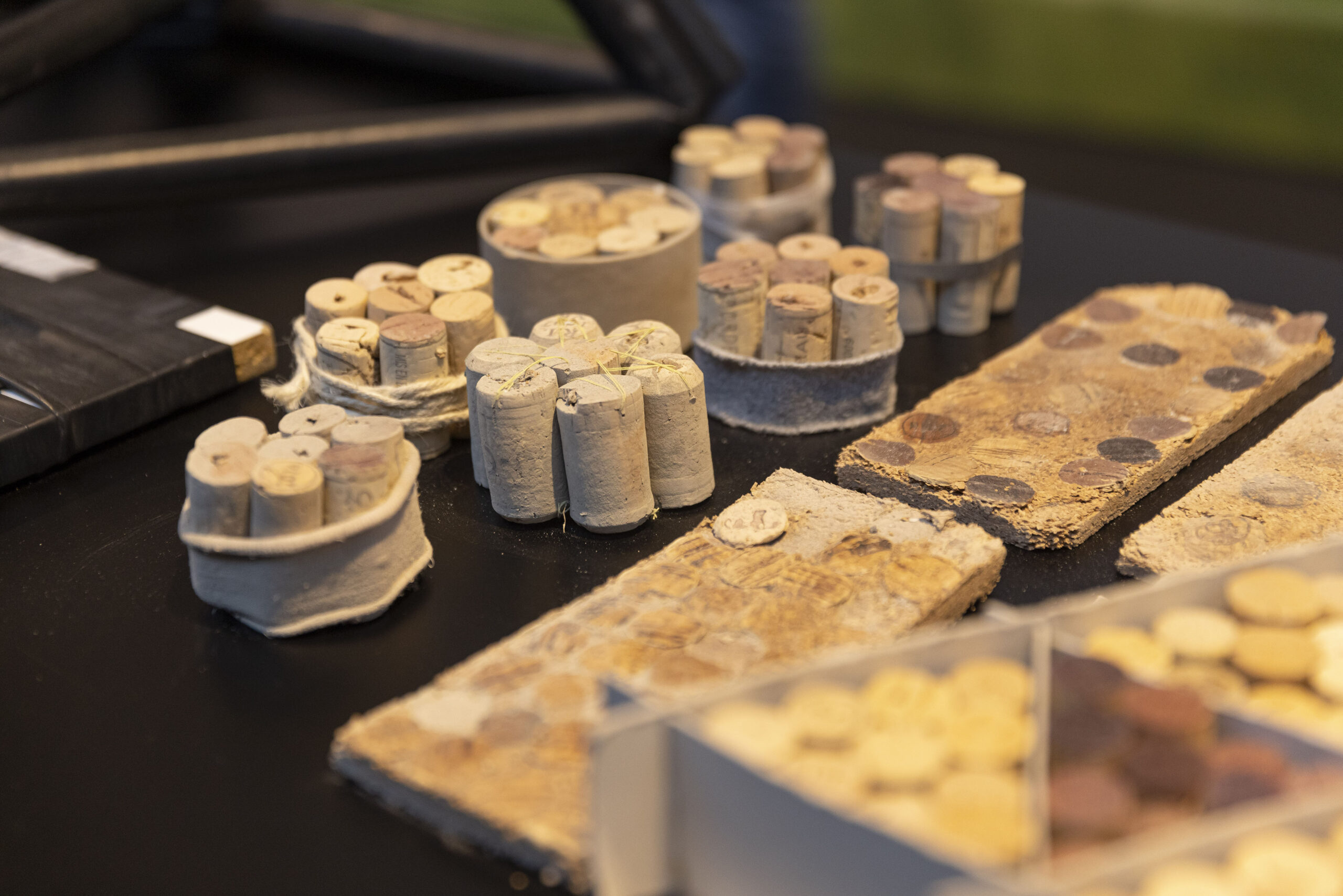
The Vitra Design Museum devotes a major exhibition to the utopian appeal of plastics and to the current challenges that need to be tackled by design, science, and politics. The exhibition ‘Plastic: Remaking Our World’ examines the rise of plastic during the course of the twentieth century, its present ecological consequences as well as current research and design projects towards a new, sustainable use of the material in the future.
The exhibition will be on display in Singapore till 23 June 2024. Afterwards, it’ll move on to Korea and be on show at the Hyundai Motorstudio Busan from August 2024 till May 2025.
Curatorial Team Vitra Design Museum: Jochen Eisenbrand, Mea Hoffmann V&A Dundee: Charlotte Hale, Laurie Bassam maat, Lisbon: Anniina Koivu Consultant Curators: V&A: Johanna Agerman Ross, Corinna Gardner
Exhibition Design Asif Khan
Graphic Design Daniel Streat, Visual Fields
Exhibition Tour 26.03.2022 – 04.09.2022, Vitra Design Museum, Weil am Rhein, Germany 29.10.2022 – 05.02.2023, V&A Dundee, Dundee, United Kingdom 22.03.2023 – 11.09.2023, maat, Lisbon, Portugal 27.01.2024 – 23.06.2024, National Museum of Singapore 09.08.2024 – May 2025, Hyundai Motorstudio, Busan, Korea
As already teased in a Trailer, the fascinating exhibition “Bending the Curve – Knowing, Acting, Caring for Biodiversity” is still ongoing at Frankfurter Kunstverein.
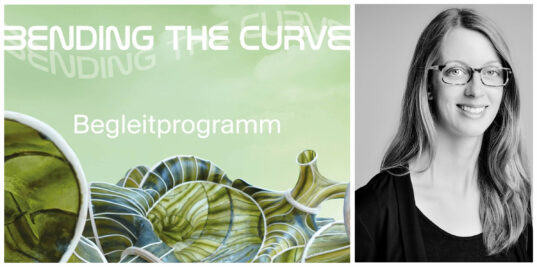
This month, exciting evening events will accompany the current exhibition: Topics ranging from justice in climate change, to the role of hope and climate activism, to sustainable construction and criminal law in the climate crisis will be covered.
Two events have been organized together with the Research Centre Normative Orders at Goethe University Frankfurt. On February 8 at 6:30 pm, the climate philosopher Prof. Dr. Darrel Moellendorf will give a lecture entitled “Mobilizing Hope. Climate activism, solidarity and the dangers of plutocracy and pessimism”. On February 20, at 8 pm, the lawyer Prof. Dr. Klaus Günther will report on (criminal) law and time in the climate crisis. This will be followed by a panel discussion.
Sustainable construction is a theme in the “Bending the Curve exhibition”, which we will be addressed by the panel discussion “Reduce, Reuse, Recycle? About building new, old and completely different” on February 13 at 6 pm, together with experts. Sandra Böhm from KIT as an expert in sustainable materials will be one of the guests. Alex Nehmer, editor of ARCH+, curated the forward-looking exhibition “The Great Repair” at Akademie der Künste in Berlin. Frankfurt architect Claudia Meixner from MEIXNER SCHLÜTER WENDT will report on how ambitious planning can be developed for our city and the Head of Planning and Housing, Prof. Dr. Marcus Gwechenberger, will provide insights into the future of urban transformation.
February begins and ends with public guided tours offered by Paula Maß on February 2 and 28, both at 2 pm. A great opportunity to find out more about the individual exhibits or to deepen your knowledge. You can visit the “Bending the Curve” exhibition until March 3rd.
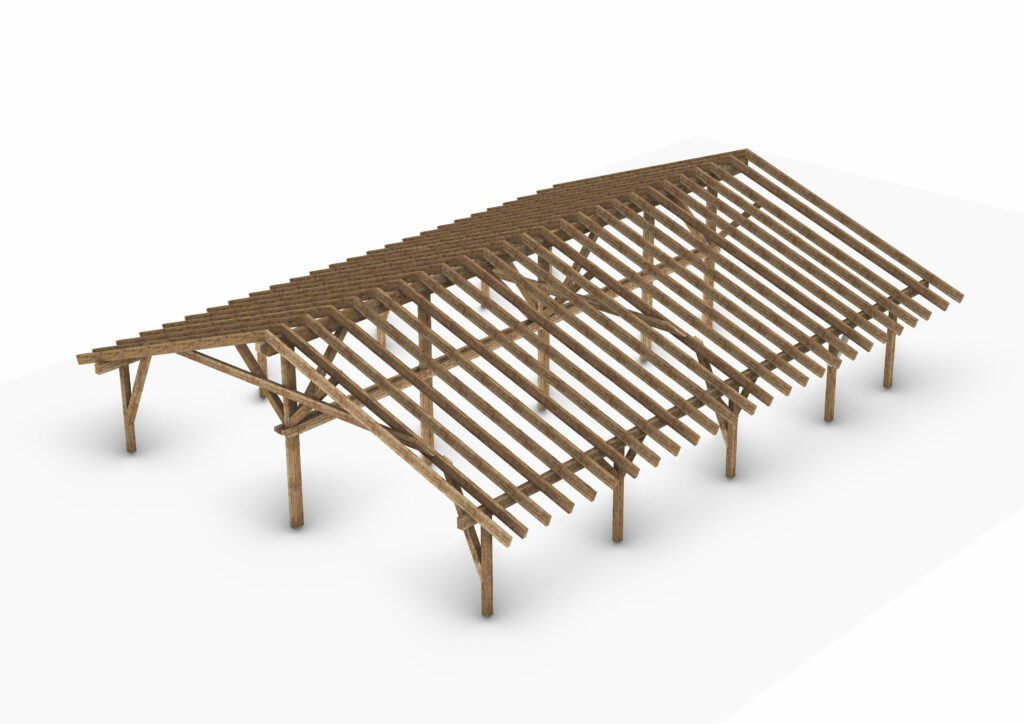
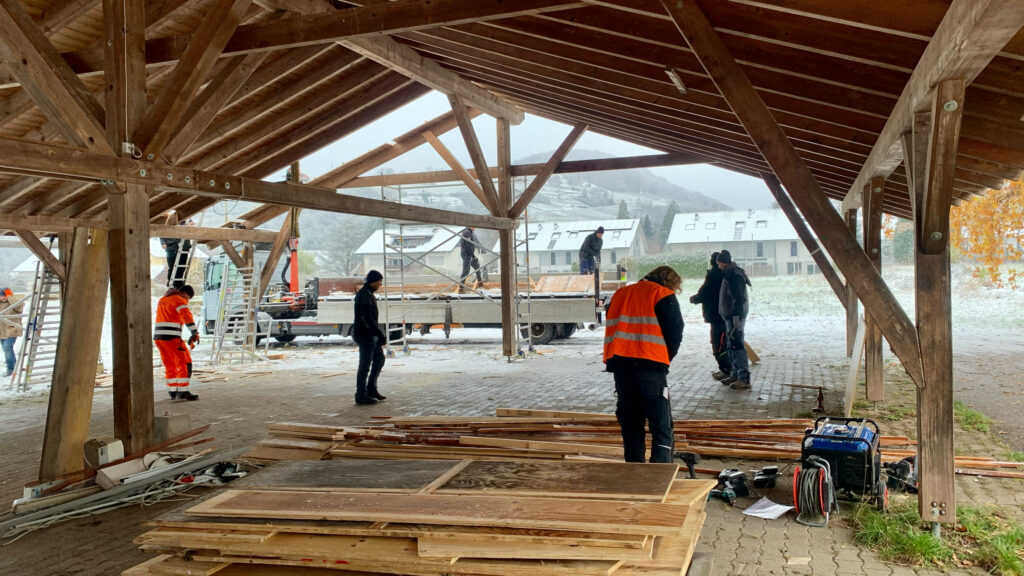
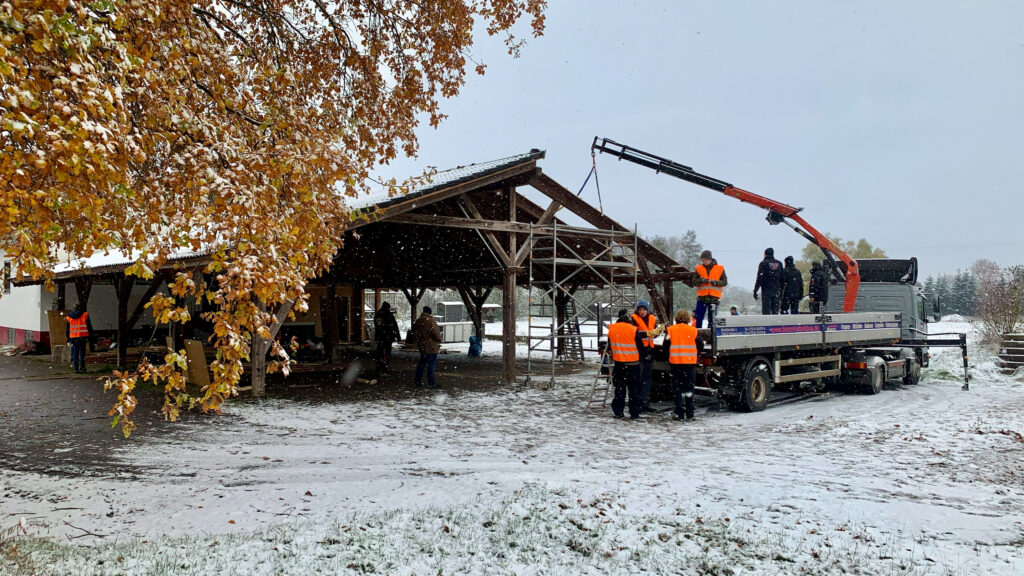
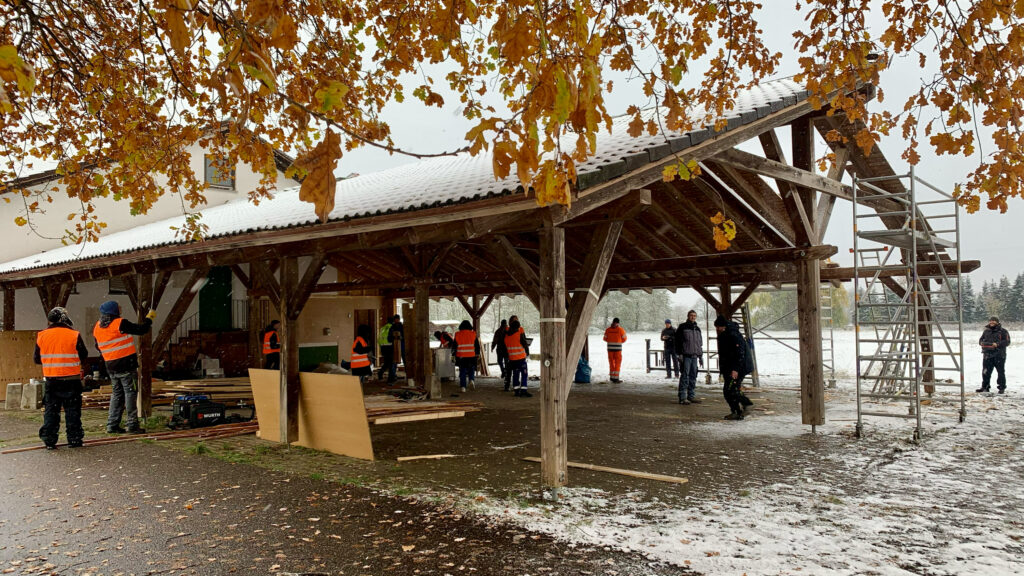
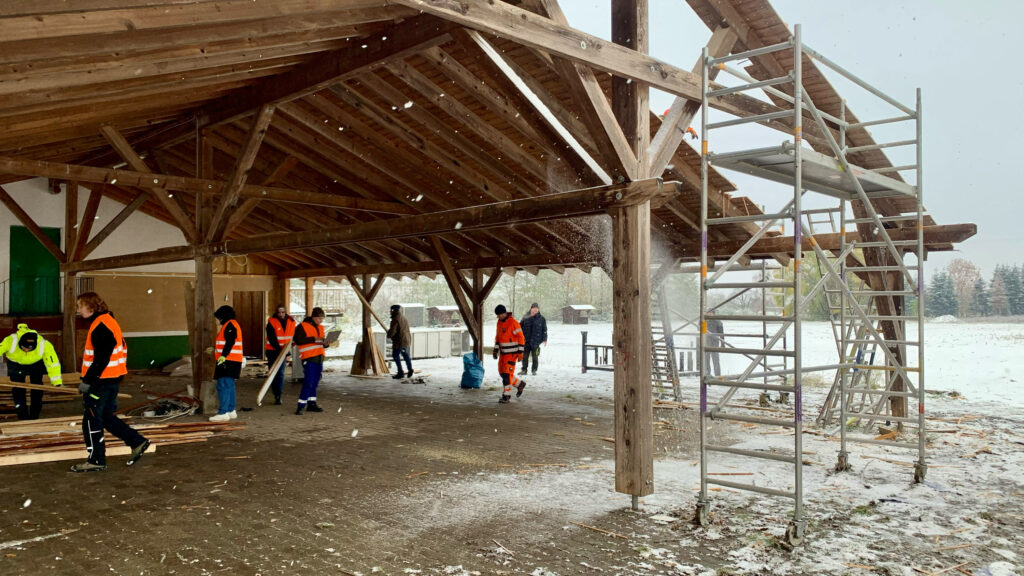
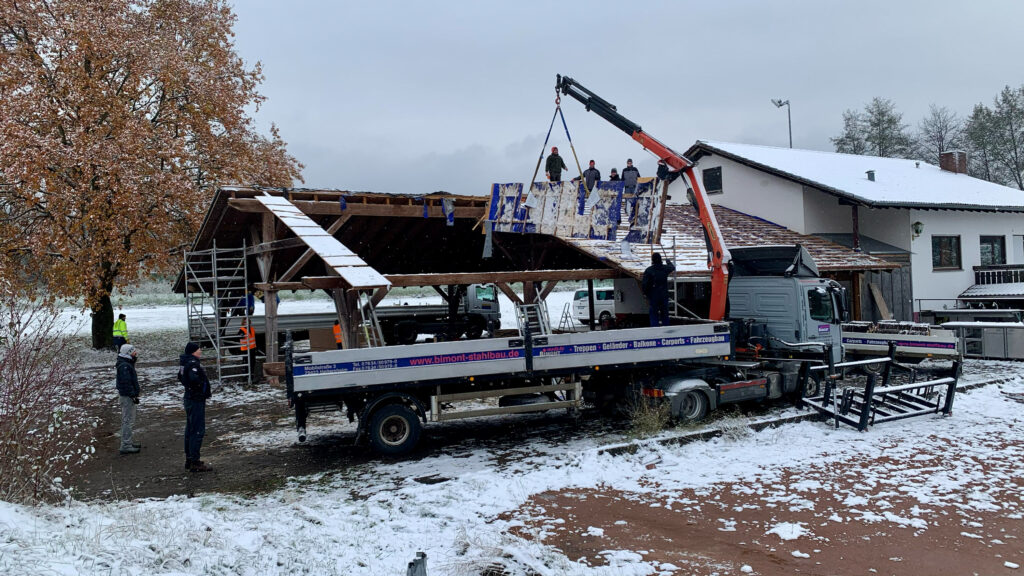
Dealing with existing structures will be one of the most important tasks in Germany and Europe in the coming years and decades. Recently, we offered a reality-based deconstruction-workshop which consists of two parts. Based on this small project, we trained important techniques and basic principles with the aim of realizing the students design ideas.
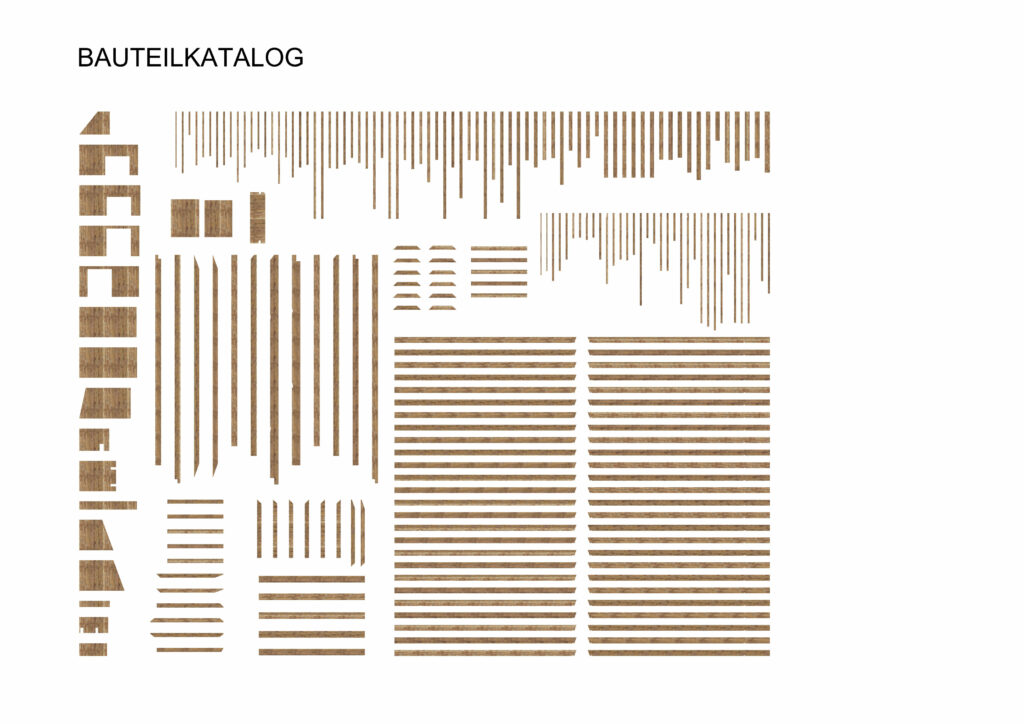
The first part was a deconstruction workshop of an existing wooden barn in Ehrenkirchen near Freiburg in December 2023. The structure has been dismantled and stored. Before that, the dismantled wooden parts have been measured by students who afterwards set up a digital material depot. This way, they’ve learned how to create simple material passes as a basis for new design.
In a second part, the students are asked to design a storage and service building for the sports club in Ebringen, using the parts obtained from the deconstruction. The original building burnt down a few years ago, but the remains are to be preserved and integrated into the design.
We are very excited about the design presentation next week!
Below please find some impressions from the first part:
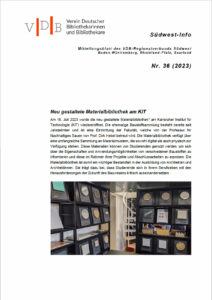
Mönnich, Michael, and Sandra Böhm. “Neu gestaltete Materialbibliothek am KIT.”Südwest-Info: Mitteilungsblatt des VDB-Regionalverbands Südwest Nr. 36 (2023), 2023.
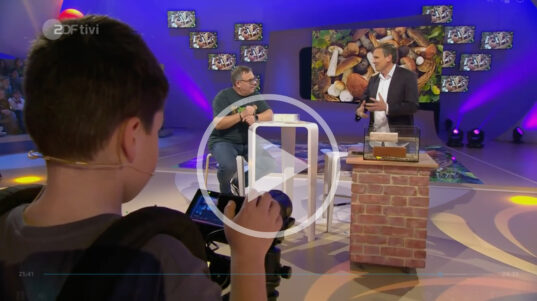
The children’s quiz “1, 2 or 3” teaches knowledge in an entertaining and playful way. Bright minds and nimble legs are required. The guessing teams give their answers by jumping on one of the answer fields.
There are over two million species of mushroom worldwide. And you can not only eat mushrooms, you can even use some of them to build houses. Prof. Dirk Hebel explains how this works. The roots of fungi form a very strong tissue. Reporter Leonore uses this so-called mycelium to produce a kind of leather at the Fraunhofer Institute in Potsdam. She finds out from expert Hannes Hinneburg why wood chips are needed for this. Mushrooms are a truly miraculous material. They can not only be used to make leather, but also a meat substitute for plant-based steaks. And even ants grow mushrooms in their anthills as food. But why some mushrooms glow in the dark, spread black liquid, or how they even manage to take on cleaning tasks in nature, Elton wants to know from the guessing teams.
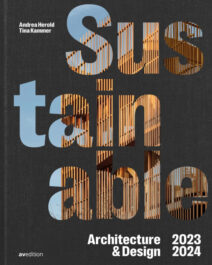
Hebel, Dirk E. “RoofKIT Wuppertal, Germany; Interview with Prof. Dirk Hebel: The aim is clear, we must forge the path ourselves.” In Sustainable Architecture & Design 2023/ 2024, edited by Andrea Herold, Tina Kammerer, and InteriorPark., 46–55. Stuttgart, Germany: av edition GmbH, 2023.
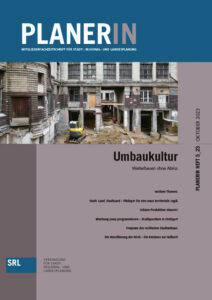
Hebel, Dirk E. “Der Bestand ist die künftige Ressource – Den linearen Umgang mit Baumaterialien schnellstmöglich stoppen.”Planerin – Mitgliederfachzeitschrift für Stadt-, Regional- und Landesplanung, Oktober 2023.
“Primary materials are becoming increasingly rare, especially in our resource-poor region of Central Europe. The circular building method can therefore be an answer to the question of how we can still allow future generations to build according to their needs, ideas and values and thus also be able to realize a dignified life.”
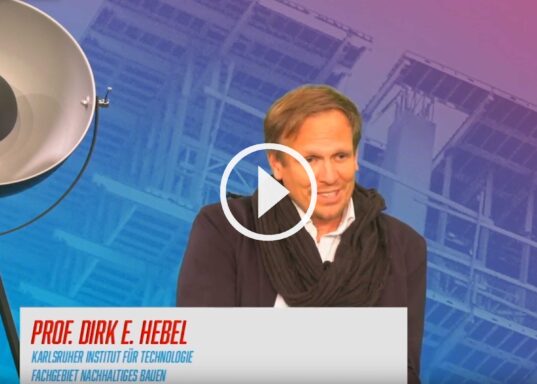
Prof. Dirk E. Hebel explains the principle of the “anthropocene depot” using the example of the “RoofKIT” in a video interview: the city, the built environment, becomes an urban mine from which raw materials are recovered.
The stacking module designed and constructed for the “Solar Decathlon 2022” student competition, which Prof. Hebel supervised as a faculty advisor, has caused a sensation since winning the largest building competition for universities because it has implemented a large number of central architectural themes: Circular economy, adding storeys, biological building materials, timber construction, the use of renewable energies to supply electricity… None of this as a “promise for the future”, as Prof. Hebel emphasizes, but as a module that can already be implemented at this point in time.
Due to the complexity of the topics, RoofKIT will be presented in two films. The next part will highlight the student team members’ view of the project.
Without biodiversity, human existence on planet Earth would not be possible. However, this biodiversity has been declining for far too long, and at an alarming rate. This realisation unites the curatorial team of the Frankfurter Kunstverein, which has invited the Senckenberg Biodiversity and Climate Research Centre and Frankfurt Zoo to collaborate in the form of an interdisciplinary partnership. The result is the new exhibition titled Bending the Curve – Knowing, Acting, Caring for Biodiversity, which alludes to the concept of ‘Bending the Curve of Biodiversity Loss’. The exhibition explores how the negative trend can be halted – or even reversed. This issue is also the focus of the artistic and scientific perspectives presented in the exhibition, which illustrate paths and ideas for ecosystemic recovery and aim to catalyse a turnaround in the biodiversity crisis.
The exhibits and their creation demonstrate where a shift in thinking and action, as well as a new prioritisation of values, may lead to. Built upon the foundation of knowledge, action and care for biodiversity, as formulated in the sub-title, the creators and their works advocate a departure from anthropocentrism towards the concept of transformative ‘naturecultures’, as coined by Donna Haraway. The forward-looking stance of the artists showcased in Frankfurt also stems from their presentation of not just sustainable but regenerative art. Unlike sustainability, which aims to preserve resources and minimise negative impacts, regenerative art focuses on co-existence with ecosystems. This necessitates aligning the coordinates of daily life in a way that creates a liveable social environment while simultaneously contributing to the recovery, renewal, and perhaps even complete health of the environment.
Bending the Curve – Knowing, Acting, Caring for Biodiversity 13.10.2023 — 03.03.2024
In collaboration with the Senckenberg Biodiversity and Climate Research Centre and Frankfurt Zoo
Co-Creation Art: Prof. Franziska Nori Co-Creation Science: Prof. Dr. Katrin Böhning-Gaese
Alexandra Daisy Ginsberg / Fernando Laposse / Julia Lohmann / Maurizio Montalti / MYRIAD. Where we connect. / Fraunhofer Institute for Applied Polymer Research IAP / Karlsruhe Institute of Technology, Faculty of Architecture / Max Planck Institute of Animal Behavior / Walter R. Tschinkel / Frankfurt Zoo
Gholizadeh, Parham, Hamid Zarea Hosseinabadi, Dirk E. Hebel, and Alireza Javadian. “Investigation of Mechanical, Physical and Thermoacoustic Properties of a Novel Light-Weight Dense Wall Panels Made of Bamboo Phyllostachys Bambusides.”Nature Sientific Reports 13 (October 26, 2023). https://doi.org/https://doi.org/10.1038/s41598-023-45515-3
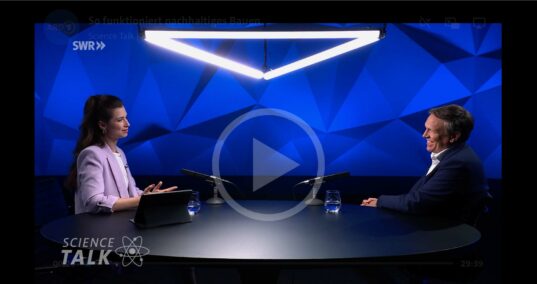
Which new materials can be used to construct buildings in an environmentally friendly and natural way? Julia Nestlen gets to the bottom of this question in SWR “Science Talk” with Professor Dirk Hebel.
“I am glad that the circular economy is becoming increasingly important alongside the climate issue. It’s necessary that we develop new technologies, that we plan better and smarter for deconstruction (of buildings) and not only for the operation phase.” Prof. Dirk Hebel
Giving science a stage: In the SWR series “Science Talk”, experts from various fields give exciting insights into their new research. Every week, a researcher explains in 30 minutes what science can say about a current topic – and what that means for people’s lives.
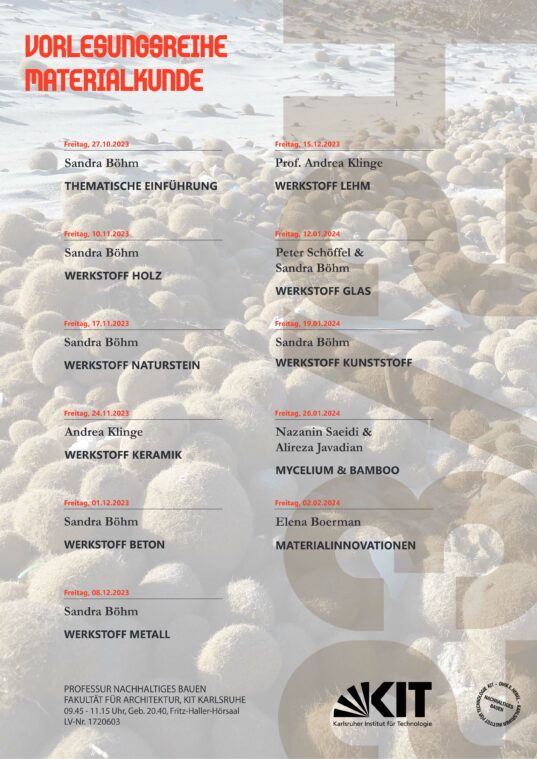
In the Winter Semester 2023/24, the KIT Department of Architecture will offer a lecture series on Materials, organized by the chair of Sustainable Construction, Dirk E. Hebel. In total, 11 lectures will address conventional and alternative building materials and their use in construction. Speakers are: Sandra Böhm, Prof. Andrea Klinge, Peter Schöffel, Nazanin Saeidi, Alireza Javadian and Elena Boerman. Please refer to the poster for actual dates. The lecture is held every Friday, 9.45 am at the lecture hall Fritz-Haller in the building 20.40 at KIT Campus South.
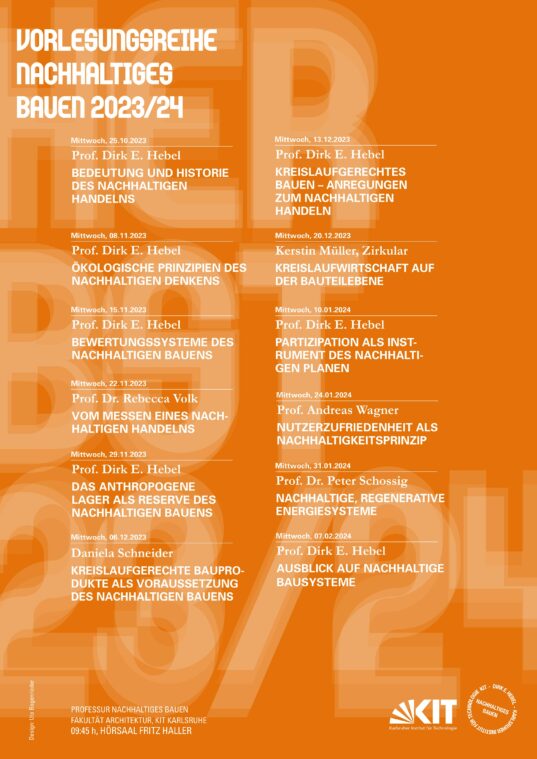
In the Winter Semester 2023/24, the KIT Department of Architecture will offer a lecture series on Sustainable Construction, organized by the Professorship of Sustainable Construction, Dirk E. Hebel. In total 12 lectures he will address the history, state of the art, and alternative futures within the theme. Please refer to the poster for actual dates. The lecture is held every Wednesday, 9.45 am in the lecture hall Fritz-Haller in the building 20.40 at KIT Campus South.
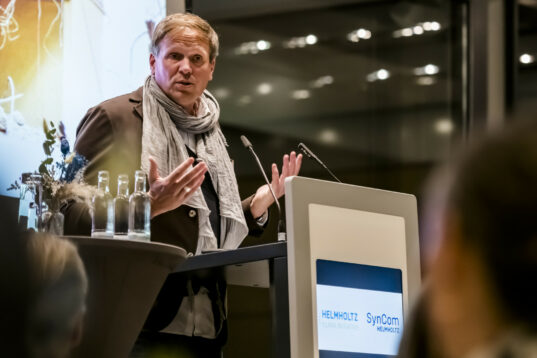
Climate change is becoming a particular challenge for our urban life: our cities heat up particularly strongly in summer, and extreme weather such as heavy rainfall pushes infrastructure to its limits. Worldwide, almost 60 percent of people live in urbanized settlements, and the number is steadily increasing. As global temperatures continue to rise, so do the challenges facing cities and the people who live in them. In Berlin on November 8th 2022, several scientists talked and elaborated on the question of how to design and adapt our cities for such challenges ahead. The parliamentary evening was organizezed by Helmholtz SynCom.
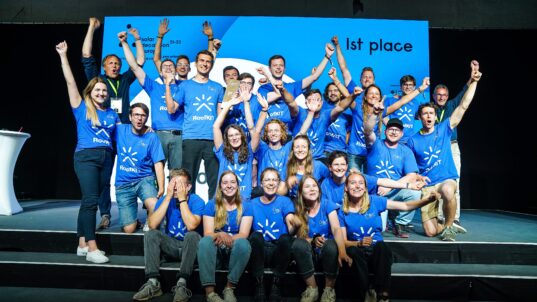
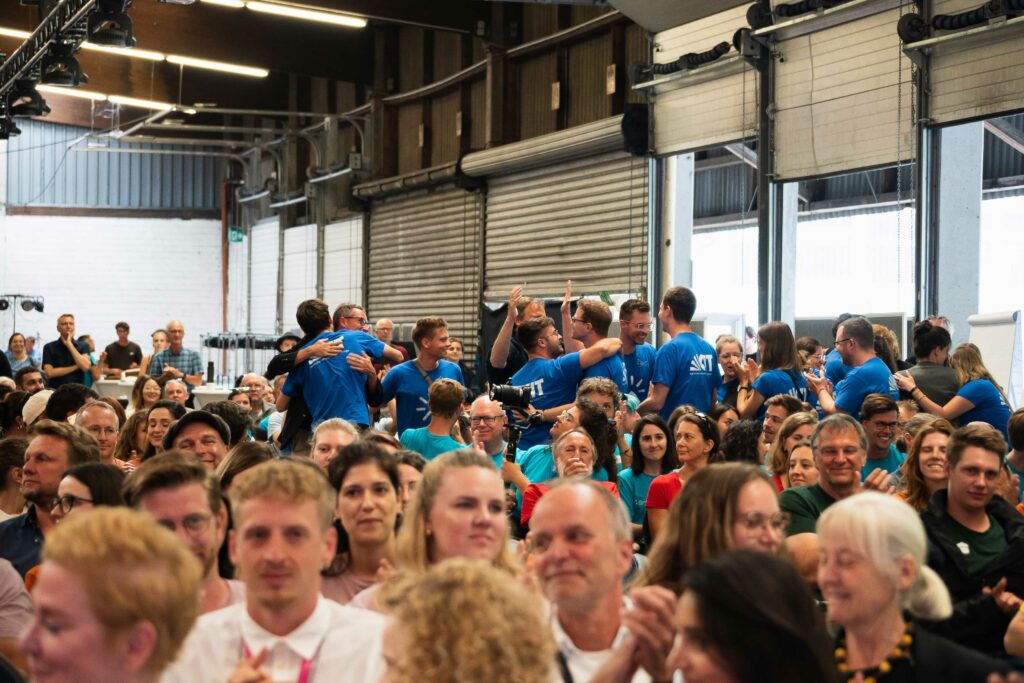
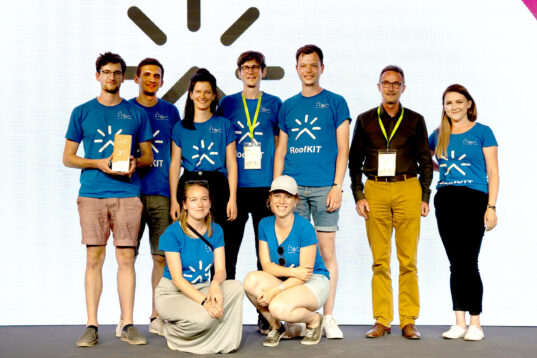
On Friday 24 June at about 6 pm, the time had finally come – the Competition Director of the Solar Decathlon Europe 2021/22, Karsten Voss, in Wuppertal announced the winning team of the student competition: Team RoofKIT from Karlsruhe! The team was very surprised about this development and expressed their relief, happiness and pride. The moment of the announcement was captured on video by SDE 2021/22:
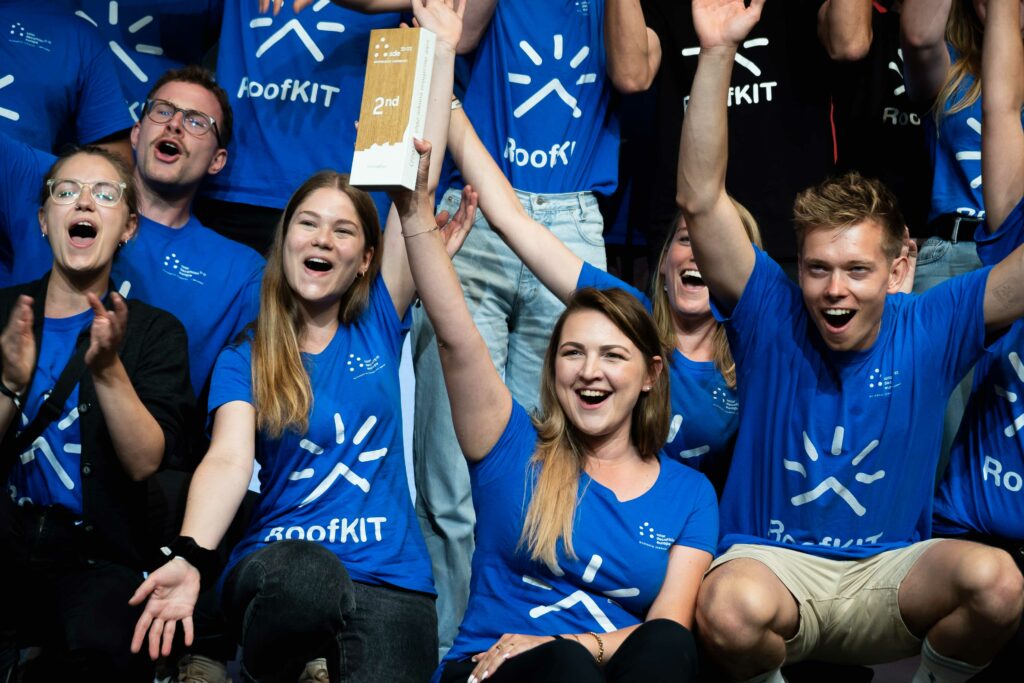
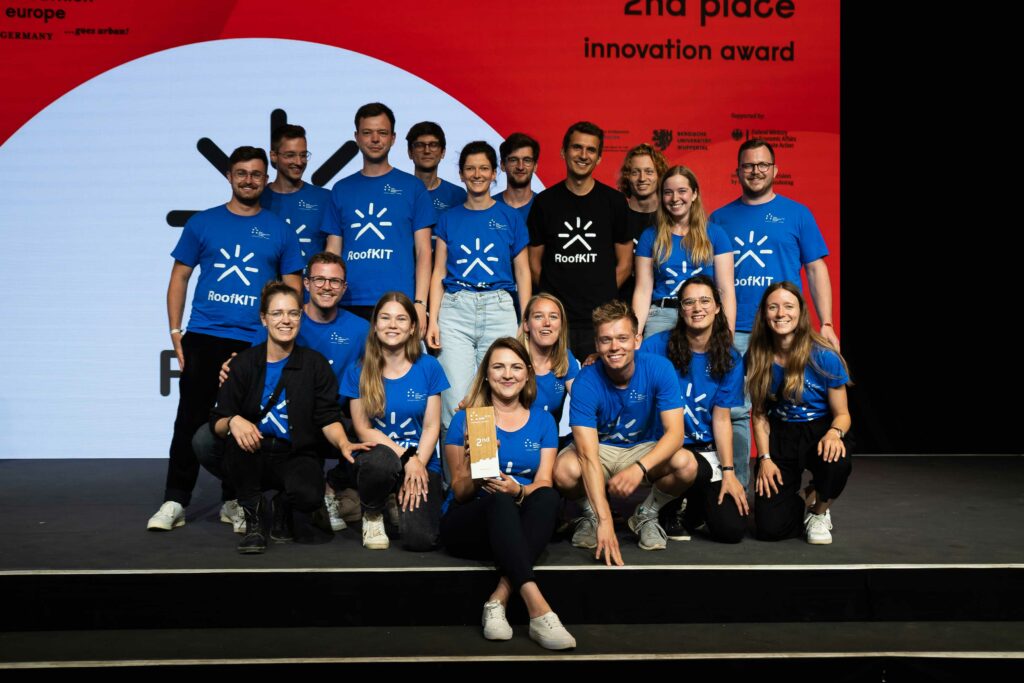
Second place in the overall competition was taken by Team Virtue from Eindhoven, and third place was shared by Team SUM from Delft and Team Aura from Grenoble. On the website of the SDE 2021/22, all other placements and the intermediate results and awards of the competition can be viewed.
After the award ceremony, Team RoofKIT was visited by WDR and the winning house was shown live on WDR’s Lokalzeit (approx. from minute 20), where some team members were also interviewed about the project.
The Professorship of Sustainable Construction and the Professorship of Building Physics would like to thank all the students and staff of Team RoofKIT and congratulate them on this great competition result!
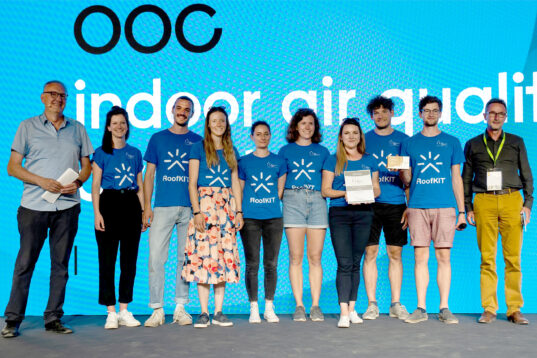
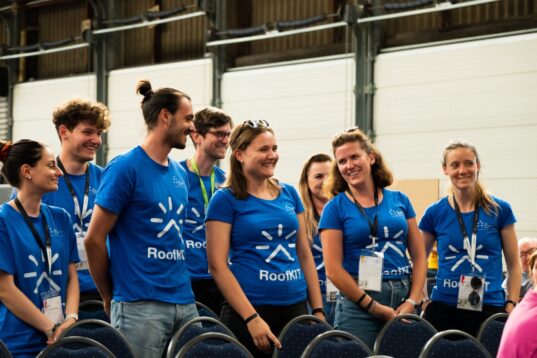
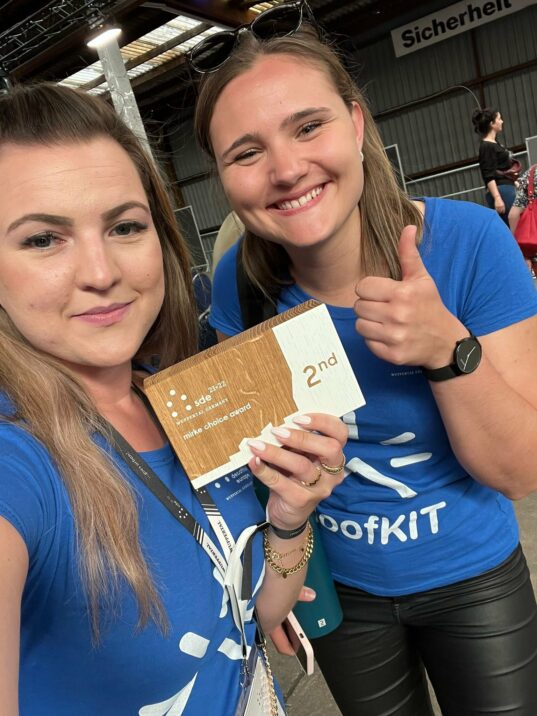
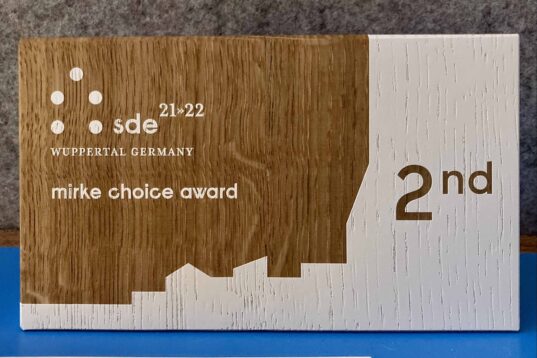
On Sunday 12th the Award Ceremony of the first “Out Of Competition Award” has taken place at the Solar Campus. Team RoofKIT ist very happy that the fist day of Award Ceremonies also brought the first trophy – The inhabitants of the Wuppertal neighborhood of Mirke, where the proposed plots of the SDE 21/22 are located, voted RoofKIT second place of the “Mirke Choice Award”. The team is especially proud that the proposal for topping up the Café ADA in the heart of the neighborhood is appreciated by the people it was designed for.
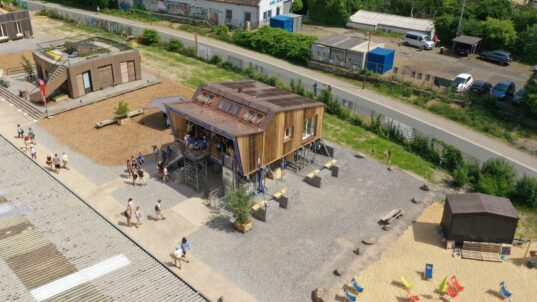
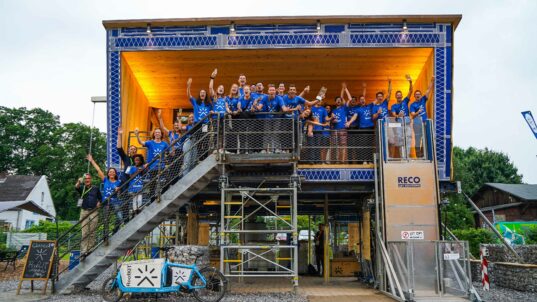
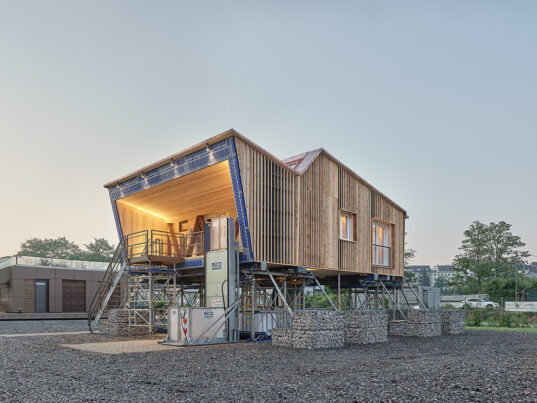
The Karlsruhe Institute of Technology is participating in the 2021/22 Solar Decathlon Competition in Wuppertal, Germany with its project RoofKIT. Designed as a top-up to an existing structure of the 19th century in the old city fabric, it demonstrates a vision for the building industry: social adequate, energy positive and circular sustainable.
It is the unique character of the Solar Decathlon competition, that next to an overall design approach of a larger project, a characteristic element is constructed as a full scale demonstrator. Since 2020, more than 100 students from KIT within different faculties and under the leadership of the professorships of Sustainable Construction (Prof. Dirk E. Hebel) and Building Technologies (Prof. Andreas Wagner) worked on the project which cumulated in the construction of the House Demonstration Unit in May and June 2022 in Wuppertal, Germany.
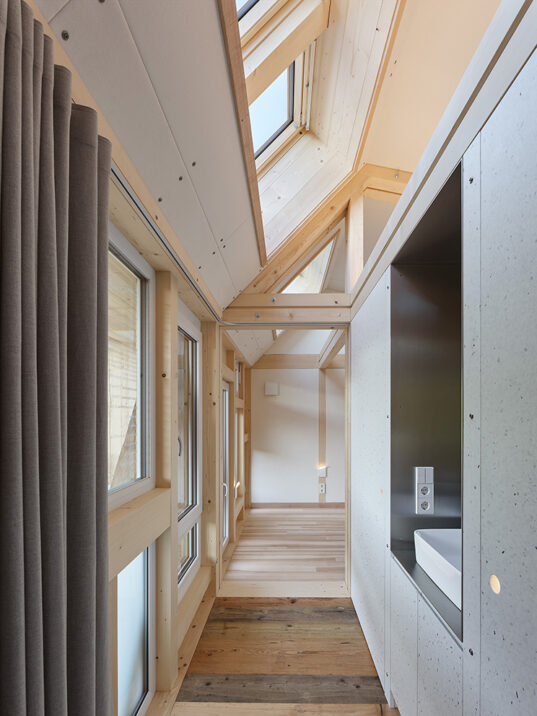
Designed as a prefabricated module system with a 100% circular construction method, the unit proofs already today, that with current technology and design capacities, we are able to fulfill the requirements of the European Green Deal. No glues, no paints, no foams or wet sealants were used, so that the circularity of the building and its materials is guaranteed. In addition, only mono-materials were used for construction, meaning no composites or mixtures of materials are to be seen.
But RoofKIT wants not only show what is possible in the future: many building components and materials are taken already out of the urban mine and are used in their second, third or even fourth circle: wood from old barns in the black forest, the entrance door from a building of the 19th century , windows from a demolished building in Basel, bathroom and kitchen sinks as well as fixtures from turn backs of fair exhibitions.
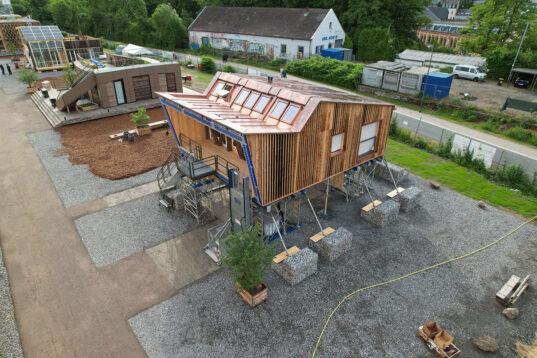
This circular approach only makes sense when it is powered by renewable energy. As the RoofKIT top-up is a new construction with a high energy efficiency standard, the total energy demand (including appliances and e-mobility) will be covered by solar systems on the building envelope. For solar harvesting PVT collectors are used which simultaneously provide electricity and heat, the latter serving as the source for a heat pump which feeds a floor heating system and hot water tank. The surface of the PV modules is colored with a special coating technology in order to merge with the copper roofing with almost no losses in efficiency. This important step is necessary to fully integrate solar panels into the design approach of future buildings. The overall light concept follows the idea of avoiding unnecessary fixtures where possible and using flexible hand-carried cable-free elements to illuminate only those areas where wanted. In addition, an artificial lighting system around the core delivers light with a luminous color adapted to the time of the day.
The unit sits on a scaffolding structure to demonstrate its character as a top-up design strategy. RoofKIT already today is a demonstrator for our future building culture and industry.
Project Credits: Core student team KIT Karlsruhe: Patrick Bundschuh, Stefanie Christl, Luca Diefenbacher, Florian D’Ornano, Jonas Ernst, Dominic Faltien, Nadine Georgi, Aaron Harter, Johannes Hasselmann, Louis Hertenstein, Michael Hosch, Martin Kautzsch, Jennifer Keßler, Nicolas Klemm, Katharina Knoop, Sebastian Kreiter, Anne Lienhard, Michelle Montnacher, Fabian Moser, Friederike Motzkus, Jana Naeve, Saskia Nehr, Julian Raupp, Alexander Resch, Nicolas Salbach, Julian Schmidgruber, Natascha Steiner, Niels Striby, Dennis Sugg, Moritz Tanner, Sven Teichmann, Benjamin Weber, Vincent Witt, Immanuel Zeh
Project Leader: Regina Gebauer (Architecture) and Nicolás Carbonare (Building Technology)
Architectural Design: Faculty of Architecture, KIT Karlsruhe, Professorship of Sustainable Construction, Prof. Dirk E. Hebel, Regina Gebauer, Sandra Böhm, Katharina Blümke, Elena Boerman, Hanna Hoss, Philipp Jager, Daniel Lenz, Manuel Rausch, Daniela Schneider, Alireza Javadian, Nazain Saeidi, Elke Siedentopp with Michael Hosch, Benjamin Weber, Martin Kautzsch, Julian Raupp
Building Technology: Faculty of Architecture, KIT Karlsruhe, Professorship of Building Technologies, Prof. Andreas Wagner, Nicolás Carbonare, Isabel Mino Rodriguez with Martin Kautzsch (cooperative partners: Klaus Rohlffs, ip5 Karlsruhe; Prof. Jens Pfafferott, University of Applied Sciences, Offenburg; Martin Wortmann-Vierthaler, Heinrich-Meidinger-Berufsschule, Karlsruhe, David Wölfle, FZI Forschungszentrum Informatik)
Structural Design demonstration unit: 2hs Architekten und Ingenieur, Prof. Karsten Schlesier HCU Hamburg with Johannes Hasselmann and Jonas Benjamin Ernst
Structural Design circulation, foundation and safety elements: Faculty of Architecture, KIT Karlsruhe, Professorship of Structural Design, Prof. Riccardo La Magna, David Andersson
Structural Design scaffolding system: DOKA, Alexandra Sell und Markus Wientzek
Light Design: Faculty of Architecture, KIT Karlsruhe, Professorship of Building Technologies, Prof. Andreas Wagner, Luciana Alanis with Erik Hofmann and Maikel Hollstein
Urban Mobility: Faculty of Architecture, KIT Karlsruhe, Professorship of Urban Design, Prof. Markus Neppl, Peter Zeile with Nicolas Salbach and Daniel Lenz
Feasibility & Affordability, Life cycle Assessment: Faculty of Economics and Management, KIT Karlsruhe, Professorship of Sustainable Management of Housing and Real Estate, Prof. Thomas Lützkendorf, Daniel Rochlitzer with Regina Gebauer and Julian Schmidgruber
Material Library: Elena Boermann und Sandra Böhm mit Anna-Lena Kneip
Corporate Design and Communication: Philip Brücher, Nadine Georgi, Dominic Faltien, Lukas Großmann, Jennifer Keßler, Katharina Knoop, Michelle Montnacher, Saskia Nehr, Sanda Sandic, Natascha Steiner, Katharina Blümke, Daniel Lenz, Manuel Rausch
Fabrication demonstration unit: Kaufmann Zimmerei und Tischlerei, Reuthe, Bregenzerwald, Österreich, Matthias Kaufmann, Mario Meusburger with KIT students
Supported by: KIT Karlsruhe, German Ministry for Economic Affairs and Climate Action, Holzbauoffensive Baden-Württemberg, Energy Endeavour Foundation
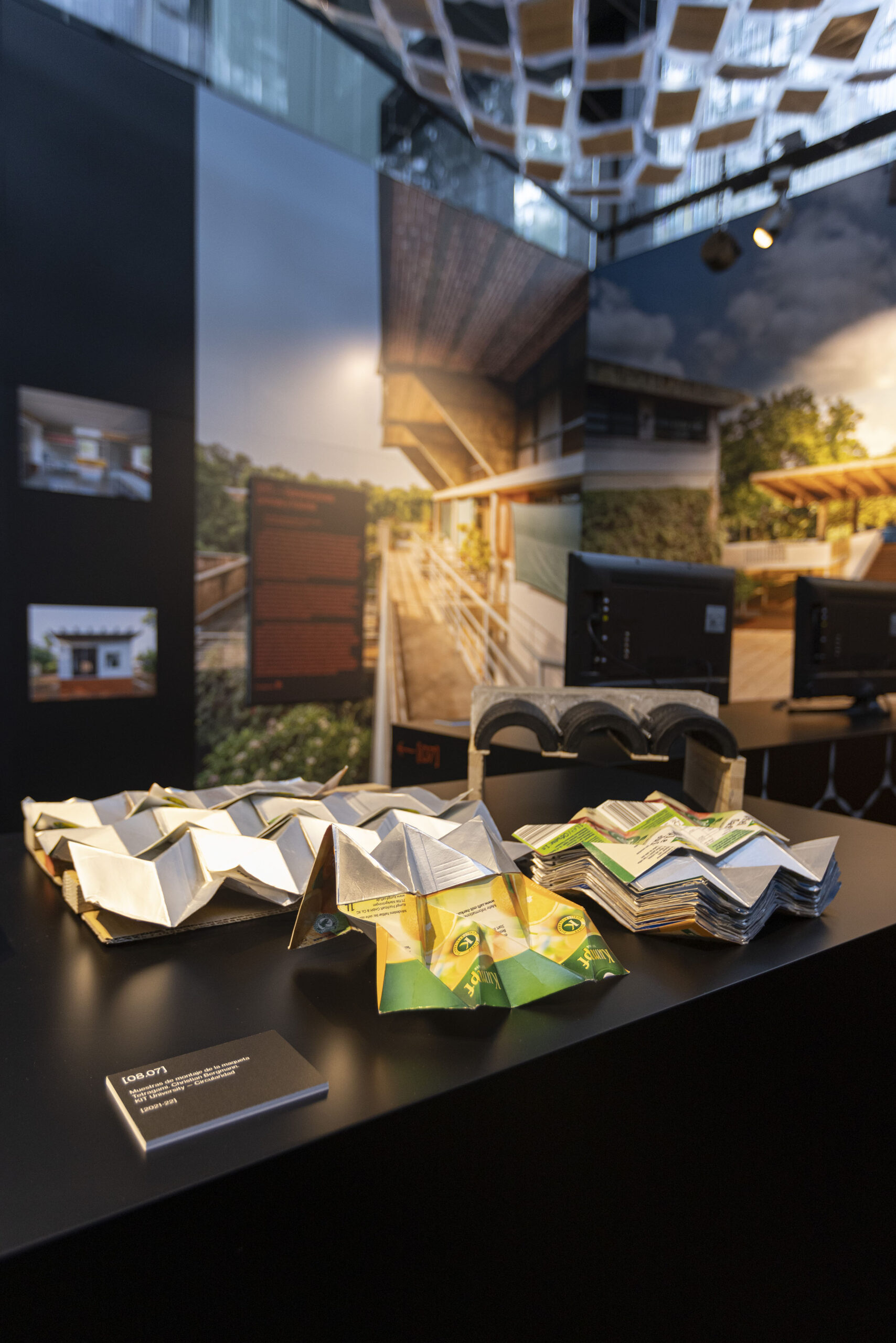
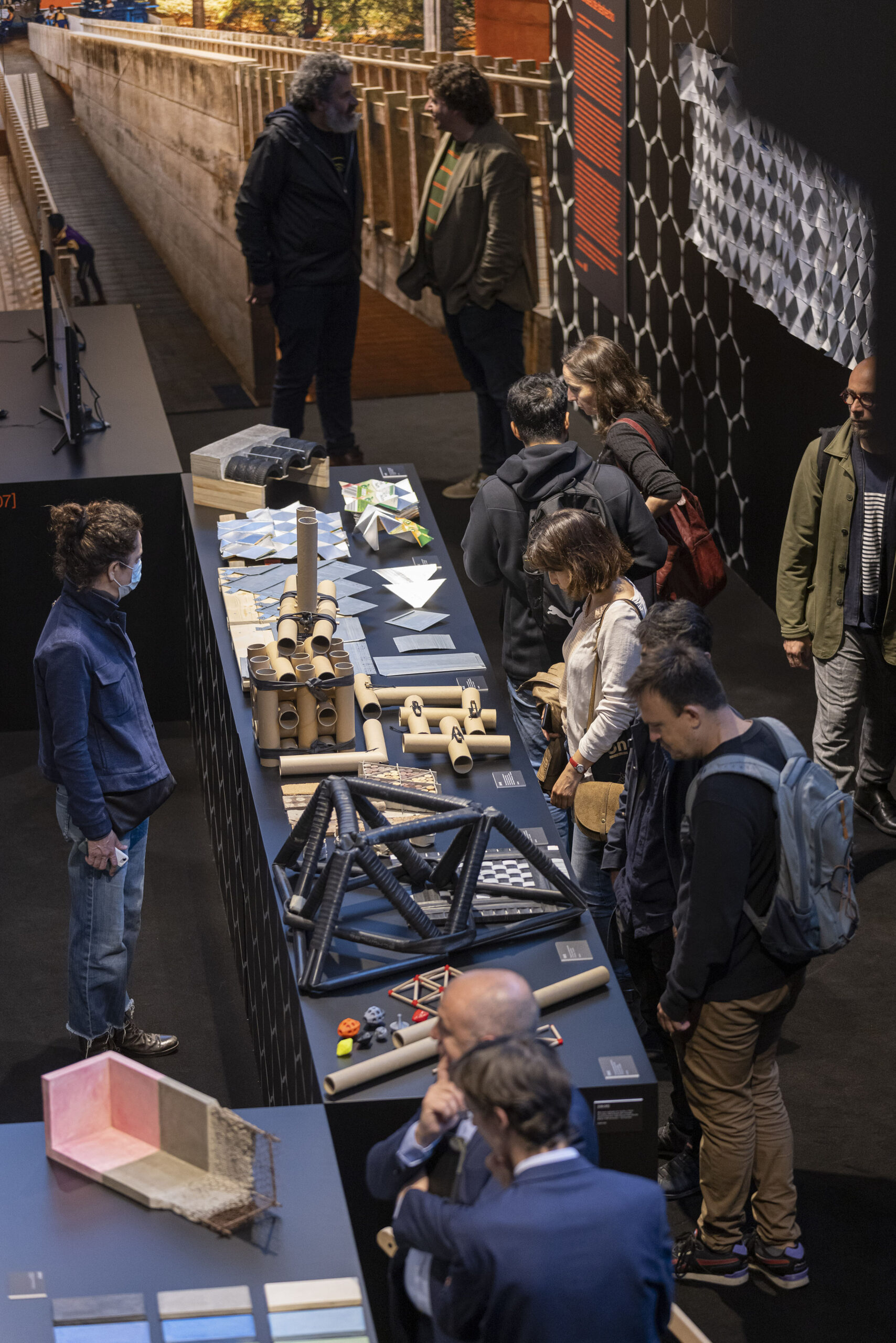
The exhibition shows, among other projects, student work from the design studio “Circularity – Architecture as a Mechanism of Waste Capture”, which took place in the winter semester 21/22 as part of Anupama Kundoo’s sto visiting professorship at KIT, Chair of Sustainable Building. Supervisors Prof. Dr. Anupama Kundoo and Daniel Lenz.
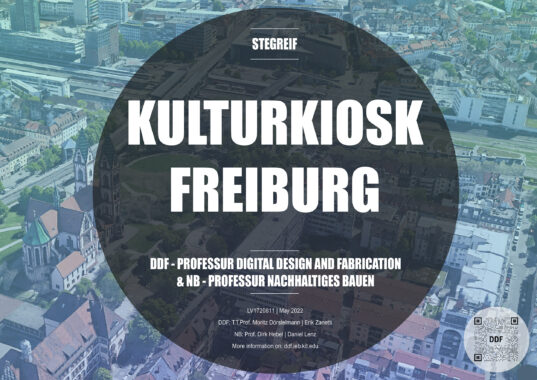
Stühlinger Kirchplatz is a small park in the center of Freiburg. A well-known meeting point for the whole community and a venue for diverse events, it is also a place of conflict due to drug dealing and excessive alcohol consumption.
An initiative by local social and cultural associations aims to establish a small multifunctional building or object as a starting point for a positive and integrated development of the whole park.
Developing a concept for this “Kulturkiosk”, addressing the social cultural context with sustainable construction and digital design, will be the focus of the Stegreif.
The Stegreif is a collaboration between the Professur Nachaltiges Bauen, Professur Digital Design and Fabrication and “Schwere(s)Los! e.V.”.
(de)
Der Stühlinger Kirchplatz im Zentrum Freiburgs ist ein beliebter Treffpunkt für das gesamte Quartier, andererseits ist er aufgrund von Drogenhandel und übermäßigem Alkoholkonsum ein Ort des Konflikts.
Eine Initiative lokaler sozialer und kultureller Vereine zielt darauf ab, ein kleines multifunktionales Gebäude oder Objekt als Ausgangspunkt für eine positive Entwicklung des gesamten Parks zu schaffen.
Die Entwicklung eines Konzepts für diesen “Kulturkiosk”, das den soziokulturellen Kontext mit nachhaltigem Bauen und digitalem Design verbindet, wird im Mittelpunkt des Stegreif stehen.
Der Stegreif ist eine Zusammenarbeit zwischen der Professur Nachaltiges Bauen, der Professur Digital Design and Fabrication und “Schwere(s)Los! e.V.“.
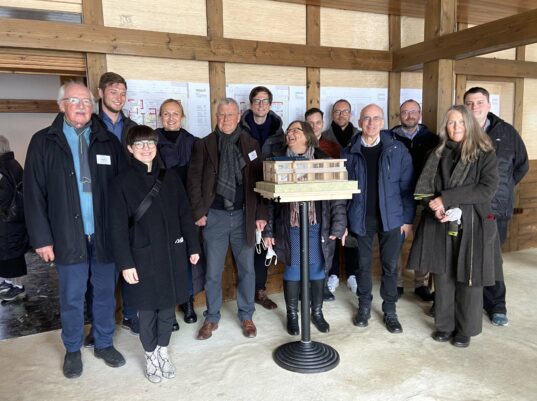
On 2 April 2022, nestbau AG Tübingen invited to an open day at the “Neschtle” in Pfrondorf. In addition to a greeting by Gunnar Laufer-Stark from nestbau AG and the presentation of the timber construction planned on site in Pfrondorf (architecture bürohauser), the event also included a small exhibition of student work from the design course “(H)Austausch!”, which was created in the winter semester 2020/21 at KIT.
The students dealt with the question of how a synergetic solution can be found for the two coinciding phenomena of housing shortage (e.g. for young families who need space) on the one hand and housing overflow (e.g. due to changed life situations such as children moving out, widowhood, etc.) on the other. Architectural ideas were developed on how such a “house swap” could look like: Close-to-the-environment, adapted, attractive, but also sufficiency-oriented living space for people who are willing to leave their flats and houses that have become too big.
Daniel Lenz represented the Chair of Sustainable Building and, together with the students present, answered questions from the visitors.
(de)
Am 2. April 2022 lud die nestbau AG Tübingen zum Tag der offenen Tür ins “Neschtle” nach Pfrondorf. Die Veranstaltung umfasste neben einem Grußwort von Gunnar Laufer-Stark von der nestbau AG und der Präsentation des am Ort in Pfrondorf geplanten Holzbaus (Architektur bürohauser) auch eine kleine Ausstellung der Studierendenarbeiten des Entwurfskurses “(H)Austausch!”, der im Wintersemester 2020/21 am KIT entstand.
Die Studierenden beschäftigten sich mit der Frage, wie für die beiden zusammentreffenden Phänomene Wohnungsknappheit (z.B. für junge Familien, die Platz benötigen) auf der einen Seite und Wohnraumüberfluss (z.B. durch veränderte Lebenssituationen wie Auszug der Kinder, Verwitwung, etc.) eine synergetische Lösung gefunden werden kann. Es wurden dabei architektonische Ideen entwickelt, wie solch ein “Haustausch” aussehen könnte: Umfeldnaher, angepasster, attraktiver, aber auch suffizienter Wohnraum für Menschen, die dafür bereit sind ihre zu groß gewordenen Wohnungen und Häuser zu verlassen.
Daniel Lenz vertrat die Professur Nachhaltiges Bauen und stand zusammen mit anwesenden Studierenden den Besuchern Frage und Antwort.
Dirk E. Hebel (2020), 100% Ressource: Bauten als Rohstofflager, in: Sorge um den Bestand, Zehn Strategien für die Architektur, von Olaf Bahner, Matthias Böttger und Laura Holzberg für den Bund Deutscher Architekten BDA, Dezember 2020, p. 165-177.
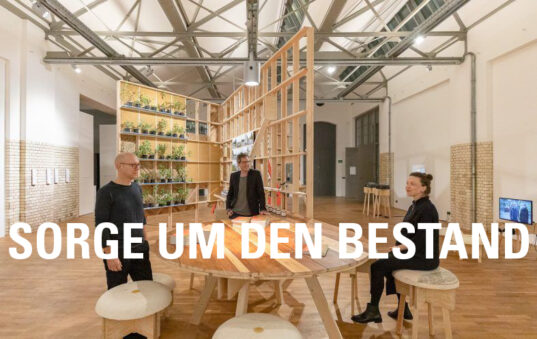
The KIT professorship of Sustainable Construction at the Faculty of Architecture is part of an exhibition and publication by the Association of German Architects BDA. In ten strategies, architects and urbanists present their concern for the existing building: taking care of the building stock, for growing social structures and for the continued existence of the earth. They invite you to read the permanence of what has been built and what has grown and plead for further thinking and careful repair of living spaces and living cultures. They show how new perspectives arise in the urban and regional context through networked approaches, through cooperation oriented towards the common good and through participation concepts. For the future, i.e. the buildings erected today, strategies for the circular use of materials and an openness to future requirements are being developed.
The exhibition of the Association of German Architects BDA was curated by Olaf Bahner, Matthias Böttger and Laura Holzberg. Exhibition design: Marius Busch – ON / OFF and Christian Göthner – lfm2 “Sorge um den Bestand” is a project in the “Experimental Housing and Urban Development” research program of the BMI / BBSR and is financially supported by the Federal Ministry of the Interior, Building and Home Affairs. Comprehensive information on the exhibition project can be found at www.bda-bund.de/sorgeumdenStock
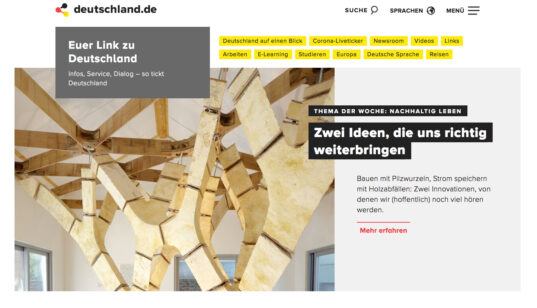
Construction with fungal roots and storing electricity with wood waste are two innovations that we will (hopefully) hear much more about in the future. At the Karlsruhe Institute of Technology (KIT) Professor Dirk E. Hebel is conducting research into radically different solutions. He wants to replace conventional building materials like concrete with renewable raw materials.
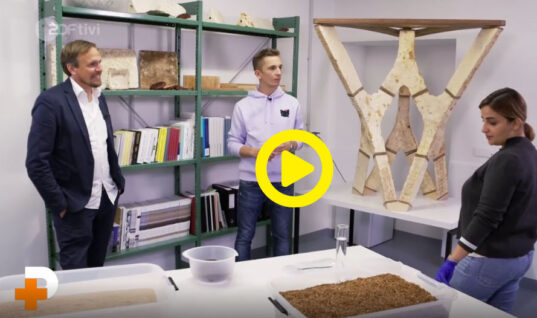
Mushrooms are given little attention – but are they the secret rulers of the world? “PUR +” presenter Eric Mayer discovers new possibilities and also visits the KIT-MycoLab of Prof. Dirk E. Hebel and his research team around Dr. Nazanin Saeidi and Dr. Alireza Javadian to understand how a new class of building materials could be cultivated.
Prof. Dirk E. Hebel in discussion about a rising circular building economy.
A talk in “Zukunft Bauen” with Prof. Dirk E. Hebel (Sustainable Construction, Faculty of Architecture, KIT Karlsruhe) and Dr. Lamia Messari-Becker (Building Technology and Building Physics, Institute of Architecture, University of Siegen) about rethinking the construction industry and its bound building materials as a raw materials warehouse in order to preserve the earth’s resources and about the paradigm change in future architectural planning and construction.
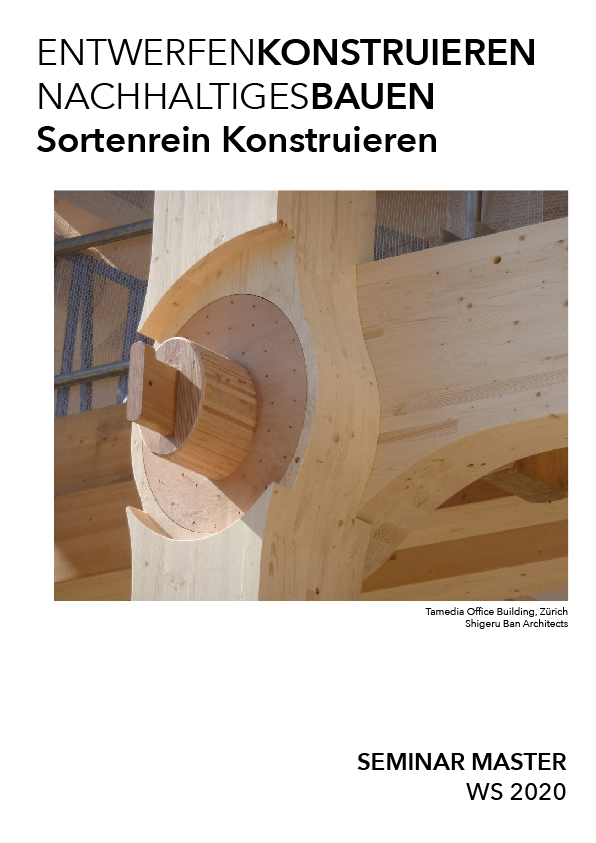
In a joint seminar, construction methods are to be investigated and documented that can guarantee the future deconstruction of buildings by type and thus form the basis of cycle-based construction. At the beginning the basics and principles of joining and designing a future recycling economy will be taught. Based on this topic, historical and current construction methods will be examined, which can be deconstructed, reused or recycled after their use in the building.
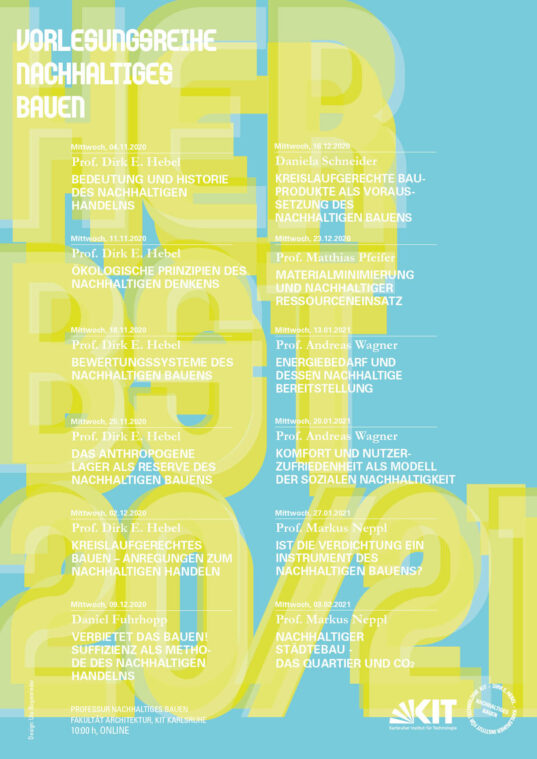
In the Winter Semester 2020/21, the KIT Faculty of Architecture will offer a lecture series on Sustainable Construction, organized by the Professorship of Sustainable Construction, Dirk E. Hebel. In total 12 lectures will address the history, state of the art, and alternative futures within the theme. Speakers are: Daniela Schneider, Prof. Daniel Fuhrhop, Prof. Andreas Wagner, Prof. Matthias Pfeifer, Prof. Markus Neppl, and Prof. Dirk E. Hebel. Please refer to the poster for actual dates. The lecture is held every Wednesday, 10:00 am online.
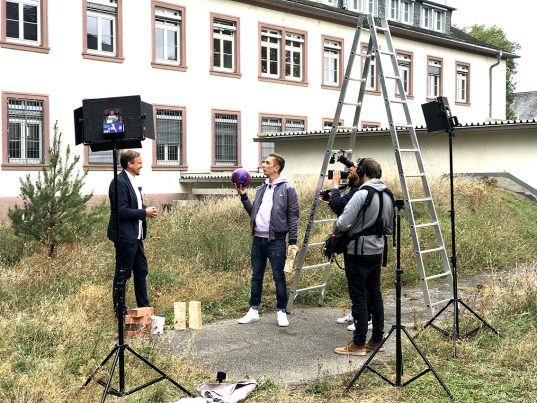
The public German TV station ZDF films at the KIT MycoLab for their format PUR+. PUR + is the discovery magazine in the children’s and youth program ZDFtivi. Each episode deals with one topic. Reports, explanations, and experiments shed light on the topic from different angles. The program focuses on the experiences and assessments of children. At KIT, Eric, the protganist of the format, explores together with the team of Prof. Dirk E. Hebel and Nazanin Saeidi the idea of using mycelium as an innovative building material of the future.
The winners of the third Urban Mining Student Award have been announced: From the total of 20 submitted design proposals, the jury awarded two first prizes and five recognitions. One of the two first prizes went to Jan Matthies & Andrea Santos Rodríguez from the KIT Faculty of Architecture. Hannah Hopp, Viola Winterstein, Laura Ganz and Pia Thisssen were delighted to receive recognitions. The design of Jan Matthies and Andrea Santos Rodríguez convinced the jury mostly by their consequent use of existing building elements coming from the urban mine and their ability to create unique and high quality spatial arrangements adequate for young children.
This year the planning task of the German-wide, open student competition was to plan a travelling school project for Cologne in order to cope with the immense investment backlog regarding reorganization measures in German schools. In order to ensure the continuation of the school operations during these construction measures, the City of Cologne needs an alternative that provides temporary, flexibly relocatable and pedagogically valuable alternative rooms. For KIT, the competition was accompanied by the Professorship of Sustainable Construction, Dirk E. Hebel, Katharina Blümke and Felix Heisel.
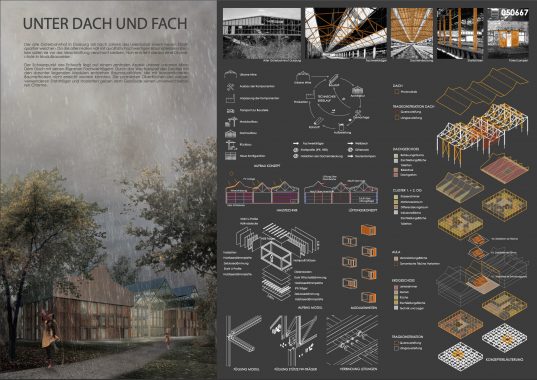
The student exercise ‘Vom Gartenhaus zum Räumling’ aimed to validate the potential of the urban mine. Using a garden shed near Karlsruhe as material depot, we carefully deconstructed the house and diligently documented each element. As a group, the students then designed a spatial installation utilizing only the harvested elements using no glue or permanent fixtures. After all, also this installation had to be designed for disassembly, providing building materials for yet another structure.
Project credits: Mohammad Mouaz Alez, Katharina Blümke, Laura Maria Ganz, Felix Heisel, Ann-Kathrin Holmer, Hannah Hopp, Marie Kamp, Sophie Klaß, Antonia Kniep, Jan Matthies, Katrin Oldörp, Manuel Rausch, Andrea Cecilia Santos Rodríguez, Pia Antonia Thissen, Arta Topallaj, Lars-Erik de Vries
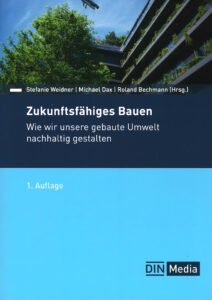
Sustainable Construction. How we are shaping our built environment in a sustainable way.
May 7, 2026
Hebel, Dirk E., and Elena Boerman. “Projektstudie 2 (Schwerpunkt: Materialien): Der Kreislaufbasierte Architekturansatz.” In Zukunftsfähiges Bauen – Wie Wir Unsere Gebaute Umwelt Nachhaltig Gestalten, 64–78. Berlin: DIN Media Innovation, 2026.
Circular! Foundations and principles of a circular construction industry.
March 11, 2026
Hebel, Dirk E., and Annette Hillebrandt, eds. 2026. Zirkulär! Fundamente und Postulate einer kreislaufbasierten Bauwirtschaft. Bauwelt Fundamente. Birkhäuser Verlag GmbH.
A matter of consequence
March 11, 2026
Deutsches Architekt:innen Blatt. 2026. “Eine Frage der Konsequenz.” March.
Circular Construction. Regenerative Building material management.
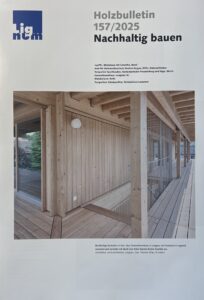
Wood as a foundation of a sustainable building culture
January 8, 2026
Glanzmann, Jutta. “Holz Als Basis Für Eine Nachhaltige Baukultur.”Lignum Holzbulletin 157/2025, no. Nachhaltig bauen (2025): 4058–59.
MycoTree
January 5, 2026
McLean, Will, Pete Silver, and Dirk Hebel. “MycoTree.” In Sustainable & Regenerative Materials for Architecture – A Source Book. 2025; Laurence King, 2025.
Really Circular – Material Library at KIT
October 29, 2025
Dietzold, Lutz, ed. Iconic Awards 2025 – Spaces Objects Visions. Frankfurt: Rat für Formgebung GmbH, 2025.
Activating the Urban Mine
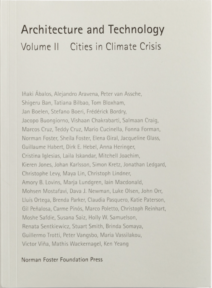
October 2, 2025
Hebel, Dirk E. “Activating the Urban Mine.“ In Architecture and Technology Volume II: Cities in Climate Crisis. Madrid: Norman Foster Foundation Press, 2025.
The city as a resource
September 18, 2025
Hebel, Dirk E. und Felix Heisel. “Die Stadt als Ressource.” In Für eine nachhaltige Architektur der Stadt. Berlin: Verlag Klaus Wagenbach, 2025.
From a linear to a circular system
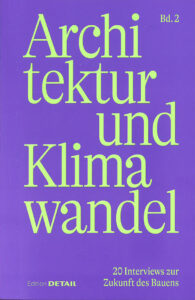
September 15, 2025
Hebel, Dirk E. “Vom Linearen Zum Kreislaufsystem.” In Architektur Und Klimawandel. München: Edition DETAIL, 2025.
Interview: “We must finally start measuring CO2 emissions – not just how thick the insulation is”
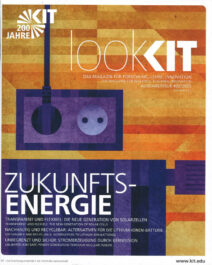
July 29, 2025
Hebel, Dirk E. Interview: “Wir müssen endlich anfangen, den CO2-Ausstoß zu messen – nicht nur, wie dick die Dämmung ist.” Interview by Christoph Karcher. LooKIT 0225, 2025.
WEtransFORM – On the Future of Building
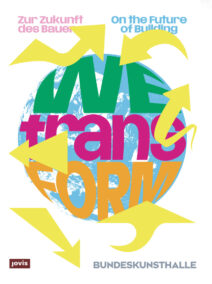
June 22, 2025
BUNDESKUNSTHALLE, ed. WEtransFORM – Zur Zukunft Des Bauens. Berlin: jovis Verlag, 2025.
Monkenbusch, Helmut. „Bauen für die Welt von morgen.“ Hörzu, 24.1.2025
Funghi – underground networkers
April 24, 2025
Hebel, Dirk E., Tanja Hildbrandt. „ Pilze – Netzwerker im Untergrund“. alverde, dm-Magazin, April 2025.
Fungi are versatile
February 24, 2025
Merkert-Andreas, Carolin. “Pilze Sind Vielseitig.”Wohnglück, January 2025.
“RoofKIT – Carbon storage and Material storage”
January 9, 2025
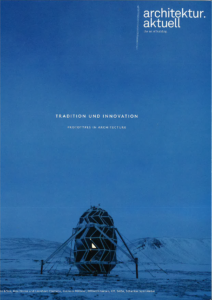
Boerman, Elena, and Dirk E. Hebel. “RoofKIT – Kohlenstoffspeicher Und Materiallager.”Architektur.Aktuell, vol. 12.2024, no. Tradition und Innovation, Dezember 2024, pp. 98–109
The many applications of mycelium construtction
December 8, 2024
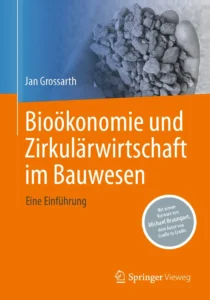
Grossarth, Jan. „Exkurs: Die vielen Einsatzbereiche von Myzel im Bauwesen“. In Bioökonomie und Zirkulärwirtschaft im Bauwesen, eine Einführung, 174–117. Wiesbaden: Springer Fachmedien, 2024.
Interview: “From a Linear to a Circular System”
November 13, 2024
Hebel, Dirk E. Interview: “Vom linearen zum zirkulären Kreislaufsystem.” Interview by Sandra Hofmeister, DETAIL 11.2024, Nov. 2024.
Building with renewable materials – Nature as a resource depot
October 29, 2024
Hebel, Dirk E., Sandra Böhm, Elena Boerman, Hrsg. Vom Bauen mit erneuerbaren Materialien – Die Natur als Rohstofflager. Stuttgart: Fraunhofer IRB Verlag, 2024.
Guest contribution: ‘Thinking, designing and operating in circular ways.’
June 27, 2024
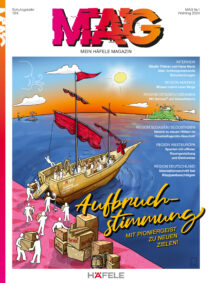
Hebel, Dirk E. “In Kreisläufen denken, entwerfen und wirtschaften.”MÄG – Mein Häfele Magazin, 2024.
Interview: ‘Mycelium power for the construction industry’
June 10, 2024
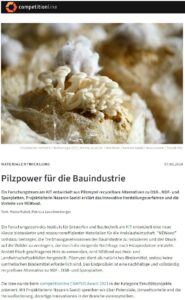
Rubel, Maike, and Patricia Leuchtenberger. Interview: “Pilzpower für die Bauindustrie.” competitionline, 7 June 2024, https://www.competitionline.com/de/news/schwerpunkt/pilzpower-fuer-die-bauindustrie-7283.html.
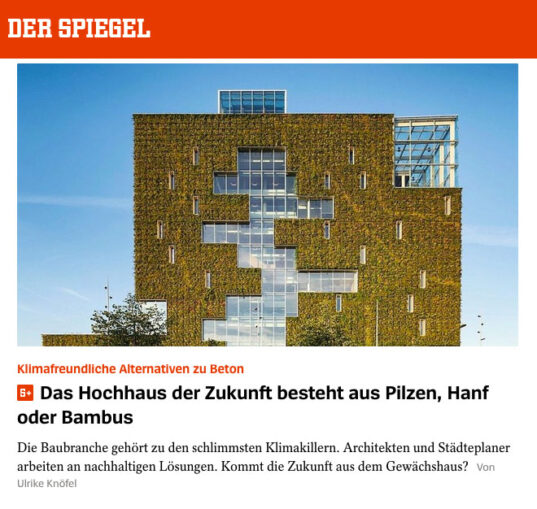
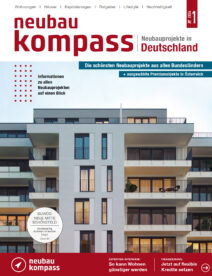
‘Future building materials: mushroom, hemp and algae’ in neubau kompass
May 27, 2024
Müller, Janek. “Baumaterialien der Zukunft: Pilze, Hanf und Algen.”neubau kompass – Neubauprojekte in Deutschland, May 3, 2024. https://www.neubaukompass.de/premium-magazin/.
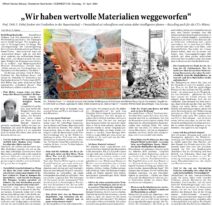
Interview: ‘We have disposed of valuable materials’
May 7, 2024
Sören, S. Sgries. “Interview: ‘Wir haben wertvolle Materialien weggeworfen.’”Rhein-Neckar-Zeitung, April 27, 2024, SÜDWEST I 28 edition, sec. Sinsheimer Nachrichten.
Built on mushroom
April 24, 2024
Schweikle, Johannes. “Auf Pilz gebaut.”Stuttgarter Zeitung, April 23, 2024, sec. Die Reportage.
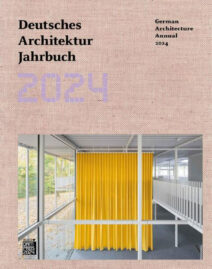
Organic Architecture – Fungus mycelium and flax as materials for the ecological building transition
February 13, 2024
Klaaßen, Lars. “Organische Architektur – Pilzmyzel und Flachs als Materialien für die ökologische Bauwende.” In Deutsches Architektur Jahrbuch 2024, edited by Peter Cachola Schmal, Yorck Förster, and Christina Gräwe, 198–209. Berlin, Germany: DOM publishers, 2024.
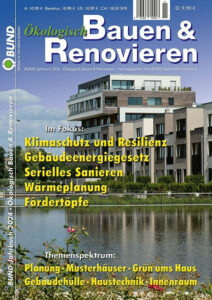
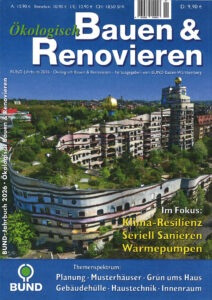
Circular construction – Circulation instead of demolition in “BUND-Jahrbuch 2024”
Redesigned Material Library at KIT in ‘Mitteilungsblatt des VDB-Regionalverbands Südwest’
January 8, 2024
Mönnich, Michael, and Sandra Böhm. “Neu gestaltete Materialbibliothek am KIT.”Südwest-Info: Mitteilungsblatt des VDB-Regionalverbands Südwest Nr. 36 (2023), 2023.
RoofKIT Wuppertal, Germany; Interview with Prof. Dirk Hebel
November 20, 2023
Hebel, Dirk E. “RoofKIT Wuppertal, Germany; Interview with Prof. Dirk Hebel: The aim is clear, we must forge the path ourselves.” In Sustainable Architecture & Design 2023/ 2024, edited by Andrea Herold, Tina Kammerer, and InteriorPark., 46–55. Stuttgart, Germany: av edition GmbH, 2023.
The existing building stock is the future resource
November 16, 2023
Hebel, Dirk E. “Der Bestand ist die künftige Ressource – Den linearen Umgang mit Baumaterialien schnellstmöglich stoppen.”Planerin – Mitgliederfachzeitschrift für Stadt-, Regional- und Landesplanung, Oktober 2023.