Privacy & Cookies: This site uses cookies. By continuing to use this website, you agree to their use.
To find out more, including how to control cookies, see here:
KIT Datenschutzerklärung
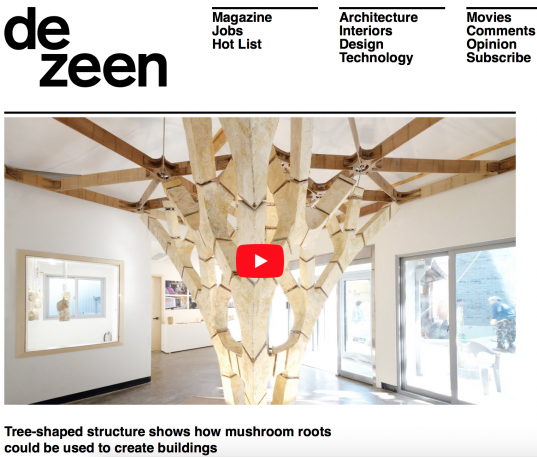
“While some architects have been experimenting with mushroom mycelium as a cladding material, architect Dirk Hebel and engineer Philippe Block have gone one step further – by using fungi to build self-supporting structures.
According to the duo, the material – which is formed from the root network of mushrooms – could provide the structure of a two-storey building, if it is designed with the right geometries.”
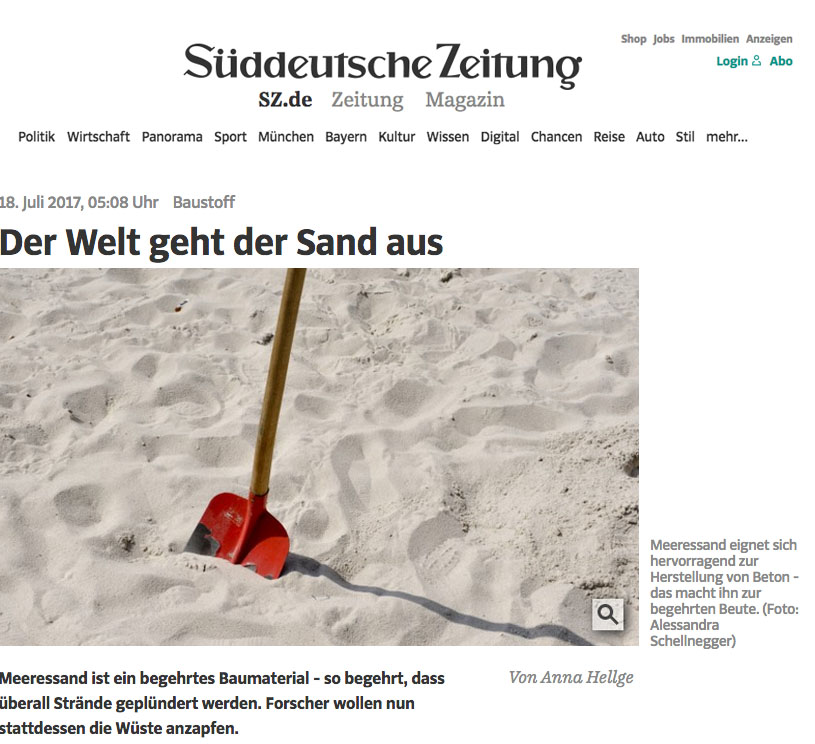
On 18 July 2017, Süddeutsche Zeitung reports on the resource sand for the building industry, with an interview by Prof. Dirk E. Hebel. “Dirk Hebel von der Universität Karlsruhe zweifelt trotzdem an der Nachhaltigkeit von Wüstensand und seinem Nutzen als alternativem Baustoff. ‘Die Idee klingt erst einmal gut’, sagt er, ‘aber auch Wüstensand ist erschöpflich. Die Wüste hat genauso ein Ökosystem wie Meere oder Flüsse, das dann zerstört wird. So würden wir ein Problem mit einem nächsten ersetzen.'” The full text (in German) can be found here.
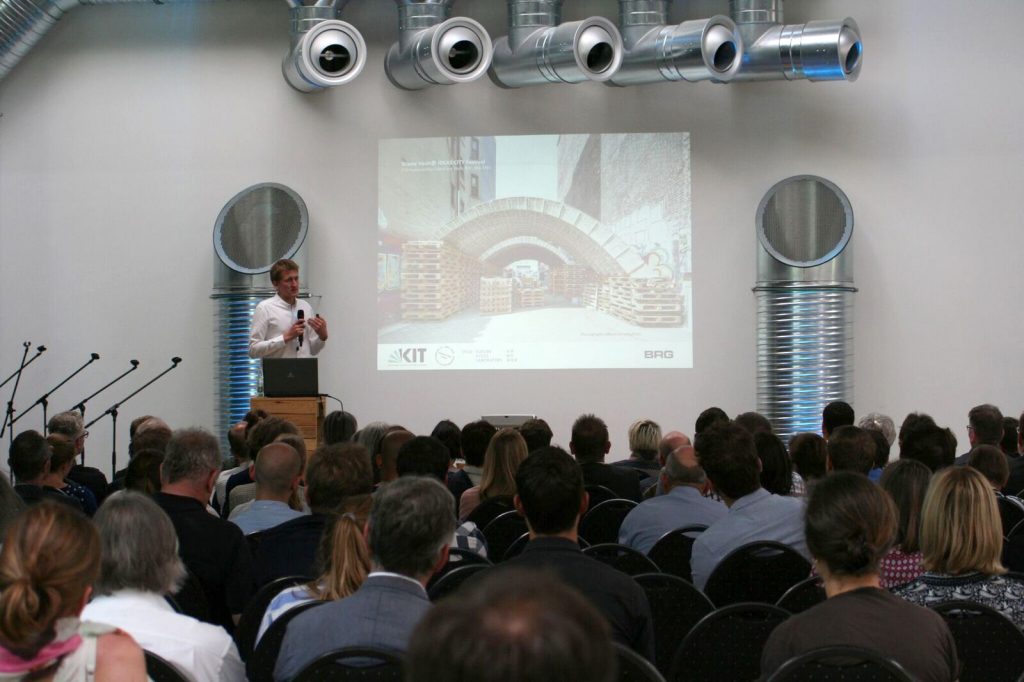
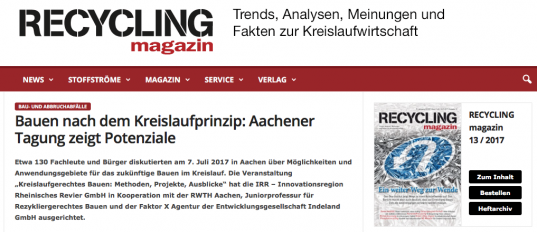
On 07.07.2017, Felix Heisel held a public lecture at the conference “Kreislaufgerechtes Bauen” in Aachen, speaking about the NEST Module UMAR (Urban Mining and Recycling), which is currently under construction in Switzerland. The German magazine Recycling reported on the event with the words: “Felix Heisel vom Fachgebiet Nachhaltiges Bauen des Karlsruher Institut für Technologie forderte Architekten zum Umdenken in der Planung auf. Ein mit dem Architekturbüro Werner Sobek in der Schweiz geplantes Gebäude sei im Bau und zeige neue Möglichkeiten: Alle Bauteile sind hier dekonstruierbar und sortenrein trennbar, um eine Wiederverwendung von Materialien sicher zu stellen. Nur so können Gebäude in der Zukunft als Materiallager dienen.”
The first installment in an interview series that explores the philosophical concerns of architects exhibiting at “TIME – SPACE – EXISTENCE,” a collateral event at the 2016 Venice Architecture Biennale, features Dirk Hebel of ETH Zürich.
World-Architects first became aware of the materials research that Hebel and his ETH colleagues having been undertaking when we visited a pavilion he designed for the IDEAS CITY Festival in New York City last year. Made from shredded beverage cartons pressed into wallboards, the striking pavilion featured arched structures resting on wood pallets. That project is visible in this four-minute interview with Hebel, who discusses the broader goals of his research, including the need to grow and cultivate materials rather than mining them. More information here.
On December 01, 2015, Ruby Press Berlin publishes SUDU, Research and Manual, edited by Dirk E. Hebel, Melakeselam Moges and Zara Gray. SUDU—the Sustainable Urban Dwelling Unit—is a full-scale prototype for an affordable, two-story house built with local materials and traditional building techniques in Ethiopia’s capital, Addis Ababa. Developed in a collaborative endeavor between the Ethiopian Institute of Architecture, Building Construction and City Development and ETH Zurich, SUDU ties in with the rich tradition of loam construction while at the same time taking a fresh look at how to adapt this tradition to contemporary needs.
Recapitulating SUDU’s idiosyncratic construction process in two lavishly illustrated volumes, this publication details the building techniques employed, such as rammed earth, mud bricks, and timbrel vaulting. The first volume additionally explores the history of Ethiopian architecture, the postcolonial nature of its current construction industry, and the challenges of the country’s rapid urbanization. The second volume, a manual with more than 600 detailed drawings and instructions, demonstrates how to build a house, step-by-step, with the most readily available building material—earth.
Future Cities: Singapore focuses on the exceptionally forward-looking urban approach of the island nation to learn about the challenges of planning for future generations.
(CNN) Singapore is small, hot and heavily populated — the 5.5 million residents of the tropical city-state live in less than 750 square kilometres of land. And population is expected to reach 6.9 million by 2030. Despite these challenges, Singapore continues to be amongst the most liveable and economically successful cities in the word, with a GDP equaling that of leading European countries. With more than 50% of the world’s population living in cities already (a figure projected to reach 70% by 2050), Singapore — where everyone is a city dweller — is setting trends for rapidly urbanizing countries worldwide. …
With high-density living comes high-density waste. But Singapore has been organized with its refuse management systems, not only by collecting it efficiently but even employing it to make more land. “They don’t have the space to store waste,” says Dirk Hebel, from the Future Cities Laboratory at the Singapore-ETH Centre for Global Environmental Sustainability. …
Due to its close proximity to the equator, Singapore’s climate is hot and humid, with temperatures averaging above 30 degrees Celsius and little variation throughout the year. The built-up nature of the city increases temperatures further through the ‘heat island’ effect — caused by buildings blocking air flow, transport emissions and long-wave radiation heating up the island nation. As a result, a lot of the city’s energy expenditure goes towards cooling people down. “Up to 60% of Singapore’s electricity is for buildings,” says Arno Schlüter, Professor of Architecture and building systems, also with the Future Cities Laboratory. Most buildings use electricity to cool-down and dehumidify public and work spaces. “Singapore is a noisy city due to all the [cooling] units on the wall,” says Schlüter.
«Architektur der Unabhängigkeit» im Vitra Design Museum Weil am Rhein. Zwischen 1957 und 1966 erlangten zweiunddreissig der heutigen vierundfünfzig afrikanischen Länder ihre Unabhängigkeit. Diese Zeit war geprägt vom Geiste des Aufbruchs, des Stolzes, des Optimismus und auch einem latent vorhandenen Grössenwahn, der seinen Niederschlag in unzähligen Bauten und Projekten wiederfindet, welche die Ausstellung «Architektur der Unabhängigkeit» in der Galerie des Vitra Design Museums in Weil am Rhein hervorhebt.
Paul, Jochen (2015). `Bauen mit Müll`, Scheizer Baublatt, Seite 16-19, Rüschlikon, Schweiz
Global betrachtet wird Müll in naher Zukunft zu einer wichtigen Ressource: Entwicklungsländer könnten ihre Importabhängigkeit bei Baustoffen reduzieren, die lndustriestaaten wertvolle Rohstoffe und graue Energie einsparen. Notwendig dafür ist ein Umdenken.
Toh, Felicia (2015). `Action for Cities`, Singapore Architect. Issue 04/2015: Education and Research, page 130-137, Singapore
The Future Cities: Research in Action exhibition by Future Cities Laboratory featured prominently on the ground floor of URA Centre from 23 January to 13 March 2015. Felicia Toh investigates its key research interests in cities.
Hebel, Dirk E., Marta H. Wisniewska and Felix Heisel (2015). ‘Müll als Rohstoffmine der Zukunft: Möglichkeiten des Bauens mit der Ressource Müll’, COVISS: 01/2015. Februar/März 12.Jahrgang, Seite 12-17, Luzern, Schweiz.
Müll ist in unserer Gesellschaft seit Jahrhunderten ein Material, das weder als natürlicher Rohstoff noch als Produkt gesehen wird, sondern als etwas, das wir schnellstmöglich verbrennen oder vergraben möchten. Müll ist sozusagen ein Nebenprodukt, das wir nicht in unser dialektisches Verständnis von ‘roh’ oder ‘verarbeitet’ kategorisieren können. Auf der anderen Seite kann man Müll jedoch auch als einen integralen Bestandteil unserer Ressourcen betrachten und auf diese Weise das Potential dieses Wertstoffs als Grundlage für die Herstellung von neuen Produkten erkennen.
Johnson, Nathan (2015). `Could bamboo replace steel reinforcement in developing countries?` Architecture and Design Australia. Chatswood, Australia.
Singapore’s Future Cities Laboratory is working to tap into the potential of bamboo as an alternative to steel for reinforced concrete applications in developing countries. Currently, steel-reinforced concrete is the most common building material in the world, and developing countries use close to 90 per cent of the cement and 80 per cent of the steel consumed by the global construction sector. However, few developing countries actually produce their own steel or cement and are thus forced into exploitative relationships with sellers in the developed world. read more
McGar, Justin (2015). `The Bamboo Revival: Green Structures`, Sourceable. Industry News and Analysis, Australia and Canada
Bamboo is one of the world’s oldest structural materials and has been used in construction for centuries. Now new research could potentially bolster its continued resurgence and use as a material in green structures. read more
Bislang sind Häuser und Brücken aus Bambus Einzelfälle. Forscher von der ETH Zürich wollen jetzt aus dem Süßgrasgewächs einen ökologischen und günstigen Massenbaustoff für die Städte von morgen entwickeln. Ein Beitrag von Oliver Ristau im Technology Review Magazin für Innovation. (article in German only)
Ristau, Oliver (2015). `Bambus statt Beton`, Technology Review – Das Magazin für Innovation. Ausgabe 02/2015, Deutschland
Bislang sind Häuser und Brücken aus Bambus Einzelfälle. Forscher von der
ETH Zürich wollen jetzt aus dem Süßgrasgewächs einen ökologischen und günstigen Massenbaustoff für die Städte von morgen entwickeln.
Hebel, Dirk (2015). `Bioplastik und eine Müllabfuhr für die Weltmeere`, ETH Zukunftsblog. ETH Zürich, Switzerland
Das Umweltproblem Plastik hat erschreckende Ausmasse erreicht und wächst stetig. Die dringende Suche nach Alternativen kommt langsam in Gang, mit einigen vielversprechenden Ansätzen. read more
Swiss daily newspaper Tagesanzeiger recently published a report in the research activities of the Assistant Professorship Dirk E. Hebel at the ETH Zürich and the FCL Singapore. You can read the full article here in German.
Hebel, Dirk (2015). `Wundermaterial mit Langzeitfolgen`, ETH Zukunftsblog. ETH Zürich, Switzerland.
Fast 270‘000 Tonnen Kunststoffmüll treibt in den Weltmeeren. Plastik ist zu einem Umweltproblem unfassbaren Ausmasses geworden, das bis in die letzten Ecken der Erde vorgedrungen ist. read more
Hebel, Dirk and Felix Heisel (2015). `Simulating the Future`, FCL Magazine N0. 03: Simulation. page 22-25, SEC, FCL Singapore
The ADDIS 2050 research project combines the collective activities and collaborations within FCL and African partners over the last few years in Ethiopia, especially in it`s capital Addis Ababa. The title ADDIS 2050 derived from an international conference in November 2012, where FCL, together with the Ethiopian Institute of Architecture, Building Construction and City Development EiABC developed a vision for the city of Addis Ababa as well as the Ethiopian nation state at large.
Dirk E. Hebel / Marta H. Wisniewska / Felix Heisel
Building from Waste
Recovered Materials in Architecture and Construction
The book provides a conceptual and practical look into materials and products which use waste as a renewable resource for architectural, interior, and industrial design. The inventory ranges from marketed products to advanced research and development, organized along the manufacturing processes: densified, reconfigured, transformed, designed and cultivated materials. A product directory presents all materials and projects according to their functional uses.
‘Bambus statt Stahl’ (Bamboo instead of Steel) has been published in Switzerland’s leading daily newspaper ‘Neue Zürcher Zeitung’ on Sunday 27th July. The article offers an overview on the recent developments of the Assistant Professorship Dirk E. Hebel in its bamboo composite material research and led to a wide public interest in Switzerland and Europe. The full article can be accessed here.
Very few developing countries have the resources to produce their own steel, and without this material tall buildings and urban development are all but impossible. But what if there were a local, renewable material that could be used instead of steel in reinforced-concrete buildings? And what if that substitute could be manufactured easily? These questions have motivated Dirk Hebel, an assistant professor of architecture and construction at the Future Cities Laboratory, in Singapore, to investigate a bamboo fiber composite as a possible substitute for steel reinforcement in concrete. The Future Cities Laboratory is a research arm of ETH (Eidgenössische Technische Hochschule) Zürich, in Switzerland, and is the first program under the newly formed Singapore-ETH Centre for Global Environmental Sustainability, which conducts multidisciplinary research to foster urbanization that conforms to the principles of sustainable development. If the tests on the bamboo composite are successful, developing countries will be able to manufacture and build their own urban centers without costly foreign steel imports, according to Hebel.
On July 31st, German Radio WDR5 reported on the chair’s bamboo composite research at the Future Cities Laboratory in Singapore. Above you can listen to the short interview with Prof. Dirk E. Hebel in German.
Civil Engineering is the award-winning monthly magazine of the American Society of Civil Engineers. Reaching an audience of more than 140,000 civil engineers worldwide, this magazine has the largest circulation in the engineering market and provides a compelling editorial mix of engineering projects and trends, engineering science, business and professional strategies, exploration of key issues, and news. The Civil Engineering website provides weekly news and feature content that supplements the content of the monthly print and digital editions.
On July 8th, the magazine published a lengthly interview with Prof Dirk E. Hebel on his current material research at the Future Cities Laboratory in Singapore titled: Bamboo Reinforcement Could Help Developing Cities. Research on the use of a bamboo composite material in place of steel to strengthen concrete is producing positive results—and could help some developing countries urbanize.
The second issue of the FCL Magazine addresses the shifting character of contemporary cities, and examines what this has to say about the fortunes of future cities. Dirk E. Hebel and Felix Heisel contributed an article titled “Cities without High-Rises” in this recent publication, which can be found here.
ADDIS 2050 is a so-called ‘synergy project’ at the Future Cities Laboratory in Singapore. It combines the collective activities and collaborations within FCL and African partners over the last few years in Ethiopia, especially in its capital Addis Ababa. The title ADDIS 2050 is derived from an international conference in November 2012, where FCL, together with our partner, the Ethiopian Institute of Architecture, Building Construction and City Development EiABC, developed a vision for the city of Addis Ababa as well as the Ethiopian nation state at large. The research work conducted could be classified in three different scales applying similar tools and methodologies: UNIT, CITY and NATION. The UNIT scale deals with the question of construction materials and methods.
Ethiopia will be confronted with a population increase of 45 million people over the next 15 years, along with increased
demand for basic needs like food, water, safety, and shelter. Given this challenge, the project asks for appropriate modes of 21st century urbanisation, rather than relying on out-dated models from the developed world or following luxury trends from the Arabian peninsula. The CITY scale discusses the future development of the city of Addis Ababa. Here, questions of urban design, infrastructure, production, and invention are
on the foreground of investigation, while the NATION scale focuses mostly on future energy concepts for Ethiopia at large.
The article at hand deals with the medium scale and future development of Ethiopia’s capital. It is an attempt to show alternative possibilities towards the dominating argument for high-rise buildings in Addis Ababa.
Architectural Blog archdaily reported recently on the ongoing research of CoReSing’s bamboo composite materials for the building industry.
“Developing countries have the highest demand for steel-reinforced concrete, but often do not have the means to produce the steel to meet that demand. Rather than put themselves at the mercy of a global market dominated by developed countries, Singapore’s Future Cities Laboratory suggests an alternative to this manufactured rarity: bamboo. Abundant, sustainable, and extremely resilient, bamboo has potential in the future to become an ideal replacement in places where steel cannot easily be produced.”
Kieron Monks asks in his recent article on CNN Innovations “Would you live in a house of sand and bacteria? It’s a surpassingly good idea”. The article gives an overview on recent developments in the field of alternative building materials and quotes Prof Dirk E. Hebel referring to mushroom bricks that “I could imagine every structure you would built out of bricks. No high-rises, but smaller scale structures and houses. The material is stronger than concrete, with better insulation capacities”. Read the full article here.
Impulse, the magazine for the German-speaking community in Singapore, recently published a short article on Felix Heisel in their issue “German Researchers in Singapore”. It describes his motivation to work in Singapore as well as his research in urban design and construction materials. The issue is available online here.
The Chair of Architecture and Construction will soon move back to Zürich to continue researching there and to start teaching a design course in the master’s programs – an exciting new task that the members are very much looking forward to. How can years of intensive research be translated into an academic approach? Marta H. Wisniewska writes about this challenge as the team aims to craft an inspiring course for their future students, and use it at the same time as another method to continue their current work. For the full article, please click here.
The CREATE Tower in Singapore sets the scene for vertical networking among its various entities. This kind of setting fosters interactions between the institutions on many levels, informally as well as professionally. Marta H. Wisniewska sees this as a strength. For the full article, please click here.
What we throw away may be a valuable renewable resource for building materials. Marta H. Wisniewska explains the future destiny of refuse in her newest blog entry for the ETH Intranet. For the full article, please click here.
Dirk E. Hebel’s newest contribution to the ETH Zukunftsblog:
Afrika wächst und wandelt sich. Oft ist eine Entwicklung nach westlichem Vorbild oberstes Ziel. Doch gibt es nicht sinnvollere Wege? Diese Frage bewegte mich während eines mehrjährigen Aufenthalts in Ostafrika. Seither ist mir der Kontinent eine Quelle der Inspiration für nachhaltiges Forschen und Handeln. To read more, please click here.
From the forests of Indonesia to the skylines of future cities. The rapid urbanization in emerging market countries sparks a search for new and better building materials.
This video is part of the ‘HSBC Canada in the Future’ Series, directed by Meg Andersen, The Mark Studios, Toronto Canada.
Founded in 1995, art4d is a magazine created by designers for designers. Through its 11 annual issues, art4d positions itself in absolute contrast to the contemporary field of shelter and decoration titles. art4d has and continues to pioneer the exchange of ideas, presented in intelligent narratives accompanied by vivid images, as standard editorial practice. Art4d serves the community of design, artistic, and creative professional and participants within Thailand – within Asia – and worldwide.
art4d 210 is entitled SMALL TALK: The Interview Issue – Conversations with eight architecture studios.
The move to Singapore two years ago was a 180-degree turn when coming from Ethiopia. Both countries cannot be more different, yet both could learn a lot from each other. Marta H. Wisniewska shares her rich multicultural experiences in an insightful column. For the full article, please click here.
CoReSing’s Marta H. Wisniewska will be one of four Opinion makers for the ETH Intranet this year. Reporting on her experiences as a Researcher at the Future Cities Laboratory in Singapore, she also draws comparisons to her former position at the Ethiopian institute of Architecture, Building Construction and City Development in Addis Ababa.
To follow her blog, please click here (ETH staff only).
Dirk E. Hebel’s contribution ‘Local Alternatives: Replacing Steel with Bamboo’ has been published in ‘The Economy of Sustainable Construction’.
About the Book:
30 specialists from around the world challenge the question of (higher) costs related to sustainability of the built environment
The Economy of Sustainable Construction is a publication inspired by the 4th International Holcim Forum and examines how sustainability can deliver a robust response to fiscal challenges. The book evaluates current architectural practices and models, and also introduces materials and methods to maximize the environmental, social, and economic performance of buildings.
Contained within its 400 pages are essays, reports, and case studies that examine the relationship between commercial and sustainable values, and explore the paths that construction will take in the 21st century. The Economy of Sustainable Construction points out the urgency of adapting more sustainable construction practices and buildings in the light of rapid urbanization, the vast growths of today’s giant cities, the sluggish economy, and burgeoning climate issues.
The Economy of Sustainable Construction, edited and published by Ruby Press Berlin was supported by the Holcim Foundation. More information can be found here.
Dirk E. Hebel and the group’s research on Advanced Fiber Composite Reinforcement has been featured in The Edge Singapore on December 09th, 2013.
The article titled ‘Bamboo could replace steel in reinforced concrete, says Future Cities Lab’s Hebel’ describes the background and research aims of the project. The Edge Singapore is a weekly magazine on business and investment and also includes a daily blog, which can be found here.
Dirk E. Hebel and the group’s research on Advanced Fiber Composite Reinforcement has been featured in the Straits Times on November 10th, 2013.
“Now, researchers from the Future Cities Laboratory, a collaboration between Singapore and the Swiss Federal Institute of Technology in Zurich (ETH Zurich), hope to harness the flexibility and strength of bamboo fibres to replace steel rebar used in reinforced concrete.
As Singapore goes through a construction boom, it is paying more attention to greening the construction process – from studying the use of bamboo to reinforce concrete, to calculating the carbon footprint of buildings. Recently, the Building and Construction Authority (BCA) made “green and gracious builder” certification a requirement for public construction projects from 2017.”
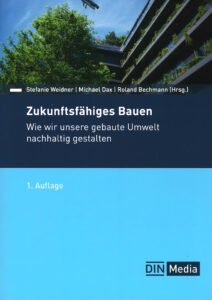
Sustainable Construction. How we are shaping our built environment in a sustainable way.
May 7, 2026
Hebel, Dirk E., and Elena Boerman. “Projektstudie 2 (Schwerpunkt: Materialien): Der Kreislaufbasierte Architekturansatz.” In Zukunftsfähiges Bauen – Wie Wir Unsere Gebaute Umwelt Nachhaltig Gestalten, 64–78. Berlin: DIN Media Innovation, 2026.
Circular! Foundations and principles of a circular construction industry.
March 11, 2026
Hebel, Dirk E., and Annette Hillebrandt, eds. 2026. Zirkulär! Fundamente und Postulate einer kreislaufbasierten Bauwirtschaft. Bauwelt Fundamente. Birkhäuser Verlag GmbH.
A matter of consequence
March 11, 2026
Deutsches Architekt:innen Blatt. 2026. “Eine Frage der Konsequenz.” March.
Circular Construction. Regenerative Building material management.
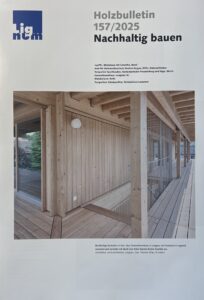
Wood as a foundation of a sustainable building culture
January 8, 2026
Glanzmann, Jutta. “Holz Als Basis Für Eine Nachhaltige Baukultur.”Lignum Holzbulletin 157/2025, no. Nachhaltig bauen (2025): 4058–59.
MycoTree
January 5, 2026
McLean, Will, Pete Silver, and Dirk Hebel. “MycoTree.” In Sustainable & Regenerative Materials for Architecture – A Source Book. 2025; Laurence King, 2025.
Really Circular – Material Library at KIT
October 29, 2025
Dietzold, Lutz, ed. Iconic Awards 2025 – Spaces Objects Visions. Frankfurt: Rat für Formgebung GmbH, 2025.
Activating the Urban Mine
October 2, 2025
Hebel, Dirk E. “Activating the Urban Mine.“ In Architecture and Technology Volume II: Cities in Climate Crisis. Madrid: Norman Foster Foundation Press, 2025.
The city as a resource
September 18, 2025
Hebel, Dirk E. und Felix Heisel. “Die Stadt als Ressource.” In Für eine nachhaltige Architektur der Stadt. Berlin: Verlag Klaus Wagenbach, 2025.
From a linear to a circular system
September 15, 2025
Hebel, Dirk E. “Vom Linearen Zum Kreislaufsystem.” In Architektur Und Klimawandel. München: Edition DETAIL, 2025.
Interview: “We must finally start measuring CO2 emissions – not just how thick the insulation is”
July 29, 2025
Hebel, Dirk E. Interview: “Wir müssen endlich anfangen, den CO2-Ausstoß zu messen – nicht nur, wie dick die Dämmung ist.” Interview by Christoph Karcher. LooKIT 0225, 2025.
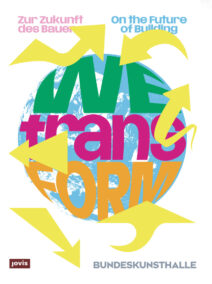
WEtransFORM – On the Future of Building
June 22, 2025
BUNDESKUNSTHALLE, ed. WEtransFORM – Zur Zukunft Des Bauens. Berlin: jovis Verlag, 2025.
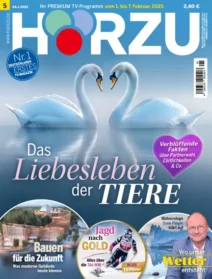
Monkenbusch, Helmut. „Bauen für die Welt von morgen.“ Hörzu, 24.1.2025
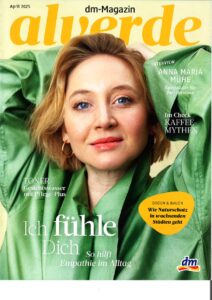
Funghi – underground networkers
April 24, 2025
Hebel, Dirk E., Tanja Hildbrandt. „ Pilze – Netzwerker im Untergrund“. alverde, dm-Magazin, April 2025.
Fungi are versatile
February 24, 2025
Merkert-Andreas, Carolin. “Pilze Sind Vielseitig.”Wohnglück, January 2025.
“RoofKIT – Carbon storage and Material storage”
January 9, 2025
Boerman, Elena, and Dirk E. Hebel. “RoofKIT – Kohlenstoffspeicher Und Materiallager.”Architektur.Aktuell, vol. 12.2024, no. Tradition und Innovation, Dezember 2024, pp. 98–109
The many applications of mycelium construtction
December 8, 2024
Grossarth, Jan. „Exkurs: Die vielen Einsatzbereiche von Myzel im Bauwesen“. In Bioökonomie und Zirkulärwirtschaft im Bauwesen, eine Einführung, 174–117. Wiesbaden: Springer Fachmedien, 2024.
Interview: “From a Linear to a Circular System”
November 13, 2024
Hebel, Dirk E. Interview: “Vom linearen zum zirkulären Kreislaufsystem.” Interview by Sandra Hofmeister, DETAIL 11.2024, Nov. 2024.
Building with renewable materials – Nature as a resource depot
October 29, 2024
Hebel, Dirk E., Sandra Böhm, Elena Boerman, Hrsg. Vom Bauen mit erneuerbaren Materialien – Die Natur als Rohstofflager. Stuttgart: Fraunhofer IRB Verlag, 2024.
Guest contribution: ‘Thinking, designing and operating in circular ways.’
June 27, 2024
Hebel, Dirk E. “In Kreisläufen denken, entwerfen und wirtschaften.”MÄG – Mein Häfele Magazin, 2024.
Interview: ‘Mycelium power for the construction industry’
June 10, 2024
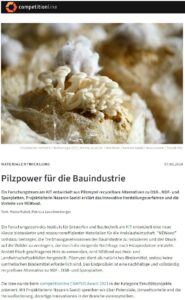
Rubel, Maike, and Patricia Leuchtenberger. Interview: “Pilzpower für die Bauindustrie.” competitionline, 7 June 2024, https://www.competitionline.com/de/news/schwerpunkt/pilzpower-fuer-die-bauindustrie-7283.html.
‘Future building materials: mushroom, hemp and algae’ in neubau kompass
May 27, 2024
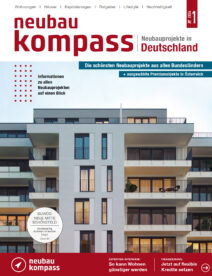
Müller, Janek. “Baumaterialien der Zukunft: Pilze, Hanf und Algen.”neubau kompass – Neubauprojekte in Deutschland, May 3, 2024. https://www.neubaukompass.de/premium-magazin/.
Interview: ‘We have disposed of valuable materials’
May 7, 2024
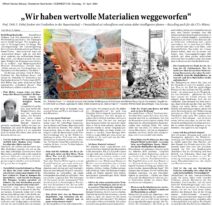
Sören, S. Sgries. “Interview: ‘Wir haben wertvolle Materialien weggeworfen.’”Rhein-Neckar-Zeitung, April 27, 2024, SÜDWEST I 28 edition, sec. Sinsheimer Nachrichten.
Built on mushroom
April 24, 2024
Schweikle, Johannes. “Auf Pilz gebaut.”Stuttgarter Zeitung, April 23, 2024, sec. Die Reportage.
Organic Architecture – Fungus mycelium and flax as materials for the ecological building transition
February 13, 2024
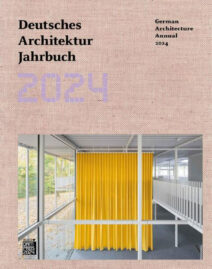
Klaaßen, Lars. “Organische Architektur – Pilzmyzel und Flachs als Materialien für die ökologische Bauwende.” In Deutsches Architektur Jahrbuch 2024, edited by Peter Cachola Schmal, Yorck Förster, and Christina Gräwe, 198–209. Berlin, Germany: DOM publishers, 2024.
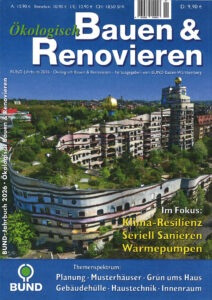
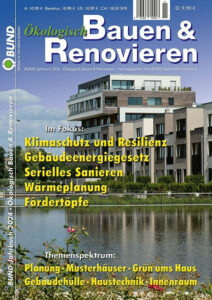
Circular construction – Circulation instead of demolition in “BUND-Jahrbuch 2024”
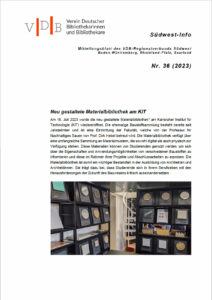
Redesigned Material Library at KIT in ‘Mitteilungsblatt des VDB-Regionalverbands Südwest’
January 8, 2024
Mönnich, Michael, and Sandra Böhm. “Neu gestaltete Materialbibliothek am KIT.”Südwest-Info: Mitteilungsblatt des VDB-Regionalverbands Südwest Nr. 36 (2023), 2023.
RoofKIT Wuppertal, Germany; Interview with Prof. Dirk Hebel
November 20, 2023
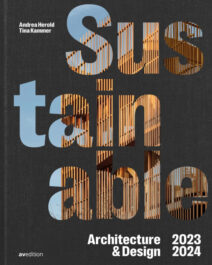
Hebel, Dirk E. “RoofKIT Wuppertal, Germany; Interview with Prof. Dirk Hebel: The aim is clear, we must forge the path ourselves.” In Sustainable Architecture & Design 2023/ 2024, edited by Andrea Herold, Tina Kammerer, and InteriorPark., 46–55. Stuttgart, Germany: av edition GmbH, 2023.
The existing building stock is the future resource
November 16, 2023
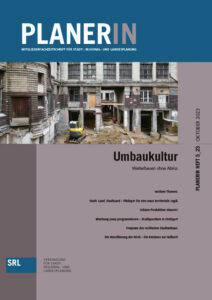
Hebel, Dirk E. “Der Bestand ist die künftige Ressource – Den linearen Umgang mit Baumaterialien schnellstmöglich stoppen.”Planerin – Mitgliederfachzeitschrift für Stadt-, Regional- und Landesplanung, Oktober 2023.